

Wharfedale Diamond 225 loudspeaker
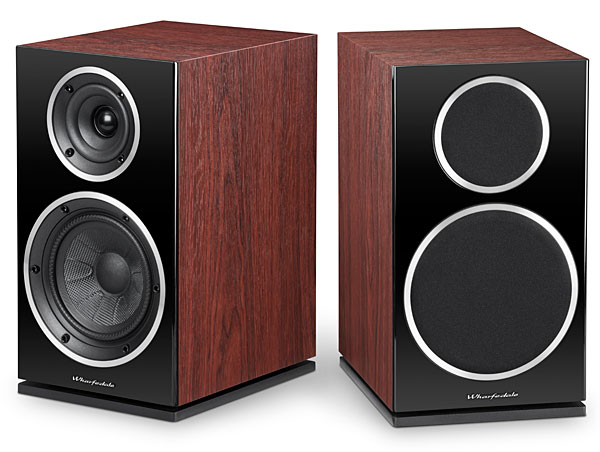
In the United Kingdom, the first seeds of perfectionism in audio separates were sown by Goodmans Industries, founded in 1925. Then, in 1930, Garrard (est. 1722) produced its first commercial gramophone. Shortly thereafter, England experienced the Great Slump, the British name for the worldwide catastrophe known in the US as the Great Depression. Near the beginning of this economic downturn, in 1932, Gilbert Briggs founded Wharfedale Wireless Worksand the first British "high-fidelity" audio amplifiers began being manufactured by H.J. Leak & Co. Ltd., founded by Harold Joseph Leak in 1934.
Wharfedale Diamond 9.1 loudspeaker

Following in the footsteps of my August">http://www.stereophile.com/floorloudspeakers/805bw">August 2005 review of the B&W DM603 S3, the second stop of the Bob Reina British Invasion Tour is the latest revamping of Wharfedale's affordable Diamond series.
Wharfedale Diamond loudspeaker

It wasn't too many years ago that no audio perfectionist would even consider owning speakers having woofers of less than a 12" diameter. Everyone knew that it took a BIG speaker to reproduce real bass, and pointed at the size of a double bass and an organ bass pipe as proof that there was no way of circumventing that particular law of physics.
WiiM Amp streaming D/A integrated amplifier

Life is not for Goldilocks. "Just right" is elusive. Every day, we face countless situations where our choices are either too many to navigate or too few to find satisfaction. Behavioral scientists call those dissatisfying alternatives "choice overload" and "choice deprivation," respectively.
I think choice overload may scare some audiophiles away from the glorious world of streaming, where the bulk and finite scope of a physical music-media collection can be traded for (or augmented by) many more listening choices. If you're willing to explore and choose, you can hear as deep and wide as most musical rabbit holes are likely to go, and then return to your favorite songs with a couple of finger-pecks on your phone.
For some people, all that choice is intimidating, paralyzing, overwhelming, highly stressful. That's no way to enjoy music! I sympathize. I'm not ready to leave physical media behind. But I am very happy in the streaming present. In fact, I urge the hesitant: Cast aside your fears and trepidations, sign up for a free month of Qobuz, Spotify, Tidal, Apple Music, you decidethen take it slow. At first, avoid browsingjust search for the music you want to hear. Try something new each day. Over time, you'll adjust to the overwhelming abundance. By the end of the month, especially with a full-resolution service like Qobuz, Tidal, or Apple Music+HD, you may not want to give it up. The future-present beckons loudly.
WiiM Mini streaming D/A preamplifier

Characteristically, the email from Kal Rubinson got straight to the point: "I have a WiiM Mini that I have played with, but I am not the right one to review this as I am not sufficiently interested in or knowledgeable about wireless streaming. It ... can handle uncompressed PCM via its DACs." "I'll review it," I replied, intrigued by a $99 D/A processor that can stream hi-rez audio via Wi-Fi and that also has an analog input so it can act as a preamplifier.
Yamaha @PET RP-U100 personal receiver

Convergence is a widely used buzzword in today's consumer-electronics industry. However, other than using my PC's soundcard in the office to play back MP3-encoded music and plugging the Mac in my listening room into my reference system in order to experience Riven with the highest possible sound quality, I've kept a low profile in this area.
YBA Design WD202 D/A headphone amplifier
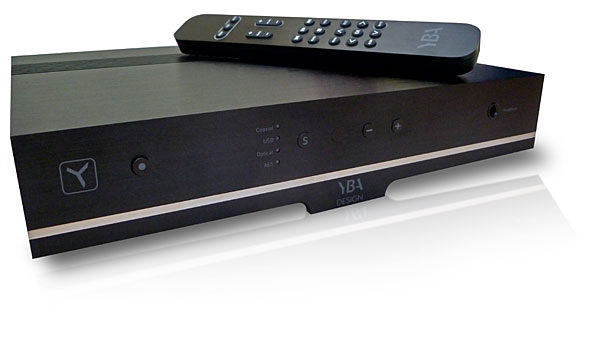
YBA Design's new WD202 D/A processor and headphone amplifier showed up while I was turning the pages of Don and Jeff Breithaupt's Precious and Few: Pop Music of the Early '70s, recommended by John Marks in his October 2009 "Fifth Element" column. Each page drips with great examples of why the 1970s often wind up on the wrong end of the culture stick (the Osmonds, anyone? Terry Jacks?).
Zu Audio DL-103 MC phono cartridge

In 1962, when tennis rackets were made of wood, newspeople were known for challenging the government, and the off-Broadway musical The Fantasticks was in its second year (the show closed in 2002), Nippon Columbia's Denki Onkyo (or Den-On) division introduced to the professional audio world a brand-new moving-coil phono cartridge. Developed in cooperation with the Japan Broadcasting Corporation, the DL-103 was one of the first attempts at making a truly wide-bandwidth stereo cartridge that nonetheless could withstand the rigors of back-cueing. The DL-103 was a nearly instant success with broadcasters, and its popularity spilled over into the world of domestic audio.