

Spiral Groove SG2 turntable

Photograph: TONEAudio Magazine
High-end audio exists at the intersection of art and science. Either discipline can produce a good product, but it takes both to create the very best. The Sonic Frontiers gear I auditioned many years ago, for example, was technically sound, nicely built, and sounded goodjust never as sublime as products from, say, Audio Research or VTL. On the other hand, an experienced, insightful designer such as Quicksilver's Michael Sanders can create wonderful products from humble circuits and parts, but be ultimately limited by the underlying technology. But when brilliant design, uncompromised execution, long experience, and artistry all come together, the results can be staggering.
Stenheim Alumine loudspeaker
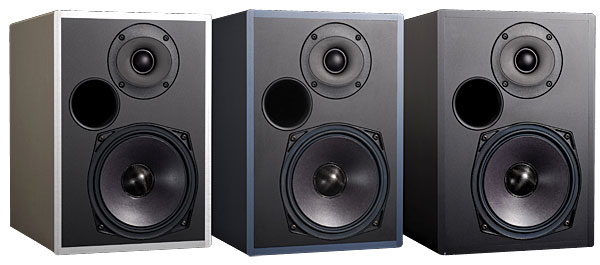
The sound of the Stenheim Alumine loudspeakerits openness, transparency, and freedom from temporal distortions, not to mention its good bass extension for such a small enclosurereminded me at once of my favorite small loudspeaker from the late 1980s, the Acoustic Energy AE1. On reflection, the comparison is extraordinary: The two products are as different as night and day, the AE1 being a wooden loudspeaker with a metal-cone woofer, the Alumine a metal loudspeaker with a pulp-cone woofer. I suppose one can skin a catfish by moving the knife or by moving the fish.
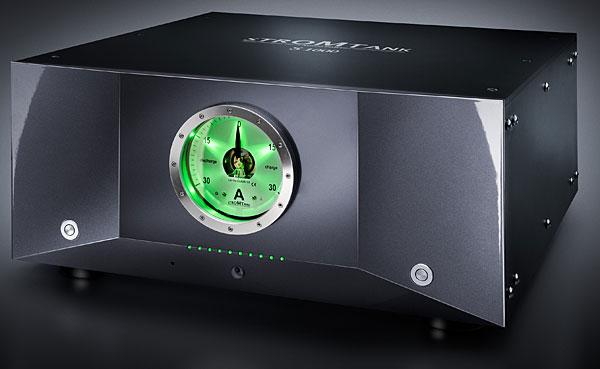
Stromtank S 1000 computer-controlled battery power source
The Kingdom of Audiophiledom rests on a paradox. Inanimate audio systems and rooms aim to deliver music that animates our senses and touches our souls. The inherently lifeless exists to bring music to life.
This holistic realitythat systems and rooms function as living organisms where every part is interconnected and interrelatedcame home to me when, during one of the first AXPONAs in Chicago, I entered a long, cavernous basement room with several spongy "conference room" walls. "There is no way that any setup can deliver good sound in this room," self said to self. Yet, the system sounded unbelievably good.
Stromtank S-4000 ProPower MK-II XT computer-controlled battery power source
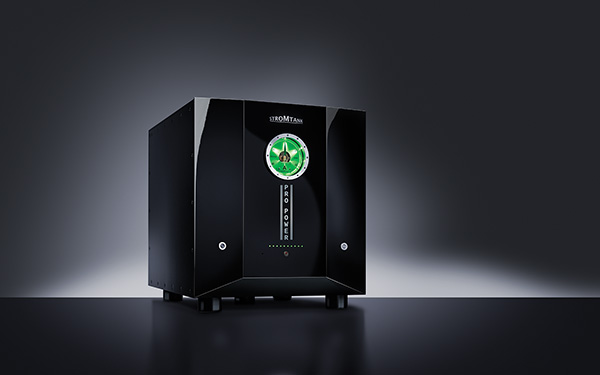
In my enthusiastic 2022 review of the Stromtank S-1000 ($16,900), I described the Stromtank as a computer-controlled lithium iron phosphate (LiFePO4) battery array that, coupled with its AC inverters and all the trimmings, supplies clean, constant, stable off-grid AC power to hi-fi components. By softly depressing a single button on the front panel, Stromtank owners can easily switch from wall-connected mode (when the Stromtank's dimmable front-panel meter is blue) to a disconnected, battery-only state (when the meter is green). At the end of a listening session, users can return to blue mode to recharge the battery array.
Sutherland Engineering Phono Block monoblock phono preamplifier
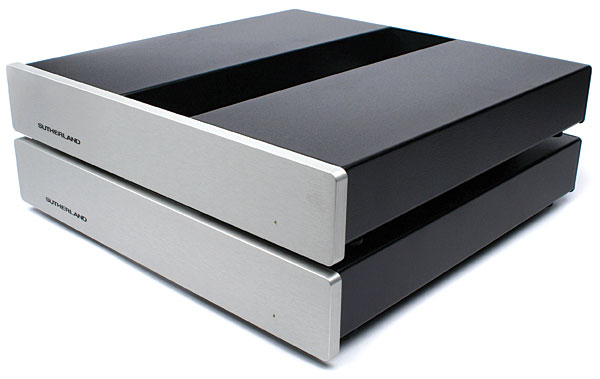
Saying that Sutherland Engineering builds a nice line of phono stages is like saying that the Porsche 911 Carrera is a nice line of sports car. The Sutherlands all share common design philosophies, features, and sonic attributesbut just as ramping up from Porsche's classic Carrera Coupe ($78,000) to the GT3 ($115,000) or the Turbo S Cabriolet ($172,000) increases the level of performance and distills the Porsche experience down to its essence, ascending the Sutherland line from the PH3D ($1000) to the 20/20 ($2200) to the Hubble ($3800) buys more of what Ron Sutherland is all about.
Symphonic Line Kraft 400 monoblock power amplifier

Things didn't start off auspiciously. I'd been after Symphonic Line's Klaus Bunge for more than a year to send me the Kraft 400 Reference monoblocks. Finally he called. He said he was going to be in town for a few days, and he had with him a pair of what he described as his "traveling" Kraft 400s, which he proposed to leave with me.
T+A MP 3100 HV G3 multisource player
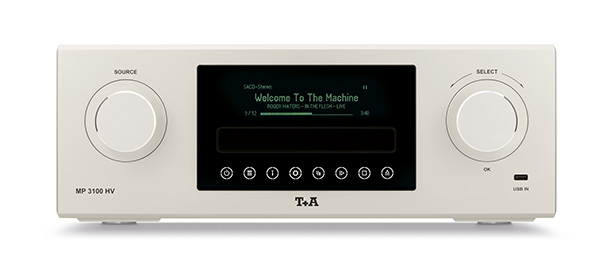
When auditioning a new audio component, I invariably start with some ideas about what I should listen for, based on my preconceptions about the pitfalls and propensities of products in its category. For example, with digital, I'm listening for sound that's awake and unprocessed. With every component, I start by hoping I can spot their colorations and assess their level of importance.
T+A Solitaire S 530 loudspeaker

I jumped at the chance to review T+A's $47,900/pair Solitaire S 530 loudspeaker for a few reasons. First, because T+A is a well-established company with an approach I like and respect: They make hi-fi equipment of the highest quality but with prices that, though substantial, are in line with their technology and execution. Their stuff is very handsome with impressive industrial design, but T+A doesn't do audio jewelry. What's more, though T+A is aggressive in R&Dtheir "Company" webpage says, "Actually, we're scientists ..."but they are selective in the use of new technology. The third reason I was interested in reviewing a product from T+A is that their prices and technical level place them in a market segment I know well.
What I didn't know until recently is that T+A makes loudspeakers, and they're quite different from the loudspeakers other companies make. I only learned this when I started hearing about the S 530 and its larger sibling, the S 540, from friendsfriends whose ears I trust.
TAD C600 line preamplifier
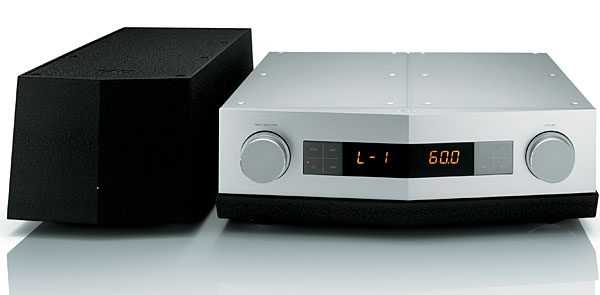
In the early 1970s, Stereophile's founder, J. Gordon Holta man I used to describe, with all due respect, as having been clothed by the haberdasher to the homelesssaid that Audio Research's SP-3 tubed preamplifier was "the closest thing available, in fact, to the ideal straight wire with gain" ie, it would amplify the signal without editorializng in any way. Back then, the SP-3 cost $595. Today it would cost around $3500. But TAD's C600 dual-mono, solid-state, balanced preamplifier costs more than 10 times that: $42,000.
TAD Compact Reference CR1 loudspeaker

High-end audio is in some ways a dynastic beast, though without as many "begats." One of the world's most successful loudspeaker manufacturers in the years following World War II was the Wharfedale company, from Yorkshire in the North of England. Wharfedale was founded by Gilbert Briggs in 1932, who in the 1950s handed over the reins of Technical Director to fellow Yorkshireman Raymond Cooke. Cooke left Wharfedale in 1961 to found KEF Electronics Ltd., where he subsequently appointed Goodmans designer Laurie Fincham as Chief Engineer in 1968. Fincham led a team of young engineers, including Mike Gough, who eventually joined B&W, and Yorkshire-born Andrew Jones, who became KEF's Chief Engineer in 1989, before Fincham was lured to Harman's Infinity division, in Northridge, California, in 1993. Jones followed Fincham across the Atlantic, where he worked on Infinity's Prelude, Overture, and Reference Series speakers, before joining Pioneer in 1997. The Japanese company had established a state-of-the-art speaker-design facility in Southern California, and Jones was invited to lead the design team.