

Anniversaries, Auditions, Advertisers
A couple months back, a question from a dealer set me back in my chair: "Are you guys really going to put out Stereophile on a monthly basis?" I was surprised—when he put the question, we were just starting production work on the issue you hold in your hands, the twelfth to hit the stands since we started publishing monthly. Beginning with Vol.10 No.5 in August 1987, a Stereophile has gone in the mail every month, pretty much on time despite having gone through the trauma of changing printers last December on one issue's notice.
As I See It: From London to Santa Fe
From London, England, to Santa Fe, New Mexico, is a pretty big jump, both geographically and culturally. From Hi-Fi News & Record Review to Stereophile, however, is a mere hop; the similarities overwhelm the differences. Unlike the US, mainstream magazines in the UK have managed to keep in touch with the fact that hi-fi components sound different; to edit and to write for an ostensibly "underground" American magazine presented no major philosophical problems. (I say "to edit," but as mentioned in "The Big Announcement," Vol.9 No.3, my editing is done in harness with Stereophile's founder and guiding light, J. Gordon Holt.)
Audible Wallpaper
We're not really sure who coined the term—it is usually attributed to Alistair Cooke, former host of the "Omnibus" TV program—but "audible wallpaper" is an apt term for something that is of more than passing concern for the serious music listener.
Audio & Design M9BA tonearm

Back in the days of pre-stereo high fidelity, when a 6-gram phono pickup was considered to be "featherweight," the best universal-type tonearm we knew of was a bulky, very professional-looking device made by Gray Labs and designated the Model 108. One unusual thing about it was that, instead of using sleeve or cone-face bearings, it had a single up-ended needlea so-called unipivotfor both the vertical and lateral modes of motion. The other unusual thing about it was that the pivot system was viscous-damped, and it was this, we suspect, that was largely responsible for the arm's ability to make any pickup sound somehow sweeter and cleaner than it did in any other arm.
Audio By Van Alstine Super-PAS Three preamplifier

If I had to pick one amplifier designer as having had the greatest continuing influence on the high-end market, as much as I admire John Curl, Audio Research's Bill">http://www.stereophile.com/interviews/894z">Bill Johnson, and Krell's Dan">http://www.stereophile.com/interviews/1203dagostino">Dan D'Agostino, the name of David">http://www.stereophile.com/news/11661">David Hafler inexorably springs to mind. Not because he challenged the very frontiers of hi-fi sound, but because he combined a fertile, creative mind (footnote 1) with a need to bring good sound to as wide an audience as possible, both by making his products relatively inexpensive and by making them available as kits. (The Major Armstrong Foundation apparently agrees with me—they presented David with their "Man of High Fidelity" award at the summer 1988 CES.) It remains to be seen if the Hafler company will continue in this tradition, now that David has sold it to Rockford-Fosgate. But there is no doubt that many audiophiles were first made aware of the possibilities of high-end sound by Hafler products in the late '70s, and by Dynaco in the '60s.
Audio Dynamics ADC-1 phono cartridge
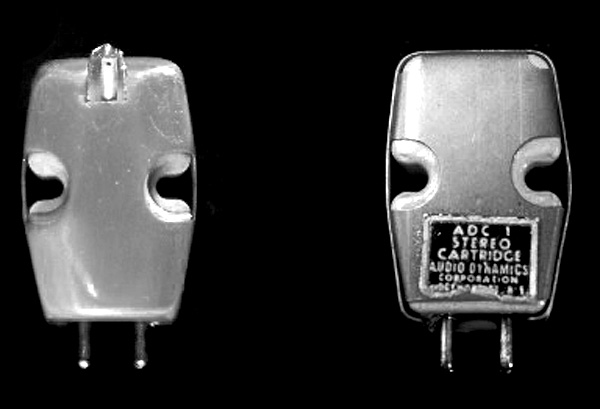
We tested two samples of the ADC-1 phono cartridge, both of which were taken from a dealer's stock. One was a demonstrator that had been in use for some months. The other was brand new, right off the shelf. Both were tested in an Empire 98 tonearm and in a Gray 108-C tonearm with its damping lightly adjusted, but results with both cartridges were for all intents and purposes identical in both arms.
Audio McCarthyism
In the early 1950s, a quiet, undistinguished Senator named Joseph Raymond McCarthy began a crusade against what he imagined were subversive, dangerous elements in American government. His tactics included irresponsible accusation, militant attacks on his opponents, and self-aggrandizing witch-hunting. So virulent were his methods the term "McCarthyism" entered the language. McCarthyism came to mean any unjustified persecution and the false conformity this strategy engendered (footnote 1).
Audio Minimalism
Five or six years ago I wrote a breezy, introductory-type piece on mid-fi "knob-surfing," winding up with a reprise on the old line that the number of the knobs, lights, and tattoos on the faceplate is often inversely proportional to the quality behind them.
Audio Research Dual 150 power amplifier

We mentioned in the last issue that we were becoming increasingly disturbed by "a certain manic quality that is creeping into this pursuit of sonic perfection." We were referring then to a manufacturer's announcement of the imminent availability of a speaker system weighing over 1000 lb per channel, but we could just as well have been speaking of this behemoth from Audio Research.
Audio Research SP9 preamplifier

Following the introduction of their very expensive, tube/FET hybrid SP11 preamplifier, there were rumors that Audio Research was working on a hybrid tube/transistor preamplifier targeted to cost less than $2000. The rumors were confirmed when ARC showed a black-and-white photo of the SP9 at the 1987 Winter CES. Obviously, like all magazines, we were impatient to receive a review sample, but the first review of the SP9 actually appeared in the summer '87 issue of Peter Moncrieff's IAR Hotline. Peter's review was almost intemperately enthusiastic, comparing the SP9 positively with early samples of the SP11 and suggesting that its sound quality was considerably better than would be expected from its $1695 asking price. Naturally, we were anticipating good things when our review sample arrived in Santa Fe in late July.