Reference

Sort By: Post DateTitle Publish Date

An Amplifier Listening Test

It is always a matter of great interest when a difficult question, in this case the audibility of differences between amplifiers, is put to an empirical test. When the question is tested by such intelligent, knowledgeable, and unbiased investigators as John">http://www.stereophile.com//features/113/">John Atkinson and Will Hammond (see the July issue of Stereophile, Vol.12 No.7, p.5, the interest is even greater. Unfortunately, when the test turns out to have been flawed by errors in design and in use of statistics, as was the case here, the disappointment is also even greater.

PDM, PWM, Delta-Sigma, 1-Bit DACs

Editor's Note: One-bit DAC chips in the 21st century, where the analog output signal is reconstructed from a very high-rate stream of pulses, are ubiquitous. But a quarter-century ago, those chips were only just beginning to stream from the chip foundries. In this feature, we aggregate Stereophile's 1989 coverage of the then-new technology, starting with Peter van Willenswaard on the basics.—John Atkinson.


1989 may well become the year of the D/A converter (DAC). CD-player manufacturers have, almost without exception, launched research projects focusing on this problem area of digital audio; many of these projects are already a year old. This is, however, by no means the only imperfection keeping us away from the high-quality sound we have come to suspect is possible with digital audio media, and maybe not even the most important.

The Science of Subwoofing

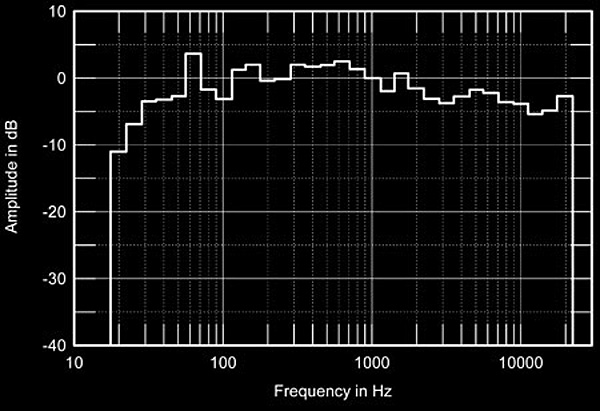
There was a time, as recently as 40 years ago, when frequencies below 100Hz were considered extreme lows, and reproduction below 50Hz was about as common as the unicorn. From our present technological perch, it's too easy to smirk condescendingly at such primitive conditions. But just so you're able to sympathize with the plight of these disadvantaged audiophiles, I should tell you that there were two perfectly good reasons for this parlous state of affairs. First of all, program material at that time was devoid of deep bass; not because it was removed during disc mastering but simply because there wasn't any to begin with. The professional tape recorders of the day featured a frequency response of 50–15kHz, ±2dB—just about on a par with the frequency performance capability of a cheap 1988 cassette tape deck.


Loudspeaker Specifications: What Matters?

In a recent answer to a reader's letter, I somewhat bluntly stated that Stereophile's reviewers use "hi-fi" adjectives to describe loudspeaker sound because even good loudspeakers are too far removed from sounding "real" to be compared directly with live music. Upon reflection, this may have sounded too dismissive, so I will elaborate a little in this short essay.

Concert Halls: A View From The Stage

When I decided to write a piece on the subject of concert-hall acoustics, I realized that almost all discussion concerning this topic is based on the viewpoint of the listener in the audience. While this is important (since the primary purpose of any hall is to bring audience and performance together), the criteria that musicians employ in concert-hall evaluation address sonic parameters that are probably not obvious to the casual listener, and may often be at odds with conclusions reached from the other side of the footlights. Some readers might feel that any discussion of concert halls has no place in a publication such as Stereophile; they may have a point, especially if their sole aim through audio is to produce sonic spectacle, rather than to recreate an artistic event. I believe, however, that there are some readers who would like to gain some insights into the specific problems and acoustical considerations presented to performing musicians, and possibly come away with some fresh ideas to incorporate in their listening criteria.


Analog vs Digital: Home-Brew Science at the Edge of the Art

Publisher's note: The following article, from the early days of Compact Disc, is presented with no claim for absoluteness. (In fact, just as we go to press in the spring of 1986, we received a manuscript from Philip Greenspun, Product Review Editor of Computer Music Journal (Cambridge, MA), who had precisely the opposite result when comparing CD to analog versions of the same recording, though it was unclear that his test procedures were as thorough as in the tests by these authors.) The tests described are neither single- nor double-blind, and the author's decision to forego conversation while listening to the same products does not by any means guarantee lack of mutual influence—especially because their musical tastes are so well known to each other. Moreover, repeating the test with different phono equipment, a different CD player, and a different replica of the master tape would likely yield somewhat different results.


Nevertheless, I think the basic conclusion is sound: good CD reproduction is remarkably close to a fairly good version of master tape sound; there's a good chance that it's more accurate than what you'll get from the average cartridge, tonearm, and turntable.

The Pros & Cons of Electrostatic Loudspeakers

The main inherent advantage of the full-range electrostatic loud speaker system is that it allows a single diaphragm to embody the conflicting attributes needed for optimal performance at both extremes of the audio range. Its thin-membrane diaphragm can be made exceedingly light, for superb transient response and extended HF response, yet it can be about as large in area as desired, for extended LF response.
Advertisement
Advertisement
Advertisement