
Reference

Sort By: Post DateTitle Publish Date

Sounds Like? An Audio Glossary

Subjective audio is the evaluation of reproduced sound quality by ear. It is based on the novel idea that, since audio equipment is made to be listened to, what it sounds like is more important than how it measures. This was a natural outgrowth of the 1950s high-fidelity "revolution," which spawned the notion that a component, and an audio system as a whole, should reproduce what is fed into it, without adding anything to it or subtracting anything from it.
What It All Means: line-level preamplifier measurements

Though we sometimes take for granted that the basic "language" of our measurements is clear to all of our readers, letters to the editor tell us that this is not the case. Periodically, then, we will attempt to explain exactly what our measurements are and what they purport to show. Though those with technical training may find our explanations a bit simplistic, they're aimed at the reader who lacks such experience.


Holiday Reading

I recently scoured my shelves and came up with the following list of must-read books for stereophiles, all of which are in print and should be available from specialist bookshops or from the suppliers mentioned in the text. Books marked with an asterisk (*), though too technical for the general reader, will be found rewarding by those who have a good grasp of mathematics and who want to delve deep. Reading the books in the first "general" section of the list will enable readers to understand just about everything that appears in Stereophile, but all the books listed contain between their covers untold treasures.


A Question of Bits

Someday we may speak wistfully to our grandchildren about the "golden age" of digital audio when consumer formats (CD and DAT) contained a bitstream that was an exact bit-for-bit duplicate of the original studio master recording—not a digitally compressed, filtered, copy-resistant version whose sound is "close enough" to the original. Digitally compressed formats such as DCC and MiniDisc represent, in effect, a return to the pre-CD era when consumer-release formats were always understood to be imperfect copies of the studio original. Even the most ardent audiophile accepted the fact that LPs and mass-produced tapes did not, and could not, sound as good as the master tapes they were derived from.


The Sound of Surprise (the loudspeaker/stand interface)

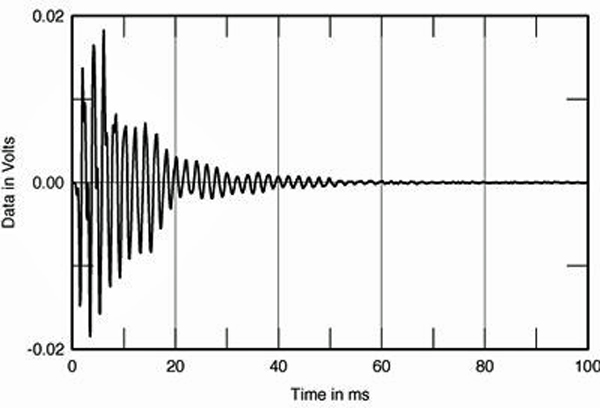
One of the great imponderables in hi-fi is how much the vibrations of a dynamic loudspeaker's cabinet walls contribute to its overall sound quality. Studies by William Stevens in the mid-1970s showed that, with some speakers, the acoustic output of the enclosure could be almost as much as that from the drive-units. Since then, responsible speaker designers have worked hard either to damp cabinet vibrations or to shift them to higher frequencies where their effect on the music will be less deleterious.

Noise, Modulation, & Digital/Analog Conversion

At the February 1991 Audio Engineering Society Convention in Paris, Audio Precision's Dr. Richard Cabot (see my">http://www.stereophile.com/interviews/850">my interview in January 1991, Vol.14 No.1) proposed a new technique for measuring noise modulation in D/A converters (footnote 1). The method, based on psychoacoustic principles, attempts to predict the audible performance of D/A converters. Now that Stereophile has added digital-domain signal generation and analysis to our Audio Precision System One, we can employ Dr. Cabot's technique and see if there are any correlations with subjective performance.


The Listeners' Manifesto

Editor's Note: This article is now only available as an Audio Engineering Society preprint, under the title "The Role of Critical Listening in Evaluating Audio Equipment Quality," preprint number 3176. The price is $4.00 for AES members, and $5.00 for non-members; it can be ordered (currently on paper only, not as a downloadable pdf) by entering the number in the appropriate field on the preprint">http://www.aes.org/publications/preprints/search.html">preprint search page at the AES">http://www.aes.org">AES website.


Harmonic Convergence: the Effect of Component Tweaking

Power amplifiers fascinate me. In the past 15 years I've helped design and build over a dozen advanced models, with output powers ranging from 50 to 2500W, for a number of the UK's professional equipment manufacturers. To learn from others' ideas and mistakes, I've also repaired, measured, used, and reviewed hundreds of makes of amplifier. My experiences have led me to regard the power amplifier as one of the messiest, most imperfect pieces of electronic equipment in the record/replay path.
Advertisement
Advertisement
Advertisement