Features

Sort By: Post DateTitle Publish Date

Book Review: Norman Granz: The Man Who Used Jazz for Justice
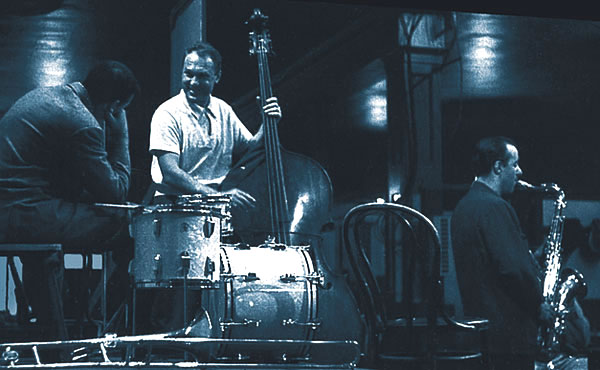
Norman Granz: The Man Who Used Jazz for Justice

By Tad Hershorn. Berkeley: University of California Press, 2011. 470pp. Hardcover, $34.95.


One night in 1942, Billie Holiday was singing at a Los Angeles nightclub. Between sets, she crossed the street to have a drink with Norman Granz. She was in tears because some black friends who had come to hear her had been turned away.
Book Review: KEF: 50 Years of Innovation in Sound

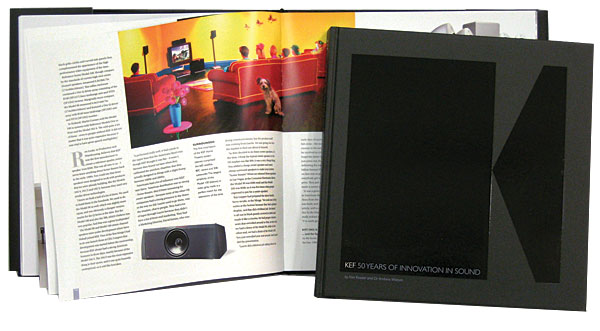
KEF: 50 Years of Innovation in Sound

By Ken Kessler and Dr. Andrew Watson. GP Acoustics International Limited, 2011. $89.99. Hardcover, 12" by 12" by 0.9", 216 pp. ISBN 978-988-15427-4-8. Available from selected KEF dealers and Amazon.com.


Ken Kessler's latest "coffee-tabler" (my favorite publishing-industry insider neologism) celebrates the 50th anniversary of the founding of KEF Electronics by documenting the history of the venerable loudspeaker manufacturer. While the book doesn't quite start with a bang, it does start with an evocative vignette. The year was 1979, the place the ballroom of Buckingham Palace. Her Majesty the Queen, about to present KEF's founder, Raymond Cooke, with the medal representing his having been made an Officer of the Most Excellent Order of the British Empire (OBE), inquired, perhaps formulaically, "This is for loudspeakers?"

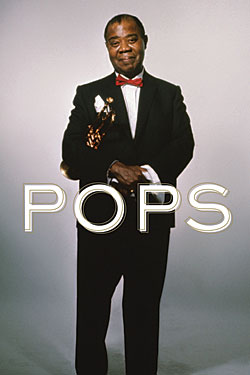
Book Review: Pops: A Life of Louis Armstrong

Pops: A Life of Louis Armstrong, by Terry Teachout (Houghton Mifflin Harcourt, 2009): 475pp. Hardcover, $30; paperback, $16.95.
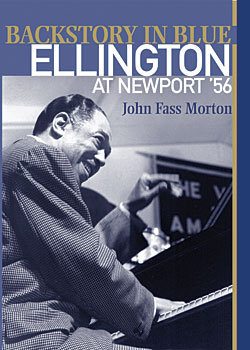

If you plan to read just one book about Louis Armstrong, whose virtuosic cornet solos pushed jazz past rudimentary ensemble playing and launched his phenomenal career as an instrumentalist and singer, make it Pops. Teachout built it on brickwork laid by authors who preceded him, so you'll benefit from their research, as well as from narrative on 650 previously private reels of tape that Armstrong recorded and archived. Moreover, Teachout is a musician and music critic who offers opinions on his subject's discography.


Few people seem to realize that Armstrong (1901–1971) called himself LOU-iss. "All White Folks call me Louie," he once noted, and in some instances that may have been patronizing. In others, it was surely an instinctive response to the man's infectious warmth and informality.

Road Trip!

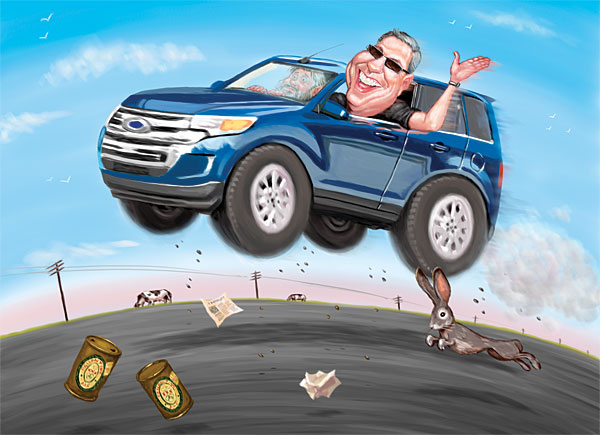
Illustration: Jeff Wong

John Atkinson and I were On the Road, whistling down I-95 in a big, Kona Blue Metallic 2011 Ford Edge Ltd with voice-command everything. To paraphrase Raoul Duke at the very beginning of Hunter S. Thompson's Fear and Loathing in Las Vegas, we were somewhere around Princeton, New Jersey—not quite the edge of the desert—when the drugs began to take hold. Just as in the original text, "there was a terrible roar all around us, and the sky was full of what looked like huge bats, all swooping and screeching and diving around the car . . ." I decided that there was no point in mentioning the bats to JA. He'd bought the Criterion Collection DVD of Terry Gilliam's film version of Fear and Loathing at Princeton Record Exchange. He knew about the bats.

Arc Angles: Optimizing Tonearm Geometry


As Chester Rice, co-inventor of the moving-coil loudspeaker, once ruefully observed: "The ancients have stolen our inventions." So often, what is painted as new and innovative turns out to be something someone thought of long before. We have a habit of forgetting, and that applies not only to inventions, but to knowledge of other kinds as well.

Cut and Thrust: RIAA LP Equalization

Until the Recording Industry Association of America hit the headlines in recent years with its antipiracy campaign, the initials RIAA meant one thing to seasoned audiophiles: the vinyl-disc equalization characteristic introduced in the 1950s to standardize what had previously been an anarchy of different EQs. Three decades later, as CD gained ascendance, a large proportion of audiophiles still knew what RIAA equalization was, and a good number of them had some idea or better of what the RIAA EQ curve looked like, and why it was applied.
Advertisement
Advertisement
Advertisement