Interviews

Sort By: Post DateTitle Publish Date

James Taylor: an American Standard
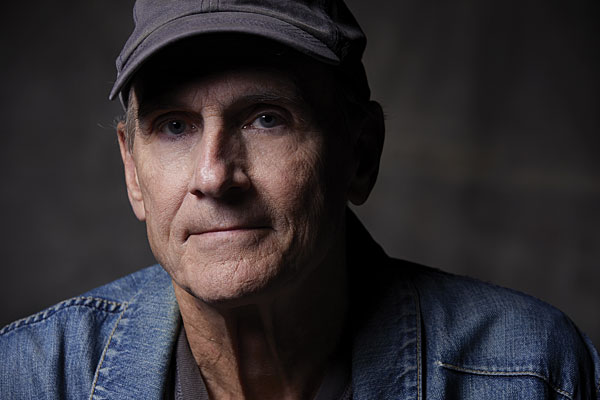
On iconic singer-songwriter James Taylor's 20th album, American Standard, the lanky crooner adapts the classic American songbook to his easy-rolling musical ways. The result is an American mixture of timeless songcraft.


Where some popular singers use the songbook canon to increase record and ticket sales, Taylor has no need to change himself or increase his audience. He's as comfortable as any man can be, having sold many millions of records the world over for almost 50 years.

John Atkinson: a Career in Audio

At the end of April, Adrian Low, the proprietor of Toronto retailer Audio Excellence, asked if he could interview me. "I've been interviewing audio luminaries for some time," Adrian wrote, "partly because I am so interested in how they started, their experiences, and also to share these with fellow audio enthusiasts."


We connected with Skype and, in the two videos embedded below, Adrian and I, along with Jan and Vilip from Audio Excellence, talk about many things connected with my 52 years as an audiophile, my 43 years in audio magazine publishing, and my 33 years at the editorial helm of Stereophile.

Going Dutch (& Dutch): a Conversation with Martijn Mensink

In his review of the three-way, active Dutch & Dutch 8c loudspeaker in the August 2019 issue of Stereophile, Kalman Rubinson concluded that "The D&D 8c demonstrates that active, DSP-empowered speakers are the future." I was equally impressed by the 8c's measured performance—a superbly flat on-axis response and an unmatched control of dispersion over the entire audioband—and asked to borrow a pair so I could experience the speakers in my own listening room.

Four Interviews with John Atkinson

Occasional Stereophile contributor Steve Guttenberg publishes a YouTube channel about audio that has achieved an impressive reach. As Steve told me in a conversation I had with him last December, 22% of his 98,000 subscribers (at the time we talked) are under 34 years old, and, to judge from the comments, most of them don't read Stereophile!!!! "It would nice to introduce you to them!" said Steve, and proposed he interview me and post the video to his channel when it hit the magic 100k number, which it did on January 9.


Steve visited my place in Brooklyn just before the New Year, and we spent an afternoon talking about audio, magazines, measurements, and music.

Bill Frisell: New Ideas in Old Songs

Of the celebrated triumvirate of John Scofield, Pat Metheny, and Bill Frisell—the most original and influential jazz guitarists of the past 50 years—none is more distinctive, or self-effacing, than Frisell, a true changeling of the guitar. Frisell is a jazz-based musician, but his music crisscrosses genres, and his guitar playing isn't bound to or limited by a specific technique. He's a master illusionist, able to alter a song's meaning far beyond its original intent with the aid of a Telecaster guitar, a modest effects chain, and, most importantly, his rich imagination.

Manfred Eicher: "You Can't Record Everybody"

There has never been a record producer like Manfred Eicher, founder and sole proprietor of ECM records, the German-based jazz (and sometimes classical) label that celebrates its 50th anniversary this month.


Eicher doesn't quite win the all-time prize for longevity. Edward Lewis started Decca (UK) in 1929 and owned it until 1980. David Sarnoff controlled RCA from 1919–1970. William Paley did the same at Columbia from 1938-1988. But unlike those other, financially heftier titans, who deferred to department heads and studio producers, Eicher has supervised every single one of ECM's albums—more than 1600 of them.

Chick Corea: Pioneering Jazz Pianist

Armando Anthony "Chick" Corea belongs to that elite cadre of pianists that includes Herbie Hancock, Keith Jarrett, and Mccoy Tyner, pioneers who reshaped the jazz or- der starting in the early 1960s and continued to make strides into the present day.


The now-78-year-old Corea's attainments are many: composer of the standards "la fiesta," "Spain," "500 Miles High," "Matrix," and "Windows"; winner of 22 Grammy Awards (and 64 nods); founder of at least six colossal improvising units (Return to Forever I and II, Circle, the Three Quartets quartet, the Chick Corea Elektric Band, the Vigil Quintet); popularizer of early monophonic synthesizers, and recipient, in 2006, of an NEA Jazz Masters award.

Never Stop: a Musical Interview with Jon Anderson

Vocalist Jon Anderson has been at the center of the fabled rock band Yes since its founding in 1968 and has collaborated with other notable artists including Vangelis, Mike Oldfield, Jean-Luc Ponty, and the Contemporary Youth Orchestra. A tireless and prolific musician, composer, and multi-instrumentalist, he has also released more than a dozen solo albums.


Almost exactly 50 years after the July 1969 release of the first Yes album, Anderson visited my house for an afternoon of talk and listening to music. We listened to some old Yes tracks, some favorites from other artists, and several from his most recent album, 1000 Hands: Chapter One, which was 30 years in the making.

John Adams

American composer John Adams and I first met in the late 1970s, when I became one of his composition students at the San Francisco Conservatory of Music. My recollections from those days endure as near-cinematic images: John lugging his homemade synthesizer—he called it "the Studebaker"—down the hall prior to meeting me at his office; an early performance, at Mills College in Oakland, of Adams's Shaker Loops (footnote 1) for string septet; sitting with Adams during rehearsals for the 1981 premiere of his choral symphony Harmonium (footnote 2), with Edo De Waart and the San Francisco Symphony.
Advertisement
Advertisement
Advertisement