J. Gordon Holt

Sort By: Post DateTitle Publish Date

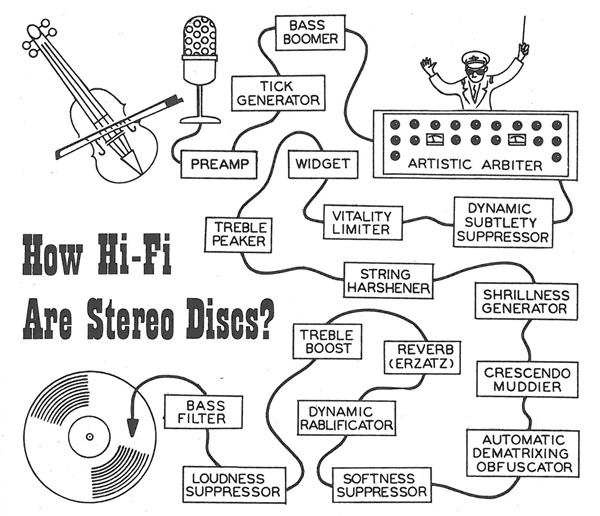
How Hi-Fi are Stereo Discs?

Editor's Note from 1992: This seminal J. Gordon Holt essay on how the art of recording natural sound became compromised in favor of unmusical artificiality for good commercial reasons was originally published in August 1964, in Vol.1 No.8. Though most people these days listen to classical music from CDs, not LPs, in the intervening decades, recording technology has not changed for the better as much as one might have hoped. Nevertheless, the days of wretched multimiking excess described by Gordon are past, and it's rare to find the music treated with the lack of respect typical of a mid-'60s Columbia session. Although some of the smaller companies—Reference Recordings, Delos, Chesky, Mapleshade, Dorian, and Sheffield Lab in the US; Meridian, Nimbus, and Hyperion in the UK—consistently use honest, minimal miking, it is not unknown for the majors in the '90s to do likewise. And the use of time delay for spot microphones, pioneered by Denon in the mid-'80s, means that instruments that might tend to become obscured at orchestral climaxes can now be brought up in level without unnaturally time-smearing the sound. I still find it sad, however, that it is rare to hear the sheer dynamic range of a live ensemble successfully captured on a commercial recording.—John Atkinson

Don't Just Sit There!

Like every sensible publication, The Stereophile keeps track of the questions raised by readers who write to us, so we can get some idea of what most of you would like to see in future issues of the magazine. To date, the list looks like this, in order of diminishing interest: transistor amps and preamps, loudspeakers, pickups, tape equipment, tuners and, way at the bottom of the list, recordings. We are devoting most of the August 1964 issue to a discussion of commercial recording practices.

Recording of June 1964: Joan Baez In Concert, Part 2

Joan Baez In Concert, Part 2

Joan Baez, vocals, guitar

Vanguard VTC-1679 (tape), VSD-2123 (LP). Maynard Solomon, prod., Reice Hamel, eng. TT: 48:00.


Well, we finally got ourselves equipped to review 4-track open-reel tapes, via a slightly modified Ampex F-44. All the tapes we have auditioned had noticeably higher hiss than the average stereo disc, but this was not loud enough to be distracting except when the tapes were reproduced at very high levels. Even then, we found the smooth, even hiss to be less objectionable than the ticks and pops from some discs played at the same level.

Merry Christmas Indeed

Editor's Note: The editorial leader for the seventh issue of what was then called The Stereophile, cover-dated April 1964, was the first to introduce a recurring theme to the magazine's first 20 years of publication: an apology to subscribers for being late.—John Atkinson


Those of you who have a mind for dates may have noticed that this issue of The Stereophile is very, very late. This, the seventh issue, was supposed to have been a Merry Christmas November–December issue, but as things worked out, it doesn't even deserve the title of January–February issue. So, we think a few words of explanation are in order.

In Praise of Imported LPs

By the time you read this in late 1963 (probably a month after it is written, judging by the speed with which the US mails speed second-class matter on its appointed rounds), Capitol Records will have announced the first bit of really good news for the high-fidelity perfectionist in years: the release of imported disc pressings—taped, cut, and stamped in Europe. London has been importing for years—all the Londons you buy are pressed by Decca in England. But this will be the first opportunity we will have of sampling the products of some of London's overseas competitors.

Recording of December 1963: Music of Edgar Varèse, Vol.2

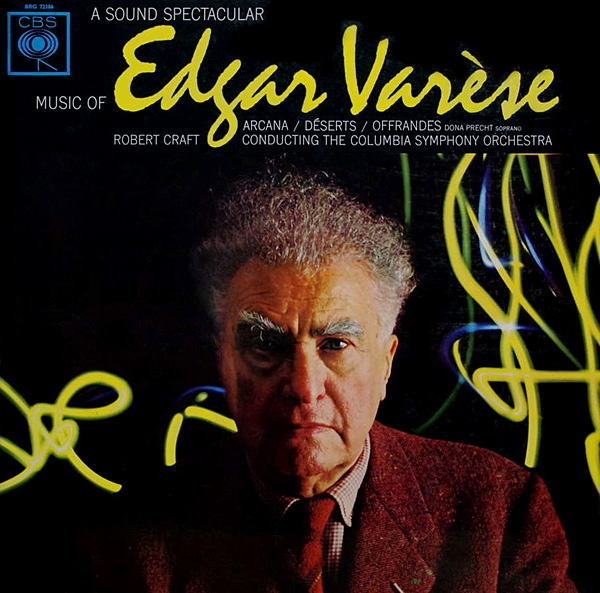
Music of Edgar Varèse, Vol.2

Arcana, Déserts, Offrandes, Chanson De Là-Haut (Song From High)

Dona Precht, soprano, Columbia Symphony Orchestra, Robert Craft, conductor.

Columbia Masterworks MS-6362 (LP). John McClure, Thomas Frost, prods. TT: 24:45.


In electronic music, the sounds of musical instruments, natural noise-makers and electronic signal generators are recorded on tape, modified by running them at higher- or lower-than-normal speeds and manipulating their tonal content, and then combined in rhythmic and tonal patterns to create entirely new forms of music.

Koss PRO-4, PRO-4A and Pro/4 AAA Plus headphones

Almost a dead-ringer for the early-model Sharpe HA-10, Koss's PRO-4 ($45) is readily distinguishable by a large knurled protuberance sticking out of the lower part of the right-hand phone. This, in case you've wondered, is a mounting for a "boom-type" lip microphone, for use in speech labs and for communication purposes. (Sharpe and Permoflux also provide facilities for attaching a lip-mike.)

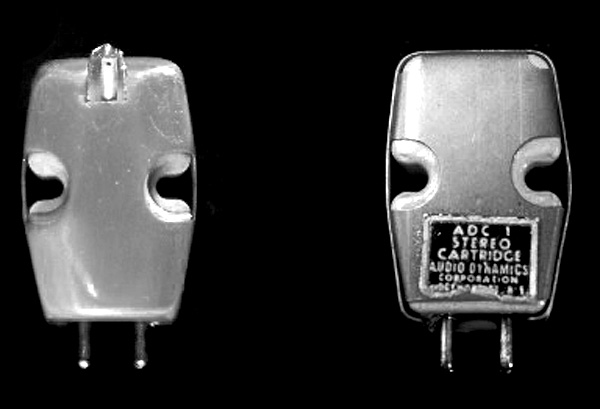
Audio Dynamics ADC-1 phono cartridge

We tested two samples of the ADC-1 phono cartridge, both of which were taken from a dealer's stock. One was a demonstrator that had been in use for some months. The other was brand new, right off the shelf. Both were tested in an Empire 98 tonearm and in a Gray 108-C tonearm with its damping lightly adjusted, but results with both cartridges were for all intents and purposes identical in both arms.

Down with Dynagroove!

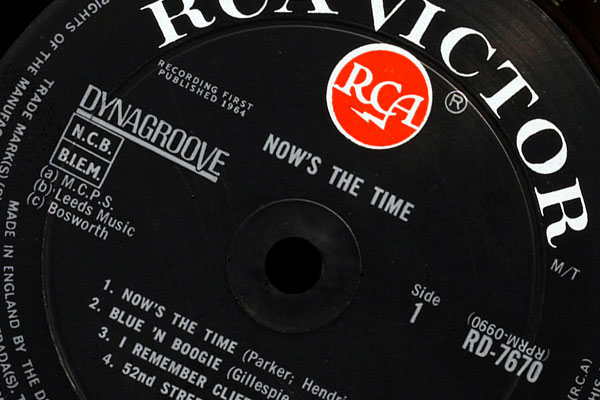
Editor's Introduction: In 1963, Stereophile's founder J. Gordon Holt published attacks on what he saw as the single largest step backward in high-fidelity sound reproduction at that time: RCA's introduction of "Dynagroove" LP records, where the recorded signal was pre-distorted and dynamically equalized to compensate for the poor performance of cheap phonograph players. "Issue 5...revealed most of RCA Victor's 'revolutionary' new system as nothing more than a sophisticated way of bringing higher fi to record buyers who don't care enough about hi-fi to invest in a decent playback system." Ten years later, Gordon wrote that, "As of 1974, the best we can say for Dynagroove is that there is no audible evidence of it on current RCA releases." (These articles were reprinted in June 1992, Vol.15 No,6, as part of Stereophile's 30th-anniversary celebrations.)John Atkinson
Advertisement
Advertisement
Advertisement