J. Gordon Holt

Sort By: Post DateTitle Publish Date

Recordings of April 1988: The First Colossus Recordings

Beethoven: Sonata No.32, Op.111; Sonata No.21, Op.53 ("Waldstein")

Tibor Szasz, piano

Bainbridge BCD-6275 (CD). Leo de Gar Kulka, eng. & prod. DDD. TT: 58:03


Mozart: Piano Concerto No.13, K.415; Overture to Lucio Silla, K.135

Jeremy Menuhin, piano; George Cleve, 1987 Midsummer Mozart Festival Orchestra

Bainbridge BCD-6273 (CD). Leo de Gar Kulka, eng. & prod. DDD. TT: 36:58


Prokofiev: Alexander Nevsky, Lieutenant Kije

Andre Previn, Los Angeles Philharmonic

Telarc CD-80143 (CD). Jack Renner, eng.; Robert Woods, prod. DDD. TT: 63:37


Rachmaninov: Sonata for Cello and Piano, Op.19

Steven Kates, Montagnana cello; Carolyn Pope Kobler, Bösendorfer piano

Bainbridge BCD-6272 (CD). Leo de Gar Kulka, eng. & prod. DDD. TT: 40:42


The Sounds of Trains, Vols.1 & 2*

Bainbridge BCD-6270, -6271* (CDs). Brad Miller, eng. & prod. DDD. TTs: 60:45, 50:14*


If you read my article in these pages about recording the Cumbres and Toltec Scenic Railway steam trains (January 1987, Vol.10 No.1), you may recall the mention of Colossus. Colossus is the name of a new digital recording system which designer Lou Dorren claims to be different from every other digital system in several ways, none of which has ever been disclosed to us. I had a chance to listen to some tapes made on it shortly after writing the C&TSRR article, but since they were made with a completely unfamiliar microphone (Mobile Fidelity Productions of Nevada's own design) and featured mainly the sounds of trains, airplanes, and other sources of potential ear damage, I couldn't really tell anything about the recording system, except that it had the kind of low end I expect from any respectable digital audio. A sonic evaluation had to wait until I heard Colossus on more familiar terms—that is, with music recordings. Now, that time has come.

Nelson-Reed 1204 subwoofer

I was so impressed by the Nelson-Reed 8-04/B loudspeaker's low-end range that I seriously doubted the add-on subwoofers could add enough of significance to be cost-effective.


I was wrong.


Two of the subwoofers were provided, along with the necessary electronic crossover unit. Each 1204 unit contains four 12" woofers in a very solid sealed enclosure, with two facing to the front and two facing the rear. The electronic crossover has three controls, besides the AC power switch: a hardwire (footnote 1) bypass switch, a stereo/mono switch, and a subwoofer level control. In the stereo mode, the low frequencies are kept separate, left from right; in mono mode, they are blended together for feeding to a single subwoofer. I will not resurrect the question of whether or not it is important to maintain stereo separation into the LF range, except to echo N-R's observation that there is no LF separation on analog discs to begin with; the lows are mixed together, to limit vertical excursions of the cutting stylus that could cause it to rise above the disc surface or, worse, dig into the aluminum base of the master disc.

Grabbing the Crystal by the Ball

Every once in a while, and particularly around the first of the year, news writers (of which I am one) get the urge to play oracle, laying our credibilities on the line by attempting to divine what the coming year will bring. Since I am writing this at the end of January, the chances of my miscalling my shots have already been reduced by a factor of 0.083. But there are still 11 months to go, and some possibility that a prediction or two may be wrong. Nonetheless, I shall intrepidly grab the bull by the horns, the crystal by the ball, and the opportunity of the moment to take an educated guess at what the rest of 1988 holds for audio.


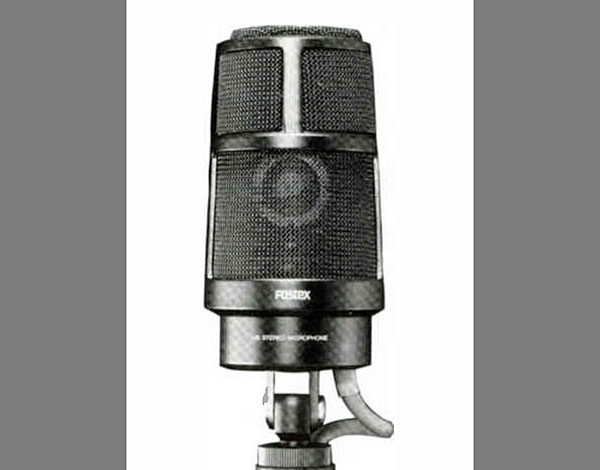
Fostex M22RP/S M-S microphone

Coincident stereo miking (footnote 1) has two advantages and one disadvantage. Its advantages are that it gives the most stable, specific imaging of any mike technique, and its outputs can be summed for mono reproduction without loss of quality. Its disadvantage is that, in most of its configurations, it tends to produce an overly narrow, shallow soundstage.

Copycode & the Future of DAT

Now that Sony has bought CBS's records division, and the infamous Copycode bill seems to be dying in Congress, the way may be clearing at last for the US introduction of the new Digital Audio Tape system. This has sparked renewed speculation in the industry about the impact DAT will have on existing formats, particularly the fledgling CD. Some are convinced DAT will kill CD, because of its ability to record as well as play digital recordings. Others believe DAT won't even gain a foothold in the market, for the same reason quadraphonic sound laid an egg back in the '70s: The public can't handle more than one "standard" format. I feel that both views are wrong, and that—as is usually the case with extreme views—the truth lies in between. I believe DAT will catch on in the marketplace, but never in a big way, and certainly not the way CD has. Here's why.


Tandberg 3015A CD player

Tandberg of Norway has a rather ambiguous corporate image among audio perfectionists. Long considered to make some of the best tape-recording equipment around, the firm has never been seen as a leader in electronics, despite some bold—and reportedly good-sounding—forays into the realm of $2000 preamps and $3500 power amplifiers. Perhaps this is why, when Tandberg started making CD players, high-enders were uncertain how to respond.

Is Music in Danger?

When I attended the Audio Engineering Society convention in October 1987 (my first time in over eight years; full report in this issue), I was impressed by the incredible technology now available to composers of music. I was also dismayed, however, by the extent to which so-called purist audio, as well as "acoustical" music, have been consigned to oblivion by the pro audio community. It was clear, both from the exhibits and the many conversations on which I eavesdropped, that audio professionals are no longer concerned about fidelity, in the sense of trying to reproduce sounds accurately. A "real" sound has become to them merely raw material of no value except as something to be processed, manipulated, folded, bent, and spindled to produce any sonic effect except the original one. About a third of the products displayed at the 83rd AES convention were tools for doing that.


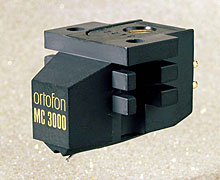
Ortofon MC-3000 MC phono cartridge

The Ortofon">http://www.stereophile.com/phonocartridges/ortofon_mc-2000_mc_phono_car… MC-2000 may just have been the most impractical cartridge to be unleashed upon the audio community for some years. With a high compliance (20cu) that made it ill-suited for most tonearms, it also had a preposterously low signal output of 50 microvolts, which gave new meaning to the terms hum and noise. Few MC preamps had enough gain to deliver adequate driving voltage to a system, and none of those that did had low enough noise to be usable with the 2000. If the problem wasn't hum, it was hiss; if hiss was acceptably low, there would be too much hum. At least Ortofon had the sense to be aware of the problem and to do something about it, in the form of their T-2000 step-up transformer, which is the only device I ever found that would allow the cartridge to be operated without a constant background of hum or hiss. Despite all this, I have used the MC-2000 as my reference cartridge for the last two years. Why? Because of all the cartridges I've tried, it is by far the most accurate.


Versa Dynamics 2.0 LP player

There is something vaguely disturbing about the idea of an $8000 turntable and arm combination. That's more money than a lot of audiophiles have invested in records through the years. Total overkill! Or so it might seem. But the entire history of analog disc reproduction, from the first LP to the present, has been one of seemingly open-ended discoveries—of subtleties nobody ever imagined were frozen in those tiny grooves, of levels of quality no one ever guessed the medium was capable of. Yes, newer LPs are a lot better than the first ones, but that is only to be expected in any technologically advancing field. What is amazing about the LP is that, 40 years after its introduction, we are still finding out that all of them, from the first to the latest, are better than anyone could have imagined. An improved phono unit doesn't just make the latest release from Wilson Audio or Reference Recordings sound better, it does the same for every LP you own!


Advertisement
Advertisement
Advertisement