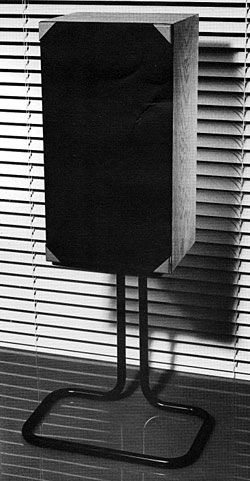
The Gale loudspeaker dates back to the early 1970s. As I understand it, the basic design resulted from a collaboration of Ira Gale and Sao Win, who were college classmates at the time. Their speaker proved very popular in England and was subsequently imported to the USA during the mid-1970s by Audio Technica. Recently, Techport (the folks who import the Perreaux line) has taken over US distribution.
While the Gales have undergone same changes through the years, their distinctive appearance and, according to some, their equally distinctive sonic "flavor," have continued to earn the respect of critical listeners all over the world. Nonetheless, these speakers have also sustained their fair share of criticism; not everybody likes them. This sort of continuing disagreement usually means that what is at issue is a "different" kind of sounda product that sounds quite unlike others, yet somehow offers a high enough degree of musical satisfaction to appeal to a lot of serious audiophiles. Of such products are cults made.



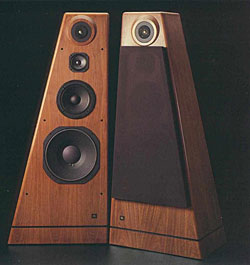 Once upon a time, in audio's infancy, anyone who wanted better than average soundaverage sound during the 1940s being rich, boomy and dullhad no choice but to buy professional loudspeakers. In those days, "professional" meant one of two things: movie-theater speakers or recording-studio speakers. Both were designed, first and foremost, to produce high sound levels, and used horn loading to increase their efficiency and project the sound forwards. They sounded shockingly raw and harsh in the confines of the typical living room.
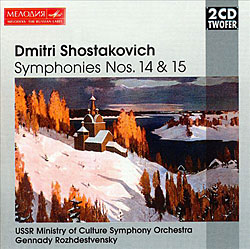 Shostakovich: Symphony 15
 Mozart: Eine Kleine Nachtmusik, Posthorn Serenade