Budget Component Reviews

Sort By: Post DateTitle Publish Date

The Entry Level #33

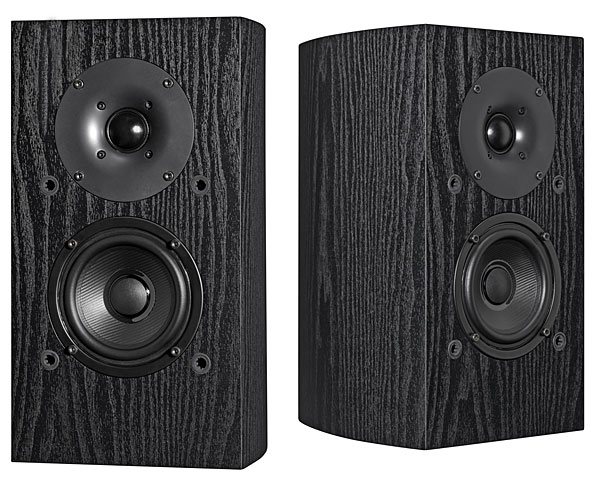
Two of the five loudspeakers reviewed in our July issue were designed by Andrew Jones: the $29,800/pair TAD Evolution One and the $129.99/pair Pioneer SP-BS22-LR (footnote 1). I did the math. You can buy 229 pairs of the Pioneer for the price of a single pair of the TAD. Which is the better deal? Which would result in more happiness? Imagine keeping one pair of the Pioneers, and delivering the other 228 pairs to friends and family. Or donating them to schools. The possibilities are great. How much fun can you have with just a single pair of speakers, anyway?

Audience ClairAudient The One loudspeaker

As the years pass and I turn into a crotchety old man, I'm reminded of those old TV ads for the Honda Accord: "Simplify." Even though I now have more things going on than at any other point in my life, I try to eliminate complications everywhere I can. I now can't believe that, for over 15 years, I used the Infinity RS-1B as my reference loudspeaker. Sure, I loved it—the RS-1B was the first speaker I'd owned that produced a wide, deep soundstage, the full dynamic range of an orchestra, and bass extension down to 25Hz. But it was ridiculously complex: a five-way design with three different driver types and a servomechanism for the woofers. It also required biamplification—I got the best sound with a combination of high-powered tube amp and high-current, solid-state amp.

Meridian Explorer USB D/A processor/headphone amplifier

Those of us who groan at the appearance of every new five-figure digital source component in a massively oversized chassis—and who groan in greater torment when the offending manufacturer says his customer base insists on products that are styled and built and priced that way—can take heart: The appearance of such sanely sized and affordable products as the Halide Design DAC HD ($495) and the AudioQuest DragonFly ($249) would suggest that the market has a mind of its own.

Schiit Audio Bifrost D/A processor

Late last year came an epic audiophile moment: I slapped a final length of tape on the box of the awesome-sounding MSB Diamond DAC (Stereophile, October 2012), in final preparation for its trek to John Atkinson's testing lab, in Brooklyn. Next up was the Bifrost DAC from Schiit Audio. I popped it into my system, where, moments before, the MSB had held court.


From $43,325 to $449. Yowseh!!—the MSB costs almost 100 times as much as the Schiit! Was this even fair?

Creek Evolution 50A integrated amplifier

It seems I'm always reviewing an integrated amplifier from Creek Audio. It started in the late 1980s, when I fell in love with the capabilities of inexpensive, well-designed audio equipment, sparked by the spectacular sound of a pair of Celestion 5 bookshelf speakers at a Consumer Electronics Show in Chicago. I was reading an issue of Hi Fi Heretic (now defunct), for which my friend Art Dudley wrote, and it included a survey of various inexpensive British integrated amplifiers, some of them made by Creek. I was already familiar with the company, but hadn't listened to affordable British electronics since I'd lived in London, in the early '80s. I got a Creek 4140s2 integrated and was amazed at its neutrality, its lack of etched sound, its natural reproduction of instrumental timbres. I ended up buying it, and used it to review bookshelf loudspeakers.

Astell&Kern AK100 portable media player

Apple's iPod came of age in the fall of 2003, when, with the release of iTunes 4.5, the player was no longer restricted to lossy compressed MP3 or AAC files. Instead, it could play uncompressed or losslessly compressed files with true "CD quality"; users no longer had to compromise sound quality to benefit from the iPod's convenience.


Enter Astell&Kern. At the beginning of 2013, this brand from iRiver, a Korean portable media company, introduced its AK100, a portable player costing a dollar short of $700 and capable of handling 24-bit files with sample rates of up to 192kHz.

Pioneer SP-BS22-LR loudspeaker

I often receive letters from Stereophile readers. I've even gotten a few letters from female readers, one an attractive young lover of tube gear who sent me a picture of herself and [sigh] her boyfriend. But most are from people who are either thanking me for a specific review that resulted in a purchase and a satisfied buyer, or are suggesting products they'd like me to review. I frequently take the advice of writers of this second category; in fact, two of the inexpensive speakers I'll review in the next year were recommended by readers.

HRT Music Streamer HD USB D/A processor

No history of the computer-audio marketplace could be complete without some mention of High Resolution Technologies, the California company whose Music Streamer was, in 2009, the first perfectionist-quality USB digital-to-analog converter to sell for as little as $99. One could argue that HRT's entire business model has contributed to shaping our attitudes toward the hobby: Because digital-audio technology continues to evolve at such a rapid pace, HRT has introduced a succession of newer and ever more effective Music Streamers, occasionally to the obsolescence of their predecessors; yet because those products have all been so affordable—remarkably and laudably so, given their thoroughly American provenance—we tend not to mind.

Peachtree Audio decco65 D/A integrated amplifier

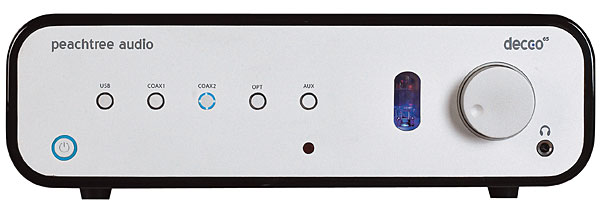
Whether one was surprised, in 2010, by the success of Peachtree Audio's iDecco may have more to do with age than anything else. My peers and I wondered, at first, who would want their high-end integrated amps to come bundled not only with digital-to-analog converters but with iPod docks, of all things; at the same time, younger hobbyists wondered who in the world still wanted their integrated amps to contain phono preamplifiers. (Respect for the elderly, myself especially, prevents me from adding "and mono switches.") Color me chastened.
Advertisement
Advertisement
Advertisement