Audacious Audio

Sort By: Post DateTitle Publish Date

Audionet Max monoblock power amplifier
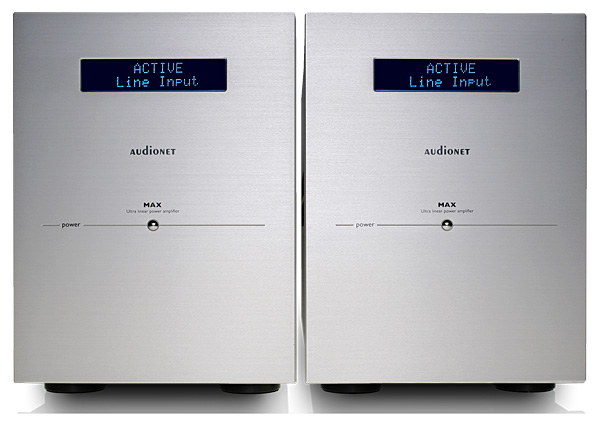
Three years ago, when I first heard Audionet's Max monoblock power amplifiers, I described their pairing with YG Acoustics Hailey loudspeakers "an absolute winner" and "definitely one of the finer systems at T.H.E. Show Newport Beach." At subsequent audio shows, no fewer than four other Stereophile Contributing Editors enthused about different pairings of YG loudspeakers with Audionet amplification. Herb Reichert, at the 2014 Rocky Mountain Audio Fest: "Everything had a kind of just right quality. Totally impressive!" Sasha Matson, at RMAF 2015: "Marvelous" on vocals, "rockin' and tight" on bass and drums. John Atkinson, at T.H.E. Show 2016: "Duke Ellington's classic Jazz Party in Stereo . . . was reproduced with terrific dynamics." Larry Greenhill at the 2017 Consumer Electronics Show on the sound in the YG Acoustics room, which included Audionet's Max monoblocks: "the sound on playback of Jake Shimabukuro's ukulele wizardry came closer to matching his live performance than in most rooms."

Zesto Audio Andros Téssera phono preamplifier

Maybe you've seen the widely circulated New Yorker cartoon: Two guys stand in front of a nicely drawn, tubed audio system, under which are shelves full of LPs. One guy says, "The two things that really drew me to vinyl were the expense and the inconvenience."


If you can't laugh at that, you've lost your sense of humor—even acknowledging that, oddly, convenience is the raison d'etre of some recent phono preamplifiers—including Dan D'Agostino Audio's Momentum and the CH Precision P1, both of which offer multiple, switchable, configurable inputs saved in memory. Today's well-heeled vinyl enthusiast might have two or more tonearms mounted on a single turntable—or even two turntables, each with two arms. Zesto Audio's new Andros Téssera tubed phono preamplifier takes aim at that market segment.

Wilson Audio Specialties Alexx loudspeaker

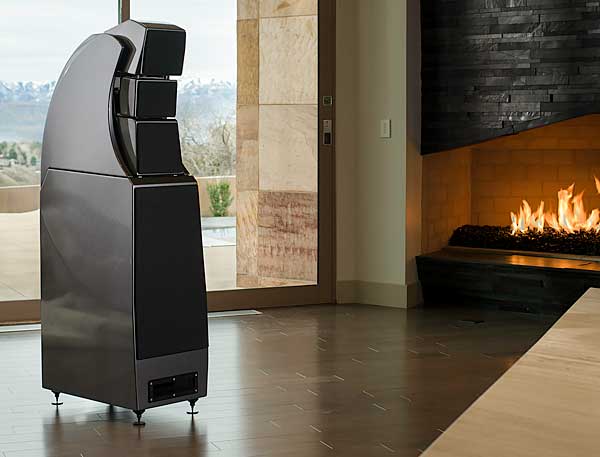
Having discontinued the MAXX3 loudspeaker ($68,000/pair in 2009, when I reviewed it), Wilson Audio needed to plug the resulting gaping hole between the Alexia ($48,500/pair) and the Alexandria XLF ($210,000/pair). Company founder Dave Wilson was busy with the limited-edition WAMM Master Chronosonic loudspeaker ($685,000/pair), so son Darryl Wilson set about creating a speaker with a retail price of about $100,000/pair. The result, the Alexx, finally came in at $109,000/pair.

Mark Levinson No.526 preamplifier

The Mark Levinson No.526 is the first preamplifier designed by a new 12-person team led by Todd Eichenbaum, director of engineering at the Harman Luxury Audio Group's Engineering Center of Excellence (ECOE), in Shelton, Connecticut. Designed to fit the price niche between the company's least and most expensive preamps—the No.326S ($10,000) and No.52 ($30,000)—the No.526 costs $20,000.

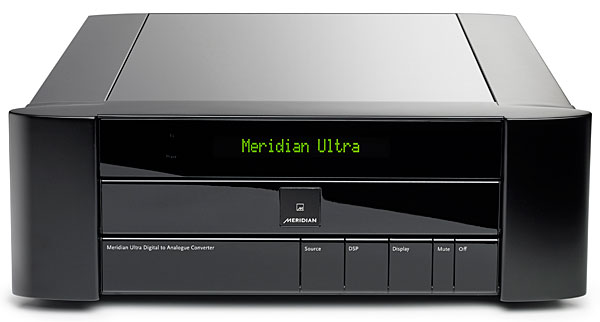
Meridian Audio Ultra DAC D/A processor

As I mentioned in my review eight years ago of Meridian Audio's 808.2 Signature Reference CD player, I have long been impressed by the British company's components—in fact, ever since the early 1980s, when I purchased a Meridian 101 preamplifier, followed by my very positive experiences with Meridian's MCD Pro and 208 CD players, 518 digital audio processor, D600 and DSP8000 digital active loudspeakers, and, most recently, the Prime and Explorer D/A headphone amplifiers.

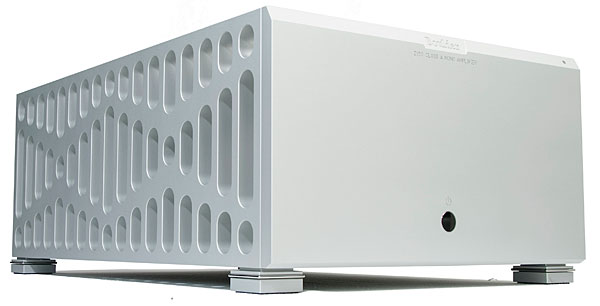
Boulder Amplifiers 2150 monoblock power amplifier

"I'm a recording engineer, so I value accuracy," said a panelist in a discussion—titled "How to Read Between the Lines of Audio Advertising"—at last October's Rocky Mountain Audio Fest. I, too, was on the panel, which was moderated by Brent Butterworth, a writer for the SoundStage! Network of online audio magazines.


"Accuracy is overrated," I interjected from the other end of the dais. "Accurate to what? To your sonic tastes? To what you hear on your preferred loudspeakers? Other than one's personal preferences, I'm not sure the term accuracy has much meaning."

Magico S5 Mk.II loudspeaker

"Dammit!" No sooner had I praised small loudspeakers while dismissing large speakers as potentially having "large problems," in my review of the Crystal Arabesque Minissimo Diamond in the October issue, than I had to eat my words. Only days after that issue had gone to press, Magico's VP for Global Sales & Marketing, Peter Mackay, and CTO Yair Tammam, arrived at my place to set up a pair of the Bay Area company's floorstanding—and very large—S5 Mk.II loudspeakers.

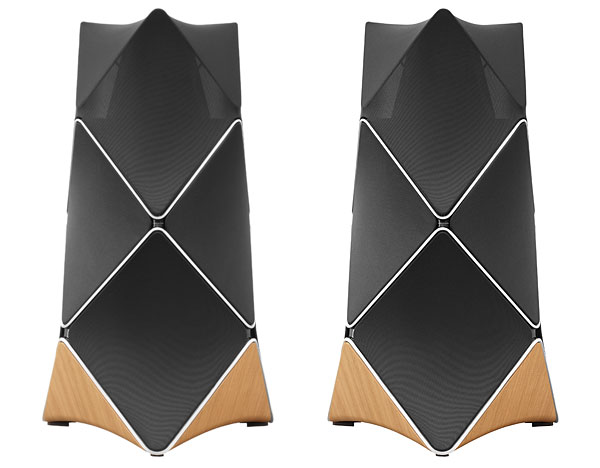
Bang & Olufsen BeoLab 90 loudspeaker

Bang & Olufsen's BeoLab 90 is not a loudspeaker to take on lightly. Though its size—49.33" high by 28.9" wide by 29.4" deep—and weight (302 lbs each) meant a major disruption of my listening room, which is also our living room, my wife assented. Its price of $84,990/pair puts it far beyond anything I might consider buying—and the complexity of the BeoLab 90, which has its own dedicated amplifiers and DACs, makes it impossible for a reviewer—or consumer—to directly compare it with any other loudspeaker. So be it.

dCS Rossini Player & Rossini Clock

It has been 20 years since I first became aware of the British company Data Conversion Systems, which manufactures audio products under the dCS brand. Rather than use off-the-shelf conversion chips, the groundbreaking dCS Elgar D/A converter, which I reviewed in our July 1997 issue, featured a then-unique D/A design that they called a Ring DAC. This featured a five-bit, unitary-weighted, discrete DAC running at 64 times the incoming data's sample rate—2.822MHz for 44.1kHz-based data, 3.07MHz for 48kHz-sampled data and its multiples—with upsampling and digital filtering and processing implemented in Field Programmable Gate Arrays (FPGAs). Oversampling to a very high sample rate allows the word length to be reduced without losing resolution, and use of a low-bit multi-bit DAC makes for very high accuracy in the analog voltage levels that describe the signal. (If this seems like voodoo, for a given signal bandwidth, bit depth and sample rate are related. To oversimplify, double the rate, and you can reduce the bit depth by one bit while preserving the overall resolution.)

Shure KSE1500 electrostatic in-ear headphone system

I wrote several issues back that my first high-end headphones were Koss Pro4AAs, which I bought in 1972 following a positive review in the British magazine Hi-Fi News. Although that review didn't mention that the Pro4AAs were relatively fragile (footnote 1), I nonetheless loved their sound. They were the best headphones I'd heard—until, a couple years later, I was playing bass on some sessions for record producer Tony Cox. Tony had a pair of signal-energized electrostatic headphones, Koss ESP-6es, which were heavy and clunky—but they opened my ears to the sound quality that could be obtained from "cans." I didn't hear better until after I'd moved to Santa Fe, in 1986, and J. Gordon Holt loaned me his review samples of the Stax SR-Lambda Pros.
Advertisement
Advertisement
Advertisement