Audacious Audio

Sort By: Post DateTitle Publish Date

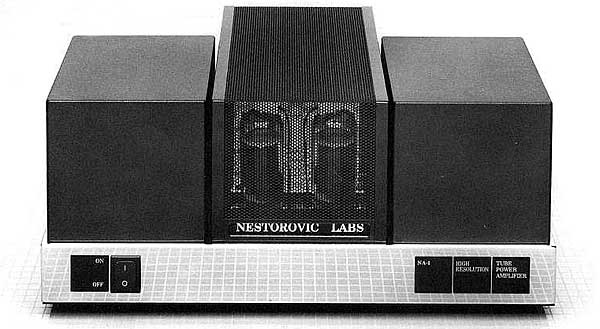
Nestorovic Alpha-1 power amplifier

The great debate that has long separated audiophiles is tubes vs solid-state. Other topics, CD for example, may temporarily steal the spotlight, but year-in and year-out no other subject is the cause of as much controversy as whether tubed or solid-state circuitry produces the more accurate sound. As is typical with long-standing feuds, the split runs deep, and tempers often flare.

Mark Levinson ML-7A preamplifier

Before launching into Stereophile's first-ever report on a Mark Levinson product, an important point needs to be clarified. Although Mark Levinson products were originally made by Mark Levinson, they are no longer. Au contraire, Mark Levinson products are now being made by Madrigal, Ltd., which bought Mark Levinson Audio Systems' assets and trademark two years ago. Mark Levinson's products, as distinguished from Mark Levinson products, are now being manufactured by a company called Cello. But the subject of this report, the Mark Levinson ML-7A preamplifier, is a product of Madrigal, Ltd., not of Cello. Now that I've made that all perfectly clear, we may proceed.


Counterpoint SA-4 monoblock power amplifier

Some audio products deliver truly superb sound of a kind that really makes all the frustrations of building a high-end system worthwhile; they also require exceptional attention and care. The Counterpoint SA-4 is a case in point. With the right speakers, it competes for the title of "Most Transparent Amplifier Available at Any Price." On the other hand, this amplifier steadily loses output power as speaker impedance drops; it must be carefully matched to the right speaker. Then, and only then, can it produce one of the finest musical experiences available.

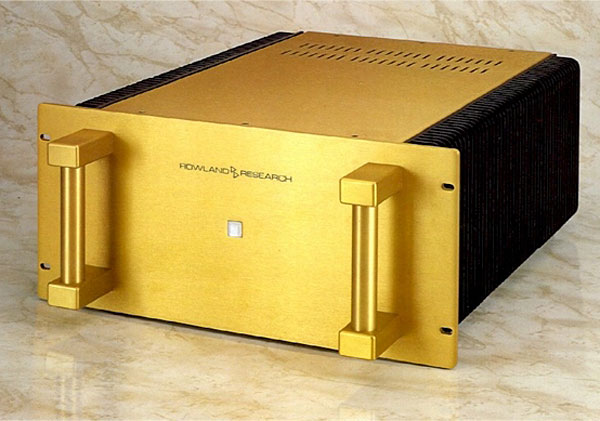
Jeff Rowland Design Group Model 7/II power amplifier

Very few products exude opulence as do the Rowland amplifiers: the massive chassis, the gold finish, those sculpted handles on the front plate. For some strange reason the amp reminds me of Brutus Beefcake, the golden boy of professional wrestling, upon whom I stumbled one night while flipping through the myriad channels of our cable TV. The visual impact is the same: beefy. And then there's the price: also beefy.

Kyocera DA-910 CD player

Those of our readers who are still anti-CD are going to be offended by what I am about to say. Partly because they do not want it to be true, but mainly because it is. I shall utter the heresy anyway: the Compact Disc is, right now, doing more for the cause of high-end audio than anything that has ever come along before!


There, I've said it. Now I shall explain it.

Ortofon MC-2000 MC phono cartridge

Although the idea of a $1000 moving-coil cartridge no longer shocks audiophiles, it is still not exactly what I'd call "Mainstream Hi-Fi." Audio magazine's 1984 Equipment Directory—the most complete such compendium published in the US—lists only 10 models in this price range, not counting the Kiseki Lapis Lazuli at a whopping three-and-a-half grand! I have not tested most of these, nor have I tried any of the current models from the Japanese Koetsu firm, which was first with the gall to put a $1000 price tag on a cartridge. But I have tested a couple of one-granders during the past few years, and was sufficiently unimpressed to be hesitant about testing any more samples of what were beginning to look like nothing more than monumental ripoffs. So when Ortofon sent us the MC-2000, I was naturally less than enthusiastic about trying it.


Audio Research SP-10 preamplifier

It says something for the state of technology that, after a quarter of a century, there still is no authoritative explanation for why so many high-end audiophiles prefer tubes. Tubes not only refuse to die, they seem to be Coming back. The number of US and British firms making high-end tube equipment is growing steadily, and an increasing number of comparatively low-priced units are becoming available. There is a large market in renovated or used tube equipment—I must confess to owning a converted McIntosh MR-71 tuner—and there are even some indications that tube manufacturers are improving their reliability, although getting good tubes remains a problem.


Mark Levinson HQD loudspeaker system

We wrote a long, rather unkind report on the HQD, pointing out that, if that was typical of the way it was supposed to sound (And why not, after Mr. Levinson had installed and tweaked it?), then it had to be the most expensive bomb ever to be made available for civilian use. Mr. Levinson responded with a phone call during which he:


1) Told us we had not heard it at its best, but refused to address himself to our specific criticisms;


2) Claimed that many practicing professional musicians felt the HQD to be "extremely realistic";


3) Informed us that, since he sold very few HQD systems and would soon be discontinuing them anyway because Quad had ceased making those speakers, the "sensible" thing to do would be to kill the report; and


4) Mentioned, just in passing of course, that he was currently writing a feature article for Time on the subject of "underground" audio magazines.

Wilson Audio Modular Monitor (WAMM) loudpeaker system

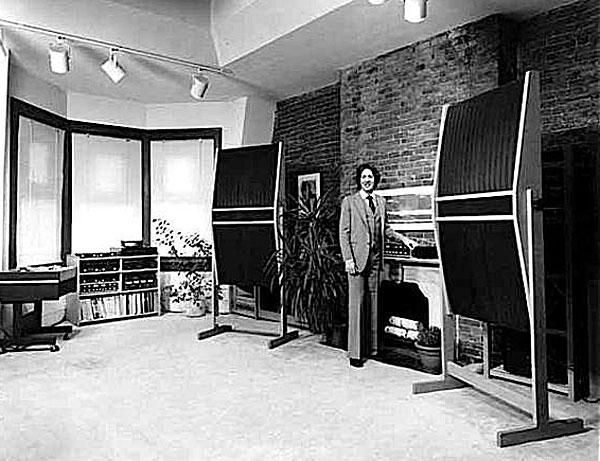
No, we made no typos in the specifications sidebar. The weight of the Wilson Audio Modular Monitor (WAMM) speaker system is enough to make you consult a structural engineer before dropping it on your living room floor—fragile, 300-year old New England frame houses are probably out. And the recent price increase from $32,000 to $35,000 is enough by itself to buy a pair of Quad ESL-63s—which is not a bad speaker system. The WAMM represents an all-out assault on both the state of the art in speaker systems and on the limits to which wealthy audiophiles will go in order to have the best.

Hill Plasmatronics Type 1 loudspeaker

Dr. Alan Hill, president of Plasmatronics Inc., was previously employed by the US Government in laser research. His assignment: To increase the efficiency of lasers so that they could do something more impressive than produce holograms, mend leaky retinal blood vessels, and punch pinholes in steel blocks. Dr. Hill earned his keep, thus advancing laser technology a giant step closer to Star Wars, and then retired from government service to design. . . a loudspeaker?!!!?
Advertisement
Advertisement
Advertisement