Miscellaneous

Sort By: Post DateTitle Publish Date

Spin Doctor #25: The Garrard 301 in a New Light

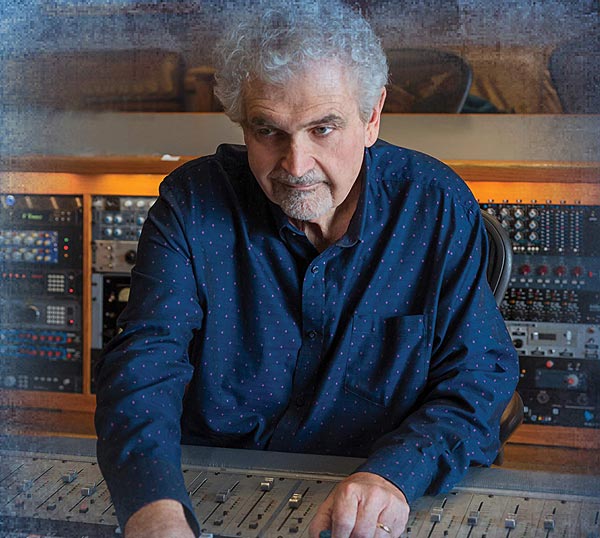
They say that with age comes wisdom, and judging by some of my younger self's misguided choices, that adage could be true, at least for me. In 1984, after graduating from college with a degree in audio production, I moved back to England, where I had spent most of my teen years as a boarding school inmate. I had friends and connections there, and despite being a US citizen, I had some kind of sketchy work authorization that allowed me to work legally in the UK for up to six months. I connected with my old school friend Morris Gould, and we found a flat in South London to share as I looked for work.


Morris had been the de facto leader of my high school punk band, The Ripchords. Six years later, he was getting started with a career as ambient chill-out deejay Mixmaster Morris, releasing records as The Irresistible Force. Our apartment became a kind of hub in the South London music scene, with musicians and industry people circling through. Eventually, I found a job working at Music and Video Exchange, the gear-focused branch of the popular Record and Tape Exchange chain of secondhand record shops. At M&VE, the staff had first dibs on any cool gear that came in, and I remember being intensely envious when colleague Andy snagged a rare EMS VCS 3 synthesizer for almost nothing.

Brilliant Corners #26: Racks, Cleaners, Cables, Resonators

Some years ago, I visited the home of a well-known American author who happened to be an audiophile. His cramped, dimly lit listening room contained a tube amp, a DAC, and a pair of inexpensive floorstanding speakers surrounded by what looked like a museum of audio tweaks. I recall a scarecrow-like contraption with swiveling wood-and-metal arms that rearranged magnetic fields, assorted boxes and panels that promoted "quantum proton alignment," mysterious dots covering the walls like a rash, and nearly a dozen things dangling from the speakers' binding posts that were supposed to do something I can't remember. The author had an almost mystical belief in the power of these objects to bend the laws of physics and told me that he'd spent more on them than on the rest of the system, because in his opinion they were more important to the overall sound.


The thing that surprised me most is that despite the tweaks—or maybe because of them—his hi-fi sounded pretty terrific.

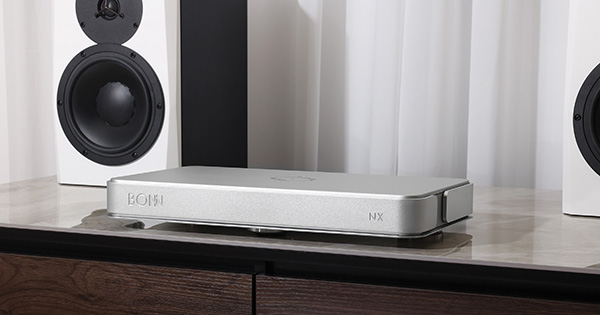
Silent Angel Bonn NX network switch

With every passing season, a new audiophile-grade network switch hits the market. These products, which can cost hundreds or thousands of dollars, do the same basic thing as network switches bought at Best Buy for $30 or so (except, in some cases, slower), but their manufacturers claim they are built to a higher standard to achieve better sound.


As with all signal-conditioning devices that operate completely in the digital realm—especially those that work at packet level (more correctly referred to as "frame-level" on the local side of the router, but that's a distinction that even few experts make)—the sonic efficacy of audiophile network switches is debated, the debate being, as usual, mainly between those who insist they hear a difference and those who insist, on theoretical grounds, that no difference is possible.

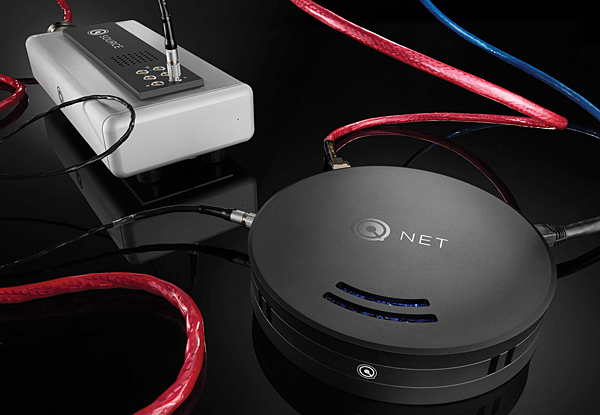
Nordost QNet network switch & QSource linear power supply

"A switch? Why do I need a switch?" That was my response to Meredith Gabor, head of marketing and PR for cable and accessories manufacturer Nordost, after she dropped the news. She had just arranged with Jim Austin for me to write a shorter, "ancillary" review of the new Nordost QNet Network Switch ($3199.99) with its optional QSource linear power supply ($2749.99) and premium QSource DC umbilical interface cables ($339.99 for 1m). Why did I need an expensive QNet switch when my router was functioning reliably? Good question.

Book Review: Chairman at the Board

Chairman at the Board: Recording the Soundtrack of a Generation, by Bill Schnee. Backbeat Books, 2021. 219pp. $24.49, hard cover; $21.49, Kindle e-book.


It was September 2012, and Sasha Matson and I were in Los Angeles to record the singers for his jazz opera, Cooperstown. We had already recorded the instrumental backing with engineer Mike Marciano at Brooklyn's Systems Two studio, and the venue for the vocal tracking sessions was Bill Schnee's studio in North Hollywood.

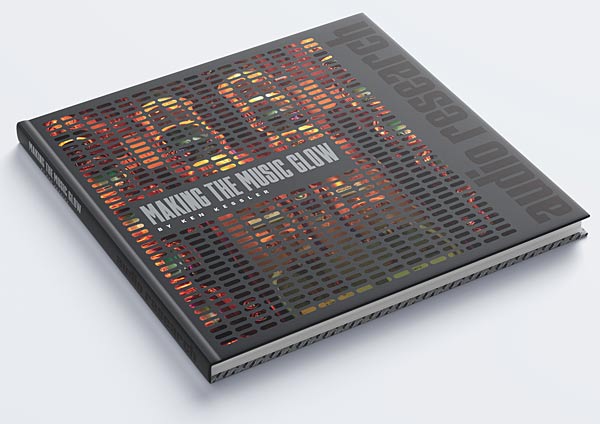
Book Review: Audio Research: Making the Music Glow

Book Review: Audio Research: Making the Music Glow

Written by Ken Kessler, designed by Henry Nolan. 220pp. $150. Available at Audio Research dealers and online at audioresearch.com.


I never met Audio Research Corporation founder William Zane Johnson, who died in 2011. But when he founded his now-legendary company in 1970, I and my ragged troupe of Dynaco modifiers were in the trenches, fighting the sand-warrior hordes during the first transistor onslaught.

FollowUp RoundUp

When Stereophile publishes followup reviews of various kinds in the print magazine, we add the followup as a "child page" to the full review. That means that they don't appear on the website's home page and might get missed. The October 2020 issue included three followups: of the Boulder 2108 phono preamplifier, the Weiss DAC502 D/A processor, and the IsoAcoustics Gaia loudspeaker isolation feet.

Andover Model-One turntable music system

Apart from the Beatles and Hendrix I heard in my audiophile father's basement, one of my earliest rock'n'roll memories involved a multipurpose record player at school. In third grade, six of us were moved as a separate group to a round table to watch a filmstrip in a darker part of a large, open-plan classroom. A clunky old record player in a self-contained carrying case with a half-dozen headphone jacks sat on the table.

Book Review: Hi-Fi: The History of High-End Audio Design

Hi-Fi: The History of High-End Audio Design, by Gideon Schwartz, Phaidon Press, 2019. 272pp. $84.97, hard cover.


The ongoing evolution of hi-fi can be measured in any number of ways. Most obviously, we see that evolution in the technologies associated with our industry: in big breakthroughs—mono to stereo, tubes to transistors, analog to digital—as well as incremental improvements in materials and manufacturing techniques.

Advertisement
Advertisement
Advertisement