It says something for the state of technology that, after a quarter of a century, there still is no authoritative explanation for why so many high-end audiophiles prefer tubes. Tubes not only refuse to die, they seem to be Coming back. The number of US and British firms making high-end tube equipment is growing steadily, and an increasing number of comparatively low-priced units are becoming available. There is a large market in renovated or used tube equipment—I must confess to owning a converted McIntosh MR-71 tuner—and there are even some indications that tube manufacturers are improving their reliability, although getting good tubes remains a problem.
 These trends have passed long beyond the cult stage. While tube amplifiers still cannot provide the high damping factors or woofer control that is possible With transistor amplifiers, no one still claims that they soften highs or somehow romanticize recorded sound (footnote 1). There is a consensus among high-end magazines that the best tube units are exceptional in the areas of transient and harmonic detail, high frequency information, and imaging and soundstage data. Further, there is a similar consensus that the days when tube units provided superb midrange at the expense of the frequency extremes are long gone.
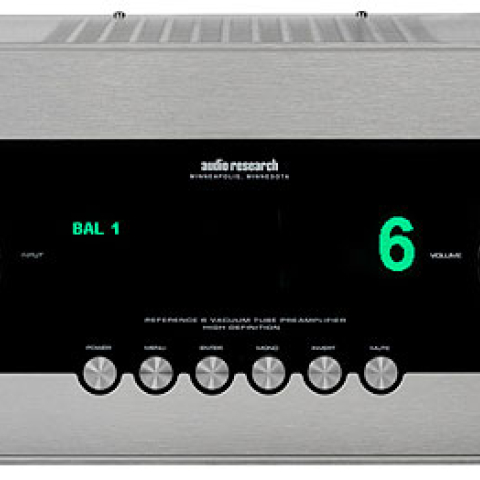
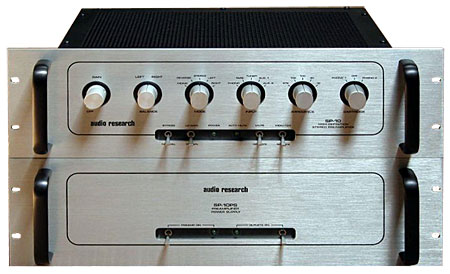
This brings me to the units under review: the Conrad-Johnson H-la head amp and Premier Three preamp combination and the Audio Research SP-10 preamp and D-160B amplifier.
Regardless of "who's on first," these two components make a fascinating contrast; they also provide an insight into each manufacturer's design philosophy. Unlike many tube units, they can be used With most moving-coil cartridges (more on this in a moment), and the preamps have sufficient output to drive most amplifiers.
It is tempting to focus on short-term differences, and to ignore the fact that you're looking for equipment that gets the best out of a broad collection of records, tapes, CDs, and FM broadcasts, and on which you can listen for hours without reminders that your equipment is introducing unpleasant or constantly detectable colorations. By comparison, transistor equipment always has a distinctly less musical sonic fingerprint than does tubed equipment—either in the form of dryness or harshness in the upper octaves or a distinct loss of detail.
The C-J and ARC sets of equipment also offer amazing realism in the midrange. This is a function of coherence and the ability to reproduce an amazing amount of detail without hardening or softening, the ability to reproduce extremely detailed low-level harmonics, and the ability to provide wide dynamic range without effort—neither appearing to slow the music nor accelerating too far.
This superior coherence shows up clearly on those piano and violin records with both mechanical and musical detail: where the music is complex and covers the entire midrange; where scores are rustled, bowing sounds are clearly heard, the players move slightly, or there are extraneous sounds in the hall. To the extent that illusions are ever real, both the Conrad-Johnson and Audio Research systems seduce you into suspended belief: you listen as if it were live.
Tube units are famous for their imaging and depth, and for providing precise natural placement of the musician or singer. Again both these sets of equipment outperform the best transistors I've heard. Centerfill is excellent and the soundstage extends to the right and left of the speakers when the music permits it. Depth is natural. Imaging height is determined by the speakers and not by the electronics. Hall effects are clearer and less exaggerated. Transistor equipment can on occasion do a few of these things better, but never so many in combination.
Although neither the C-] nor the ARC equipment veil or roll off the highs, many audiophiles would enjoy simply to hear the upper octaves without the fatigue or irritation that comes from prolonged listening to their transistor equipment. The key subjective impact of the best tube units is that the highs will reveal any problems in the miking, but will sound natural with decent miking and on those records and tapes that actually do sound natural.
Sonics
These trends have passed long beyond the cult stage. While tube amplifiers still cannot provide the high damping factors or woofer control that is possible With transistor amplifiers, no one still claims that they soften highs or somehow romanticize recorded sound (footnote 1). There is a consensus among high-end magazines that the best tube units are exceptional in the areas of transient and harmonic detail, high frequency information, and imaging and soundstage data. Further, there is a similar consensus that the days when tube units provided superb midrange at the expense of the frequency extremes are long gone.
This brings me to the units under review: the Conrad-Johnson H-la head amp and Premier Three preamp combination and the Audio Research SP-10 preamp and D-160B amplifier.
Regardless of "who's on first," these two components make a fascinating contrast; they also provide an insight into each manufacturer's design philosophy. Unlike many tube units, they can be used With most moving-coil cartridges (more on this in a moment), and the preamps have sufficient output to drive most amplifiers.
It is tempting to focus on short-term differences, and to ignore the fact that you're looking for equipment that gets the best out of a broad collection of records, tapes, CDs, and FM broadcasts, and on which you can listen for hours without reminders that your equipment is introducing unpleasant or constantly detectable colorations. By comparison, transistor equipment always has a distinctly less musical sonic fingerprint than does tubed equipment—either in the form of dryness or harshness in the upper octaves or a distinct loss of detail.
The C-J and ARC sets of equipment also offer amazing realism in the midrange. This is a function of coherence and the ability to reproduce an amazing amount of detail without hardening or softening, the ability to reproduce extremely detailed low-level harmonics, and the ability to provide wide dynamic range without effort—neither appearing to slow the music nor accelerating too far.
This superior coherence shows up clearly on those piano and violin records with both mechanical and musical detail: where the music is complex and covers the entire midrange; where scores are rustled, bowing sounds are clearly heard, the players move slightly, or there are extraneous sounds in the hall. To the extent that illusions are ever real, both the Conrad-Johnson and Audio Research systems seduce you into suspended belief: you listen as if it were live.
Tube units are famous for their imaging and depth, and for providing precise natural placement of the musician or singer. Again both these sets of equipment outperform the best transistors I've heard. Centerfill is excellent and the soundstage extends to the right and left of the speakers when the music permits it. Depth is natural. Imaging height is determined by the speakers and not by the electronics. Hall effects are clearer and less exaggerated. Transistor equipment can on occasion do a few of these things better, but never so many in combination.
Although neither the C-] nor the ARC equipment veil or roll off the highs, many audiophiles would enjoy simply to hear the upper octaves without the fatigue or irritation that comes from prolonged listening to their transistor equipment. The key subjective impact of the best tube units is that the highs will reveal any problems in the miking, but will sound natural with decent miking and on those records and tapes that actually do sound natural.
Sonics
Now for the comparison. I tested both a new SP-10 and one borrowed from a local audiophile, Steve Summerall, who had retubed it to his taste. The C-J HV-1A and Premier Three preamp had just been retubed, and I tested two variants of the head amp. I tested both the Conrad-Johnson and Audio Research combinations using top quality turntables like the Goldmund and SOTA-Sumiko arm combination, top-quality cartridges, and speakers like the modified Quad ESL-63, Thiel CS3, Spica, and Fuselier 3.3s. I have used them with compact discs and a wide range of FM tuners. I have mixed and matched cables, including the Straightwire, Petersen, Discrete Technology, Audiosource, and Monster Cable Interlink Reference. The SP-l0 or Premier-Three-plus-HV-1a (which are remarkably close in price) have just enough gain so that you can use any moving-coil cartridge with a minimum of 2mV output. "Just enough," however, means detectable hiss and noise. I have recorded such noise and superimposed it on the sound of much quieter transistor units (this is a rough-cut approach since it is impossible to do this without adding some colorations to the sound), and it is clear that it matters. Ironically, one has an expanded impression of depth or air; the unpleasant aspects are a tendency to mask the softest musical detail and harmonics, while adding a dry coloration in the spectrum where the noise is dominant. Worse, the imaging tends to alter. There is a feeling of expanded soundstage size and detail, but it is not natural and, although it is initially impressive, it eventually has the same irritating effect as exaggerated highs.
Footnote 1: For a somewhat different point of view, see "As We See It" in this issue.—J. Gordon Holt
These trends have passed long beyond the cult stage. While tube amplifiers still cannot provide the high damping factors or woofer control that is possible With transistor amplifiers, no one still claims that they soften highs or somehow romanticize recorded sound (footnote 1). There is a consensus among high-end magazines that the best tube units are exceptional in the areas of transient and harmonic detail, high frequency information, and imaging and soundstage data. Further, there is a similar consensus that the days when tube units provided superb midrange at the expense of the frequency extremes are long gone.
This brings me to the units under review: the Conrad-Johnson H-la head amp and Premier Three preamp combination and the Audio Research SP-10 preamp and D-160B amplifier.
Now for the comparison. I tested both a new SP-10 and one borrowed from a local audiophile, Steve Summerall, who had retubed it to his taste. The C-J HV-1A and Premier Three preamp had just been retubed, and I tested two variants of the head amp. I tested both the Conrad-Johnson and Audio Research combinations using top quality turntables like the Goldmund and SOTA-Sumiko arm combination, top-quality cartridges, and speakers like the modified Quad ESL-63, Thiel CS3, Spica, and Fuselier 3.3s. I have used them with compact discs and a wide range of FM tuners. I have mixed and matched cables, including the Straightwire, Petersen, Discrete Technology, Audiosource, and Monster Cable Interlink Reference. The SP-l0 or Premier-Three-plus-HV-1a (which are remarkably close in price) have just enough gain so that you can use any moving-coil cartridge with a minimum of 2mV output. "Just enough," however, means detectable hiss and noise. I have recorded such noise and superimposed it on the sound of much quieter transistor units (this is a rough-cut approach since it is impossible to do this without adding some colorations to the sound), and it is clear that it matters. Ironically, one has an expanded impression of depth or air; the unpleasant aspects are a tendency to mask the softest musical detail and harmonics, while adding a dry coloration in the spectrum where the noise is dominant. Worse, the imaging tends to alter. There is a feeling of expanded soundstage size and detail, but it is not natural and, although it is initially impressive, it eventually has the same irritating effect as exaggerated highs.
Footnote 1: For a somewhat different point of view, see "As We See It" in this issue.—J. Gordon Holt