DeVore Fidelity Gibbon X loudspeaker
Ten years later, the Gibbon Nines are still my main speakers. That's the longest I've ever kept a pair of speakers in my main system, not counting the Polk Audio 7Bs I bought in 1980, when I was 16.
In audio, snake oil means fake science or fake technologyanything that's claimed to improve the sound of a system but that looks like an obvious rip-off. For some people, expensive speaker cables and interconnects are snake oil. A few objectivists consider AC power treatments snake oil: most modern audio components, after all, can correct for AC line-voltage flaws and reject "ripple" in a power supply's output. A handful of hard-core objectivists maintain that every new digital technology since the advent of the Compact Disc is snake oil.
It's the vocabulary. In these reviews I often see words that I rarely see used elsewhere: scintillating, irresistible, delightful. One venerable reviewer for Gramophone magazine has used the word "beguiling" 100 times in some 900 reviews. When I read such words, I envision the poor music critic writhing in his (occasionally her) listening chair, approaching an involuntary state of aesthetic ecstasy. It isn't a pretty image.
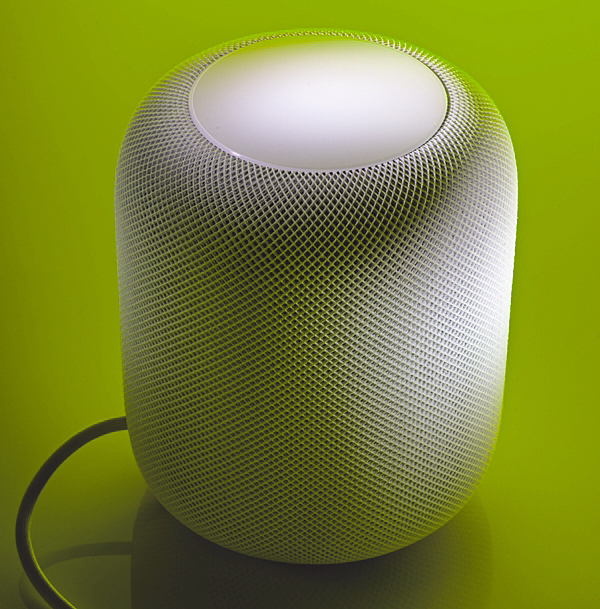
I mention this because the HomePod's "smart" featuresits integration with Siri and the Apple Music streaming serviceis a big part of its appeal. In its natural element, the HomePod provides a way of accessing music that, although as old as our century, to me is still new and unfamiliar: Forget your hoary music collection, your Rolling Stones and Beethoven. Decide what kind of music you want to heara genre or a moodthen leave the choice to Siri and her algorithmic minions.