Jason Victor Serinus, Stephen Francis Vasta

EMM Labs MTRS power amplifier

Edmund (Ed) Manfred Meitner's name and reputation have long been synonymous with pioneering achievements in the fields of digital audio, especially DSD. In 1971, after designing the first fully automated studio console, Ed identified what he calls "the jitter problem." He worked with Sony and Philips to help create and refine SACD and subsequently designed the first complete six-channel DSD playback system for home use.

In 1998, while developing the eight-channel A/D and D/A DSD converters still used to create most SACDs, Ed founded EMM Labs and became head of design, with the goal of bringing DSD to the consumer realm...

Less widely discussed are Ed's amplifier circuit designs, which are the heart of the EMM Labs MTRX and MTRS amplifiers he designed collaboratively with Mariusz Pawlicki, EMM manager of R&D, and the late Zenon "Zanny" Muzyka.

Continue Reading »

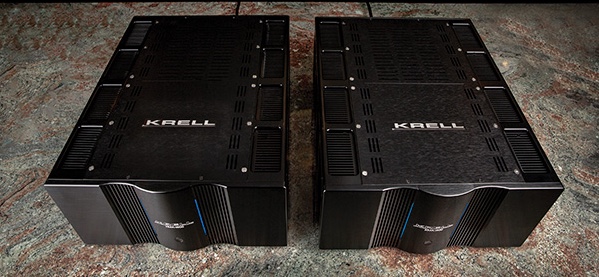
Krell KMA-i800 monoblock power amplifier

Ever since I raved about Krell's K-300i integrated amplifier after it was released in early 2019, I've wanted to review other Krell products. After spending more than a year and a half (since its prerelease announcement) awaiting the opportunity to review Krell's new flagship mono power amplifier, the KMA-i800 ($73,000/pair), the time has come. Both Krell models utilize the company's proprietary iBias technology, albeit in different iterations, and both were designed by longtime Krell engineer Dave Goodman.
Continue Reading »

Re-Tales #40: Showing Your Best

Dear audio show exhibitors: This one's for you. As members of the press who have spent decades covering audio shows, we've developed a clear sense of what works for us and—we think—for other show attendees. We ask your indulgence as we share our observations about how to mount a successful exhibit and get the best coverage possible from Stereophile and, presumably, other publications.
Continue Reading »

JMF HQS 7001 monoblock power amplifier

For some, it takes the likes of Scheherazade to seduce; for me, simple sound will suffice. But not just any sound. If I'm going to enter into a relationship with an audio component, I want it to last.

I don't know anyone who, having heard the JMF Audio system at AXPONA 2023—the HQS 6002 dual-mono power amplifier ($40,000; footnote 1) and PRS 1.5 dual-mono line stage preamplifier ($36,000) with Harbeth M40.3 XD speakers—did not rave about the sound. In my show report, I credited the system, assembled by Fidelis Distribution and Audio Skies, with delivering "some of the finestsounding music" I heard at the show. "This is the perfect sound for mellow music," I proclaimed. "Bliss."

Continue Reading »

Plinius Reference A-150 power amplifier

When Jim Austin offered the Plinius Reference A-150 stereo amplifier ($14,995) for review, it felt like a welcome blast from the past. Plinius has, lately, maintained a low profile in the US, likely due to several changes in US distributorship...Under the auspices of Ralph Abramo and California-based Plinius Audio Sales and Repair, Plinius's US profile seems to be rising again.
Continue Reading »

Audio Video 2023, aka "The Warsaw Show"

The Warsaw show's biggest site really is a stadium. (Photos by Jason Victor Serinus.)

At the risk of writing hyperbole, I will state that Audio Video 2023, held October 27–29, 2023, was unlike any other audio show I've attended. At no other audio show have I encountered so many young people, so many women, and so many brands unknown in the United States. Not even in Munich have I encountered crowds as dense as those that mobbed the show's biggest site, the National Stadium of Poland, PGE Narodowy, on Saturday. A press badge counts for nothing when you're 11" short of 6'3", attempting to see far enough into a huge room to spy a seat. Any seat.

Happily, the majority of attendees at the Warsaw Show did not come to yap away about the stock market or the speaker they built three decades ago. People came to listen, and they respected others who came to listen. Even in the largest rooms, with crowds of some 150 people, it was possible to hear music and learn from presenters' unamplified raps.

Continue Reading »
Advertisement
Advertisement
Advertisement