Alex Halberstadt

Brilliant Corners #10: Tron Electric Convergence Signature & PrimaLuna EVO 100 phono stages

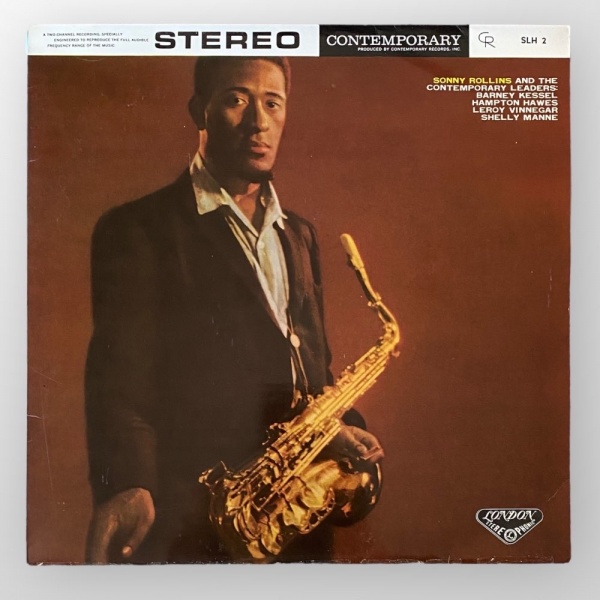
"The phonograph record is an art form itself," Lester Koenig wrote in March 1959, "and one of its advantages is the performance that exists uniquely of, by and for the record." Remarkably, when Koenig included this pronouncement in his liner notes to Sonny Rollins and the Contemporary Leaders, the 12" long-play record had been the dominant carrier of recorded music for less than a decade, and stereo discs had been mass-produced for just over a year.

For Koenig, this issue wasn't merely academic. Before making his name as head of Contemporary Records in Los Angeles, he had attended Yale Law School, worked as a screenwriter and producer at Paramount, and gotten blacklisted by the House Committee on Un-American Activities. At Contemporary, he set out to become a leading practitioner of the art of phonography.

Continue Reading »

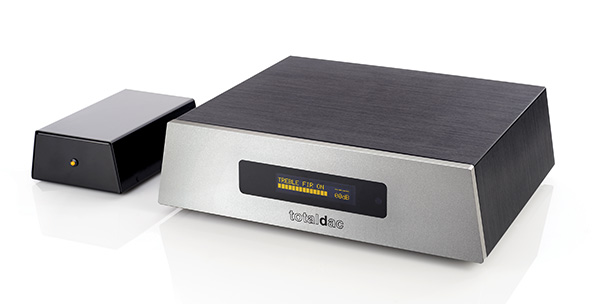
Brilliant Corners #9: a DAC and a Streamer from France's Totaldac

To misquote Morrissey, some knobs are better than others. The Manley Neo-Classic 300B amplifiers that I've been listening to, for example, have a knob marked "feedback" that goes from 0 to 10. I've learned so much from using it that I've come to believe that if your amp doesn't have such a knob, it should. You see, the higher you set this control, the better the amp will measure. Applying more global negative feedback to these amps lowers their nonlinear distortion and noisefloor, increases their bandwidth, renders them less sensitive to the speaker's impedance variations and otherwise makes them more stable and efficient. In fact, by applying lots of feedback to an amplifier, it's possible to reduce distortion to barely measurable levels.

So what's the problem? Well, a few turns of the knob suggest that negative feedback isn't as useful as it appears on paper.

Continue Reading »

Brilliant Corners #8: Can Kissa—Jazz Listening Parlors—Work in the US?

In a scene from The Silence of the Lambs—a film that for all of its camp happens to be nearly perfect—FBI cadet Clarice Starling asks caged psychopath Hannibal Lecter for help in figuring out a serial killer's motives. "Do we seek out things to covet?" Lecter responds, following Starling with his eyes as though she were his next meal. "No," he continues, "we begin by coveting what we see every day." Lecter's astute observation applies equally well to audiophilia. Much of this hobby consists of coveting: before we own a component, we usually spend a long while imagining all the ways it will improve our lives.
Continue Reading »

Brilliant Corners #7: Dual-Mono Manley Mahi Amplifiers

Writing a regular column can be a funny thing; the repetition it requires brings up questions that grow increasingly urgent. Chief among them: What are we doing here, and what is this for? For all the handwringing about story-telling and prose style, what we're up to in the equipment-review section of this magazine is writing about metal boxes filled with wire, capacitors, circuit boards, and other bits of hardware. Life is difficult and goes by in a flash, love and satisfaction are fleeting at best—so why should we care? Well, because some of these boxes manage to connect us to beauty and meaning in a way that can enhance and gradually change our lives. (And yes, both have to be in the mix: Beauty without meaning is anodyne and lacks whupass.)
Continue Reading »

Brilliant Corners #6: Munich from the Back of the Bus

Alex Halberstadt (front) listens to the BAACH-SP Adio system at High End Munich. (Photo: Jason Victor Serinus)

If you're going to Germany to immerse yourself in big-city excitement—churning dance clubs, matterful contemporary art, visitors and food from around the world, and street life that goes on all night—you'll probably find it in Berlin. Though rents have been climbing and there's no shortage of dirty sidewalks and petty crime, the German capital remains one of the most youthful and vibrant cities in Europe, an art and culture center with large expatriate communities and endless things to do. For urban thrills on a smaller scale, you can make a case for Cologne and even Leipzig.

Just maybe don't go to Munich. As soon as you leave the airport, you know you've reached the epicenter of German burgherdom—a place where manicured lawns, public safety, tidy storefronts, and respectful revelers in Tyrolean costumes are the norm.

Continue Reading »

Fezz Audio Silver Luna Prestige integrated amplifier

The last time I had to box up my roughly 2600 records, during a move, I cursed up a storm and drank almost an entire bottle of tequila. I struggled to keep the vinyl alphabetized and kept running out of boxes, markers, and tape. And I discovered that I had more LPs of music by Miles Davis and Bach than by anyone else. In third place was George Jones.

The vectors of tradition, originality, and talent came together in Jones to produce a strange and unlikely gift. His music can make you feel things as suddenly and deeply as just about anyone's, but on top of this Jones had the greatest instrument of any male vocalist in country music, almost outlandish in its range and power. Then there was his technique: He could wring four syllables out of a four-letter word, and even when performing the same hit night after night, he varied the stresses and melismatic leaps depending on his mood. Sinatra called him "the second-best singer in the world."

Continue Reading »

Brilliant Corners #5: High Water Sound; TW-Acustic Raven GT2 turntable; Dynavector Te Kaitora Rua & Miyajima Shilabe phono cartridges

"New York is an ugly city, a dirty city," John Steinbeck wrote in 1953. "But there is one thing about it—once you have lived in New York and it has become your home, no place else is good enough." Decades later, the novelist's insight about this appalling, incomparable city still feels true. New Yorkers love to complain about the summers, with their wafting miasma of hot garbage and urine; about the superannuated subway system, which only sometimes resembles a psilocybin trip gone really wrong; about the purgatorial agony of finding an apartment; about the affronts of existing shoulder-to-shoulder with the stupendously rich. . .

What I'm getting around to saying is that easily the best part of living here is the people. One of them is Jeffrey Catalano, who has been a drummer, painter, DJ, and construction worker and today runs a hi-fi business, High Water Sound, from a loft in a former sail-making factory on Water Street in Manhattan's financial district.

Continue Reading »

Brilliant Corners #4: Something Old, Something New, Something Borrowed, Something Blue

It turns out that PVC, or polyvinyl chloride—the stuff used to make Starbucks gift cards, imitation leather wallets, inflatable pool unicorns, the pipes under your sink, and Billy Idol's pants—is also the main ingredient in phonograph records. And today we're living in the silver age of PVC. Not the golden age, since records are no longer the dominant medium for recorded music, but these days we're lucky to again have access to a remarkable amount of music stamped on top-quality hot plastic.

Better still, as listeners have become more knowledgeable and demanding, vinyl releases have become more scrupulously sourced, pressed, annotated, and packaged. Many of today's records show an unprecedented level of care and transparency about their production—and sound terrific to boot.

Continue Reading »

Klipsch La Scala AL5 loudspeaker

There's a good case to be made that the world's greatest—and strangest—audiophile culture resides in Japan. Probably the most important notion the Japanese have introduced to our hobby is that home audio isn't merely a way of heightening the musical art of others but can be an art in itself. This idea's most flamboyant embodiment was the poet, journalist, chef, and amplifier builder Susumu Sakuma, better known as Sakuma-san.

In the articles on hi-fi that he contributed to the Japanese magazine MJ, Sakuma-san also wrote about film, fishing, karaoke, and pachinko machines, and he usually began and ended his contributions with a poem. He considered himself an evangelist for emotional sound and demonstrated his audio systems in homes, at conferences, and on concert stages around the world. Though he passed in 2018, his fan club, called Direct Heating, remains a happening concern. Sakuma-san was fond of coining mottos—one was "farewell to theory"—but what has stuck with me most is his description of an ideal sound: "endless energy with sorrow."

This phrase came to mind often during the months I spent living with the Klipsch La Scala speakers, which imbued my musical life with unprecedented amounts of sound and emotion, and which I believe Sakuma-san would have enjoyed.

Continue Reading »

Brilliant Corners #3: On the Horns of a Dilemma—A for Ara speakers, the Lejonklou Källa streaming DAC

The Amtrak Empire service snakes north along the Hudson River before reaching Albany, where it pitches sharply to the west, eventually winding up in Niagara Falls. In November I rode it—the Amtrak Empire service, not Niagara Falls—from New York City to the town of Hudson, New York. On my left, the sun beat down on the river's expanse while an occasional sailboat flashed by. Above the water, the undulating domes of the Catskills, with their fading yellow and red streaks, looked like the work of an unsuccessful colorist at a busy hair salon.

I was traveling upstate to visit Rob Kalin, a founder and former CEO of the online craft marketplace Etsy and proprietor of a newish speaker company called A for Ara.

Continue Reading »
Advertisement
Advertisement
Advertisement