Robert Baird, Phil Brett, Ray Chelstowski

Frampton at 50

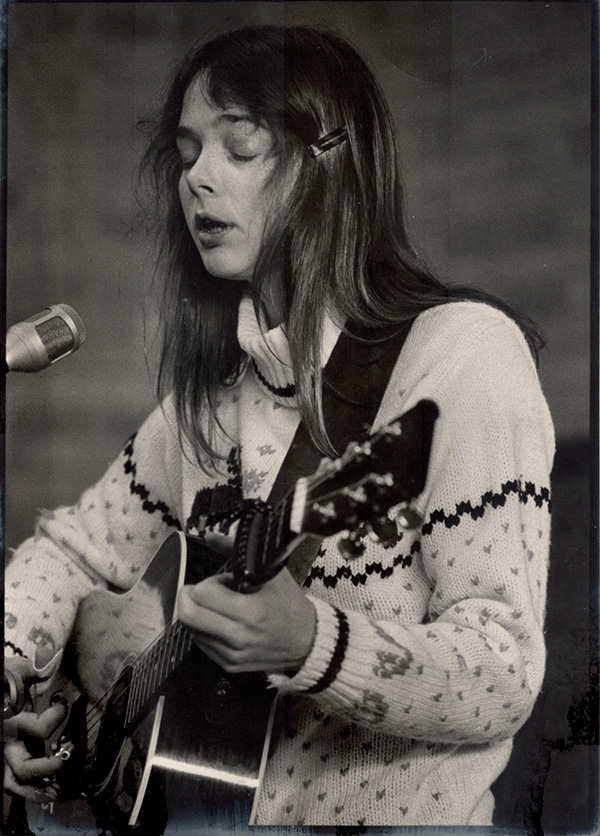
A cultural steamroller that's sold more than 20 million copies so far, Frampton Comes Alive! is also the most celebrated example of an artist who broke through to worldwide fame thanks to a live record. In the wake of this monster success, fans went back and listened to Peter Frampton's four solo studio records that predated the live behemoth. Sales and respect grew.

Three of those four releases, Wind of Change (1972), Frampton's Camel (1973), and Frampton (1975), have been remastered and reissued in a limited edition, 180gm vinyl-LP box set, Frampton@50, In the Studio 1972–1975, by Intervention Records.

Continue Reading »

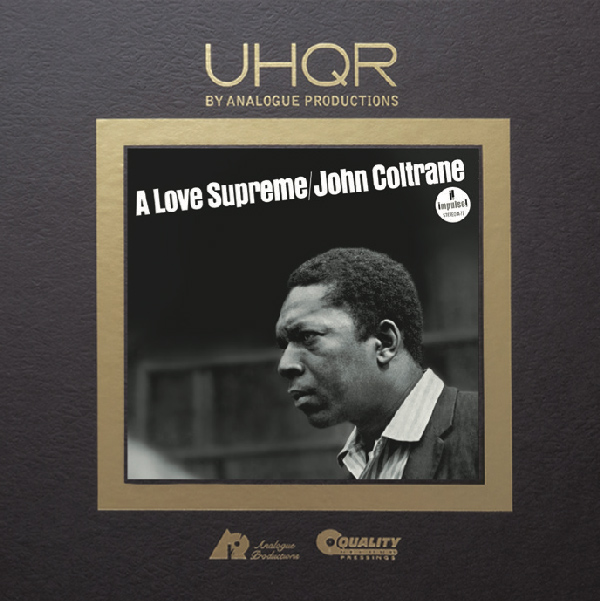
Revinylization #47: John Coltrane's Seminal A Love Supreme on UHQR Vinyl

Why is John Coltrane's A Love Supreme still so resonant nearly 60 years after it was recorded? Much to its credit, it's short (just over 30 minutes) and to the point. If you're going to raise a prayer of gratitude to a higher power and layer spiritual meaning onto music, best not belabor the point. In the case of A Love Supreme, that kind of brevity also extended to the recording process. The album was tracked in one day—December 9, 1964—by Rudy Van Gelder in his studio in Englewood Cliffs, New Jersey; Van Gelder also mixed the album. A composed (rather than purely improvised) four-part suite ("Acknowledgement," "Resolution," "Pursuance/Part 4," and "Psalm"), it exudes a certain hypnotic aura. It draws the listener in with an entrancing spirituality, its fealty to love and a higher power. Finally, the incisive, same-page playing of bassist Jimmy Garrison, drummer Elvin Jones, and pianist McCoy Tyner is almost supernatural.
Continue Reading »

Records for the New Land

Resurrecting musical treasures is a tough business. The explosion of vinyl-reissue labels, ranging from superlative to second-rate, has made it increasingly difficult for newcomers to stand out—to make the kind of splash that serious LP buyers will notice. Even more elusive is endurance and turning a profit. The affable, musically savvy James Batsford, owner of a pair of vinyl-only UK labels, New Land Records and Omerta Records, can't help but laugh over our New York–to–London Zoom connection when I ask why an obviously intelligent person with taste, like himself, would jump into the vinyl-reissue tarpit?
Continue Reading »

Revinylization #45: Charles Mingus's Changes: The Complete 1970s Atlantic Studio Recordings

The standup bass genius and jazz force of nature Charles Mingus made his first album for Atlantic Records, Pithecanthropus Erectus, in 1956. Several of his most memorable musical masterpieces, including The Clown (1957), Blues and Roots (1960), and Oh Yeah (1962), followed as he intermittently returned to the label throughout the 1960s and early '70s. Beginning in 1974 with Mingus Moves, the cigarillo-chomping, famously gruff Mingus recorded most of his final albums for the label as he progressed from composer/player to wheelchair-bound writer and musical director. His final seven studio albums for the label and a single LP of outtakes, all freshly remastered, comprise this welcome 8-LP (or 7-CD) box-set addition to the Mingus oeuvre.
Continue Reading »

Warren Zevon: the Werewolf on Mobile Fidelity

If music reflects the life of the person who created it—if, for example, we can hear Mozart's inner turmoil in his operas—then Warren Zevon's song catalog is uncommonly revealing. Headless mercenaries, killer rapists, and yes, impeccably dressed werewolves with a taste for pina coladas are all part of the colorful world of WZ's twisted imagination and especially of his masterpiece, 1978's Excitable Boy, recently reissued by Mobile Fidelity on two 180gm LPs cut at 45rpm.
Continue Reading »

Vince Mendoza's Learning Laboratory

Photo by Reinout Bos

Audio engineers never get the credit they deserve. The same is true for music arrangers, who are also an unheralded but hugely fundamental part of any musical success. As a composer, conductor, and inventive arranger of popular music, the modest but multitalented Vince Mendoza says he's most focused on enhancing the song he is arranging and the story it is trying to tell.

"Young arrangers are very concerned with their own voice and spinning their own melodies and turning things upside down and backwards, and they forget what a song really is about," he told me in a recent Zoom conversation from his home in Los Angeles. "You could be writing about heartbreak, and there are a million and one ways to tell that story, but the listener still has to feel it."

Continue Reading »

Revinylization #43: The Original Jazz Classics label label rises (yet) again

Liner notes from jazz albums of the 1950s and 1960s can be shot through with naivete, hipsterism (usually faux), and callousness toward the abundance of musical talent then working. Few though are as shortsighted as the original essay by Jack Maher on the back of 1960's Workin' with the Miles Davis Quintet. Opening with "Miles Davis is the most maligned and idolized musician in modern American jazz today. He is at once the saint and the sinner," he goes on to cite a dynamic that literally all musicians experience, especially when playing live: "He has been accused of being lackadaisical and unconcerned about his playing. When the spirit moves him, he plays with warmth and lyric beauty, at other times he plays with vague disinterest."

Once the tape was running, however, Miles rarely missed a step. Among all of Davis's recording triumphs, the pair of sessions with Rudy Van Gelder in Hackensack, New Jersey, his May and September 1956 sessions with saxophonist John Coltrane, pianist Red Garland, bassist Paul Chambers, and drummer Philly Joe Jones, remain among his finest moments on record.

Continue Reading »
Advertisement
Advertisement
Advertisement