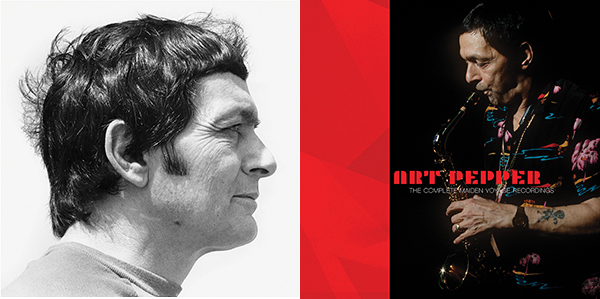
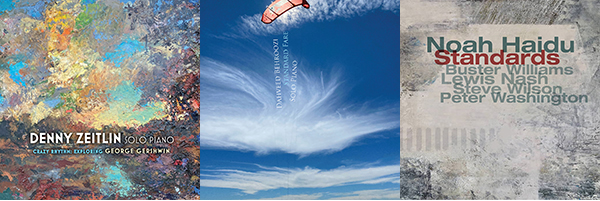
Robert Baird, Thomas Conrad, Larry Birnbaum
On The Road Again, A Year Later
It has been a year since my piece "On The Road Again: A Jazz Festival Journal From A Summer Of Plague And War" appeared, in the November 2022 issue of this magazine. It described three European jazz festivals I attended in July 2022.
In July 2023, I returned to Europe to attend two festivals. The COVID-19 plague and its fallout had significantly subsided. The war in Ukraine was still raging, but this time I didn't get near it. In 2022, I went to a festival in Romania, which borders Ukraine. In 2023, I only went to Italy.
October 2023 Jazz Record Reviews
September 2023 Jazz Record Reviews
Rabbit Holes #6: The Curse of Composition
There is a counterargument. It goes like this: Jazz today is vital and dynamic because great players keep popping up, all over the world. Very few of those great players are also great composers. Yet they apparently feel obliged to be. A large proportion of new jazz albums contain all or mostly originals.
Recording of September 2023: The Other One
12-piece ensemble; Threadgill, conductor
Pi PI97 (CD, available as download). 2023. Liberty Ellman, prod.; Stephen Cooper, Eric Shekerjian, engs.
Performance ****½
Sonics ****½
At 79, Pulitzer Prize winner and NEA Jazz Master Henry Threadgill is one of the last men standing among the founding fathers of the jazz avant-garde. Because his output of recordings is not voluminous, every new Threadgill release is an event. The Other One is more of an event than most because of its ambition (it is an album-length suite) and its scale: It introduces a new 12-piece ensemble.
August 2023 Jazz Record Reviews
July 2023 Jazz Record Reviews
Jazz at a Dark Moment: the 2023 San Jose Jazz Winter Fest
In 1923, Bessie Smith sang songs based on her experience of racism and sexism. In 1939, Billie Holiday recorded "Strange Fruit," a chilling song about a lynching. Charles Mingus's 1959 classic "Fables of Faubus" secured a permanent place in music history for the segregationist governor of Arkansas; thanks to Mingus, among jazz fans at least, the name "Orval Faubus" will ever be synonymous with bigotry.
But if social activism is nothing new in jazz, it has never been so prevalent as it is today. At some point in the new millennium, it began to feel like every new jazz album had to have at least one overtly political track. The reasons for this development may lie in the extreme political polarization of our society. The divisiveness of the Trump Era forced everyone, including artists, to choose sides.
But the ways jazz has woven itself into contemporary history go far beyond standoffs between progressives and conservatives . . .