Tourist Photo 3
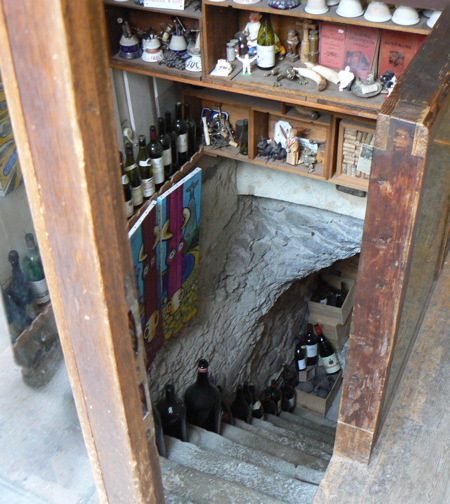
Lyon, I was told, has an extensive network of underground tunnels, which helped its citizens hide Jews during the Occupation. As I walked by this wine shop, I snapped a photo of its stairs to underground Lyon.


Lyon, I was told, has an extensive network of underground tunnels, which helped its citizens hide Jews during the Occupation. As I walked by this wine shop, I snapped a photo of its stairs to underground Lyon.
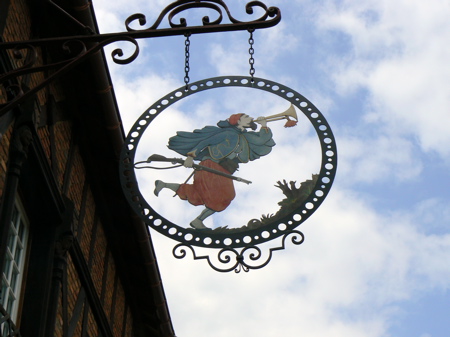
This dashing zouave graced an antiques store in Bourbon-Lancy. What did it sell? Why, military antiquities, of course. I was tempted by a Hussar's sabre, but I was pretty sure I couldn't carry it on the airplane home with me.
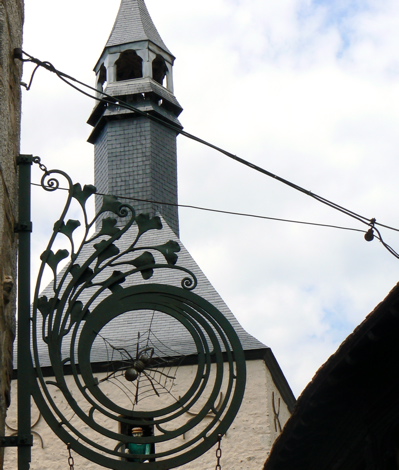
A shop sign in Bourbon-Lancy. A Hallmark moment if ever there was one.
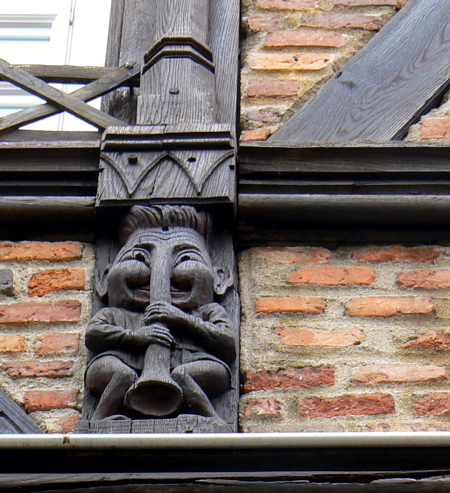
This carved detail from a house in Bourbon-Lancy sort of snuck up on me. I walked past it, got about five steps down the street and did a classic double take.

This carved detail from a house in Bourbon-Lancy reminded me of the <I>marginals</I> Sergio Aragonés drew for <I>Mad</I>.
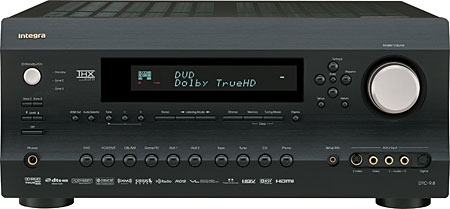
In <A HREF="http://www.stereophile.com/musicintheround/108mitr">January</A>, I reported on my experiences with the Integra DTC-9.8 preamplifier-processor, which I found to be outstanding with digital sources. That assessment was due, in no small part, to the performance of the Audyssey MultEQ XT room-correction system, which is included in the DTC-9.8. With only a little serious effort, MultEQ opened up the entire soundstage, making possible a better appreciation of the hi-rez sources now available on all sorts of discs. I have no doubt that any careful user can achieve similar satisfaction.
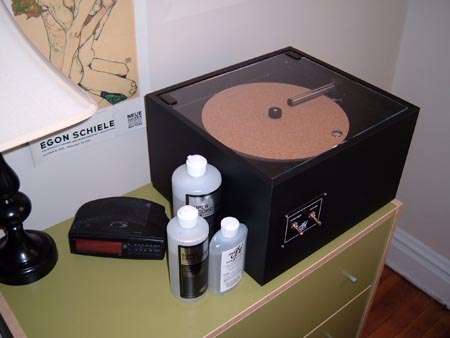
I knew that the VPI 16.5 measured around 15" x 9" x 14" and weighed something close to 30 lbs, but it still struck me as large and heavy. I sliced through the packing tape to find that the machine was carefully and securely set within its carton, held in place by heavy wedges of foam. Once unpacked, it was clear that the VPI was all business and built to last, as though it could withstand great amounts of strenuous work over much time and from place to place. It's a product made to satisfy its owner. With solid, black side panels and an acrylic top, it may be nothing much to look at, but it's surprisingly attractive in its quiet, utilitarian way. Again, the VPI doesn't mess around. No frills, nothing but what is absolutely necessary. I am tempted to customize my VPI, decorate it with punk rock stickers or a pin-up girl or a name tag or something.
Sometimes, wonderful things go unnoticed. Thus did <I>Stereophile</i> miss that, in June 2007, at its 31st annual conference, in London, UK, the International Audio Engineering Society issued two Awards of Excellence in the category of Professional Engineering. One, which we learned about from a Minnetonka Audio press release, went to Dorian Records (see the May 2008 issue of <I>Stereophile</I>, pp.14–15). The other went to <A HREF="http://www.aixrecords.com">AIX Records</A> of Southern California. The award is for John Gorka's <I>The Gypsy Life</I>, one of more than 50 high-resolution recordings available from AIX in DVD-Audio/Video surround sound and on two-channel CD. Most interesting is that both AES awards were for DVD-Audio projects.
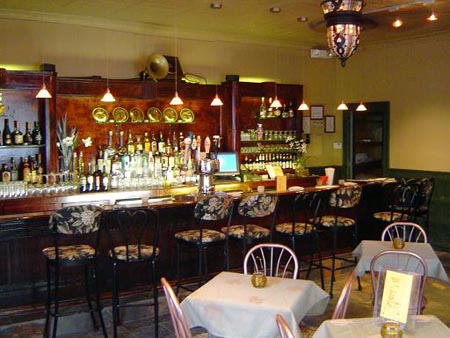
The cute bartender and her unimpressive boyfriend opened Abbey's Pub at just after 1PM on Saturday afternoon. She was wearing tight blue jeans and a small black top. Who cares what he was wearing? I noticed them from where I stood, at my living room. Not that I was eager for them to open the bar or anything. It was just that my VPI 16.5 record-cleaning machine was waiting for me in there.
So far, as part of my quest to find good affordable box loudspeakers, I have reviewed 16 models, in the August, October, and November 1987 issues of <I>Stereophile</I> (Vol.10 Nos.5, 7, & 8). This fourth group of loudspeakers expands the price range covered, down to $329/pair and up to $1349/pair, and includes one model from California (Nelson-Reed), one from Canada (Paradigm), and one, Monitor Audio's "flagship," the R952MD, from the UK.