CEDIA 2007

Sort By:  Post Date TitlePublish Date

Beer-Budget Beautiful Jamo Speakers

Continuing with European speakers, on static exhibit at the Klipsch Group complex was one of the most cleanly and beautifully simple speaker designs I've seen in a while. It was Jamo's S60, the largest in a new "S" line that, so far, includes a tiny bookshelf, a small center channel, and a subwoofer. These looked like many European small designs, almost too small to be effective. But the graceful three-way S60 sports a dome tweeter, a vertically arrayed pair of 4" midrange units, and a side-firing 8" woofer. Everything fit and matched, and the materials and textures just screamed quality. I just had to find out the price. It's only $450/pair! For that money and their graceful appearance, this speaker is a bargain even unheard!
Adam's Professional Monitors Feature Heil Drivers

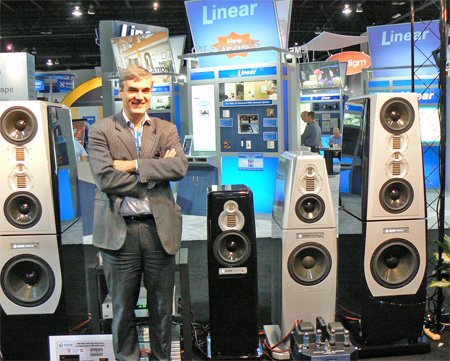
I got a chance to listen to a 5.1 setup of small HM series monitors ($1699 each) from Adam Professional Audio, the same speakers that the recording had been mixed on. Even amidst the hustle and bustle of the CEDIA floor, they made a good showing. Even more impressive were the new Tensor series, all of which use ART (Advanced Ribbon Technology, inspired by the old Oskar Heil ribbons) HF and MF drivers, along with active Hexacone woofers in substantial cabinets. The larger Beta and Alpha models have additional cone midrange drivers. All are also available in fully active versions and the line runs from $8199 for a semi-active Gamma to $24,999 for a fully active Alpha. Klaus Heinz proudly explained his design philosophies, but the show floor was no place to really appreciate the speakers' performance. These look really promising.

Tower of Power

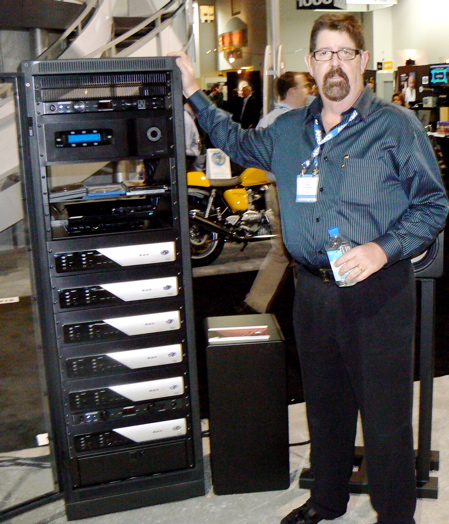
I decided that since Stereophile only had two show bloggers this year, I would avoid writing about weird custom-install products and home-theater systems. However, rules, as they say, are made to be broken.

PSB Synchrony

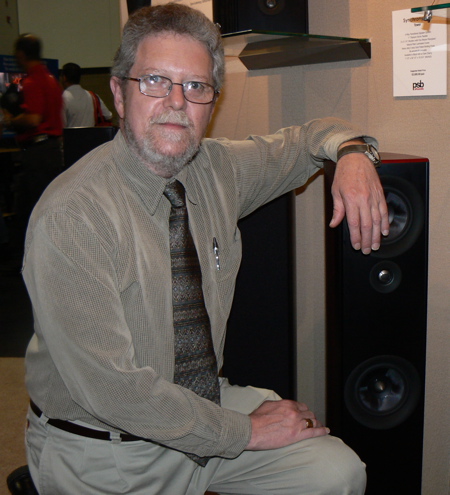
We get a kick out of Paul Barton, so we wandered into PSB's room to see what's new. He was talking to a good-looking man of a certain age (ours, approximately), to whom he introduced us: it was Vance Dickason, the man who wrote the book on designing DIY loudspeakers: The Loudspeaker Design Cookbook.

ReQuest's New Wave

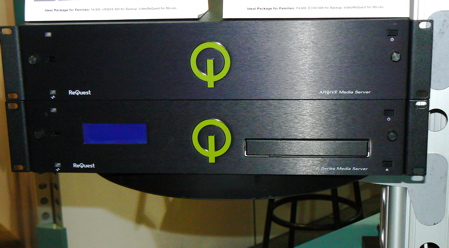
ReQuest is betting there's a music server in your future, and they're working hard at eliminating any objections you might have about it. In addition to showing off their new S-series components ("S" for "serious sound"), the company introduced a host of widgets, added functions, new remotes, and the Echo, a daily-updated backup drive for your music library.

Arcam FMJ MS250 Music Server

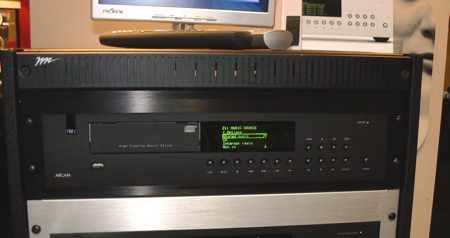
Billed as the "world's first audiophile music server," the MS250 contains a 400GB hard disk and a CD ripper/player, as well as "a custom sound card specifically designed for the MS250 using four Crystal CS4398, 120dB dynamic-range, 24-bit, stereo DACs, plus properly implemented power supplies and output filters, just like an Arcam CD player."

Breaking News!

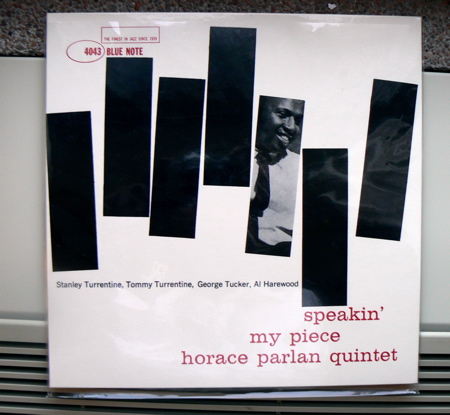
Joe Harley was striding around the Denver Convention Center. When we shook hands, he glanced around and said, "Let's go somewhere private." We ducked into an empty demo room and he pulled a few records out of his bag. "Nobody else knows about this, I'm giving you the exclusive."

Art Decco

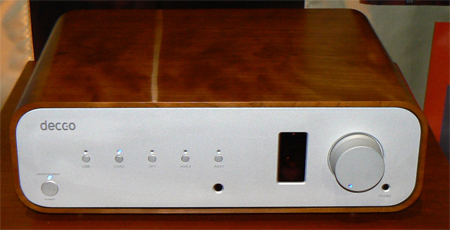
Peachtree Audio, which is distributed by Signal Path, introduced a tasty little 50Wpc digital integrated amp, the Decco ($799). That little window in the front has a 6922 tube behind it, feeding, presumably, a class-D power amp. The Decco has two analog inputs and three digital inputs: USB, Toslink, and S/PDIF coaxial. It decodes MP3, FLAC, AIF, and WAV and even has a slot in the rear to accommodate a Sonos ZP80 WiFi media player. It is also compatible (but lacks slots for) Apple TV and other music servers. There's a preamp output, in case you want to go for more power.

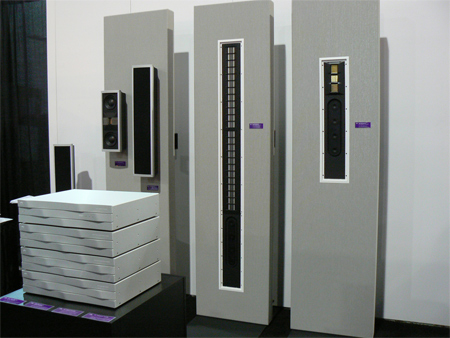
Wisdom In-Walls Use Audyssey EQ

It was disorienting to arrive in the Denver Convention Center and both have to re-learn where everything is and to try to maintain my bearings on the Show floor. The grid of floor sites is very approximately regular, with each numbered row thickening and thinning to complement its neighbors. At one point, I had let myself be led around to three different booths by a press representative, only to look up and not know which was the front and which was back!

Bag End Introduces Active Acoustics Correction

Look at the picture and tell me that those don’t look like speakers! They are, of course, but they are not intended to be driven by audio signals directly. What subwoofer manufacturer Bag End was demonstrating is a small, active bass trap, the E-Trap, and they are driven by the bass frequencies in the room. Each of these small boxes contains a driver, two microphones, and some pretty snazzy electronics that let the driver cancel the energy at the frequency (or two) of your room’s major mode. Sure, acoustic treatment is generally best, but that can get awfully cumbersome below 100Hz. Adjustments allow you to select frequencies between 20Hz and 65Hz and adjust the amplitude and shape of the cancellation. For critical success, you need to experiment with placement (although that is almost always at a room boundary) and, at the moment, have access to some nice FFT software. Bag End's James Wischmeyer promises that, eventually, some simpler setup software will be provided. Mebbe, but I asked to try one ASAP.

Advertisement
Advertisement
Advertisement