The Entry Level

Sort By:  Post Date TitlePublish Date

The Entry Level #42

In response to my review of Music Hall's USB-1 turntable, that company's founder and president for life, Roy Hall, noted my detailed explanation of the product, diverse taste in music, and keen attention to minutiae. He then offered six words of final observation that will, if there is any justice in this world, go down in Stereophile lore: "The kid has gotta get laid."

The Entry Level #41

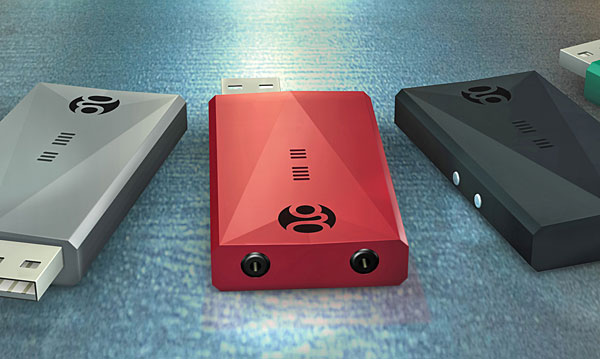
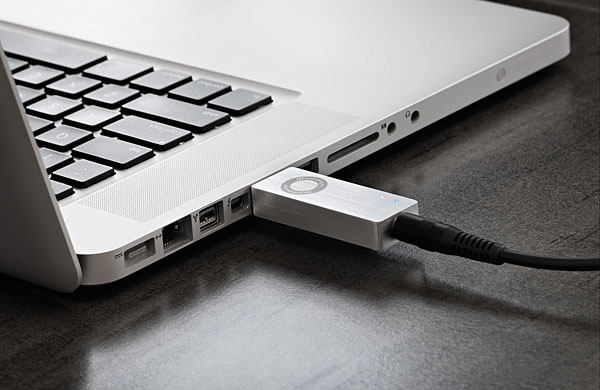
What I failed to make absolutely clear in my April column is that I really, truly, thoroughly enjoyed all three USB DAC–headphone amps that I auditioned: the Audioengine D3 ($189), the AudioQuest DragonFly v1.2 ($149), and the Cambridge Audio DacMagic XS ($199). Each offered a slightly different perspective on the music, but none could be accused of closing lanes on the George Washington Bridge, dumping several feet of snow on top of our car, or doing anything especially wrong.

The Entry Level #40

Today, the system sounds better than usual—in fact, amazing: warm, detailed, powerfully present, remarkably true. But how can this be? Isn't it more likely that my system, a well-considered but nevertheless inanimate, unfeeling collection of boxes and wires—NAD C 316BEE CD player, Arcam FMJ A19 integrated amplifier, KEF LS50 loudspeakers, AudioQuest Big Sur interconnects and Rocket 33 speaker cables—sounds today exactly as it did yesterday?

The Entry Level #39

In his article on the future of audio engineering in this issue, John La Grou tells us—succinctly and correctly, I think—that we are rapidly moving from a culture of handheld devices to one of headworn devices. He postulates that by perhaps as early as 2025, rather than being actively sought out, most audio/video media will be delivered, like milk or the newspaper—but delivered not to our front doors, but more or less straight to our brains. Fascinating? Sure. Frightening? Kinda, yeah.

The Entry Level #38

Last month, I wrote about Light Harmonic's use of Kickstarter to fund the final production and packaging of their Geek Out portable USB DAC–headphone amplifier. The campaign raised $303,061 from 2146 backers. That success led Light Harmonic to create a new division dedicated to mass-market products: LH Labs. The Geek Out would be its first product. (Pre-orders are still being accepted.) LHL's second product would be the Geek Pulse, a "pure class-A" desktop integrated amplifier–DAC capable of handling 32-bit/384kHz PCM files, as well as decoding native DSD64 and DSD128 files.

The Entry Level #37

As I discuss in this issue's "As We See It," a handful of audio companies have recently turned to the crowdfunding website Kickstarter to launch and promote new products. The most notable of these is Light Harmonic. The Sacramento, California–based electronics maker first caused a stir at the 2011 Axpona show with the release of its impressive Da Vinci DAC ($20,000), one of the few home audio converters capable of handling the 384kHz sampling rate.

The Entry Level #36

In an August 21 post to his popular Lefsetz Letter blog, music-industry analyst Bob Lefsetz shared with his readers the great and often surprising joy of listening to music through a good set of headphones, specifically the open-back, planar-magnetic Audeze LCD-2. Lefsetz clearly does not mess around: He went straight to the top of the headphone hierarchy. If you're at all familiar with the exciting world of headphone listening, you've heard of Audeze (pronounced odyssey). Since their impressive debut at the 2009 Rocky Mountain Audio Fest, the young audio company has drawn from hi-fi critics and enthusiasts the sort of rave reviews typically reserved for the most respected brands.

The Entry Level #35

In the mornings, just before I leave for work, I power up the system, turn the volume down low, and set the CD player to Repeat. I like to think that if I play calm, soothing music while Ms. Little and I are away, the cats will feel less alone and more relaxed. It's also nice, on returning home from work, to walk into a room filled with music. One evening a few weeks ago, I stepped into the apartment, dropped my bags to the floor, settled down into the couch with my iPhone, and began scrolling through text messages. I'd been seated for only a moment before I had to turn my attention entirely to the sound of the system, which, even at a very low volume, sounded warm, detailed, and unusually good—unbelievably, almost unbearably engaging.

The Entry Level #33

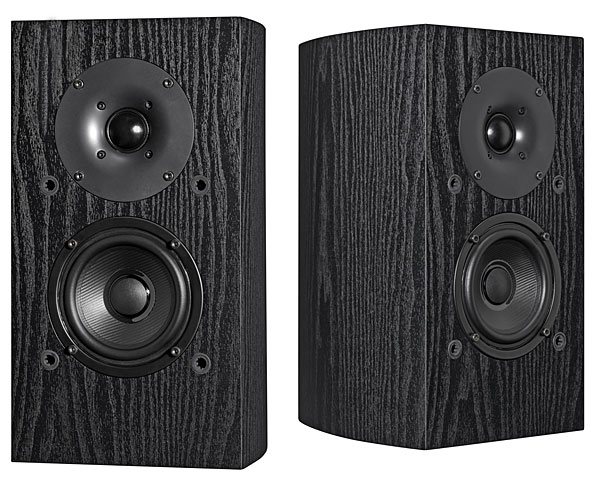
Two of the five loudspeakers reviewed in our July issue were designed by Andrew Jones: the $29,800/pair TAD Evolution One and the $129.99/pair Pioneer SP-BS22-LR (footnote 1). I did the math. You can buy 229 pairs of the Pioneer for the price of a single pair of the TAD. Which is the better deal? Which would result in more happiness? Imagine keeping one pair of the Pioneers, and delivering the other 228 pairs to friends and family. Or donating them to schools. The possibilities are great. How much fun can you have with just a single pair of speakers, anyway?
Advertisement
Advertisement
Advertisement