The Fifth Element

Sort By:  Post Date TitlePublish Date

The Fifth Element #22
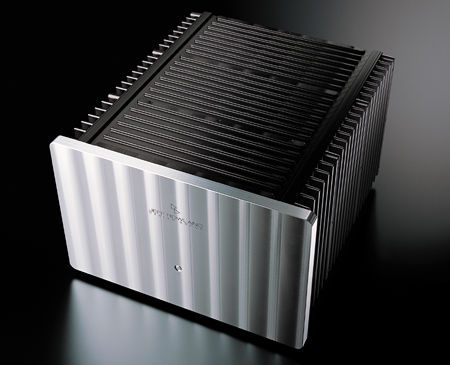
I have always had a soft spot in my heart for Jeff Rowland's products. Going back to the Model 7 monoblock power amplifier and the Model 5 stereo amplifier of nearly 20 years ago, Rowland's designs always sounded essentially musical to me, and quite forgiving and non-fatiguing.
The Fifth Element #21

To the great surprise of not that many people at all, at Home Entertainment 2003, as at the two immediately previous shows, the room featuring loudspeakers by Joseph Audio was voted by showgoer ballot "Best Sound of Show" (see September 2003, p.62). I'm not going to pick a fight over that. Not only was the sound very, very good; the entire vibe was confidently relaxed, while at the same time being purposeful in a manner businesslike yet friendly.

The Fifth Element #19

Let's start with some music—three discs I recently have been using to evaluate equipment as well as listen to for enjoyment. They are as contrasting in style as one could hope for, but all on an enviably high musical plane. (Space considerations compel brevity approaching that necessary to sell screenplays to producers at cocktail parties, footnote 1)

The Fifth Element #15

The word chancellor derives, believe it or not, from the Italian word for wooden latticework, cancelli. In the church architecture of sixth-century Rome, a latticework screen demarcated an area near the altar where deacons or priests would stand, waiting to assist the principal celebrant as needed. In English, this area became known as the chancel. In consequence, a trusted assistant came to be known as a chancellor. In the High Middle Ages, that title was given to the cleric who would correspond on behalf of and maintain the archives for an important churchman, such as a bishop.

The Fifth Element #14

The custom of giving presents at Christmastime recalls the Magi, or wise men, of the Nativity story (Matthew 2:1-16), who were most likely not "kings" but astrologers. Paintings usually depict three wise men presenting gifts to a newborn in a stable. However, a persnickety reading of Matthew's text reveals that the precise number of Magi, although it must have been at least two, is not stated. The text specifically mentions a house rather than a stable, and implies that Jesus was a toddler. So much for the great Renaissance painters doing their research, or even reading carefully. The text, however, does specify three gifts, and it is that inventory—of gold, frankincense, and myrrh—which has given rise to the common (but not necessarily commonsense) inference that the number of wise men was three.

Advertisement
Advertisement
Advertisement