Integrated Amp Reviews

Sort By:  Post Date TitlePublish Date

Peachtree Audio decco65 D/A integrated amplifier
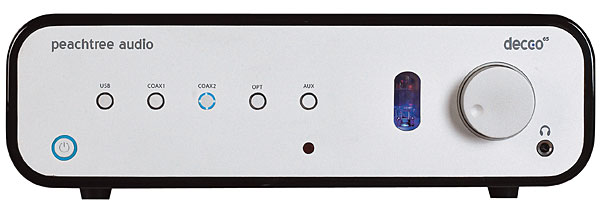
Whether one was surprised, in 2010, by the success of Peachtree Audio's iDecco may have more to do with age than anything else. My peers and I wondered, at first, who would want their high-end integrated amps to come bundled not only with digital-to-analog converters but with iPod docks, of all things; at the same time, younger hobbyists wondered who in the world still wanted their integrated amps to contain phono preamplifiers. (Respect for the elderly, myself especially, prevents me from adding "and mono switches.") Color me chastened.

The Mission System

Since its founding just over ten years ago, Mission Electronics has grown to become one of the largest "real" hi-fi companies in the UK. Although their product line originally consisted of three relatively conventional loudspeakers, it rapidly grew to encompass high-end pre- and power amplifiers, cartridges, tonearms, and turntables, and, in the mid 1980s, a system concept based on CD replay and relatively inexpensive electronics: the Cyrus amplifiers and tuner.

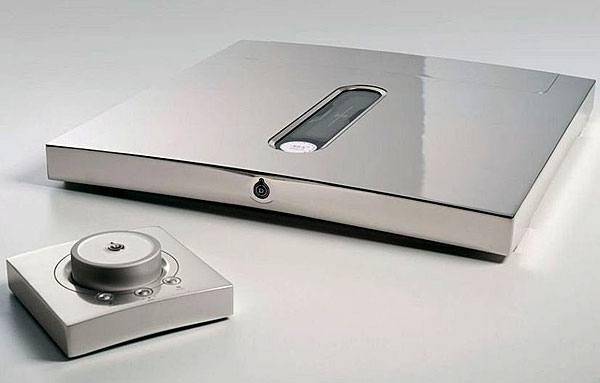
Devialet D-Premier D/A integrated amplifier

Most reviews are straightforward. One preamplifier or power amplifier replaces another. DACs are swapped out. A new pair of speakers takes up residence in the listening room.

But some products demand a complete revision of a system's architecture. Such was the case with Devialet's D-Premier ($15,995). Not only is this French product an integrated amplifier, with phono and line analog inputs; it has digital inputs and an internal D/A section.

Rogers High Fidelity EHF-100 integrated amplifier

I can imagine the gaiety and mirth that filled the halls of the electronics industry in the 1950s, as engineer after bespectacled engineer realized that the transistor would soon consign to the outposts of oblivion those ancient technologies that had preceded it. Before long—surely no more than a decade—the hated vacuum tube would vanish from the Earth, along with the tube socket, the tube tester, the tag board, the high-voltage rail, and that lowest rascal of them all, the output transformer. What a jubilant time!

I can't imagine what went wrong.

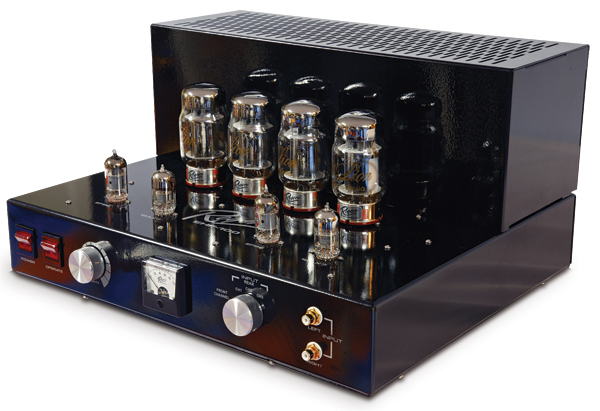
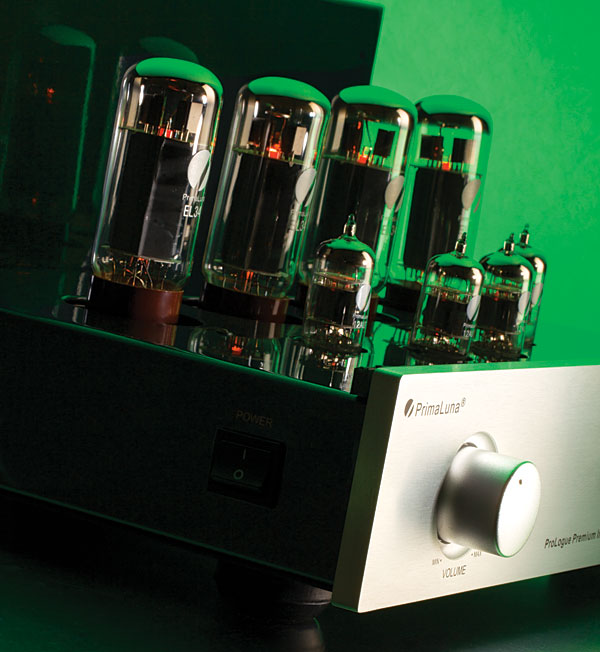
PrimaLuna ProLogue Premium integrated amplifier

Integrated amplifiers are hot. I don't mean in the literal sense—although having a preamplifier and stereo power amplifier in the same chassis usually results in higher running temperatures—but in the metaphorical one. Once viewed as the type of component that no serious audiophile would consider buying, integrated amps have made a comeback in popularity and prestige. Consider: the October 2006 "Recommended Components" issue of Stereophile listed 29 integrated amps, whereas the October 2011 issue lists 40. Stereophile's 2010 Amplification Component of the Year award went to an integrated amp, the Audio Research VSi60, beating out a host of heavy-hitter preamps and power amps. The 2012 Stereophile Buyer's Guide lists 400 integrateds.

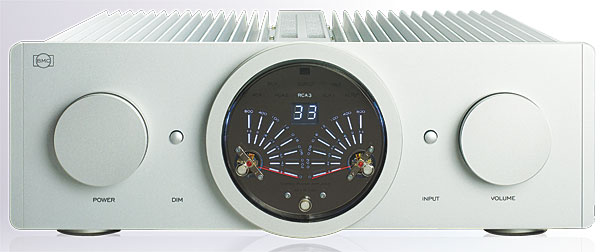
B.M.C. Audio Amplifier C1 integrated amplifier

B.M.C. Audio GmbH (the initials stand for Balanced Music Concept) designs its high-performance audio products in Germany, where the company was founded in 2009, and has them manufactured in its own wholly owned factory in China. The design team is headed by Carlos Candeias, whose earlier designs included a belt-driven CD transport for C.E.C. and, for Aqvox, a high-performance, current-gain–based, balanced phono preamplifier that's reasonably priced. These have won him a lot of attention, and made him something of a celebrity in certain sectors of the audiophile world.

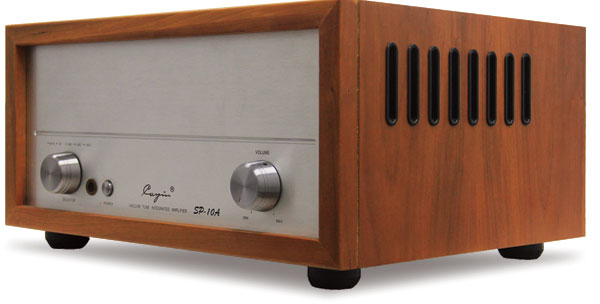
Cayin SP-10A Integrated amplifier

Stereophile has reviewed two integrated amplifiers from Chinese manufacturer Cayin in the past: the A-50T, which I wrote about very positively in March 2008, and the A-300B, which Art Dudley reviewed in February 2007. So when I read about Cayin's $2195 SP-10A integrated amplifier, which has a wood-covered sleeve, just like the old Marantz and McIntosh gear and offers 38 watts of push-pull power, in our coverage of the 2008 CES, I put in on my must-write-about list.

Harman Kardon HK 990 integrated amplifier

The very first amplifier I bought was a Harman Kardon PC-200, aka The Prelude. It was a 10Wpc integrated, but I chose it over the competition for some of the same reasons that the HK 990 has appealed to me. Almost all amps back in the1960s had a plain cake-pan chassis with tubes, capacitors, and transformers studding the top. Integrated amps had the standard four knobs on the front for input selection, volume, bass, and treble. The HK PC-200 had an enclosed black chassis cage that formed a graceful cowl over the brushed-copper front panel and the six matte-black knobs: for Input selection (with three phono turnover settings), Volume, Bass, Treble, Loudness contour, and Treble rolloff. In addition, it had a Rumble Filter switch. The PC-200 was not only more beautiful than the rest of the push-pull competition powered by EL84 tubes, it also had more useful features. (Take that, you fans of the Grommes Little Jewel!). Over the decades, H/K products have always been stylish and innovative, but in today's fractured marketing world, most such creative energies are applied to audio/video receivers and lifestyle products.

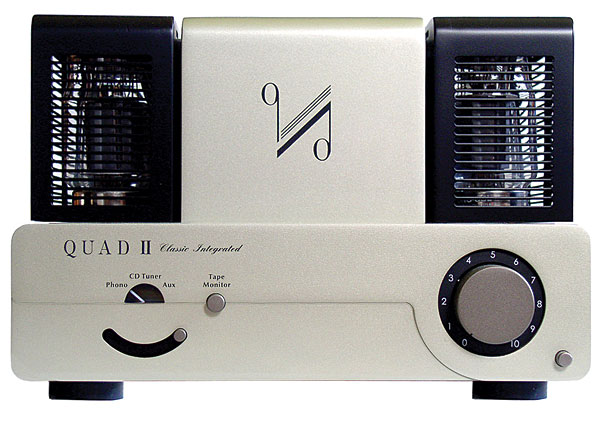
Quad II Classic Integrated amplifier

Given that Quad's founder, the late Peter J. Walker, wasn't around to design the Quad II Classic Integrated, the English firm relied instead on Tim de Paravicini, whose credits include the comparatively recent Quad II-eighty mono amplifiers and QC-twentyfour preamplifier (not to mention his own line of E.A.R./Yoshino electronics and countless other well-regarded products). It's with respect for both men that I say: In turning to Tim de Paravicini, Quad has probably chosen the closest approach to the original.

Luxman SQ-38u integrated amplifier

Let's not beat around the bush: this is what an amplifier is supposed to look like. The silver front panel contains over a dozen knobs and switches, yet somehow avoids seeming cluttered. The solid wood cabinet wouldn't look out of place next to Hugh Hefner's cognac decanter. And the controls! The SQ-38u is as full-function as they come ("as they used to come" would be closer to the truth), with a Balance knob, separate Bass and Treble Tone Controls, a low-frequency cutoff (aka "rumble") switch labeled Low Cut, a Mono/Stereo switch, and a mute button; plus switching and connectors for two pairs of loudspeakers. Everything but curb feelers.
Advertisement
Advertisement
Advertisement