Music and Recording Features

Sort By:  Post Date TitlePublish Date

Project K622

The upbeat is the most magic moment in classical music making. Before the conductor brings down his baton for the downbeat, anything and everything are possible in the musical journey that is about to begin. And the upbeat to Mozart's sublime Clarinet Concerto that conductor Robert Bailey was about to give in London's Henry Wood Hall last November gave me an extra frisson—as producer of the recording sessions, I would have to pronounce instant judgment on everything I was about to hear.
Deep River: the Cantus Spirituals Project

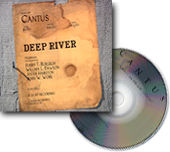
When Cantus's">http://www.cantusonline.org">Cantus's artistic coordinator (and Stereophile reader) Erick Lichte phoned me in the summer of 2000 about my recording this Minnesotan male-voice choir, it didn't occur to me that I was entering a long-term relationship. But just as sure as 16-bit digital is not sufficient for long-term musical satisfaction, my first Cantus CD led to a second, and now a third. (All available from this">https://secure.stereophile.com/stereophile/recordings.shtml">this website). For Deep River, I traveled to Sioux Falls, South Dakota, where the city has spent millions of dollars to transform the downtown high school into a gloriously warm-sounding, state-of-the-art performing arts center.

The Fifth Element #9

I don't know who originated the idea of "desert island" recordings. I do know that for many years there was a BBC radio program in the UK that asked celebrities to list their choices. While reading quite a few of those lists, I had the sneaking suspicion that the respondents either hadn't entered fully into the spirit of the task, or were tailoring their choices with a view to what the radio or reading audience would think. (Interior monologue: "I am an anorak-wearing viola da gamba player. Hmmm. Birth of the Cool had better be on my list. London Calling, too, just to be safe.")

The Unmaking of Elvis Presley: New Reissues 1960-1972

No artist in the history of sound recordings has a more confused recorded legacy than Elvis Presley. Thanks to several generations' worth of ruthless avarice by his label, the constant machinations and eventual fire sale by his manager, Col. Tom Parker, and his own pathetic sloth, due in part by a 20-year addiction to prescription drugs, Elvis's recorded catalog is an absolute disaster: cut and pasted, issued and reissued as both budget and full-priced collections, exploited beyond all recognition. Keeping track of Elvis's catalog is one of, if not the most, labyrinthine discography in rock 'n' roll history. When all the foreign issues and reissues of his work are taken into account, it is, (speaking from recent experience) an endeavor which severely tasks the human capacity for tedium.

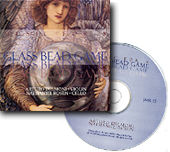
Music for a Glass Bead Game

ARTURO DELMONI & NATHANIEL ROSEN: Music for a Glass Bead Game
J.S. Bach: Two-Part Inventions 1, 3, 6, 7, 9, 10, 13. Kodály: Duo for Violin & Cello. Giordani: Duetto II. Martinu: Duo for Violin & Cello. Handel: Passacaglia
Arturo Delmoni, violin; Nathaniel Rosen, cello
John Marks Records JMR 15 (CD). John Marks, prod.; Jerry Bruck, eng. DDD. TT: 62:34

Advertisement
Advertisement
Advertisement