News

Sort By:  Post Date TitlePublish Date

Post-Fire Future Unclear for Apollo Masters

On February 6, our sister site AnalogPlanet.com reported the news of a three-alarm fire at the Banning, CA headquarters of Apollo Masters, a renowned manufacturer of ready-to-cut lacquers for use in the LP-mastering industry. The blaze reportedly burned for approximately three hours before being brought under control, during which time an adjacent highway was shut down.
Immersive Audio at National Sawdust

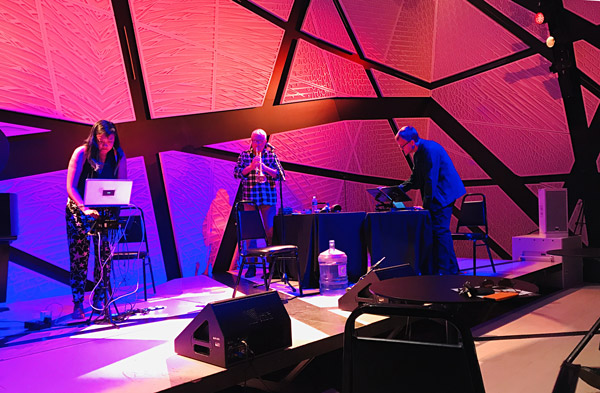
In September 2019, I made an afternoon visit to National Sawdust, a vibrant, innovative performance space in Williamsburg, Brooklyn, to attend a demonstration of the new Constellation and Spacemap systems installed there by Meyer Sound. According to Meyer Sound designer Steve Ellison, the two systems permit control of the space's acoustics (Constellation) and empower performers and sound designers to construct a soundscape (Spacemap) in which voices, instruments, and other sounds can be located virtually anywhere within as well as beyond the confines of the performance space.

Immersive Audio at AES

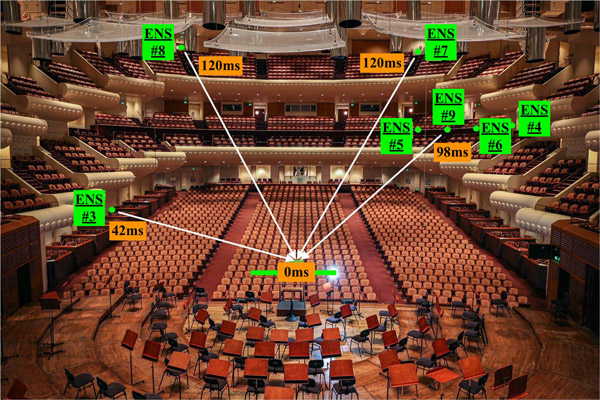
The buzz at the 2019 Audio Engineering Society (AES) convention in New York was immersive audio, as it has been for the last several years. I witnessed developments that may have a big impact on the future of multichannel audio.

A Polk/Classé/Marantz Event in Montreal

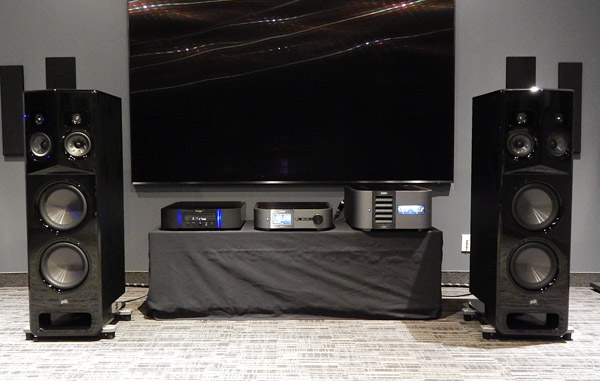
Until about a week ago, I thought Classé Audio was out of business. Imagine my surprise when I discovered that Classé was not just alive but also kicking, with a new line of high-end electronics, which were being showcased, along with flagship products from Marantz and Polk Audio, at Montreal audio-video importer Sherpa Group's offices. What's more, it was happening tomorrow–that is, the day after I found out about Classé's resurgence.

Hi-Rez Audio Distinguished in Blind Testing

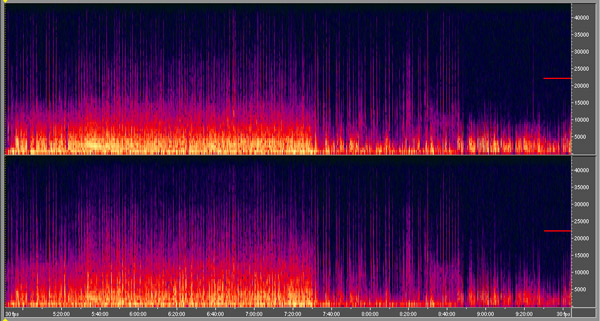
Spectral analysis of a live blues band recording made by John Atkinson, showing content up to 40kHz, from "What's Going On Up There?"

At the October 2019 Audio Engineering Society convention in New York, Yuki Fukuda and Shunsuke Ishimitsu, both of Hiroshima City University, presented results that show quite clearly that listeners can distinguish sounds encoded and reproduced at different sampling frequencies. Their trials differed from the previous ones in one important way: Instead of exposing test subjects to music at different resolutions, they used test tones.

Advertisement
Advertisement
Advertisement