Phono Preamp Reviews

Sort By:  Post Date TitlePublish Date

Gramophone Dreams #85: Let the Right Brain In; the Hagerman Audio Labs Piccolo Zero head amp
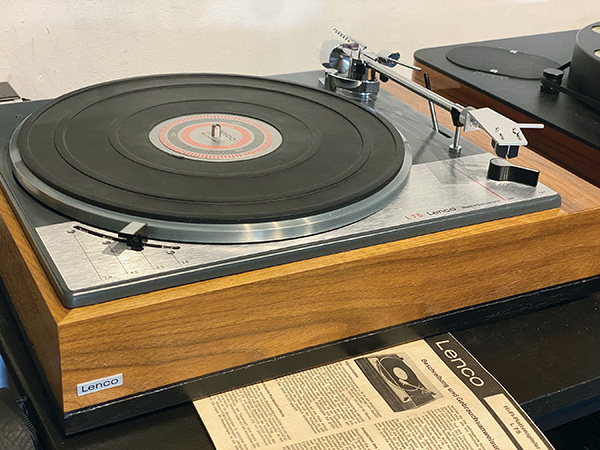
In the months since I told my Lenco story in Gramophone Dreams #79, two of my friends have bought L75s, and now they're enjoying them more than their shiny movie-star decks. One told me he has put more than $2000 into a Lenco L75 he bought online for $350. When I asked how his hot-rodded Lenco compared to his fancy belt drive, he replied, "You can feel it. The Lenco's motor pulls like a team of Clydesdales. It makes my belt drive feel like a pony pulling a child's cart."

When I asked him what he thought his rebuilt Clydesdale deck, with its new bearing, Jelco tonearm, and Grado Prestige Gold cartridge, was doing that his well-regarded belt drive was not, he replied, in a low, serious voice, "I think it gets more of the first part of a note."
Spin Doctor #12: EMM Labs DS-EQ1, The Wand 14-4 Turntable, M•A Inner Sleeves

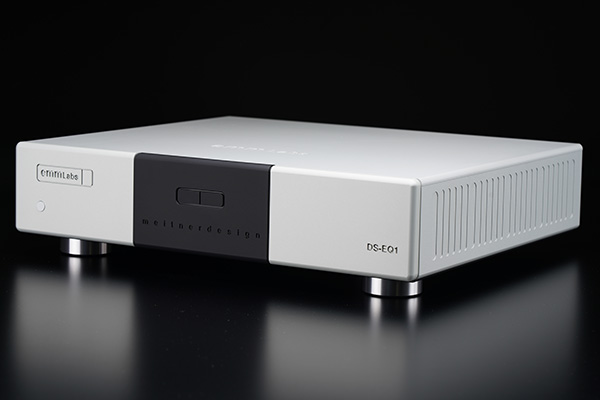
"I think both moving coil and moving magnet cartridges are terrible." That's what legendary Canadian audio designer Ed Meitner told me when I asked about the pioneering transimpedance current drive phono stage he created for his Meitner PA6 preamp some 40 years ago.

Meitner has been designing innovative hi-fi gear for the pro and consumer audio markets for more than 50 years, but for most of the last 30, he has been best known for his work with high-resolution digital audio and DSD recording. Despite this focus on digital—and despite that comment about the two leading phono cartridge technologies—deep in his heart, Ed still loves analog and has fond memories of the Kenwood optical cartridges from the 1970s, which I discussed in last month's Spin Doctor column. So when Ed read that a company in Japan called DS Audio was bringing back an improved version of the optical cartridge using modern materials, he contacted designer Tetsuaki Aoyagi to learn more.

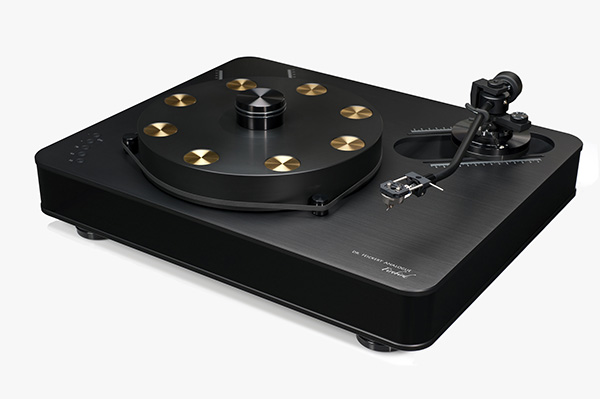
Analog Corner # 247: Dr. Feickert Firebird turntable, Viva Fono MC phono preamplifier, AcroLink and Fono Acustica interconnects

Dr. Feickert Analogue's top-of-the line turntable, the Firebird ($12,500), is a generously sized record player designed to easily accommodate two 12" tonearms. Its three brushless, three-phase DC motors, arranged around the platter in an equilateral triangle, are connected to a proprietary controller in a phase-locked loop (PLL); according to the Firebird's designer, Dr. Christian Feickert, a reference signal from just one of the motors drives all three—thus one motor is the master while the other two are slaves. (Man, today that is politically incorrect, however descriptively accurate.)

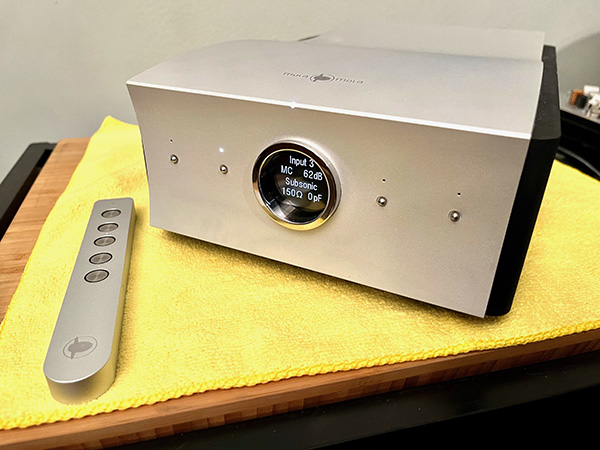
Spin Doctor #10: Tone Controls, Vinyl EQ Curves, and the Mola Mola Lupe

Twice in the last month I have been at someone's house, servicing their turntable, when they asked whether they should be considering a new phono preamp that offers additional playback equalization curves besides the standard RIAA. My usual reaction is to thumb through their record collection, where, more often than not, I find that they don't own a single record that was cut using a curve other than RIAA.

Phono playback EQ is one of those audiophile topics that stokes some people's passions, with plenty of disagreements about how important it is. I have seen grown men get into heated discussions about the history of record EQ curves, but in truth, the subject is only likely to matter if you listen to a lot of 78s or original mono LPs pressed between the late 1940s and the mid-1950s.

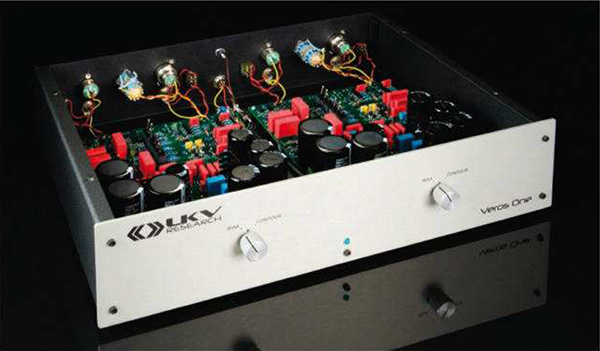
Analog Corner #249: LKV Research Veros One phono preamp, Triangle Art Apollo MC cartridge

Designer Bill Hutchins, of LKV Research, builds the 2-SB moving-magnet/moving-coil phono preamplifier in North Conway, in the White Mountains of New Hampshire; he uses as many US-sourced parts as possible, and sells his products factory direct. I reviewed the 2-SB in March 2014, on AnalogPlanet.com: the 2-SB's sound was exceptionally fine—especially if you like refined, solid-state quiet and detail, and especially considering its then-price of $2500. Since that review's publication, the 2-SB has been upgraded with a version of the third gain stage from LKV's JFET-based Veros One phono preamp ($6500; see below), and its price has risen to a still-reasonable $3000.

In May 2014, Bill Hutchins introduced the Veros One phono preamplifier ($6500).

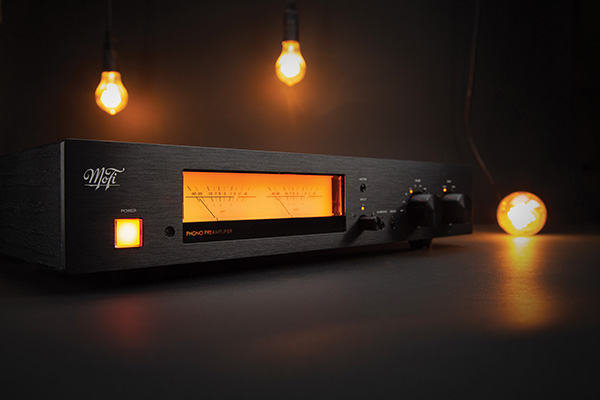
Gramophone Dreams #80: Mobile Fidelity Electronics MasterPhono

During my cub reporter days at Stereophile, I was always on the lookout, casting about for midlevel analog components I might latch on to, ones that could join my long-term daily-driver reference system by complementing the character of my midlevel DeVore Fidelity Orangutan O/93 and Falcon LS3/5a loudspeakers. I was searching for these basic traits: alive and vigorous, clear and well-sorted, relaxed and natural. One of my first-ever Stereophile reviews, in the October 2014 issue, was of Sentec's EQ11 phono preamplifier, which featured six EQ choices, selectable from the front panel, Bakelite knobs, Switchcraft switches, and a gray Hammerite-paint finish.

When I reviewed the Sentec, I owned three turntables and about 300 records. But phono stage–wise, I was a beggar and a borrower, hoping a friend's phono pre or some review product would jump out of the deck and become my reference.

Brilliant Corners #10: Tron Electric Convergence Signature & PrimaLuna EVO 100 phono stages

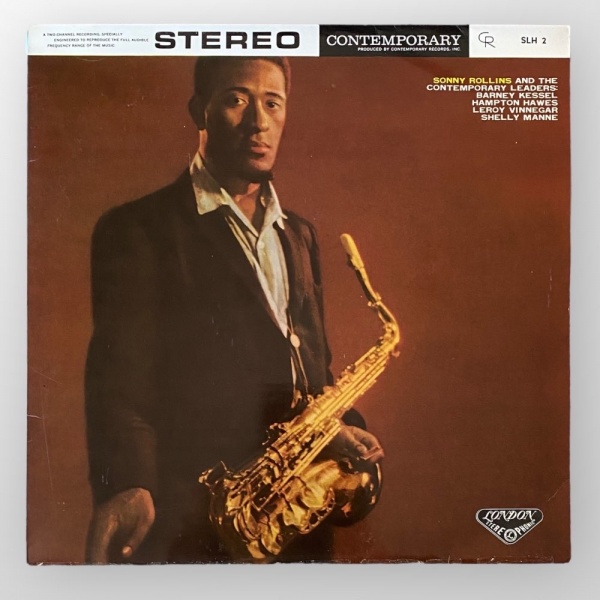
"The phonograph record is an art form itself," Lester Koenig wrote in March 1959, "and one of its advantages is the performance that exists uniquely of, by and for the record." Remarkably, when Koenig included this pronouncement in his liner notes to Sonny Rollins and the Contemporary Leaders, the 12" long-play record had been the dominant carrier of recorded music for less than a decade, and stereo discs had been mass-produced for just over a year.

For Koenig, this issue wasn't merely academic. Before making his name as head of Contemporary Records in Los Angeles, he had attended Yale Law School, worked as a screenwriter and producer at Paramount, and gotten blacklisted by the House Committee on Un-American Activities. At Contemporary, he set out to become a leading practitioner of the art of phonography.

Analog Corner #251: ModWright PH 150 phono stage

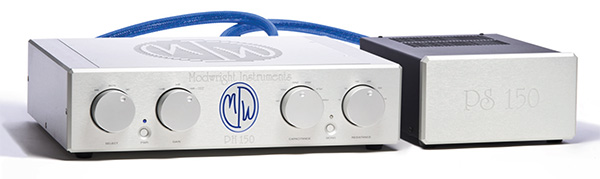
ModWright Instruments' PH 150 moving-coil/moving-magnet phono stage measures 17" wide by 5" high by 12" deep and weighs 19lb. Knobs on its front panel let you easily make adjustments that with some phono preamps require accessing the rear panel or going inside. Starting at the left, the Select knob offers settings for MC, MM, and Mute. The Gain knob offers levels of 0dB, –6dB, and –12dB. With MC selected, those settings would correspond with 72, 66, and 60dB of gain, respectively; with MM, the numbers would be 57, 51, and 45dB, the last being more typical of most MM stages.

First, let's talk about problems with grounding and hum...

Gramophone Dreams #79: a Vintage Lenco L75 turntable & the PrimaLuna EVO 100 phono stage

My adoptive mother, Lily Mae, was a retired businesswoman and former fashion model turned stay-at-home mom and artist-painter with famously good taste in everything. She raised me to have good manners, an "active awareness of color and texture," and "an eye for form." She expected me to critique her paintings, her decorating, and her wardrobe, urging me constantly to develop "good taste in everything."

In Lil's world, a perfect day was for me to skip school and go with her clothes shopping at Marshall Field's, where it was my job to sit in a plush chair offering comments about which outfits had the best fabrics and best "complimented her form." She always said "form is bones" and fashion is about "how fabrics hang on people's bones."

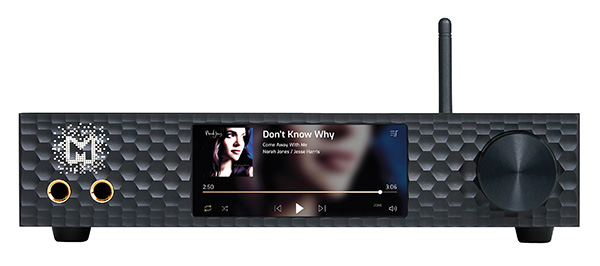
Mytek Digital Brooklyn Bridge II Roon Core preamplifier

The concept of streaming digital music files over distances great (as with internet-streaming services like Spotify, Qobuz, Tidal, etc.) and small (from a home-PC hard drive, NAS, or networked music server) became mainstream only recently. But it was already brewing during the late 20th century, with people illegally downloading low-bitrate MP3 files made from CD rips and coming close to killing the recorded-music industry.

That wasn't streaming exactly, or not in the current sense, because the files needed to be downloaded, stored locally, then either played out of a computer or loaded onto a portable player, but from that point forward it was a steady march to the streaming-dominated present.

Never mind Napster—the first subscription audio "streaming" service was one you probably wouldn't think of: Audible, the audio book service now owned by Amazon, which started up in 1995. I did beta testing and editing work for early-days Audible, and around that time, I started loading up home-ripped MP3 files on a pocket-sized Rio MP3 player (which by then had replaced Audible's proprietary player), using it in place of a portable CD player. This led to experiments with a PC music library/player running Linux, controlled by a Handspring PalmOS device connected to the stereo system via a Sound Blaster 16 card.

Advertisement
Advertisement
Advertisement