Rabbit Holes

Sort By:  Post Date TitlePublish Date

Rabbit Holes #12: Julius Eastman's Different Kind of Swing

New recordings of Julius Eastman compositions aren't as rare as they were a decade ago. Eastman's profile has grown with each repetition of his story, which seems to become more dramatic with each iteration. Trained at the Curtis Institute of Music; worked with Peter Maxwell Davies, Meredith Monk, and Petr Kotik; composed significant works often for instrument multiples (four pianos, 10 cellos); then drugs, homelessness, and dying alone in a hospital at the age of 49. A recent resurrection has brought new recordings, new research, and new visibility. An exciting recent realization of his 1974 composition Femenine, recorded jointly by Talea Ensemble and Harlem Chamber Players, offers fresh perspective. It led me to listen to some older releases, some with the composer himself performing.
Rabbit Holes #11: Chasing John Lennon's Mind Games

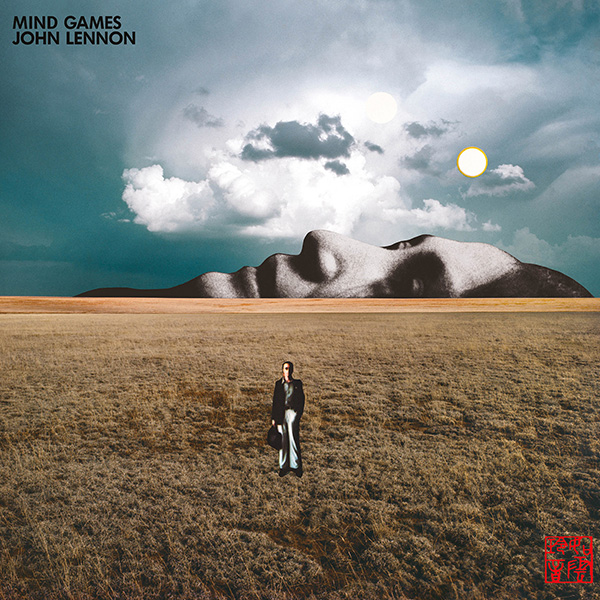
After a wild decade in the biggest pop music group ever, John Lennon's post-Beatles years were spent in protest, in various kinds of therapy, in immigration court, and in search of a new musical identity. He had been a musician since age 16 and a superstar since his early 20s. He was only in his 30s.

By summer 1973, when Lennon's fourth album, Mind Games, was recorded at New York's Record Plant Studios, the turbulence of Lennon's life seas was at gale force. He was separating from Yoko Ono and starting a 16-month relationship (consummated at Ono's suggestion) with their shared administrative assistant, May Pang. The Nixon Administration was targeting Lennon and Ono for deportation because of their left-wing political activities, mostly focused on the Vietnam War.

Rabbit Holes #10: Les McCann's Never a Dull Moment!

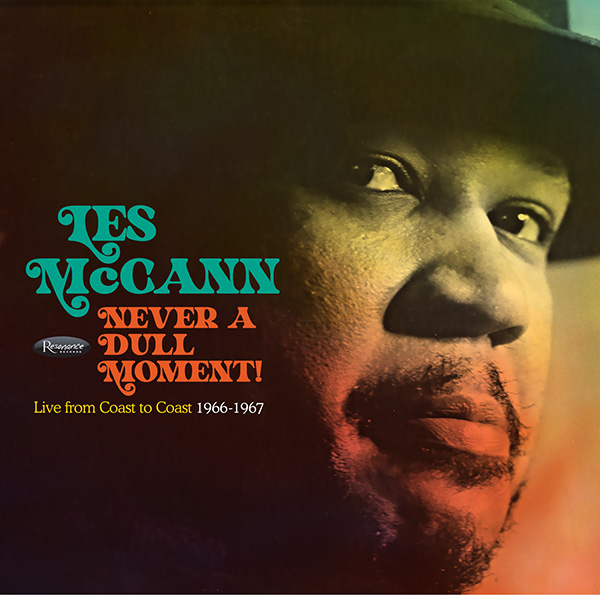
The best Christmas gift in history was George Bailey being shown what the world would be like without his being born, courtesy of Angel Second Class Clarence, in the classic 1946 film It's a Wonderful Life. More recently, and in the real world, the best gift ever was the release of pianist Les McCann's Never a Dull Moment! (Live from Coast to Coast 1966–1967) a few weeks before Christmas 2023 and less than a month before his death at 88, on three vinyl LPs.

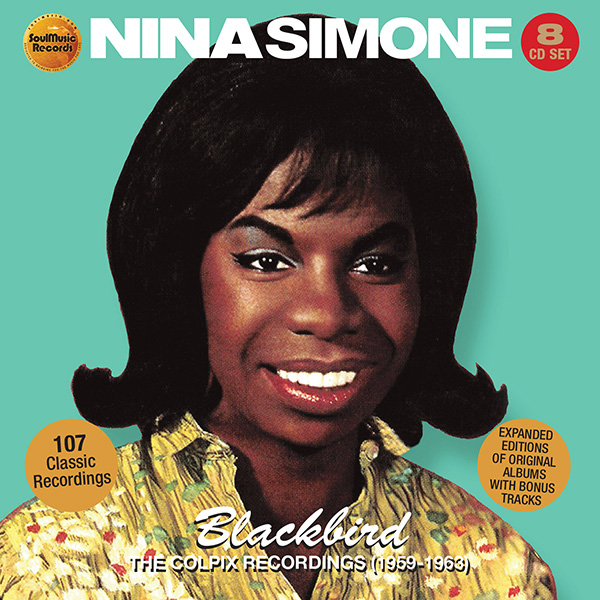
Rabbit Holes #9: Nina Simone on Colpix

Seventy years ago this summer, a young pianist from Tryon, North Carolina—a town of fewer than 2000 residents—made her professional debut in Atlantic City. This was not the culmination of a dream but rather an economic choice born of the racial circumstances of the era. It was a letdown.

The venue was the Midtown Bar. If they'd known what she was doing, her parents would have objected and her musical peers would have sneered, so Eunice Waymon performed under a pseudonym: Nina Simone. Adding to the indignity for this classically trained pianist, playing wasn't enough; she was also expected to sing.

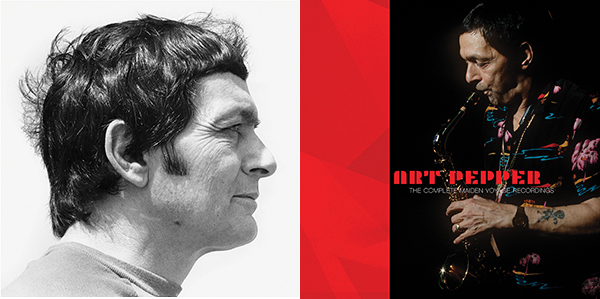
Rabbit Holes #8: Art Pepper Lives! Or, Long Live the CD!

Art Pepper Photo by Laurie Pepper

That title must have gotten your attention. Not the part about Art Pepper but the part about the CD. Nobody has anything good to say about the compact disc anymore. CD sales suck. Streaming and downloads rule the world. Vinyl (an album format that warps, scratches, and has to be flipped every 22 minutes) now outsells CDs.

But the CD still deserves a place in your heart. One reason: box sets. Many of them are worthy of coveting. For example, there is an amazing new project on the Omnivore label, Art Pepper's The Complete Maiden Voyage Recordings. It contains eight hours and 20 minutes of music on seven CDs. Collections that large do not lend themselves to LPs.

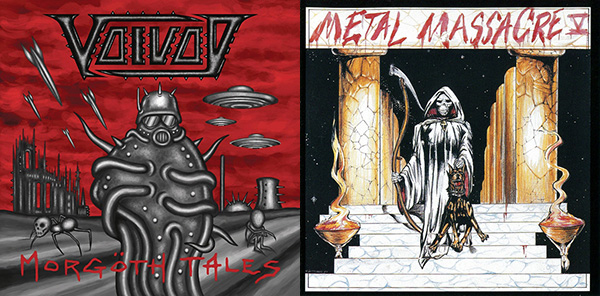
Rabbit Holes #7: Quebec's Voïvod remakes its own best songs

In 1984, Metal Blade Records of Van Nuys, California, released the fifth edition of its Metal Massacre series, which had already unleashed such bands as RATT, Metallica, Slayer, and Lizzy Borden onto an unwitting music-buying public. On the second track, among future stalwarts Overkill, Fates Warning, and Metal Church as well as no-hit wonders Lethyl Synn and Jesters of Destiny, was an oddly named band from Jonquière, Quebec: Voïvod, spelled Voi Vod on the album cover. Voïvod's four members were Blacky, Away, Piggy, and Snake.

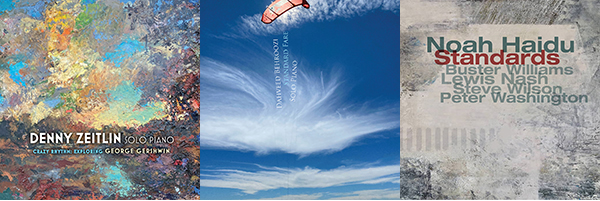
Rabbit Holes #6: The Curse of Composition

Something has happened in jazz culture in the new millennium. There is more emphasis on original composition than ever before. There has been remarkably little discussion and analysis of this phenomenon, perhaps because many assume it is a positive development. Jazz, after all, prioritizes originality.

There is a counterargument. It goes like this: Jazz today is vital and dynamic because great players keep popping up, all over the world. Very few of those great players are also great composers. Yet they apparently feel obliged to be. A large proportion of new jazz albums contain all or mostly originals.

Rabbit Holes #4: Elvis On Tour

FLASH! Record Business Conquers Death! Musicians Live Forever! There is life after death in the world of recorded music. Elvis left the building 46 years ago. Jimi Hendrix has been absent for 53 years. Yet both continue to release albums of unreleased material. Bob Dylan, Neil Young, and Bruce Springsteen wisely recorded much of their music throughout their careers, live and in the studio; they'll continue to release "new" music long after they pass.

Keeping fans satisfied but also looking forward is an effective marketing tool, one that Ernst Mikael Jørgensen, the guru of all things Elvis, has mastered. His latest project is the six-CD box set Elvis On Tour, which is connected to the 50th anniversary of Presley's 1972 US tour and the rerelease of the MGM documentary/concert film of the same name, a Blu-ray of which is also included.

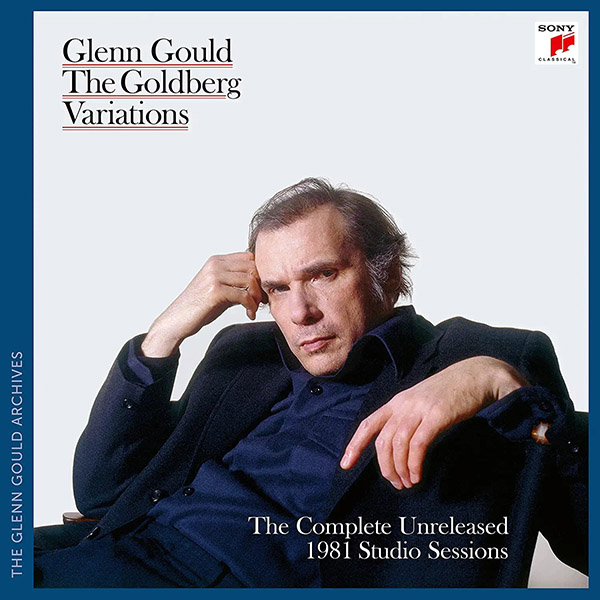
Glenn Gould's Goldberg Variations: The Complete Unreleased 1981 Studio Sessions

In 1955, Canadian pianist Glenn Gould surprised executives at Columbia Masterworks by choosing J.S. Bach's Goldberg Variations for his debut recording. His performance was fast and fluid and sparkling and delicious, and it was an astonishingly big seller. In 1981, Gould came full circle and recorded the Goldbergs again. It was his last studio recording. That second attempt could not be more different from the first: relentlessly intellectual, percussive, insistent.

Late last year, to honor what would have been Gould's 90th birthday, Sony put out a package with a full-color coffee table book and 10 CDs of unreleased outtakes from the 1981 sessions—The Goldberg Variations: The Complete Unreleased 1981 Studio Sessions—with an 11th disc containing the 1981 album.

Advertisement
Advertisement
Advertisement