Recording of the Month

Sort By:  Post Date TitlePublish Date

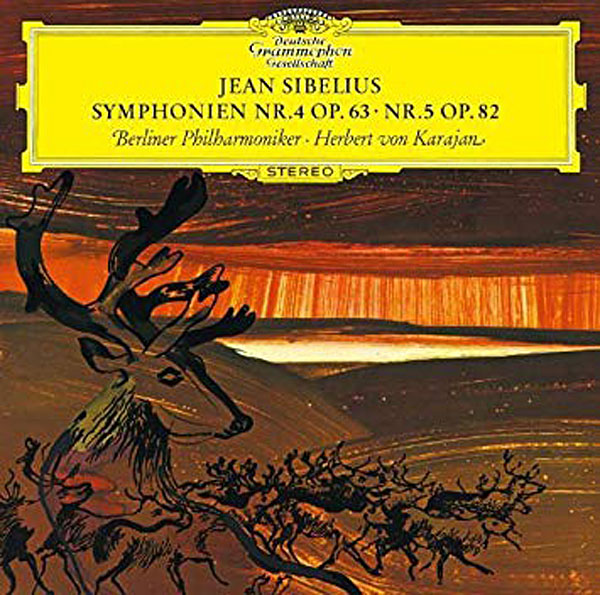
Recording of September 1966: Sibelius: Symphonies Nos.4 & 5

Sibelius: Symphonies Nos.4 & 5, The Swan of Tuonela, Tapiola
Berlin Philharmonic, Herbert von Karajan
Deutsche-Grammophon 138 974 (LP, Symphony 4). Both symphonies reissued on CD (Deutsche Grammophon 457 748 2)

Magnificent, musically natural recordings with some of the deepest, fattest bass and richest, warmest orchestral sound that's been committed to recordings for many years. The discs are a shade more lucid than the tapes, but not much. Take your pick.—J. Gordon Holt

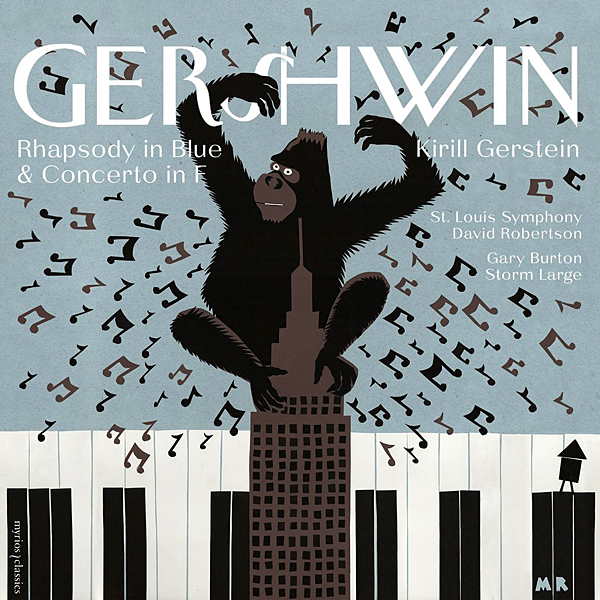
Recording of August 2018: The Gershwin Moment

Gershwin: Rhapsody in Blue (1924 jazz-band version, orch. Grofé). 1 Piano Concerto in F. 2 "Summertime." 3 Gershwin-Wild: "Somebody Loves Me," "I Got Rhythm," "Embraceable You."4 Oscar Levant: "Blame It On My Youth." 5
Kirill Gerstein, piano; 1–5 Storm Large, vocal; 3 Gary Burton, vibraphone; 5 David Robertson, St. Louis Symphony Orchestra1, 2
Myrios Classics MYR022 (CD, 24/192 FLAC). 2018. Kirill Gerstein, prod.; Stephan Cahen, prod.,1-5 eng.; 1, 2, 4, 5 Paul Hennerich, 1, 2, 4 Doug Decker, 3 engs. DDD. TT: 73:45
Performance *****
Sonics *** (CD), **** (24/192 FLAC)

I grew up with Gershwin's Rhapsody in Blue. I was the youngest in a family not particularly interested in music, and whose record collection consisted of pop music and three oddly assorted classical recordings, all on 78rpm discs: Enrico Caruso singing "Vesti la giubba," Stravinsky's The Rite of Spring (on four 12" 78s), and the 1927 recording of Rhapsody in Blue with the Paul Whiteman Concert Orchestra and Gershwin at the keyboard.

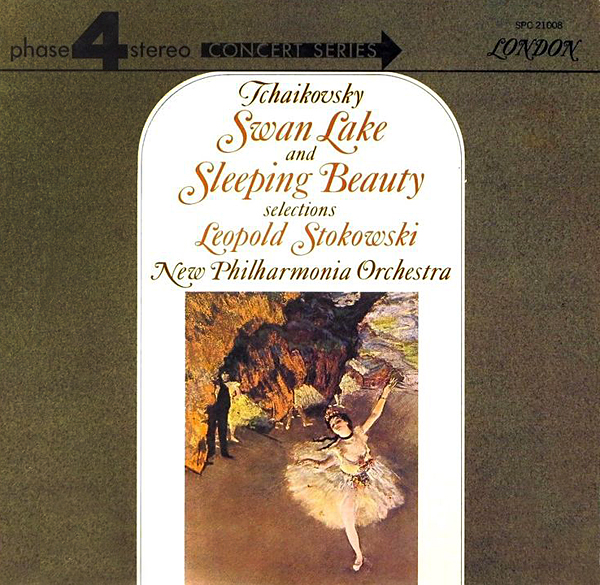
Recording of December 1966: Tchaikovsky: Swan Lake & Sleeping Beauty

Tchaikovsky: Swan Lake & Sleeping Beauty Selections
New Philharmonia Orchestra, Stokowsky
London Phase-4 SPC 21008 (LP); Ampex LCL-75008 (open-reel tape). Tony D'Amato, Marty Wargo, prods.; Arthur Lilley, eng. TT: 46:50.

These are exciting, lilting, concert-style (as opposed to ballet-style) performances of the best-known excerpts from Tchaikovsky's second- and third-most-popular ballets. (First, of course, is the Nutcracker.) The recording is a surprise, after the excesses we've heard on earlier Phase-4 recordings.

Recording of April 1967: An Audio Obstacle Course

An Audio Obstacle Course: The Shure Trackability Test Record
Shure Bros. TTR-101.

Shure's new "Supertrack" V-15 Type II pickup was designed as an answer to all those high-powered discs whose excessive modulations make them shatter all over the place on lesser pickups, But just in case anyone didn't happen to own any of these difficult discs, Shure decided to issue one of these, too. The result is a collection of some of the meanest modulations ever gathered together in one place.

Recording of February 1968: Chopin; Nocturnes

Chopin; Nocturnes
Arthur Rubinstein, piano
RCA Victor LSC-7050 (2 LPs) (reissued on CD as RCA Victor Red Seal 0902 663049-2). Max Wilcox, prod.; Tom MacCluskey, Sergio Marcotulli, engs. Recorded August 30–September 2, 1965, 2 February 21, 1967.

If these Nocturnes are never played better than this, we couldn't care less. These are exquisite performances!

The recording, via RCA Victor's Dynagroove process is a far cry from the earlier excesses that gave Dynagroove its horrid reputation among perfectionists. One is simply not aware of the recording at all, as long as it is played at the right volume, which is about what you would hear from a good first-balcony concert-hall seat.

Recording of July 2018: Life Of

Steve Tibbetts: Life Of
Steve Tibbetts, 12-string guitar, piano; Michelle Kinney, cello, drones; Marc Anderson, percussion, handpan
ECM 2599 (CD). 2018. An ECM production; Steve Tibbetts, eng.; Greg Reierson, eng., mastering. DDD. TT: 50:40
Performance *****
Sonics *****

The sound of Steve Tibbetts's guitar music is unique—one need hear only a measure or two of his new album to identify the distinct tang of his playing. Common wisdom is that a guitarist's sound is in the hands and fingers, but Tibbetts has another trick: his weathered, 50-year-old Martin D12-20 12-string acoustic guitar.

Recording of July 1968: Stravinsky: Petrouchka, Circus Polka

Stravinsky: Petrouchka, Circus Polka
Los Angeles Philharmonic, Zubin Mehta, cond.
London CS 6554 (LP/tape).

This is all the proof one could want that London's big, fat sound is more the result of their recording philosophy than of the halls they record in. One of the first London recordings ever made in the US, this has the now-familiar London sound all down the line: The big, fat low end, the richness, the superb balance, and the razor-sharp detail without zizz or zip. As usual, the result is not terribly real, but it certainly is exciting as well as being musically satisfying.

Recording of June 2018: After Bach

Brad Mehldau: After Bach
Brad Mehldau, piano
Nonesuch 7559-79318-0 (CD). 2018. Robert Hurwitz, exec. prod.; Tom Korkidis, prod. coord.; Tom Lazarus, eng., mix, mastering; Brad Montgomery, mix. ADD? TT: 69:24
Performance *****
Sonics *****

That American jazz pianist Brad Mehldau has made a recording of J.S. Bach's music should come as no great surprise to anyone who's followed his extraordinarily varied career. In many ways, it seems a natural progression.

Having become one of the most important jazz pianists of this century, and dabbled in classical-flavored music, film scores, and even performances of popular music (by Oasis Soundgarden and Nick Drake, to name just a few of the artists he's covered), Mehldau has finally gotten around to recording this album of five pieces by one of the greatest keyboard improvisers in history. Mehldau's method here is to play a more or less straight version of a Bach prelude or fugue from The Well-Tempered Clavier, BWV 846–893, followed by his own "After Bach" reimagining of the same piece.

Recording of December 1970: The Pentangle

Pentangle: The Pentangle
Terry Cox (drums), Bert Jansch & John Renbourn (guitars), Jacqui McShee (vocals), Danny Thompson (double bass), Shel Talmy, prod.
Transatlantic TRA162 (English LP), Reprise RSLP63 15 (US LP). TT: 30:52.

The first "pop" recording we've ever reviewed in Stereophile may set a precedent for future reviews if there are others that sound like this. To this untutored ear, the material is rock out of raga, but it is beautifully done and, except for the larger-than-life singer, the sound is almost shockingly good. No filthy fuzzed-up guitars here, and the pickup of the double-bass simply has to be heard to be believed. Get it, at least as a demo.

Recording of May 2018: Monteverdi: Vespers 1610

Monteverdi: Vespers 1610
Joanne Lunn, Esther Brazil, sopranos; Amy Lyddon, Rory McCleery, altos; Joshua Ellicott, Matthew Long, Nicholas Mulroy, Peter Harris, tenors; Peter Harvey, William Gaunt, bass; Dunedin Consort, His Majestys Sagbutts & Cornetts; John Butt
Linn CKD 569 (2 CDs). 2017. Phil Hobbs, prod.; Robert Cammidge, eng. DDD. TT: 94:00
Performance ****½
Sonics *****

As the old joke does not go, How do you get to the Papal Chapel? Audition, audition, audition. There you are, gifted and, for the early 1600s, relatively famous. You practically invented opera. You've worked for years at what seems a cushy job as the court composer to the Dukes of Gonzaga in Mantua, but you're underpaid, and feeling as if you need and deserve more. And so you self-publish, under the title Vespers 1610, a 90-minute collection—psalm settings, a motet, a hymn, a Magnificat—that highlights all of your compositional gifts.

Advertisement
Advertisement
Advertisement