Recording of the Month

Sort By:  Post Date TitlePublish Date

Recording of September 2011: Son of Chamber Symphony

John Adams Son of Chamber Symphony, String Quartet
John Adams, International Contemporary Ensemble; St. Lawrence String Quartet
Nonesuch 523014-2 (CD). 2011. Judith Sherman, prod.; John Kilgore, John D.S. Adams, engs.; Chris Allen, Tom Gloady, Nathan Chandler, asst. engs. DDD? TT: 54:00
Performance ****½
Sonics ****

When John Adams was working on his Chamber Symphony (1992), he became aware that his son Sam was in the next room watching old American cartoons, presumably those by Warner Bros. that used music by the great Raymond Scott. Hyperkinetic borrowings from Scott's witty scores made their way into that earlier work, and now into its successor, a fact hinted at by its humorous title: Son of Chamber Symphony. There's even a moment early on in this new work when the distinctive rhythmic rumble of Scott's masterpiece, "Powerhouse," can be fleetingly heard in what is, overall, a short but very sweet triumph.

Recording of September 1988: CBS's Serious-Suited Young Jazzmen

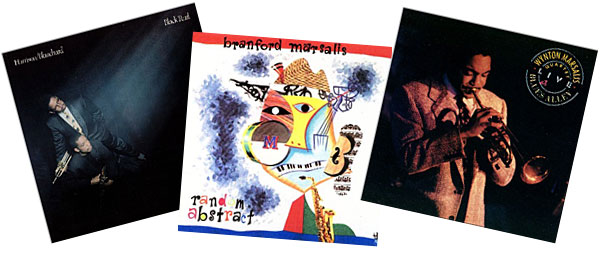
Wynton Marsalis Quartet: Live at Blues Alley
Wynton Marsalis, trumpet; Marcus Roberts, piano; Robert Leslie Hurst III, bass; Jeff Watts, drums
Knozz-Moe-King (4 takes), Juan (3 takes), Just Friends, Cherokee, Delfeayo's Dilemma, Chambers of Tain, Au Privave, Do You Know What It Means To Miss New Orleans, Autumn Leaves, Skain's Domain, Much Later
Columbia PC2 40675 (2 LPs), C2K 40675 (2 CDs). Tim Geelan, eng.; Steve Epstein, prod. DDA/DDD. TT: 117:39

Branford Marsalis: Random Abstract
Branford Marsalis, saxes; Kenny Kirkland, piano; Delbert Felix, bass; Lewis Nash, drums
Yes and No, Crescent City, Broadway Fools, LonJellis, I Thought About You, Lonely Woman, Steep's Theme, Yesterday's,* Crepuscule With Nellie*
Columbia OC 44055 (LP), CK 44055 (CD*). Tomoo Suzuki, eng.; Delfeayo Marsalis, prod. ADA/ADD. TTs: 58:46, 74:10*

Harrison/Blanchard: Black Pearl
Terence Blanchard, trumpet; Donald Harrison, saxes; Cyrus Chestnut, piano; Reginald Veal, bass; Carl Allen, drums
Selim Sivad, Black Pearl, Ninth Ward Strut, Infinite Heart, The Center Piece, Somewhere, Dizzy Gillespie's Hands, Toni, Birth of the Abstract
Columbia FC 44216 (LP), CK 44216 (CD). Tim Williams, eng.; George Butler, prod. ADA/ADD. TT: 53:09

"Jazz isn't dead—it just smells funny," said Frank Zappa in 1974. Back then, in those dark days of Fusion, one could be forgiven for thinking that jazz's greatest years were over, that the form had died, or at least mutated enough, in its wooing of the huge, bucks-wielding rock audience, to be unrecognizable, or at least unlovable. Then, in 1982, fresh from Art Blakey's band (Blakey remains a seemingly bottomless well of fresh young talent; Harrison/Blanchard, too, worked with him), Wynton Marsalis's eponymous debut LP was released. This was possibly one of the most important jazz releases of all time, not so much because of its musical content as its stylistic choices: intelligent, hard-edged, fully fledged acoustic jazz in the style of Miles Davis's second great quintet. Marsalis, in fact, used most of that quintet on half of that release, the other half his new band of Kirkland, Watts, Moffatt, and brother Branford.

Recording of August 2011: Bon Iver

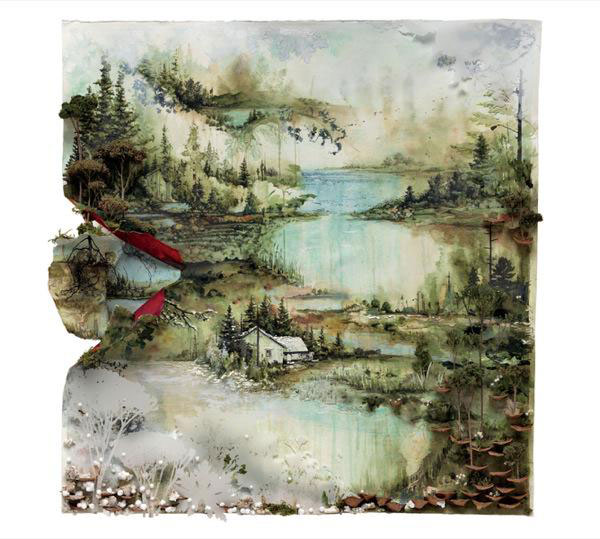
Bon Iver: Bon Iver
Jagjaguwar 52135 (CD). 2011. Justin Vernon, prod., eng.; Brian Joseph, eng.; Nate Vernon, Andy Immerman, asst. engs.; Greg Calbi, mastering. AAD. TT: 39:28
Performance ****
Sonics ****

Many, though certainly not all, musicians of most genres dream of composing, crafting, birthing a hit record—one they will forever be known for, and that will make them enough money that they'll never have to sleep on another hard floor or friend's stained couch as long as they live. Very few fulfill this dream, and those who do often don't know why or just how it happened.

Recording of October 1988: Pontiac

Lyle Lovett: Pontiac
MCA/Curb MCA-42028 (LP), MCAD-42028 (CD). Willie Pevear, eng.; Tony Brown, Lyle Lovett, prods. DDA/ DDD. TT: 35:41

Jesse Winchester has been silent for seven years now, and we needed some mint-julep–voiced cowboy to write and croon such smooth, fluid, irresistible songs, no sharp edges and none needed, thanks. Thank God Lyle Lovett stepped in; we could have done much, much worse.

Recording of July 2011: So Beautiful or So What

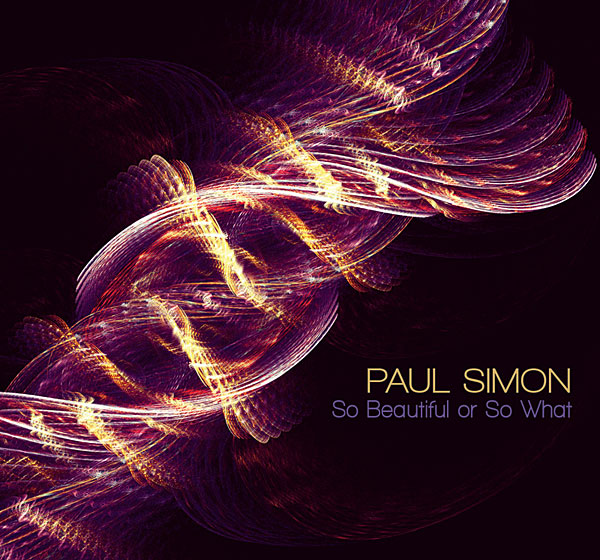
Paul Simon: So Beautiful or So What
Hear Music HRM-32814 (CD; the LP comes with a voucher for hi-rez downloads). 2011. Paul Simon, Phil Ramone, prods.; Andy Smith, eng. AAD? TT: 38:15
Performance ****½
Sonics ***½

"Love & Blessings"? "Questions for the Angels"? It seems that Paul Simon, who will turn 70 in October, has begun to ask life's Big Questions in preparation for his own exit. Yet in this case, seeming is not reality, and at 69, Simon has returned to his polyglot musical influences (that he may or may not have heisted...but that's an argument for another day) to fashion a startlingly powerful collection of songs that successfully mix the jaunty near-danceability of his world-music adventures with serious lyrics about impending death, the vagaries of love, and, especially, the many unknowables contained in the word God.

Recording of November 1988: Pierre Verany Digital Test CD

A useful test CD has recently come my way, courtesy of the Stereophile editorial staff in Santa Fe (a copy was provided to each of the contributing equipment editors). Digital Test was produced in France by Pierre Verany (PV.788031/788032, 2 CDs), and is distributed in the USA by Harmonia Mundi. It provides a wide variety of tests and useful musical selections, but the subject of special interest here is its test bands for evaluation of laser-tracking and error-correction capability.

There are two interrelated parameters which, in the absence of drop-outs or information gaps—we'll get to them shortly—can affect the ability of a player to track the CD "groove" (or "whorl," as the quaintly translated disc booklet calls it): linear "cutting velocity" and track pitch. The standards for the first establish a range of 1.2 to 1.4 meters/second (the rotation speed of the disc varies from 500 to 200rpm from the inside to the outside of the disc to maintain this linear velocity); for the second, the spacing between adjacent tracks, from 1.50 to 1.70 micrometers (µm).

Recording of June 2011: Dinastía Borja

Jordi Savall: Dinastía Borja
Music by Guillaume Dufay, Josquin Des Prez, Lluis del Mila and others Jordi Savall, viola da gamba, director; Hespèrion XXI, La Capella Reial de Catalunya
Alia Vox AVSA 9874A/C (3 SACD/CDs). 2010. Jordi Savall, prod.; Toni Figueras, recording coordinator; Aline Blondiau, Nicolas de Beco, Dominique de Spoolberg, Olivier de Spoolberg, recording assistants. AAD? TT: 3:43:19
Performance *****
Sonics *****

As is usually the case, a recent performance at New York's Lincoln Center by Jordi Savall, his instrumental ensemble, Hespèrion XXI, and his choir, La Capella Reial de Catalunya, was a triumph—his impeccably researched and realized early music had the crowd on their feet. In lesser hands, such exotica as old-world Spanish music influenced by indigenous forms from Mexico would have trouble drawing a paying crowd, let alone filling Alice Tully Hall; but Savall's unique vision has rescued and revitalized obscure musical forms aplenty, from the medieval, renaissance, and baroque periods. Along the way he's also managed to record notable versions of more popular works of the standard classical repertoire, such as the Mozart Requiem, and J.S. Bach's Brandenburg Concertos.

Recording of December 1988: Bird (Original Soundtrack)

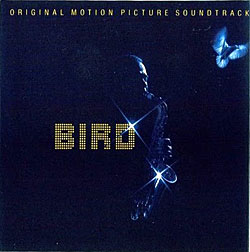
CHARLIE PARKER: Bird (Original Soundtrack)
Charlie Parker, Charles McPherson, alto saxes; Red Rodney, trumpet; Monty Alexander, piano; Ray Brown, Ron Carter, basses; Charlie Shoemake, vibes; John Guerin, drums; others
Columbia SC 44299 (LP), CK 44299 (CD). Bobby Fernandez, Neal Spritz, engs.; Clint Eastwood, Lennie Niehaus, prods. ADA/ADD. TT: 41:21

Unlike Round Midnight, which encased Dexter Gordon's Bud Powell character in a soft-focus, romanticized, soundstagily mythic NY/Paris jazz juncture that never quite was (Herbie Hancock's music direction was deliberately inauthentic for that or any time or place other than the film studio), producer/director Clint Eastwood's labor-of-love Bird attempts to place Charles Christopher Parker Jr. squarely in the bebop world he created. The modern musicians he "plays" with here blow strictly in that tradition, accompanying Parker's solos, as peeled off the original Savoy, Verve, and home recordings with audio wizardry (massive EQing, dynamic noise filters, etc.).

Recording of May 2011: Dynamite Steps

The Twilight Singers: Dynamite Steps
Sub Pop SPCD 844 (CD). 2011. Greg Dulli, prod.; Brenndan McGuire, Ben Mumphrey, Steve Nalepa, Mike Napolitano, others, engs. AAD? TT: 43:03
Performance ****
Sonics ****

Unleash "Retarded," the unforgettable first track of Up In It (1990), the Afghan Whigs' first Sub Pop album—the one with the eerie stitched-up hand on the cover—and immediately the madness seeps out. No one has ever done the angry leer and tormented spat quite like AW singer/songwriter Greg Dulli. As the charismatic leader of one of the nastiest, hardest-edged live acts ever to prowl a 1990s indie-rock stage, he and the Whigs were one of the Yo MTV 120 Minute generation's most striking acts—one that combined buzzy guitar thunder with odd but welcome leanings toward classic R&B that persist to this day in the Twilight Singers. The assault of the Cincinnati-based Whigs was led by Dulli, a seemingly normal Ohio boy whose unhinged wailing, self-flagellating lyrics, and shrieking, Cobra-like stage persona made him a rock star: dangerous candy for the girls, unhinged fury for the fellas.

Recording of January 1989: Live and Let Live!

BOBBY KING & TERRY EVANS: Live and Let Live!
Rounder 2089 (LP), CD 2089 (CD). Larry Hirsch, eng.; Ry Cooder, prod. AAA/AAD. TT: 44:42

If you've heard a Ry Cooder album in the last 12 years, you've heard Bobby King and Terry Evans—they're the gorgeously voiced gospel/R&B singers who've backed up Ry while he's learned to sing in public—and from whom he can't help but have learned a lot. To crib from the liner notes, King is from a Louisiana gospel background, while Evans sang R&B in Mississippi. Their music together is a seamless blend of the best of both sides of the churchyard gate, smack dab in the middle of the strongest undercurrents of American music. Virtually every tune is a gem, but "Let Love Begin," so warm and lovingly sensual it'll melt your speakers, and the best version I've ever heard of "Dark End of the Street," are instant classics. "Saturday Night" has a hint of sprung Cajun rhythm, and "Let Me Go Back to the Country" has that vital feel of a pick-up band one by one sitting down to sit in, music made for the sheer joy of singing and playing. Only "Bald Head," another misogynistic Cooder tune, falls flat, though not for lack of trying by King & Evans.

Advertisement
Advertisement
Advertisement