Stand Loudspeaker Reviews

Sort By:  Post Date TitlePublish Date

Technics SC-CX700 active loudspeaker system
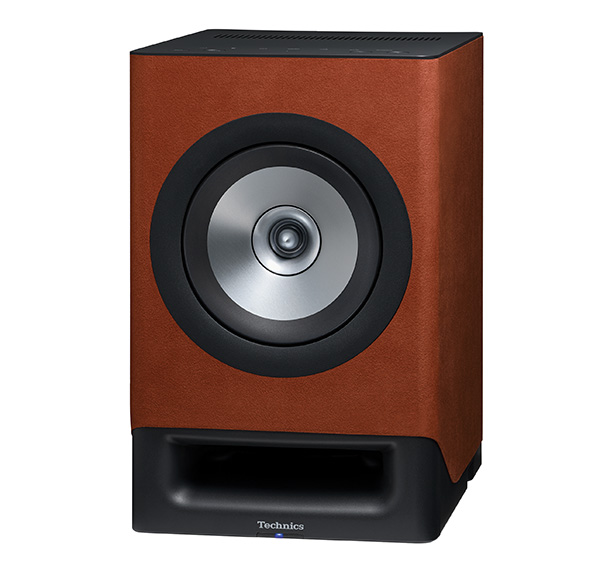
The usual Specifications sidebar in this review is a nuts-and-bolts listing of the electrical and physical properties of the Technics SC-CX700 loudspeaker ($2999.99/pair), who made it and where, and a widely varying amount of information about its electrical and acoustical performance. The information comes from the included literature, available downloads, and whatever I could find on the manufacturer's website.

Note the complete absence of the usual technical information about the design or construction of the coaxial driver or about the crossover frequency and slope. Missing, too, are performance specifications for frequency response, sound-pressure level, and distortion. That disappoints me because I like numbers, but all the really interesting stuff about these speakers—though expressed without as many numbers as I'd wish—can be found on the Technics website. These include: what Technics calls "Acoustic Solitude Construction," which isolates the electronics from the loudspeakers structurally and spatially; "Model Based Diaphragm Control," which adjusts diaphragm movement in real time; and "Space Tune," which includes four acoustical presets and two levels of measurement-based room correction.
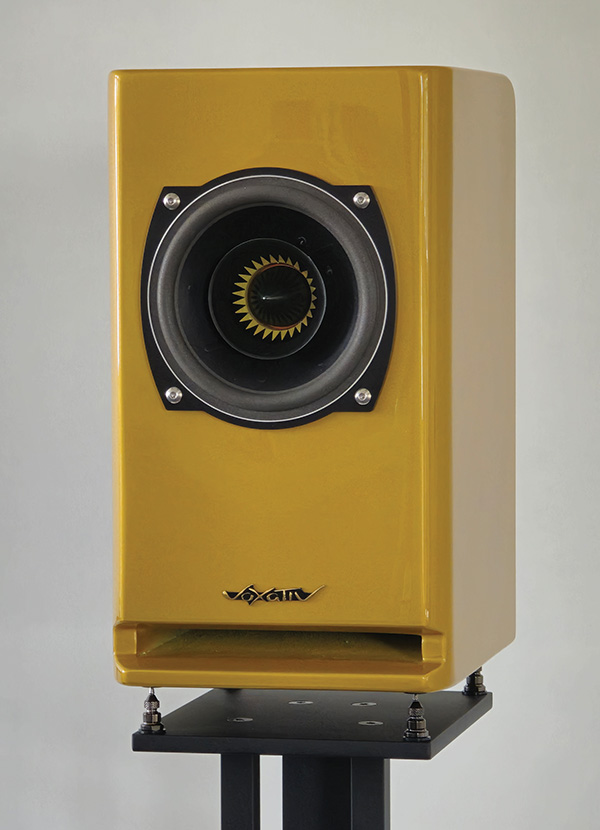
Gramophone Dreams #95: The Voxativ Hagen2 Monitor loudspeaker

I think I just found the perfect Herb speaker. It uses a hand-crafted 5" wide-range driver with a cone made from Japanese calligraphy paper. It rolls off around 50Hz at the bottom and 30kHz at the top. It has no crossover. Its cabinet is made of MDF that responds loudly when I tap it with my fingernails. Inside is what its designer calls a "short horn," which appears to harmlessly disperse back-cone energy while adding energy below the driver's cutoff frequency. Mainly, though, it's a perfect Herb speaker because it is naturally phase coherent. And sparkplug fast. And completely unmuffled.

This speaker I'm describing is Voxativ's new Hagen2 Monitor. To say it is a "Herb speaker" is to distinguish it from a John, Jason, or Kal speaker, or even a Ken or Alex speaker. If you want to know what kind of sound an audio reviewer values, notice which speakers they embrace, how well they understand them, and how long they stick with them.

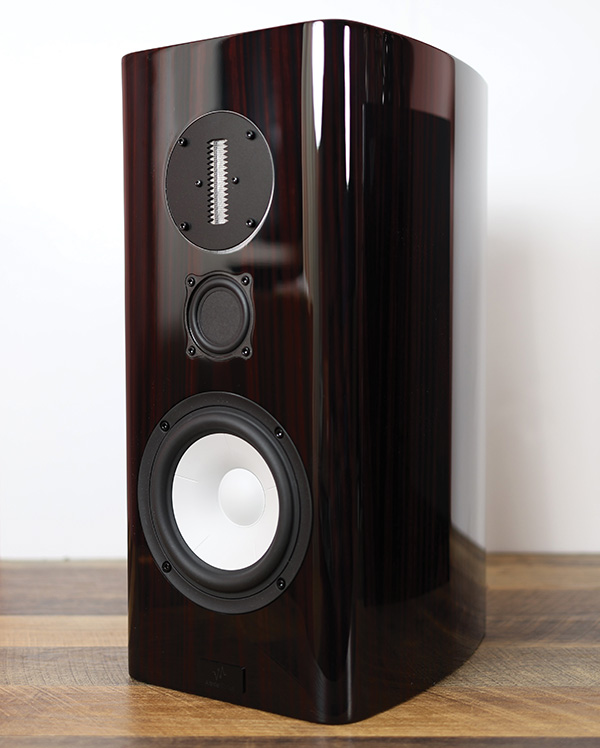
Philharmonic Audio BMR Monitor loudspeaker

Let's get this out of the way: The BMR Monitor may be a monitor, but it isn't a bookshelf or desktop speaker any more than a yacht is a dinghy. Heave a slick-surfaced, 32lb BMR from its shipping carton, then wrap your arms around its svelte figure, with its fancy array of drivers and rich-colored piano-lacquer finish, and you'll understand this speaker deserves better than to be tucked away amid books or flanking a computer screen.

I was so enamored by the look of the BMR Monitor, I initially thought its name didn't do it justice. It sounded too nondescript. But with time and growing familiarity, I came to find the BMR moniker fitting—dare I say sleekly masculine sounding, like a phonetic cross between "Bimmer" and a wolf growl. The BMR Monitor—there's also a BMR Tower—is so named for its midrange driver—a Balanced Mode Radiator. We don't come across many of these in our hobby, but it's not new: The technology was invented in 1925.

Brilliant Corners #25: Devon Turnbull and the Klipsch-Ojas kO-R1 loudspeaker

"Paul Klipsch was a genius," Roy Delgado told me recently, with the sound of genuine amazement in his voice. "Me, I'm just a tinkerer." I've spoken to Delgado, Klipsch's chief audio engineer, a handful of times over the past few years and find him affable, plainspoken, and almost absurdly humble. His LinkedIn page describes him simply as "engineer at Klipsch." His bio on the Klipsch Museum website lists his interests as "a closer relationship with God [and] the pursuit of the ever-elusive largemouth bass." To be sure, Delgado holds several patents, has an intimidating grasp of loudspeaker design, and is anything but a tinkerer. But it was still weird to see him—dressed in the T-shirt, light jeans, and work boots of an Arkansas fishing enthusiast—at the Nine Orchard Hotel during last year's New York Fashion Week.

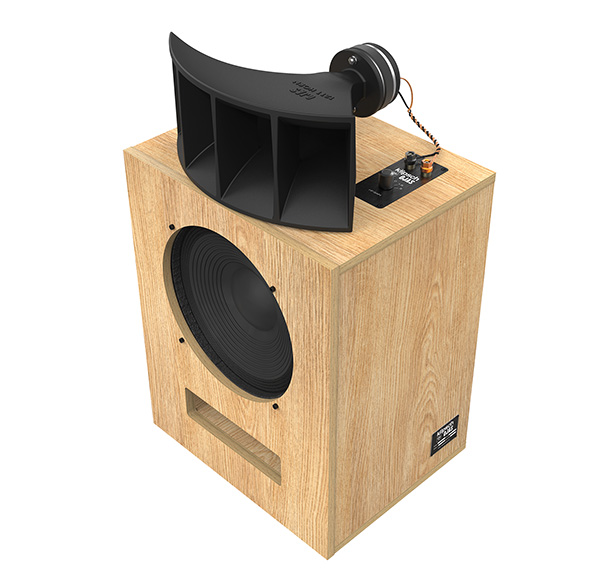
We were there for the launch of a loudspeaker, a collaboration between the Little Rock–based Klipsch Group and Ojas, the nom de solder of artist and designer Devon Turnbull.

Totem Acoustic Element Fire V2 loudspeaker

Totem Acoustic was founded in 1987, in Montreal, Canada, by a former high school math teacher named Vince Bruzzese. The company's first product, the Model 1 loudspeaker, impressed me so much I bought a pair.

These little boxes steered the music straight into my brain—just like Quads and Snells...Today, those speakers look and sound like vintage pipe-and-slippers standmounts. This is especially true when compared to Totem Acoustic's brand-new Element Fire V2. Totem's new Fire looks Maybach-level glossy, and windswept, and trés moderne, but also smart and down-to-business, as befits its made-in-Canada roots.

PS Audio Aspen FR5 loudspeaker

I remember the first PS Audio product: a simple phono stage. It was so simple—a passive RIAA EQ filter flanked by a pair of primitive op-amps—that when the schematic was made public, I built one myself; I was in the midst of my DIY years. I thought it was, to use a word from that time, nifty. Paul McGowan went on to other things and other companies, eventually reviving PS Audio and building it into its present form with a wide range of interesting and substantive products. Most recently, PS Audio added a line of loudspeakers inspired by Paul's erstwhile partner in other ventures, the late Arnie Nudell.

The PS Audio Aspen speaker line has four models, three 3-way floorstanders (FR30, FR20, FR10) and a single two-way standmount (the FR5, $3499/pair).

Quad Revela 1 loudspeaker

Hi-fi's vintage-tech revival feels like a Don Draper fever dream. You know Draper, right? The smooth-talking ad man from Mad Men? In one episode, he pitches a new Kodak slide projector, but instead of focusing on the science and the specs, he calls it a "carousel"—think bouncing painted horses—and says it will take people back to a simpler time.

For its early-'60s moment, that slide projector is high-tech—and "technology is a glittering lure," Draper tells the assembled group of cigarette-smoking suits around a conference room table. Draper mentions Teddy, a Greek former colleague Draper says taught him the ropes years ago. Teddy says that "new" is the most important idea in advertising, but he also talks about a deeper bond that can sometimes be established with a product. "Nostalgia. It's delicate, but potent."

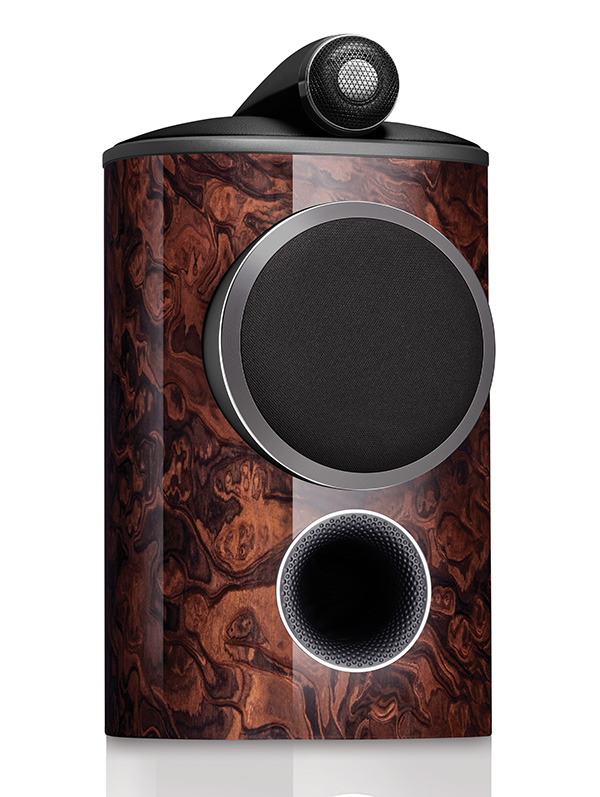
Bowers & Wilkins 805 D4 Signature loudspeaker

The "Bowers" in the name of British manufacturer Bowers & Wilkins (B&W) refers to founder John Bowers, whom I got to know fairly well before he passed in 1987. In recent years, I've reviewed two Bowers & Wilkins loudspeakers: the 705 Signature two-way standmount in the December 2020 issue and the Diamond Series 804 D4 three-way floorstander in the January 2022 issue. More recently, Tom Fine reviewed the three-way, floor-standing Signature Series 801 D4 in March 2024.

Currently there are two models in the Signature Series, which was launched in 2023 to pay tribute to the company's groundbreaking John Bowers Silver Signature from the early 1990s: the 801 D4 and the subject of this review, the two-way 805 D4 standmount, which B&W describes as its "highest performance standmount ever."

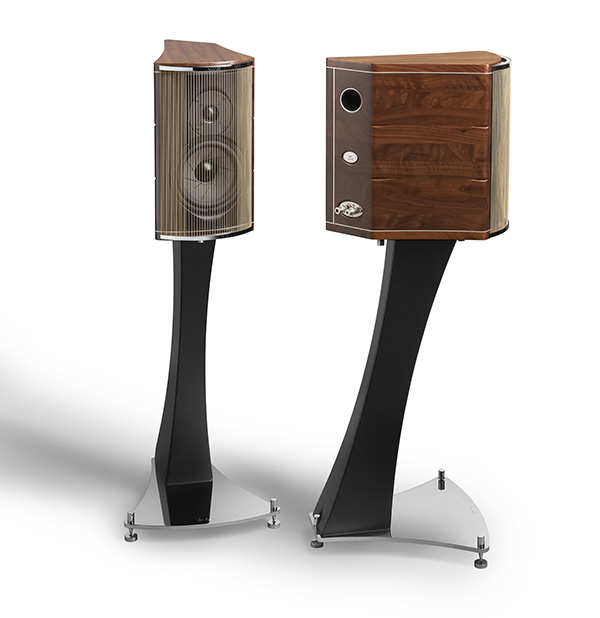
Franco Serblin Accordo Goldberg loudspeaker

As founder and chief designer of Sonus Faber, Franco Serblin designed and manufactured many loudspeakers of acclaimed high quality, mainly in box form. Nevertheless, he remained painfully aware that such conventional rectangular parallelepiped constructions inevitably possessed an inherent and hard-to-suppress resonant signature characteristic of box-form cabinetry, significantly differing from that for a musical instrument. Franco had long obsessed over the sound and construction of classical string instruments, violins, violas, and cellos made by grand masters over centuries. He valued highly those richly resonant, expressive, complex sonic signatures.

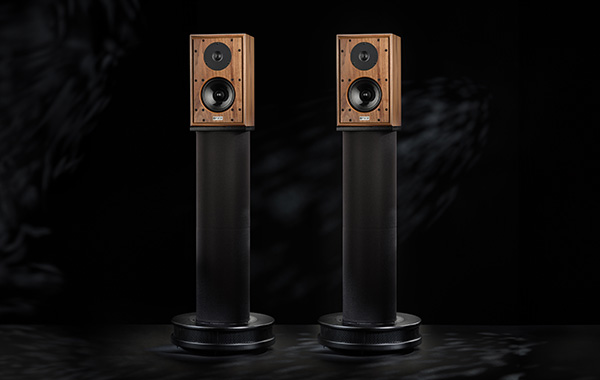
Gramophone Dreams #86: Harbeth P3ESR XD loudspeaker and Nelson subwoofer/stand

After lifelike timbres and speed-train momentum, how a loudspeaker projects its energy into my room is the main thing that determines how my sound system feels as I listen to it. When I review loudspeakers, I try to notice the unique tone and force of their "voice" as they speak into my room. Do they stand too close, stick out their chests, and brag loudly in third harmonics? Or do they have small voices that force me to lean in to make out what they're saying?

With a miniature box speaker like my reference Falcon Gold Badge LS3/5as or the similarly sized Harbeth P3ESR XDs, which I'm auditioning this month, I have to sit very close to experience any of their direct, "off-the-cone" energy. If my listening position gets too far away or the speakers are positioned too far apart or too far from the wall behind them, the sound thins and loses body.

I didn't need to sit close to those 1947 Altec A5 Voice of the Theatre horns I used to use.

Advertisement
Advertisement
Advertisement