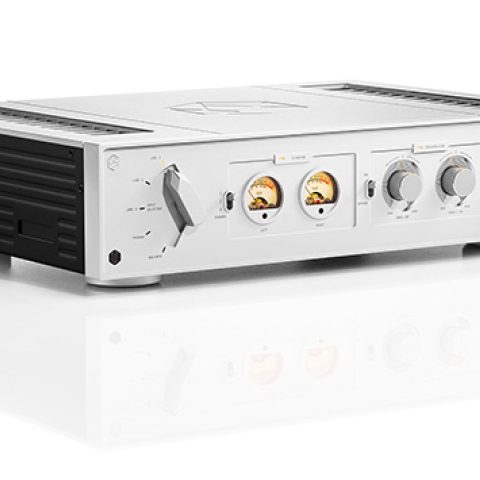
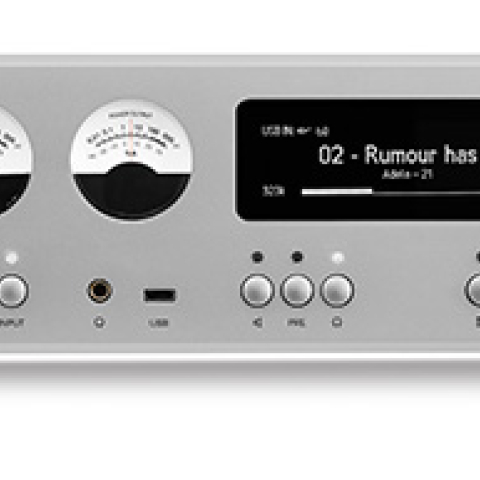
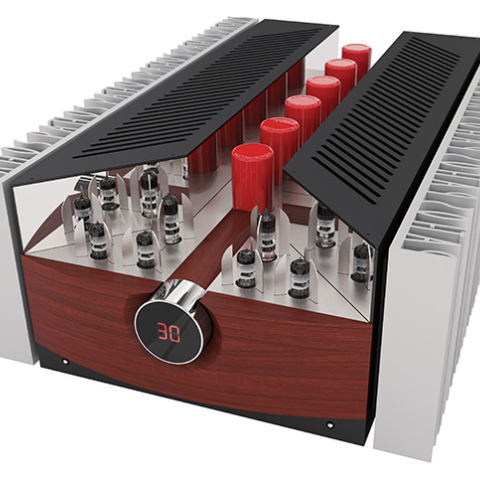
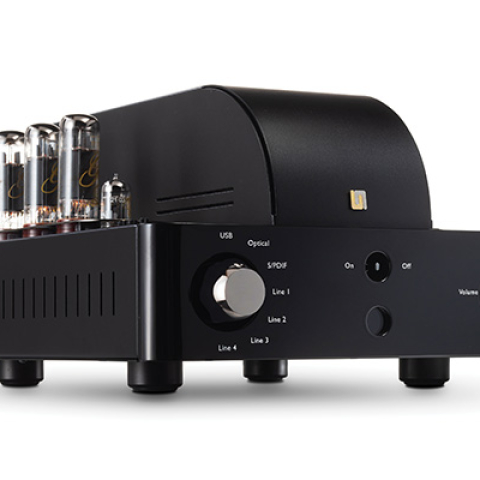
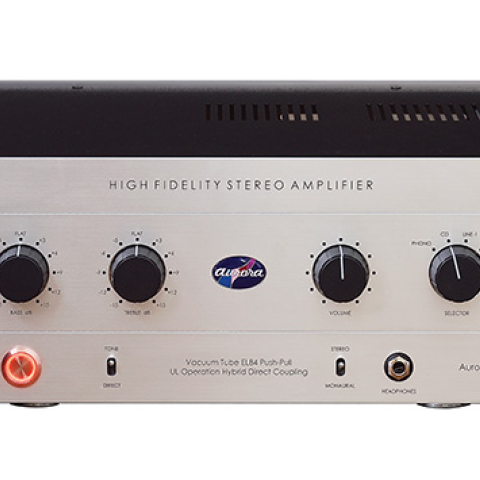
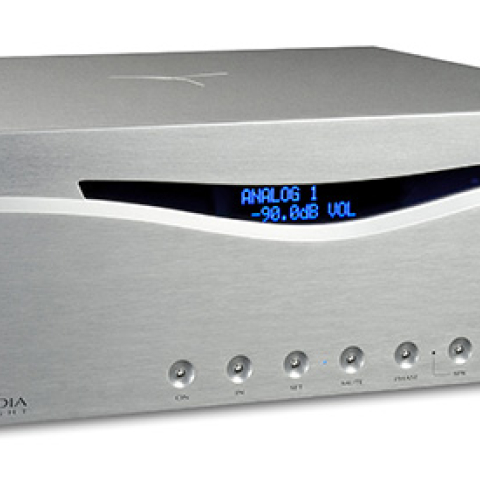
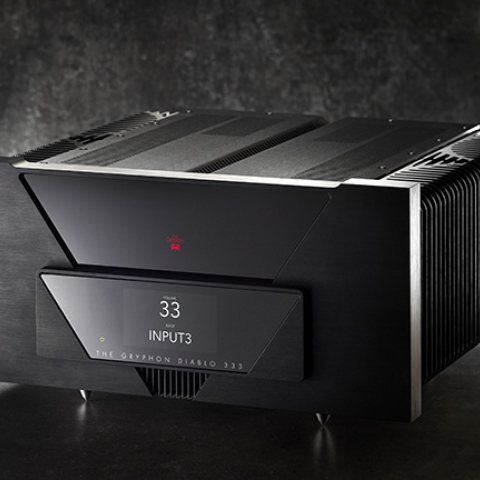
Returning to planet Earth, I was forced to admit that my reference dCS/D'Agostino setup conveyed more complexity in strings and greater detail, a livelier top, stronger bass (albeit not always so impeccably controlled), a wider soundstage with greater continuity between soundstage boundaries, and greater color contrasts, liquidity, air, and depth, but at much greater cost. The more I listened, the more the class-D U-380 impressed with the amount of color and life it could deliver from tracks I knew very, very well.
Phono and digital at Gary's
One afternoon, the Aavik U-380 made its way to Dr. Gary Forbes's rig. There, it kept company with an Immedia RPM-1 turntable with SME 309 arm and Lyra Titan i cartridge, Rega Saturn CD player, and Avalon Arcus loudspeakers. It's an older setup, with minimal power and room treatment, and what might euphemistically be described as "nondescript cables," save for Kimber PK10 power on the Aavik, a loaner Pangea AC-9 power cord on the Rega, and an old Nirvana digital BNC on the CD player. Compared to Gary's reference setup, which includes VTL's TL-2.1 preamp and ST-150 150Wpc amplifier along with a Fathom F112 subwoofer, my friend was won over. On the recent Rachael & Vilray LP (Nonesuch 599099), Gary proclaimed, "It's lovely. I'm feeling their voices in my chest, which generally happens only when there are people in the room singing to me. My reference is far more boomy; I'm definitely hearing more detail on the voices, which are more separated, and the guitar is more distinct."
After playing American funk group Vulfpeck's "Birds of a Feather," from the LP Mr. Finish Line (VULF2017RT), Gary declared, "I really like the way it flows. I'm hearing more color than through the Krell K-300i integrated that you brought over a while back; more of the singer's timbre comes through, which allows the music to flow with ease." He also gave a big thumbs up to the clarity and coherence of soul veteran Betty LaVette's "Crazy," from the LP Thankful N' Thoughtful (ANTI-87195-1).
Switching to CD, on Don Byron's "The Dicty Glide" from Bug Music (Nonesuch 79438-2), Gary found massed brass better proportioned and solo instruments standing out in more natural fashion than he usually heard. A final listen, to Andrew Bird's "Proxy War," from My Finest Work Yet (Lorna Vista LVR00556), impressed for both clarity and dynamics. I don't think Gary would have minded if I had left the Aavik at his home for an extended period so he could spend the next three years completing a fuller evaluation.
Back in the music room
Back to Serinusland. Bypassing the U-380's built-in DAC with the dCS Rossini DAC/clock combo produced a more open and liquid sound with livelier highs, greater depth, and increased color contrasts. On Byrne's "I Dance Like This," the dCS digital gear delivered greater texture in the voice, a larger and more open soundstage, and more saturated colors in the piano's midrange. But when I returned to the U-380's DAC, which is no slouch, its equally excellent transparency and special grounded smoothness were extremely appealing in their own right. Space between notes may not have been as clearly defined as through the Rossini, nor colors as vibrant, but the tactile nature of guitar and other instruments with a strong midrange component was most pleasing through the U-380's DAC. The leading edge, however, was not as strong.
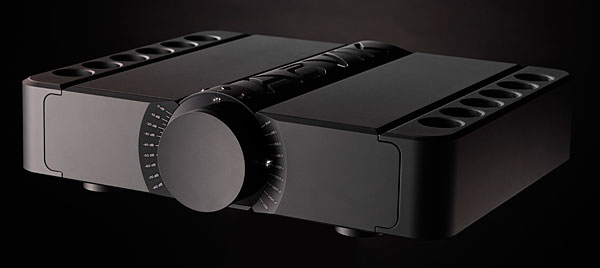 Next, a switch to the far less costly Krell K-300i with its built-in DAC. Right off the bat, bass was less clear and realistic, and the entire sound spectrum less transparent. "I Dance Like This" felt as if heard through a sonic scrim. When Byrne amped up intensity and bass got going, highs were less clear.
Bypassing the K-300i's low-cost DAC with the Rossini DAC/clock certainly improved matters. Bass foundation was far more solid, and there was an earthiness and veracity of timbre that won me over on Rickie Lee Jones's ever-fascinating take on the Rolling Stones' "Sympathy for the Devil" (Tidal, 16/44.1 FLAC), from The Devil You Know. The Krell had a markedly livelier top and wetter overall sound than the Aavik, whose touch of no-nonsense class-D dryness is mitigated by a greater range of colors than I've ever heard from class-D, but the Aavik U-380, either by itself or with the Rossini as DAC, topped the Krell for dynamics, image weight, and soundstage width and openness.
On a potential system killer, the emotionally devastating second movement ("The Ninth of January") from Shostakovich's Symphony No.11, "The Year 1905," performed live by Andris Nelsons and the Boston Symphony Orchestra (24/96 WAV download, Deutsche Grammophon 002859502), the Krell conveyed strong bass with convincing urgency but confined too much of the sound to the middle of the soundstage. The music didn't fill the space nearly as it does up close in the concert hall or through my reference monoblocks.
Michael and the Darkz supports
Next, a switch to the far less costly Krell K-300i with its built-in DAC. Right off the bat, bass was less clear and realistic, and the entire sound spectrum less transparent. "I Dance Like This" felt as if heard through a sonic scrim. When Byrne amped up intensity and bass got going, highs were less clear.
Bypassing the K-300i's low-cost DAC with the Rossini DAC/clock certainly improved matters. Bass foundation was far more solid, and there was an earthiness and veracity of timbre that won me over on Rickie Lee Jones's ever-fascinating take on the Rolling Stones' "Sympathy for the Devil" (Tidal, 16/44.1 FLAC), from The Devil You Know. The Krell had a markedly livelier top and wetter overall sound than the Aavik, whose touch of no-nonsense class-D dryness is mitigated by a greater range of colors than I've ever heard from class-D, but the Aavik U-380, either by itself or with the Rossini as DAC, topped the Krell for dynamics, image weight, and soundstage width and openness.
On a potential system killer, the emotionally devastating second movement ("The Ninth of January") from Shostakovich's Symphony No.11, "The Year 1905," performed live by Andris Nelsons and the Boston Symphony Orchestra (24/96 WAV download, Deutsche Grammophon 002859502), the Krell conveyed strong bass with convincing urgency but confined too much of the sound to the middle of the soundstage. The music didn't fill the space nearly as it does up close in the concert hall or through my reference monoblocks.
Michael and the Darkz supports
Toward the end of the review period, Michael Børresen waged psychic battle with any COVID-19 within 500m to visit Port Townsend from Denmark. After listening to several tracks, we placed three Ansuz Darkz T2S resonance support feet ($1400 apiece!) under the Roon Nucleus + server/streamer, and three more under the Small Green Computer/HDPlex LPS that powers it and other components. These supports consist of three grade 2 titanium discs whose three-layered coating of tantalum, zirconium nitrate, and diamond is said to take more than 60 hours in a particle accelerator to create. Each disc is separated by three ¼"-diameter grade-one titanium balls. We did not experiment with the option of placing additional titanium balls between each Darkz T2S and the component above it. Michael chose music we'd previously auditioned, Billie Eilish's "Listen Before I Go," from When We All Fall Asleep, Where Do We Go? (Qobuz, 24/44.1 FLAC). Along with newfound liquidity and clarity and a fuller midrange, the Darkz T2S supports delivered an amazing level of complex harmonic detail that blew me away. The track's background thunder sounded so real, and bass superb. In a rare compliment from a rival speaker manufacturer, Michael declared that he'd never heard Wilson Alexia 2s sound so good. Keeping the Darkz supports in place, we played the first movement of MTT and the San Francisco Symphony's digital-only release of Berg's Three Pieces for Orchestra (24/192 WAV, SFS Media SFS0070). I know this track backward and forward, but I'd never before been so aware of its background hiss, which is rather curious for a digital recording. The supports added liquidity to the U-380's slightly dry sound, helped deliver knockout bass, and enhanced musical flow. On the aforementioned Shostakovich, spatial depiction improved a bit, and control of the top octave (as in screaming piccolos) was superb.
Wrapping up
Without question, the Aavik Acoustics U-380 integrated amplifier delivered the finest class-D sound that I've ever heard in my system. Beyond the strong and superbly controlled bass that I've come to expect from amplification of its class, it also exhibited an uncommon range of color, dynamics, and detail. While a slight dryness of timbre and lack of ultimate brilliance were evident, they manifested in a context so musical as to render their ultimate effect perfectly suited for extended listening. To put this in some sort of context, speaking from direct experience, the difference in timbre, color, liquidity, and brilliance of the San Francisco Symphony in SF's Davies Symphony Hall and Seattle's Benaroya Hall is far greater than the sonic differences between the Aavik U-380 and the other integrateds I've auditioned. What helps put the U-380 over the top is the quality of its DAC and phono stage. The DAC may not be in the same league as that of the CH Precision I1 Universal Integrated, which costs significantly more with all the trimmings, or standalone DACs from dCS, EMM Labs, and the like, but it is 100% musical and convincing in its own right. As for the phono stage, a brief listen in my friend's system suggests that it's quite competitive. I thoroughly enjoyed every moment I spent with the class-D Aavik U-380; it delivered the kind of Class A–level sound that will prove a perfect mate for many a front end, speaker, and cable configuration. While I'd like to think that my door-to-door salesperson days are long past, if I haven't convinced you of the U-380's worth by now, perhaps it's back to Fuller I should go.
One afternoon, the Aavik U-380 made its way to Dr. Gary Forbes's rig. There, it kept company with an Immedia RPM-1 turntable with SME 309 arm and Lyra Titan i cartridge, Rega Saturn CD player, and Avalon Arcus loudspeakers. It's an older setup, with minimal power and room treatment, and what might euphemistically be described as "nondescript cables," save for Kimber PK10 power on the Aavik, a loaner Pangea AC-9 power cord on the Rega, and an old Nirvana digital BNC on the CD player. Compared to Gary's reference setup, which includes VTL's TL-2.1 preamp and ST-150 150Wpc amplifier along with a Fathom F112 subwoofer, my friend was won over. On the recent Rachael & Vilray LP (Nonesuch 599099), Gary proclaimed, "It's lovely. I'm feeling their voices in my chest, which generally happens only when there are people in the room singing to me. My reference is far more boomy; I'm definitely hearing more detail on the voices, which are more separated, and the guitar is more distinct."
Back to Serinusland. Bypassing the U-380's built-in DAC with the dCS Rossini DAC/clock combo produced a more open and liquid sound with livelier highs, greater depth, and increased color contrasts. On Byrne's "I Dance Like This," the dCS digital gear delivered greater texture in the voice, a larger and more open soundstage, and more saturated colors in the piano's midrange. But when I returned to the U-380's DAC, which is no slouch, its equally excellent transparency and special grounded smoothness were extremely appealing in their own right. Space between notes may not have been as clearly defined as through the Rossini, nor colors as vibrant, but the tactile nature of guitar and other instruments with a strong midrange component was most pleasing through the U-380's DAC. The leading edge, however, was not as strong.
Next, a switch to the far less costly Krell K-300i with its built-in DAC. Right off the bat, bass was less clear and realistic, and the entire sound spectrum less transparent. "I Dance Like This" felt as if heard through a sonic scrim. When Byrne amped up intensity and bass got going, highs were less clear.
Bypassing the K-300i's low-cost DAC with the Rossini DAC/clock certainly improved matters. Bass foundation was far more solid, and there was an earthiness and veracity of timbre that won me over on Rickie Lee Jones's ever-fascinating take on the Rolling Stones' "Sympathy for the Devil" (Tidal, 16/44.1 FLAC), from The Devil You Know. The Krell had a markedly livelier top and wetter overall sound than the Aavik, whose touch of no-nonsense class-D dryness is mitigated by a greater range of colors than I've ever heard from class-D, but the Aavik U-380, either by itself or with the Rossini as DAC, topped the Krell for dynamics, image weight, and soundstage width and openness.
On a potential system killer, the emotionally devastating second movement ("The Ninth of January") from Shostakovich's Symphony No.11, "The Year 1905," performed live by Andris Nelsons and the Boston Symphony Orchestra (24/96 WAV download, Deutsche Grammophon 002859502), the Krell conveyed strong bass with convincing urgency but confined too much of the sound to the middle of the soundstage. The music didn't fill the space nearly as it does up close in the concert hall or through my reference monoblocks.
Toward the end of the review period, Michael Børresen waged psychic battle with any COVID-19 within 500m to visit Port Townsend from Denmark. After listening to several tracks, we placed three Ansuz Darkz T2S resonance support feet ($1400 apiece!) under the Roon Nucleus + server/streamer, and three more under the Small Green Computer/HDPlex LPS that powers it and other components. These supports consist of three grade 2 titanium discs whose three-layered coating of tantalum, zirconium nitrate, and diamond is said to take more than 60 hours in a particle accelerator to create. Each disc is separated by three ¼"-diameter grade-one titanium balls. We did not experiment with the option of placing additional titanium balls between each Darkz T2S and the component above it. Michael chose music we'd previously auditioned, Billie Eilish's "Listen Before I Go," from When We All Fall Asleep, Where Do We Go? (Qobuz, 24/44.1 FLAC). Along with newfound liquidity and clarity and a fuller midrange, the Darkz T2S supports delivered an amazing level of complex harmonic detail that blew me away. The track's background thunder sounded so real, and bass superb. In a rare compliment from a rival speaker manufacturer, Michael declared that he'd never heard Wilson Alexia 2s sound so good. Keeping the Darkz supports in place, we played the first movement of MTT and the San Francisco Symphony's digital-only release of Berg's Three Pieces for Orchestra (24/192 WAV, SFS Media SFS0070). I know this track backward and forward, but I'd never before been so aware of its background hiss, which is rather curious for a digital recording. The supports added liquidity to the U-380's slightly dry sound, helped deliver knockout bass, and enhanced musical flow. On the aforementioned Shostakovich, spatial depiction improved a bit, and control of the top octave (as in screaming piccolos) was superb.
Without question, the Aavik Acoustics U-380 integrated amplifier delivered the finest class-D sound that I've ever heard in my system. Beyond the strong and superbly controlled bass that I've come to expect from amplification of its class, it also exhibited an uncommon range of color, dynamics, and detail. While a slight dryness of timbre and lack of ultimate brilliance were evident, they manifested in a context so musical as to render their ultimate effect perfectly suited for extended listening. To put this in some sort of context, speaking from direct experience, the difference in timbre, color, liquidity, and brilliance of the San Francisco Symphony in SF's Davies Symphony Hall and Seattle's Benaroya Hall is far greater than the sonic differences between the Aavik U-380 and the other integrateds I've auditioned. What helps put the U-380 over the top is the quality of its DAC and phono stage. The DAC may not be in the same league as that of the CH Precision I1 Universal Integrated, which costs significantly more with all the trimmings, or standalone DACs from dCS, EMM Labs, and the like, but it is 100% musical and convincing in its own right. As for the phono stage, a brief listen in my friend's system suggests that it's quite competitive. I thoroughly enjoyed every moment I spent with the class-D Aavik U-380; it delivered the kind of Class A–level sound that will prove a perfect mate for many a front end, speaker, and cable configuration. While I'd like to think that my door-to-door salesperson days are long past, if I haven't convinced you of the U-380's worth by now, perhaps it's back to Fuller I should go.