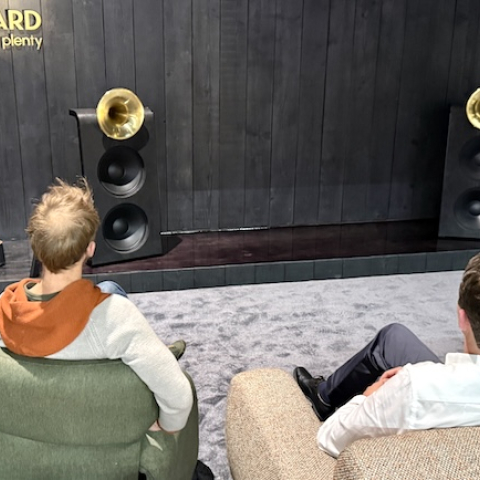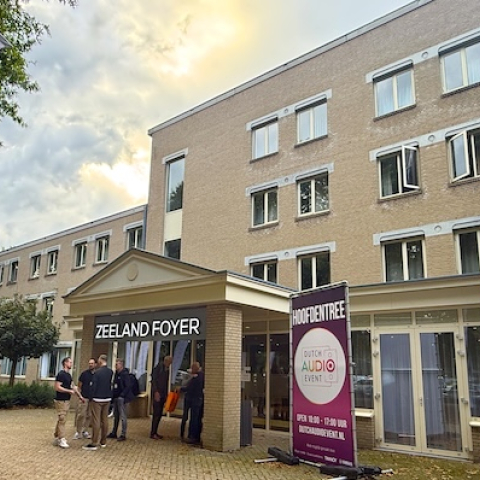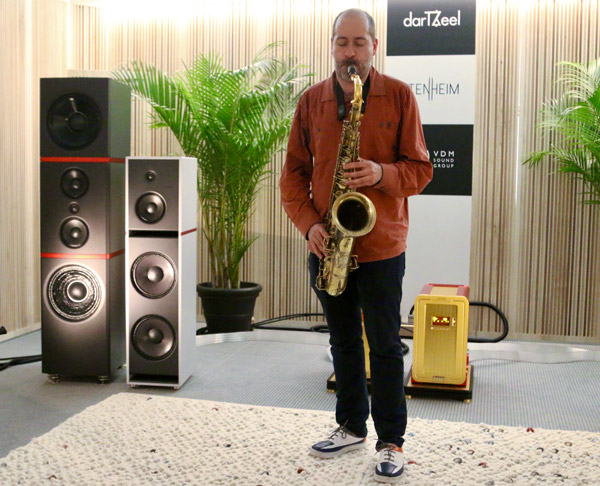
Parisian high-end audio dealer AnaMighty Sound's room, F114 in Atrium 4, showed several products made in Switzerland from darTZeel, Stenheim, and Nagra. The room also became a mini-concert venue for a couple of demo sessions on Saturday that incorporated live music: Jazz saxophonist Jérôme Sabbagh played solo, accompanied by playback of his No Filter album bandmates on the room's system. They played 24-bit/96kHz versions of the tracks with Sabbagh's sax parts/tracks omitted.
These half-hour presentations were a nice diversion; a different way of showing how, or to what extent, a system can deliver a dynamic, true-to-life sense of live-music action versus—or here, in tandem with—reproduction of recorded tracks. The bass in particular sounded rich and substantial, the instrument's three-dimensional body apparent. Sabbagh's tenor sax obviously sounded real. It seemed to blend well in scope, staging, and scale with the other musicians on the recording. A pleasing presentation.
 The system included Stenheim Ultime Reference Two loudspeakers (demos also alternated with Stenheim's Alumine 5 SE speakers) driven by a pair of darTZeel NHB-468 monoblock amplifiers (above), preceded in the chain by a darTZeel NHB-18NS preamplifier and NHP-18NS phono preamplifier. The amplification components are fully discrete designs and the preamplifiers are battery-powered. A darTZeel LHC-208 integrated amplifier with internal DAC and network streamer was also in the system; a Nagra CD player was another source on-hand.
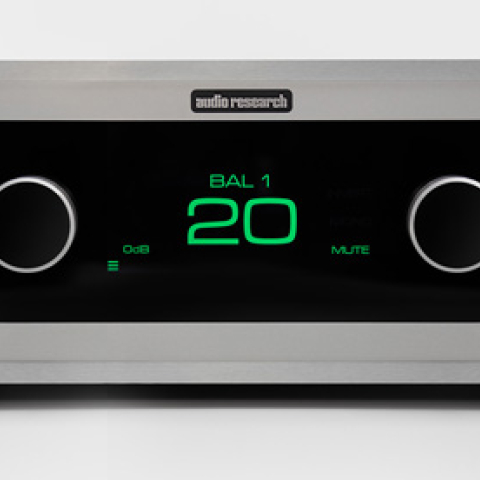
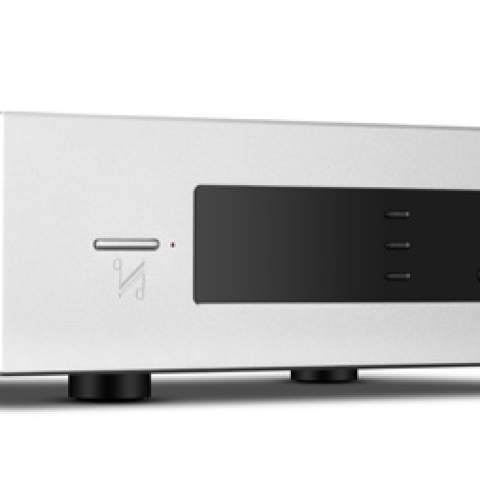
The NHB-18NS preamp, whose front panel states "zero contact signal path," is intended to get out of the music's signal path. Instead of using relay switches, its volume control is controlled "very carefully" with analog processors and LDR (light dependent resistance) to avoid contact and minimize noise. It uses zero global feedback (and only a bit of local negative feedback).
The system included Stenheim Ultime Reference Two loudspeakers (demos also alternated with Stenheim's Alumine 5 SE speakers) driven by a pair of darTZeel NHB-468 monoblock amplifiers (above), preceded in the chain by a darTZeel NHB-18NS preamplifier and NHP-18NS phono preamplifier. The amplification components are fully discrete designs and the preamplifiers are battery-powered. A darTZeel LHC-208 integrated amplifier with internal DAC and network streamer was also in the system; a Nagra CD player was another source on-hand.
The NHB-18NS preamp, whose front panel states "zero contact signal path," is intended to get out of the music's signal path. Instead of using relay switches, its volume control is controlled "very carefully" with analog processors and LDR (light dependent resistance) to avoid contact and minimize noise. It uses zero global feedback (and only a bit of local negative feedback).
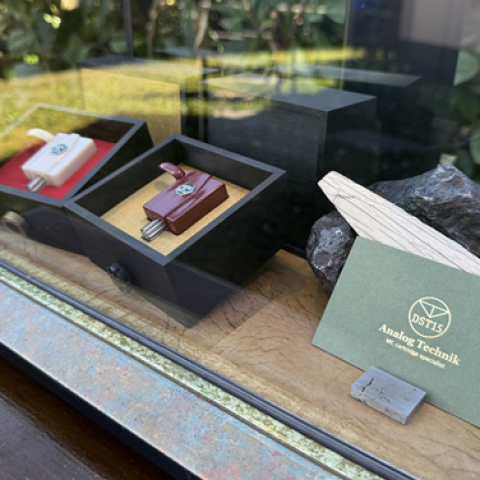
 The analog sources included a Studer A807 open-reel tape deck/recorder and—mostly—a Döhmann Helix One Mk2 turntable (above), with one of its tonearms fitted with a pre-production prototype of a new darTZeel MC cartridge (below) developed in partnership with AnaMighty Sound CEO François Saint-Gérand ("Consider Every Option" read his card), whose dealership also repairs cartridges.
 The cartridge has a ruby cantilever, and its square-shaped diamond stylus is made to have broader surface contact within the groove—about 10 times more contact area compared to many cartridges, according to Saint-Gérand, to get the most information possible from the grooves. It's a cross-coil type with silver coils. Although the pre-pro prototype (say that three times fast) is ultra-low-output—with a reported 0.075mV output spec—it doesn't need a step-up transformer (at least not in that setup) because the phono preamp is quiet enough, he added. The cartridge will be made in Hungary with the help of laser technology; production is targeted by the end of the year.
Many of the MOC venue's rooms' can be tricky to tame sonically. Here VDM Sound Group founder/designer Igor Fiorini installed custom acoustic panels made of wood to control the acoustics by absorption and reflection. Based in Rome, Italy, VDM Sounds Group also provides custom room treatments to pro-audio clients, recording studios, etc.
The cartridge has a ruby cantilever, and its square-shaped diamond stylus is made to have broader surface contact within the groove—about 10 times more contact area compared to many cartridges, according to Saint-Gérand, to get the most information possible from the grooves. It's a cross-coil type with silver coils. Although the pre-pro prototype (say that three times fast) is ultra-low-output—with a reported 0.075mV output spec—it doesn't need a step-up transformer (at least not in that setup) because the phono preamp is quiet enough, he added. The cartridge will be made in Hungary with the help of laser technology; production is targeted by the end of the year.
Many of the MOC venue's rooms' can be tricky to tame sonically. Here VDM Sound Group founder/designer Igor Fiorini installed custom acoustic panels made of wood to control the acoustics by absorption and reflection. Based in Rome, Italy, VDM Sounds Group also provides custom room treatments to pro-audio clients, recording studios, etc.
The system included Stenheim Ultime Reference Two loudspeakers (demos also alternated with Stenheim's Alumine 5 SE speakers) driven by a pair of darTZeel NHB-468 monoblock amplifiers (above), preceded in the chain by a darTZeel NHB-18NS preamplifier and NHP-18NS phono preamplifier. The amplification components are fully discrete designs and the preamplifiers are battery-powered. A darTZeel LHC-208 integrated amplifier with internal DAC and network streamer was also in the system; a Nagra CD player was another source on-hand.
The analog sources included a Studer A807 open-reel tape deck/recorder and—mostly—a Döhmann Helix One Mk2 turntable (above), with one of its tonearms fitted with a pre-production prototype of a new darTZeel MC cartridge (below) developed in partnership with AnaMighty Sound CEO François Saint-Gérand ("Consider Every Option" read his card), whose dealership also repairs cartridges.
The cartridge has a ruby cantilever, and its square-shaped diamond stylus is made to have broader surface contact within the groove—about 10 times more contact area compared to many cartridges, according to Saint-Gérand, to get the most information possible from the grooves. It's a cross-coil type with silver coils. Although the pre-pro prototype (say that three times fast) is ultra-low-output—with a reported 0.075mV output spec—it doesn't need a step-up transformer (at least not in that setup) because the phono preamp is quiet enough, he added. The cartridge will be made in Hungary with the help of laser technology; production is targeted by the end of the year.