Initial leveling is easily done: Unscrew the black caps atop each arm-mount post, then screw in or out the large hex-head screw under each. TechDAS advises checking the level after a few weeks, in case of settling.
Because the belt doesn't stretch, the most critical part of setup is to adjust the precise distance between the platter and the motor pulley. This is made relatively easy via a slide knob that can move the motor within its housing. There's no guesswork: You hold down the 45rpm and Pitch High # buttons, then adjust the slide knob until "45rpm" appears on the speed display; then you tighten the knob and press Stop.
Why use a inflexible belt? Probably because, with a virtually frictionless air bearing, a stretchy belt might produce a "runaway platter condition"; to avoid this, some designers use stretchy belts to create a bit of bearing friction.
Robert Graham, who distributes TechDAS products in the US, had come by to help with setup, and the first tonearm we installed on the Air Force III was his own new model, the Graham Engineering Phantom III ($7000, or $5000 when bundled with the Air Force III). New in the Phantom III are a titanium arm wand and better wiring inside the bearing housing, which itself is now more massive, and constrained-layer-damped with brass and tungsten. Graham says that the new wiring produces less physical resistance as the arm moves. A new counterweight permits a wider range of cartridge weights, and Graham's patented Magneglide stabilization system has been further improved, though exactly how isn't specified. I installed the new Grado Lab Epoch cartridge I reviewed last month and began playing records.
Easy Operation
Using the Air Force III daily was totally pleasurable and problem-free. The turntable performed flawlessly throughout the review period, and other than having to re-level it after a few weeks, as the instructions said might be needed, the 'table was maintenance free. It's what you should expect when you shell out the cost of a car to play your records. Push Suction on the III's front panel and the record flattens. Push 33 1/3 or 45 and the little screen tells you to "Wait!" until the proper speed has been attained and is stable. When the side's over, you hit Suction, and the pump reverses the direction of airflow to ease the lifting of the record.
I'm firmly in the camp of the properly designed and executed vacuum hold-down of LPs. My reference Continuum Audio Caliburn turntable has it, and I've had no problems with noise. You just have to keep the platter and your records clean. Every day, I use the In the Groove Record Cleaner roller on my platter(s); TechDAS supplies an acrylic platter cover.
With a record on the spinning platter and the stylus in the groove, I could rap on the vinyl close to the tonearm and hear that almost nothing was transmitted through the stylus to the speakers—just the faintest midband tap. Very few turntables can manage that. It was partly due to the vacuum hold-down, but probably also to the platter construction.
Tapping on the HRS base produced but the faintest sound through the speakers, making the Air Force III one of the most impulse-resistant suspensionless turntables I've encountered. While this test doesn't necessarily indicate a turntable's final sonic performance, it tells you something about its mechanical integrity.
Listening
All along, Hideaki Nishikawa's goal has been to design a "characterless" turntable that would act as a neutral carrier for the tonearm and cartridge, with the cartridge adding the most sonic character. He set out to accomplish that quality of characterlessness, or lack of coloration, with the vacuum hold-down system, the air-bearing platter, the platter material itself, and, with the Air Force One, an air-suspension system to isolate the 'table from the outside world. The Air Force One came close to accomplishing that goal of characterlessness, but, as I found, changing its platter insert from duralumin to the costly titanium option produced a major improvement in the sound. Air Force One owners who've told me of their experiences with this option agreed that it made a big and positive difference. Swedish Analog Technology's Marc Gomez speculated that the difference was at least in part due to titanium's lower production of eddy currents, which could affect the cartridge's sound. If you read the review of the Air Force One in my April 2013 column, you'll see that I found the differences between it and Continuum Audio Labs' Caliburn to be clear but ultimately subtle, and on a level playing field compared to the differences between the Caliburn and the Air Force III. I could easily hear the differences by dropping the combo of SAT arm and Lyra Etna SL cartridge into the Air Force III (thanks to the SAT's massive and quite attractive arm mount) and then, in less than a minute, reinstalling it in the Caliburn.
It was no surprise that the compromises necessary to lower the price from $105,000 to $29,500 while maintaining core design principles had sonic consequences—but in terms of sheer listening pleasure there were none. The biggest difference was in the bottom end, where the Air Force III introduced a modest residue of lower-midbass warmth that hung around bass notes, including around the aforementioned drum thwacks. None of this was audible as such. I could hear it only by swapping back and forth between turntables. The Air Force One's lack of this warm residue originally had me mistaking its sound as cold—much as a dip in one area of a speaker's frequency response can be interpreted as a peak elsewhere in the response.
Even though this turntable was new to me, I could tell that the new Graham arm was something special, It was immediately clear that the Phantom III's bass reproduction was far more robust and controlled than that of the Phantom II Supreme that I owned.
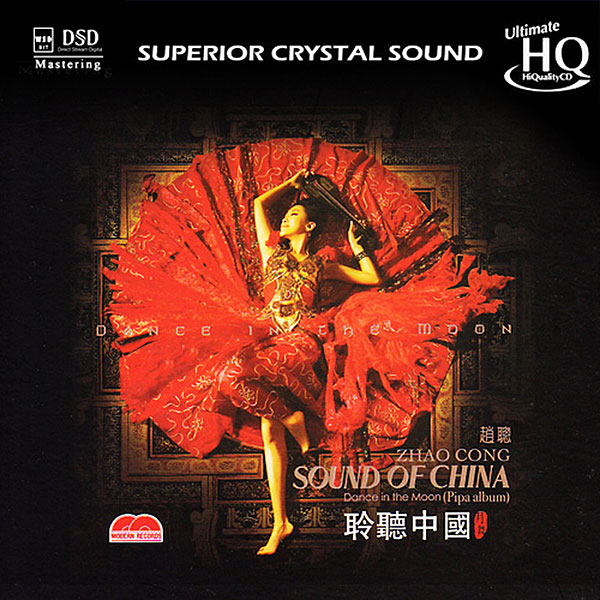 One of the first records I played was Zhao Cong's Sound of China: Dance in the Moon (Pipa album) (LP, Au Qu MCD 30101LP), brought back from last summer's Hong Kong show. Recorded in Denmark to audiophile standards, and probably a somewhat Westernized, PBS-like take on traditional Chinese pipa music, this LP has spectacular, even startling bass-drum thwacks that demonstrated the Phantom III's authoritative bass control and extension.
While the Air Force III's ability to communicate the starting and stopping of notes wasn't as good as the One's, the III's rhythmic drive and punch didn't much suffer. The main difference was an attractive but subtle tonal warmth that was kindest to well-recorded strings and women's voices.
The sound of the most recent limited edition from the Electric Recording Company, Herbert Downes and Jacqueline du Pré's Music for Viola and Cello (LP, Parlophone CSD 1499/ERC 028), was lights-out magical on both the Air Force III and the Caliburn. (Yes, one of the 300 discs pressed will set you back £500—but last June, an original copy sold for $3000!) Through the Caliburn, which has its own tinge of warmth, though not as much as the Air Force III's, Kinloch Anderson's harpsichord behind Downes's viola, in the Adagio from Handel's Sonata in C for Viola da Gamba, appeared in greater spatial relief than with the Air Force III, which bathed it more in the warmth of the viola and the recording venue, thus leaving it less clearly delineated.
John Williams's guitar in Orientale, from Cui's Kaleidoscope, glistened precisely and transparently through both 'tables, but more so through the Caliburn. But given that the Grado Epoch is itself on the warm side, and that the pairing of Epoch and Air Force III didn't sound at all bloated or too warm, this bit of coloration was, in the big picture, nothing. I just don't want you to think that in buying an Air Force III you get an Air Force One for $29,500. You don't.
What you do get in the Air Force III is a turntable with excellent and impressively stable platter speed, which I measured using Dr. Feickert Analogue's PlatterSpeed 7" test disc and app. More important, I could hear its rock-solid speed stability even before I measured it. It was the sound of rhythmic drive and, especially, high-frequency transients that were super-clean but not too sharp or too hard.
One of the first records I played was Zhao Cong's Sound of China: Dance in the Moon (Pipa album) (LP, Au Qu MCD 30101LP), brought back from last summer's Hong Kong show. Recorded in Denmark to audiophile standards, and probably a somewhat Westernized, PBS-like take on traditional Chinese pipa music, this LP has spectacular, even startling bass-drum thwacks that demonstrated the Phantom III's authoritative bass control and extension.
While the Air Force III's ability to communicate the starting and stopping of notes wasn't as good as the One's, the III's rhythmic drive and punch didn't much suffer. The main difference was an attractive but subtle tonal warmth that was kindest to well-recorded strings and women's voices.
The sound of the most recent limited edition from the Electric Recording Company, Herbert Downes and Jacqueline du Pré's Music for Viola and Cello (LP, Parlophone CSD 1499/ERC 028), was lights-out magical on both the Air Force III and the Caliburn. (Yes, one of the 300 discs pressed will set you back £500—but last June, an original copy sold for $3000!) Through the Caliburn, which has its own tinge of warmth, though not as much as the Air Force III's, Kinloch Anderson's harpsichord behind Downes's viola, in the Adagio from Handel's Sonata in C for Viola da Gamba, appeared in greater spatial relief than with the Air Force III, which bathed it more in the warmth of the viola and the recording venue, thus leaving it less clearly delineated.
John Williams's guitar in Orientale, from Cui's Kaleidoscope, glistened precisely and transparently through both 'tables, but more so through the Caliburn. But given that the Grado Epoch is itself on the warm side, and that the pairing of Epoch and Air Force III didn't sound at all bloated or too warm, this bit of coloration was, in the big picture, nothing. I just don't want you to think that in buying an Air Force III you get an Air Force One for $29,500. You don't.
What you do get in the Air Force III is a turntable with excellent and impressively stable platter speed, which I measured using Dr. Feickert Analogue's PlatterSpeed 7" test disc and app. More important, I could hear its rock-solid speed stability even before I measured it. It was the sound of rhythmic drive and, especially, high-frequency transients that were super-clean but not too sharp or too hard.
 Posted on AnalogPlanet.com is a blind comparison of nine phono preamplifiers, with needle drops of each, all made using the combination of TechDAS Air Force III and Graham Phantom III. A reader stacked up the resulting music files and noted: "the speed accuracy of the turntable is amazing. These samples stayed in sync, even going in and out of sync without much drift at all. Remarkable." The record I used for the comparison was Fiona Boyes's Professin' the Blues (LP, Reference RM-2517). If you don't think an Aussie can sing the blues, give it a listen. The live recording, engineered by Keith O. Johnson, is stunning.
Track 1 is "Can't Stay Here No More": Boyes playing a detuned National Reso-Phonic guitar, accompanied by a bass drum and three tambourines. The way the Air Force III, with either the Graham or the SAT arm, got the guitar's resonating shimmer, the well-controlled bass-drum thwacks (and the air and space around the drum), the zils of the tambourines behind Boyes—and the three-dimensionality and up-front positioning of her voice and against a dead-"black" backdrop—would make clear to any experienced listener that this disc was being reproduced by a top-shelf record player. Yes, the SAT arm itself costs $32,000, but it wouldn't be money wasted. On the other hand, you wouldn't be at all disappointed by saving $27,000 and going with the Graham Phantom III.
Playing the Boyes got me on a blues kick. I pulled out Lightnin' Hopkins' Lightnin' Strikes (Tradition/Everest 2103), originally released by Verve/Forecast in 1966. Producer David Hubert put the blues giant in a great but unidentified Los Angeles studio with harmonica player Don Crawford, bassist Jimmy Bonds, and drummer Earl Palmer. Wow! Hopkins was on fire, and it's an amazing recording. Of course, when I told Acoustic Sounds/Analogue Productions' Chad Kassem about it, he pulled out his original pressing and sent me a picture. Damn. But I can't imagine it could sound any better than the Everest reissue—and just now, as I write this, I know why. I didn't see it the other night, but now, in the lead-out-groove area, I see the faintest "BELL SOUND" stamp—the mark of New York's famous Bell Sound Studios, which did LP mastering as well as recording. That place rocked!
Conclusions
Posted on AnalogPlanet.com is a blind comparison of nine phono preamplifiers, with needle drops of each, all made using the combination of TechDAS Air Force III and Graham Phantom III. A reader stacked up the resulting music files and noted: "the speed accuracy of the turntable is amazing. These samples stayed in sync, even going in and out of sync without much drift at all. Remarkable." The record I used for the comparison was Fiona Boyes's Professin' the Blues (LP, Reference RM-2517). If you don't think an Aussie can sing the blues, give it a listen. The live recording, engineered by Keith O. Johnson, is stunning.
Track 1 is "Can't Stay Here No More": Boyes playing a detuned National Reso-Phonic guitar, accompanied by a bass drum and three tambourines. The way the Air Force III, with either the Graham or the SAT arm, got the guitar's resonating shimmer, the well-controlled bass-drum thwacks (and the air and space around the drum), the zils of the tambourines behind Boyes—and the three-dimensionality and up-front positioning of her voice and against a dead-"black" backdrop—would make clear to any experienced listener that this disc was being reproduced by a top-shelf record player. Yes, the SAT arm itself costs $32,000, but it wouldn't be money wasted. On the other hand, you wouldn't be at all disappointed by saving $27,000 and going with the Graham Phantom III.
Playing the Boyes got me on a blues kick. I pulled out Lightnin' Hopkins' Lightnin' Strikes (Tradition/Everest 2103), originally released by Verve/Forecast in 1966. Producer David Hubert put the blues giant in a great but unidentified Los Angeles studio with harmonica player Don Crawford, bassist Jimmy Bonds, and drummer Earl Palmer. Wow! Hopkins was on fire, and it's an amazing recording. Of course, when I told Acoustic Sounds/Analogue Productions' Chad Kassem about it, he pulled out his original pressing and sent me a picture. Damn. But I can't imagine it could sound any better than the Everest reissue—and just now, as I write this, I know why. I didn't see it the other night, but now, in the lead-out-groove area, I see the faintest "BELL SOUND" stamp—the mark of New York's famous Bell Sound Studios, which did LP mastering as well as recording. That place rocked!
Conclusions
No, an Air Force III won't get you an Air Force One's sound for less than a third of its price, but the III will get you equally high build quality, most of the One's technology in somewhat simplified form—including an air-bearing platter and vacuum hold-down—and supremely satisfying sound. The Air Force III is all the turntable most listeners will ever need, and it performs sufficiently fine in all respects to deserve the best tonearm and cartridge you can afford. Neither will be money wasted. If your turntable budget is about $30,000, I suggest starting your search with the TechDAS Air Force III.
Using the Air Force III daily was totally pleasurable and problem-free. The turntable performed flawlessly throughout the review period, and other than having to re-level it after a few weeks, as the instructions said might be needed, the 'table was maintenance free. It's what you should expect when you shell out the cost of a car to play your records. Push Suction on the III's front panel and the record flattens. Push 33 1/3 or 45 and the little screen tells you to "Wait!" until the proper speed has been attained and is stable. When the side's over, you hit Suction, and the pump reverses the direction of airflow to ease the lifting of the record.
All along, Hideaki Nishikawa's goal has been to design a "characterless" turntable that would act as a neutral carrier for the tonearm and cartridge, with the cartridge adding the most sonic character. He set out to accomplish that quality of characterlessness, or lack of coloration, with the vacuum hold-down system, the air-bearing platter, the platter material itself, and, with the Air Force One, an air-suspension system to isolate the 'table from the outside world. The Air Force One came close to accomplishing that goal of characterlessness, but, as I found, changing its platter insert from duralumin to the costly titanium option produced a major improvement in the sound. Air Force One owners who've told me of their experiences with this option agreed that it made a big and positive difference. Swedish Analog Technology's Marc Gomez speculated that the difference was at least in part due to titanium's lower production of eddy currents, which could affect the cartridge's sound. If you read the review of the Air Force One in my April 2013 column, you'll see that I found the differences between it and Continuum Audio Labs' Caliburn to be clear but ultimately subtle, and on a level playing field compared to the differences between the Caliburn and the Air Force III. I could easily hear the differences by dropping the combo of SAT arm and Lyra Etna SL cartridge into the Air Force III (thanks to the SAT's massive and quite attractive arm mount) and then, in less than a minute, reinstalling it in the Caliburn.
One of the first records I played was Zhao Cong's Sound of China: Dance in the Moon (Pipa album) (LP, Au Qu MCD 30101LP), brought back from last summer's Hong Kong show. Recorded in Denmark to audiophile standards, and probably a somewhat Westernized, PBS-like take on traditional Chinese pipa music, this LP has spectacular, even startling bass-drum thwacks that demonstrated the Phantom III's authoritative bass control and extension.
Posted on AnalogPlanet.com is a blind comparison of nine phono preamplifiers, with needle drops of each, all made using the combination of TechDAS Air Force III and Graham Phantom III. A reader stacked up the resulting music files and noted: "the speed accuracy of the turntable is amazing. These samples stayed in sync, even going in and out of sync without much drift at all. Remarkable." The record I used for the comparison was Fiona Boyes's Professin' the Blues (LP, Reference RM-2517). If you don't think an Aussie can sing the blues, give it a listen. The live recording, engineered by Keith O. Johnson, is stunning.
Track 1 is "Can't Stay Here No More": Boyes playing a detuned National Reso-Phonic guitar, accompanied by a bass drum and three tambourines. The way the Air Force III, with either the Graham or the SAT arm, got the guitar's resonating shimmer, the well-controlled bass-drum thwacks (and the air and space around the drum), the zils of the tambourines behind Boyes—and the three-dimensionality and up-front positioning of her voice and against a dead-"black" backdrop—would make clear to any experienced listener that this disc was being reproduced by a top-shelf record player. Yes, the SAT arm itself costs $32,000, but it wouldn't be money wasted. On the other hand, you wouldn't be at all disappointed by saving $27,000 and going with the Graham Phantom III.
No, an Air Force III won't get you an Air Force One's sound for less than a third of its price, but the III will get you equally high build quality, most of the One's technology in somewhat simplified form—including an air-bearing platter and vacuum hold-down—and supremely satisfying sound. The Air Force III is all the turntable most listeners will ever need, and it performs sufficiently fine in all respects to deserve the best tonearm and cartridge you can afford. Neither will be money wasted. If your turntable budget is about $30,000, I suggest starting your search with the TechDAS Air Force III.