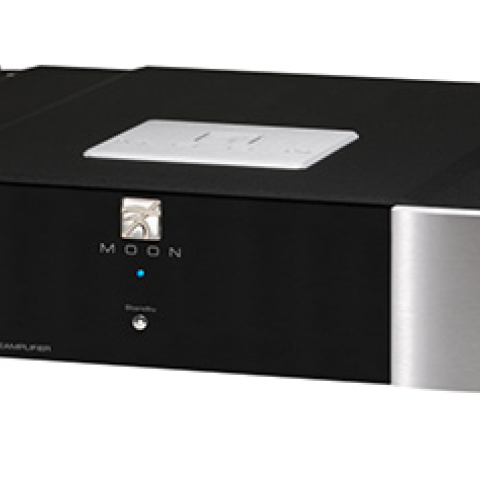
Through the CH Precision, strings arrayed across the stage well behind the guitar were sweet and well defined, with supple (not edgy) attack, generous sustain (though not as generous as through the Ypsilon), and satisfying, long decay trails that helped recreate the Air Studios space. The bass lines defined by the bigger strings pulsed cleanly. The Grail SE+'s rendering was somewhat leaner, which meant the bass-line pulses were not quite as insistent. I repeated this comparison with the CH's X1 auxiliary power supply turned off, which made the prices and overall excellent sonic performance of these two units roughly comparable if not identical ($31,000 for the CH P1, $28,900 for The Grail SE+).
van den Hul Conclusion
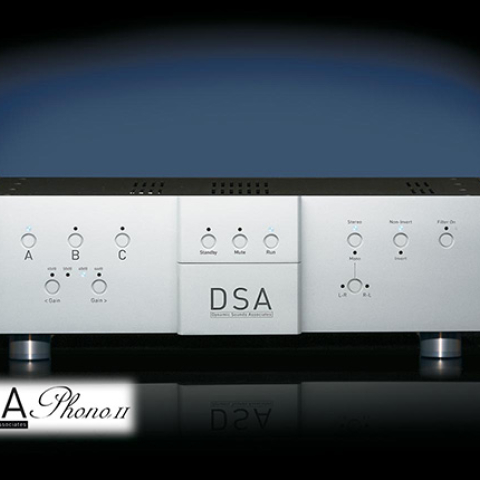
The Grail SE+ is a quiet, timbrally neutral, transparent, get-out-of-the-way-and-let-the-music-through phono preamp. It produces effortless, wide dynamic swings and seemingly full, flat frequency response, and it would score well on any checklist you might put together, unless you like tubey, super-rich sound. The SE+ sounds similar to the standard Grail, but with greater dynamic capabilities, bottom-end grip and extension, and transient refinement. Plus, it sounds stiffer and faster in the mids, where the original Grail was somewhat soft, if pleasantly so. If you want color, or bloom, best to get it from the cartridge. I claimed in my original review that AJ van den Hul did not design The Grail; the previous van den Hul importer strenuously claimed otherwise in his manufacturer's response. After reading the review of the original Grail, in which I called whoever created The Grail a "designing genius," German designer Jürgen Ultee emailed to say, "I can confirm that I'm the electronics designer of the amp you've reviewed, every single design part (except housing design and surface colors) is from my person. I'm a professional electronic designer." Of course, Mr. Ultee designed this piece as well.
The CH P1 and The Grail SE+ sound more similar than dissimilar, meaning that if you like one, you'll probably like the other—I obviously like both—but they are very different products. The Grail SE+ combines a sophisticated circuit with a rudimentary operating system of rear-mounted toggle switches and an internally mounted DIP-switch bank. It's a high-rent circuit (and sound) in kind of a low-rent though well-constructed package. The CH is a far more sophisticated and physically attractive product, with a unique, well-thought-out front-panel–based, menu-driven operating system, a display screen, and a series of useful options including a plug-in card with various EQ curves and a setup wizard that shows you frequency response vs loading for its voltage-based input.
That said, for most users of either (or any) phono preamp, once you've adjusted your settings for a particular cartridge, you're not likely to need to change them often. Still, the CH's substantial, vibration-controlled, stackable, attractively finished chassis is in another league.
While both Grails sound really fine—super quiet and musically sophisticated—the original $9350 Grail, which comes sonically close to the CH (minus the X1), is a much better value than either the CH Precision or the Grail SE+, because it puts the money into the sound rather than into CH-caliber attractive packaging and convenience features, or the Grail SE+'s additional input and somewhat more sophisticated sonics.
Once you're approaching $30,000, you're entitled to both great sound and an attractive package. The Grail SE+ is about performance and wastes little on convenience features or slick packaging.
If the opportunity arises to hear The Grail or The Grail Plus or SE+ (or, of course, the CH Precision): Go for it. All four set high performance bars for solid-state phono preamplification.
SAEC WE-4700 double knife-edge–bearing tonearm
Back in the day, SAEC's double knife-edge–bearing tonearms were considered luxurious eye candy. They were also widely regarded as superbly machined, sensibly designed, and sonically satisfying (although knife-edge bearings attract both enthusiasts and detractors).
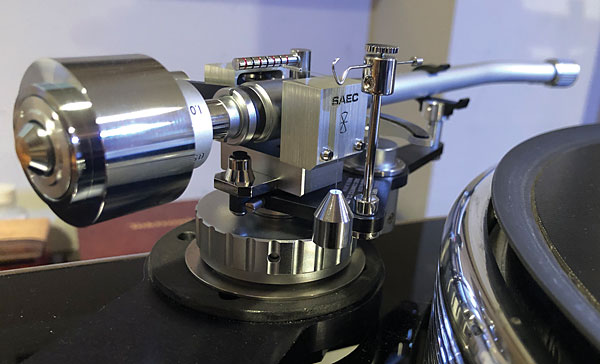 When the Döhmann Helix One Mk2, with its two removable armboards, was scheduled for review, I figured it would be a good time to try the new SAEC WE-4700 I'd seen on display the past few years at the High End show in Munich. SAEC seems to be manufacturing the arms in cooperation with a new manufacturing company (footnote 2).
The arm is not currently distributed in the US, but this is a column, not a formal review, so we get to break some rules. I was able to get the SAEC arm through DS Audio's Tetsuaki Aoyagi. I was unable to get a properly drilled Helix One armboard in time for the Döhmann review in last month's Stereophile, but I managed to fit the WE-4700 on the Continuum Caliburn's rear mount (where the Kuzma 4Point tonearm usually sits).
The WE-4700's packaging is '70s-era lavish and deluxe in every way; more important, what's inside is gleaming and exquisitely turned out in the manner of the best Japanese machining excellence. The goal, according to the instructions, was to surpass the sonic and mechanical performance of the WE-407/23 manufactured by the original SAEC in the 1980s. Go online and you can find used ones for around $2000 or less. The new one hasn't yet been priced for the US, but Aki-San figures $13,000 to $14,500.
Machined of aluminum, the new arm is claimed to feature greater rigidity and machining accuracy and thus produce improved tracing ability and more precise sound.
The arm pillar is a substantial threaded cylinder, 30mm in diameter, that clamps to the armboard opening using a large, massive chrome-plated nut tightened from below, similar to Rega's old system—though here, VTA/SRA is adjustable using a large collet in which the pillar rides. Tighten an above-board round nut by hand just so and you can smoothly move the arm up and down; tightening that nut any further locks the arm in place—a much better and more sophisticated method than a side-mounted grub screw.
The J-shaped arm terminates at the front in a standard headshell collet. A DIN jack located at the arm's bottom, within the threaded pillar, requires a straight DIN plug-terminated tonearm cable (not supplied).
A weight that slides on a rod perpendicular to the bearing block and tonearm tube sets the knife-edge bearing's lateral balance, with the distance from the block determined by the cartridge's weight, per the instruction manual. Other than that adjustment, the arm sets up in standard fashion, including antiskating using a string-and-weight mechanism, though here it can be set with greater precision than on most arms for reasons I won't get into due to space limitations. The arm can accommodate cartridges weighing between 13 and 35gm.
The WE-4700's published specs include an overall length of "max 315mm"; an effective length of 221mm; overhang of 12mm; tracking error of 0 "at innermost groove of record"; and an offset angle of 18°. If those specs seem odd to you, then you are not alone.
In fact, the supplied arm-mounting template has a pivot-to-spindle (P2S) distance of 221mm, so these specs are like the ones Technics supplied for the SL-1000R turntable/tonearm that I reviewed a few years ago. I guess in Japan P2S is called the "effective length," while in the rest of the world the effective length would be the P2S plus overhang. Here, 221mm plus 12mm equals 233mm, which is nowhere near 315mm—though again, that's listed as the "max" length, whatever that means.
As for the "0 tracking error at the innermost groove of record" spec, I translate that as meaning that, if you follow SAEC's instructions and set to 53mm the distance from where the headshell fits into the arm collet to the stylus tip, you achieve Stevenson alignment, which prioritizes having the lowest possible error at the inner groove. Precisely measuring that is guesswork at best, and I'm not a Stevenson enthusiast (other than Adlai, which shows my age). So instead I used the Wallytractor's 232mm effective length arc and followed the Löfgren A arc, which put the inner 0 tracking error point at 62mm and the outer one at 118mm. (The Stevenson's outer one is further in, at 114mm.)
So set, the stylus followed the engraved arc precisely, and at the two null points, the cantilever was tangential to the grooves. Perhaps I just lucked out, because while the SAEC headshell allows setting overhang, it offers little zenith-angle adjustment.
SAEC Sound
When the Döhmann Helix One Mk2, with its two removable armboards, was scheduled for review, I figured it would be a good time to try the new SAEC WE-4700 I'd seen on display the past few years at the High End show in Munich. SAEC seems to be manufacturing the arms in cooperation with a new manufacturing company (footnote 2).
The arm is not currently distributed in the US, but this is a column, not a formal review, so we get to break some rules. I was able to get the SAEC arm through DS Audio's Tetsuaki Aoyagi. I was unable to get a properly drilled Helix One armboard in time for the Döhmann review in last month's Stereophile, but I managed to fit the WE-4700 on the Continuum Caliburn's rear mount (where the Kuzma 4Point tonearm usually sits).
The WE-4700's packaging is '70s-era lavish and deluxe in every way; more important, what's inside is gleaming and exquisitely turned out in the manner of the best Japanese machining excellence. The goal, according to the instructions, was to surpass the sonic and mechanical performance of the WE-407/23 manufactured by the original SAEC in the 1980s. Go online and you can find used ones for around $2000 or less. The new one hasn't yet been priced for the US, but Aki-San figures $13,000 to $14,500.
Machined of aluminum, the new arm is claimed to feature greater rigidity and machining accuracy and thus produce improved tracing ability and more precise sound.
The arm pillar is a substantial threaded cylinder, 30mm in diameter, that clamps to the armboard opening using a large, massive chrome-plated nut tightened from below, similar to Rega's old system—though here, VTA/SRA is adjustable using a large collet in which the pillar rides. Tighten an above-board round nut by hand just so and you can smoothly move the arm up and down; tightening that nut any further locks the arm in place—a much better and more sophisticated method than a side-mounted grub screw.
The J-shaped arm terminates at the front in a standard headshell collet. A DIN jack located at the arm's bottom, within the threaded pillar, requires a straight DIN plug-terminated tonearm cable (not supplied).
A weight that slides on a rod perpendicular to the bearing block and tonearm tube sets the knife-edge bearing's lateral balance, with the distance from the block determined by the cartridge's weight, per the instruction manual. Other than that adjustment, the arm sets up in standard fashion, including antiskating using a string-and-weight mechanism, though here it can be set with greater precision than on most arms for reasons I won't get into due to space limitations. The arm can accommodate cartridges weighing between 13 and 35gm.
The WE-4700's published specs include an overall length of "max 315mm"; an effective length of 221mm; overhang of 12mm; tracking error of 0 "at innermost groove of record"; and an offset angle of 18°. If those specs seem odd to you, then you are not alone.
In fact, the supplied arm-mounting template has a pivot-to-spindle (P2S) distance of 221mm, so these specs are like the ones Technics supplied for the SL-1000R turntable/tonearm that I reviewed a few years ago. I guess in Japan P2S is called the "effective length," while in the rest of the world the effective length would be the P2S plus overhang. Here, 221mm plus 12mm equals 233mm, which is nowhere near 315mm—though again, that's listed as the "max" length, whatever that means.
As for the "0 tracking error at the innermost groove of record" spec, I translate that as meaning that, if you follow SAEC's instructions and set to 53mm the distance from where the headshell fits into the arm collet to the stylus tip, you achieve Stevenson alignment, which prioritizes having the lowest possible error at the inner groove. Precisely measuring that is guesswork at best, and I'm not a Stevenson enthusiast (other than Adlai, which shows my age). So instead I used the Wallytractor's 232mm effective length arc and followed the Löfgren A arc, which put the inner 0 tracking error point at 62mm and the outer one at 118mm. (The Stevenson's outer one is further in, at 114mm.)
So set, the stylus followed the engraved arc precisely, and at the two null points, the cantilever was tangential to the grooves. Perhaps I just lucked out, because while the SAEC headshell allows setting overhang, it offers little zenith-angle adjustment.
SAEC Sound
I set up the original, familiar Lyra Atlas SL on the arm and spent a week or so enjoying sound that was precise, timbrally neutral (though somewhat cool), nonmechanical, and effortless. The bottom end was well-extended and free of overhang or exaggeration, the mids were a bit lean, though impressively transparent and airy, and the top—especially vocal sibilants—was delivered precisely, thanks to outstanding tracking at the cartridge's recommended 1.72gm VTF.
The multiple breaks in the signal path (one in the headshell, one in the collet, and one in the DIN jack and plug) are not ideal, but for those who prefer easy headshell and cartridge swaps over purist minimalism, you get that here. With SME exiting the stand- alone tonearm market, the SAEC WE-4700 is—with Graham's Elite unipivot, which features a pair of signal breaks—an attractive alternative. If it does get an American distributor, I'll be sure to get another WE-4700 and produce a more detailed sonic report. For now, I'll just say it was as much fun to listen to as it was to set up, use, and stare at.
Footnote 2: SAEC, Exported by DS Exports 4-50-40.Kamitsuruma-Honcho, Minamiku, Sagamihara Kanagawa, 252-0318, Japan Web: saec-com.co.jp. Not currently imported to America.
The Grail SE+ is a quiet, timbrally neutral, transparent, get-out-of-the-way-and-let-the-music-through phono preamp. It produces effortless, wide dynamic swings and seemingly full, flat frequency response, and it would score well on any checklist you might put together, unless you like tubey, super-rich sound. The SE+ sounds similar to the standard Grail, but with greater dynamic capabilities, bottom-end grip and extension, and transient refinement. Plus, it sounds stiffer and faster in the mids, where the original Grail was somewhat soft, if pleasantly so. If you want color, or bloom, best to get it from the cartridge. I claimed in my original review that AJ van den Hul did not design The Grail; the previous van den Hul importer strenuously claimed otherwise in his manufacturer's response. After reading the review of the original Grail, in which I called whoever created The Grail a "designing genius," German designer Jürgen Ultee emailed to say, "I can confirm that I'm the electronics designer of the amp you've reviewed, every single design part (except housing design and surface colors) is from my person. I'm a professional electronic designer." Of course, Mr. Ultee designed this piece as well.
Back in the day, SAEC's double knife-edge–bearing tonearms were considered luxurious eye candy. They were also widely regarded as superbly machined, sensibly designed, and sonically satisfying (although knife-edge bearings attract both enthusiasts and detractors).
When the Döhmann Helix One Mk2, with its two removable armboards, was scheduled for review, I figured it would be a good time to try the new SAEC WE-4700 I'd seen on display the past few years at the High End show in Munich. SAEC seems to be manufacturing the arms in cooperation with a new manufacturing company (footnote 2).
The arm is not currently distributed in the US, but this is a column, not a formal review, so we get to break some rules. I was able to get the SAEC arm through DS Audio's Tetsuaki Aoyagi. I was unable to get a properly drilled Helix One armboard in time for the Döhmann review in last month's Stereophile, but I managed to fit the WE-4700 on the Continuum Caliburn's rear mount (where the Kuzma 4Point tonearm usually sits).
The WE-4700's packaging is '70s-era lavish and deluxe in every way; more important, what's inside is gleaming and exquisitely turned out in the manner of the best Japanese machining excellence. The goal, according to the instructions, was to surpass the sonic and mechanical performance of the WE-407/23 manufactured by the original SAEC in the 1980s. Go online and you can find used ones for around $2000 or less. The new one hasn't yet been priced for the US, but Aki-San figures $13,000 to $14,500.
I set up the original, familiar Lyra Atlas SL on the arm and spent a week or so enjoying sound that was precise, timbrally neutral (though somewhat cool), nonmechanical, and effortless. The bottom end was well-extended and free of overhang or exaggeration, the mids were a bit lean, though impressively transparent and airy, and the top—especially vocal sibilants—was delivered precisely, thanks to outstanding tracking at the cartridge's recommended 1.72gm VTF.
Footnote 2: SAEC, Exported by DS Exports 4-50-40.Kamitsuruma-Honcho, Minamiku, Sagamihara Kanagawa, 252-0318, Japan Web: saec-com.co.jp. Not currently imported to America.