Sidebar: Measurements (from October 2020, Vol.43 No.10)
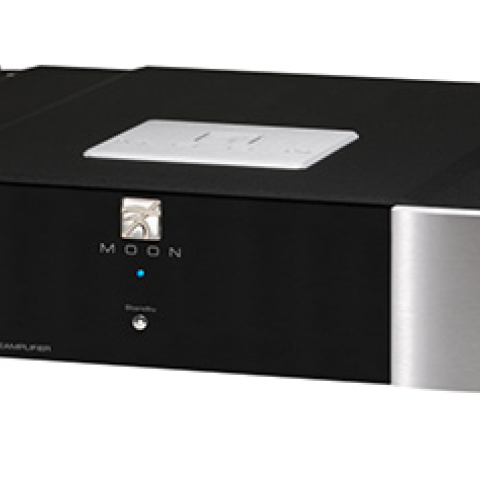
In his review of this very expensive, very heavy, American-made, two-box phono preamplifier in the August issue—the 2108 with its 2110 power supply costs $52,000—Michael Fremer enthused over its sound. "The 2108 produces both a sense of soaring exultation in the upper registers and gritty drama in the lowest one," he wrote, adding "Boulder detractors who think their products are too analytical, sounding dry and bleached, ought to give the 2108 a listen." Intrigued, and remembering how well Boulder's previous flagship phono preamp, the 2008, measured back in 2002, I suggested to Stereophile's editor-in-chief, Jim Austin, that I measure the 2108 and write a follow-up review.
I measured the Boulder 2108 phono preamplifier (serial number 12213) with my Audio Precision SYS2722 system (see the January 2008 "As We See It"). As the 2108 has balanced inputs, I floated the signal generator's balanced output from ground. For logistical reasons, I measured with the preamplifier chassis sitting on top of the power supply chassis.
Each of the 2108's three inputs has a plug-in "personality card" (actually, two, one each for the L and R channels) to set the gain, cartridge type (MM or MC), loading (resistive and capacitive), and whether the demagnetization feature is turned on or off. I performed a complete set of measurements using Input 1 and repeated some of the tests with Input 3. First, though, I measured the 2108's output impedance, which was an appropriately low 100 ohms from 20Hz to 20kHz.
For Input 1, with the personality card set up as I received it (MM, low gain, with a 100 ohm resistor soldered in place), the gain at 1kHz was 31.55dB; set to high gain, it was 10dB higher. This is significantly lower than Boulder's specifications of 40dB (low) and 50dB (high). Note, however, that my measured gains will be reduced by the voltage-divider action of the Audio Precision's balanced output impedance of 40 ohms and the Boulder's input impedance, which turned out to be 100 ohms rather than the usual 47k ohms typically used for a MM cartridge. Remeasured at Input 3, which offered input impedances of 50k ohms at 20Hz and 1kHz, dropping to 25k ohms at 20kHz, the gain measured 48dB, which is suitable for a MM cartridge. With Input 1 set to MC, the measured gains were 57.3dB (60dB specified) and 61.2dB (70dB specified), but again these will be reduced by the interaction between the AP's output impedance and the MC mode's input impedance, which I measured as 110 ohms across the audioband. The lower a moving-coil phono cartridge's source impedance, the closer the 2108's gain will approach the specified values.


 Channel separation was superb, at >95dB in both directions across the band. Spectral analysis of the Boulder's low-frequency noise floor with Input 1 set to MM and high gain (fig.3) indicated that both random noise components and power supply–related spuriae were all low in level, though there was a little more 60Hz component in the left channel (blue trace) than the right (red). The Boulder's unweighted, wideband S/N ratio, measured with Input 1 set to MM low gain, was a very good 67.3dB in the left channel and an even better 73.3dB in the right channel, both referred to an input signal of 1kHz at 5mV. Restricting the measurement bandwidth to 22Hz–22kHz increased the ratios to 74.5dB, left, and 77.5dB, right, while switching an A-weighting filter into circuit increased both ratios to 82dB. Switching the MM gain to high reduced the S/N ratios by 9–10dB, the amount of the additional gain. Similarly, setting Input 1 to MC, low gain setting, reduced the S/N ratios by 12dB, left channel, and 5.5dB, right channel. Switching to high gain didn't result in any further reduction in S/N ratio in MC mode.
The Boulder preamp's overload margins were superb but were affected by the gain setting and whether the input was set to MM or MC. In the best case, MM low gain, the margin was an astonishing 44dB across the audioband ref. 1kHz at 5mV. This dropped to 34.3dB in MM high gain mode. With the input set to MC, the margins were 38.9dB, low gain, and 28.6dB, high gain, both ref. 1kHz at 500µV. These margins are all still excellent and equate to the preamplifier output clipping at 30V RMS into 100k ohms!
Channel separation was superb, at >95dB in both directions across the band. Spectral analysis of the Boulder's low-frequency noise floor with Input 1 set to MM and high gain (fig.3) indicated that both random noise components and power supply–related spuriae were all low in level, though there was a little more 60Hz component in the left channel (blue trace) than the right (red). The Boulder's unweighted, wideband S/N ratio, measured with Input 1 set to MM low gain, was a very good 67.3dB in the left channel and an even better 73.3dB in the right channel, both referred to an input signal of 1kHz at 5mV. Restricting the measurement bandwidth to 22Hz–22kHz increased the ratios to 74.5dB, left, and 77.5dB, right, while switching an A-weighting filter into circuit increased both ratios to 82dB. Switching the MM gain to high reduced the S/N ratios by 9–10dB, the amount of the additional gain. Similarly, setting Input 1 to MC, low gain setting, reduced the S/N ratios by 12dB, left channel, and 5.5dB, right channel. Switching to high gain didn't result in any further reduction in S/N ratio in MC mode.
The Boulder preamp's overload margins were superb but were affected by the gain setting and whether the input was set to MM or MC. In the best case, MM low gain, the margin was an astonishing 44dB across the audioband ref. 1kHz at 5mV. This dropped to 34.3dB in MM high gain mode. With the input set to MC, the margins were 38.9dB, low gain, and 28.6dB, high gain, both ref. 1kHz at 500µV. These margins are all still excellent and equate to the preamplifier output clipping at 30V RMS into 100k ohms!
 Distortion was vanishingly low in level. With Input 1 set to MM high gain and with a 1kHz signal 6dB higher than the nominal MM reference level, the only harmonic visible above the noise floor was the third, and this lay at –109dB (0.0004%) in the left channel (fig.4, blue trace) and –114dB (0.0002%) in the right channel (red). This graph was taken with the easy 100k ohm load impedance.

Fig.1 Boulder 2108, Input 1, MM, low gain, response with RIAA correction into 100k ohms (left channel blue, right red), with high-pass filter set to 10Hz (left cyan, right magenta), and to 20Hz (left green, right gray) (1dB/vertical div.).
All the 2108 inputs preserved absolute polarity, with the XLR input and output jacks connected with pin 2 "hot." The RIAA correction was almost perfect, with superb channel matching (fig.1, blue and red traces). The high-pass filter was bypassed for this measurement. When I repeated the response measurement with the filter set to 10Hz (cyan and magenta traces) and 20Hz (green and gray traces), the gain dropped by almost 1dB and the response rose above the audioband. In this respect, the 2108 behaved almost identically to the original 2008.
Fig.2 Boulder 2108, Input 1, MM, low gain, response into 100k ohms with FFRR correction (left channel blue, right red), with Columbia correction (left cyan, right magenta), and with EMI correction (left green, right gray), all ref. RIAA preemphasis (1dB/vertical div.).
As the 2108 offers FFRR (Decca/London), Columbia, and EMI equalization as well as RIAA, I remeasured the response with each of these settings. As the input signal had RIAA preemphasis applied, the responses shown in fig.2 are what you get when you play a modern RIAA-equalized LP with these historical corrections. FFRR (blue and red traces) tilts up the response by >3.5dB above 10kHz and down by >4dB below 40Hz. Columbia (cyan and magenta traces) suppresses the treble by 1dB, boosts the midrange by 1.2dB, and rolls off the low bass. EMI (green and gray traces) also tilts the response but less than the FFRR.
Fig.3 Boulder 2108, Input 1, MM, high gain, output spectrum, DC–1kHz, ref. 5mV input (linear frequency scale).
Fig.4 Boulder 2108, Input 1, MM, high gain, spectrum of 1kHz sinewave, DC–10kHz, into 100k ohms for 10mV input (linear frequency scale).
Fig.5 Boulder 2108, Input 1, MM, high gain, HF intermodulation spectrum, DC–30kHz, 19+20kHz into 100k ohms for 100mV peak input (linear frequency scale).
Reducing the load impedance to the current-demanding 600 ohms didn't increase the levels of these harmonics at all. Intermodulation distortion, with an equal mix of 19kHz and 20kHz tones, at a peak input level equivalent to 1kHz at 10mV, was also extremely low in level, with no second-order difference product at 1kHz (fig.5). Overall, the performance of the Boulder 2108 on the test bench reveals it to be an extraordinarily well-engineered (though expensive) phono preamplifier.—John Atkinson