The transfer switch messed up everything. So what happened? As Powell pointed out, when the generator was installed, some of the original wiring was removed and replaced. The "hot" leads" are switched by the transfer box, same as with most electrical panels, so the ground and neutral are always in contact with the new circuits and devices in the box. The previous, better arrangement for dissipating RF has been replaced by parts more susceptible to RF noise. Add to that the longer path required to accommodate the switch, including several junctions, and it's likely to have a higher AC output impedance.
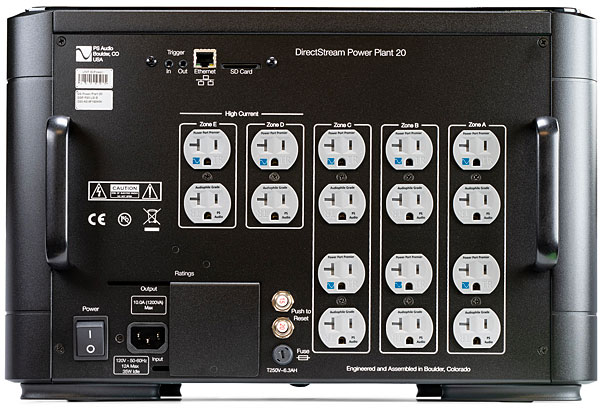
In his Power Plant 20 review, Jim wrote, "There is no standard for AC output impedance in the US electrical code, apparently because the code emphasizes safety, not performance." That was one of Garth Powell's first points when I asked him why my sound had gone south. Higher output impedance means the voltage sags more when there's a heavy demand for power. PS Audio's Darren Myers told Jim that sagging voltage also means more hash feeding back into the AC line, where, if it isn't dealt with, it can feed back into other devices. Darren told me that, too, when I called to plead for two Power Plants (footnote 2)), hoping they'd put me back in the reviewing business.
I rolled the nearly 100lb Power Plant 20 into my room on a dolly and (thanks to my 40-pushups-a-day regimen) placed it atop one of two Stillpoints amplifier stands that were unemployed as I checked out two new stands for the darTZeel monoblocks (see below). The Power Plant 20 does not belong on carpet—nor does any power amplifier.
 As I wrote last month, from my first listen with the Power Plant 20, it was clear my system was mostly back. When I added the smaller Power Plant 15 to the system's front end, it was all the way back! Now maybe it was better than before or not quite as good, but it was close. The relief this brought cannot be expressed in words—or dollars. The regenerated AC ignored the mess the switch had created and gave me a near-perfect sinewave—no comparison to the flat-top signal coming straight from the wall, with total harmonic distortion of 4%. With the regenerator it's close to 0%; incoming and outgoing distortion can be viewed on the P20's front screen. PS Audio says the Power Plants have a very low source impedance—0.049 ohm—minimizing voltage sag when the amp demands instantaneous current. I experimented with a few of the setup options, including the "multiwave" function, but I found that the default setting sounded best.
A scary moment: It was time to do a direct comparison: sound with the regenerator vs sound without the regenerator. This was a scary moment. Would that awful sound return? That was scary enough, but I also had to face the possibility that I had been imagining things. (I can feel the breath of the "confirmation bias" crowd on my neck as they look over my shoulder, insisting that unless I do this comparison blind, it's meaningless. Whatever.)
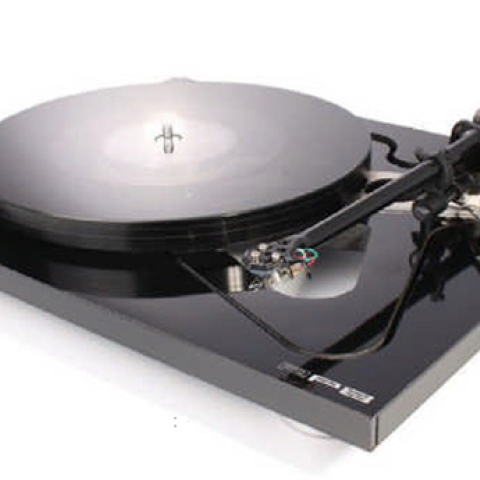
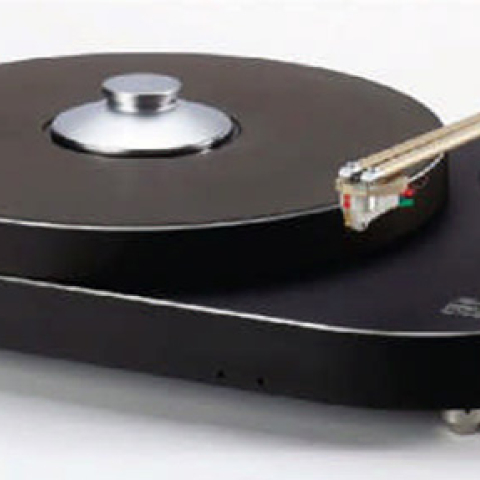
I chose two very different records to use to test the system. The first was a "wide band ffss" original pressing of La Fille Mal Gardée (Decca SXL 2313) in which I found arranger John Lanchbery's obituary I'd placed there on 2/28/03. (I also own a later, "Decca in a box" copy with a handwritten note on it: "To Kitty—to insure you don't forget London and our nice evenings! It won't be the same without you Love, Nancy". Don't try these things with streaming.) The second was a first UK Harvest pressing of Wire's Chairs Missing (SHSP 4093)—specifically the album's first cut, "Practice Makes Perfect."
As I wrote last month, from my first listen with the Power Plant 20, it was clear my system was mostly back. When I added the smaller Power Plant 15 to the system's front end, it was all the way back! Now maybe it was better than before or not quite as good, but it was close. The relief this brought cannot be expressed in words—or dollars. The regenerated AC ignored the mess the switch had created and gave me a near-perfect sinewave—no comparison to the flat-top signal coming straight from the wall, with total harmonic distortion of 4%. With the regenerator it's close to 0%; incoming and outgoing distortion can be viewed on the P20's front screen. PS Audio says the Power Plants have a very low source impedance—0.049 ohm—minimizing voltage sag when the amp demands instantaneous current. I experimented with a few of the setup options, including the "multiwave" function, but I found that the default setting sounded best.
A scary moment: It was time to do a direct comparison: sound with the regenerator vs sound without the regenerator. This was a scary moment. Would that awful sound return? That was scary enough, but I also had to face the possibility that I had been imagining things. (I can feel the breath of the "confirmation bias" crowd on my neck as they look over my shoulder, insisting that unless I do this comparison blind, it's meaningless. Whatever.)
I chose two very different records to use to test the system. The first was a "wide band ffss" original pressing of La Fille Mal Gardée (Decca SXL 2313) in which I found arranger John Lanchbery's obituary I'd placed there on 2/28/03. (I also own a later, "Decca in a box" copy with a handwritten note on it: "To Kitty—to insure you don't forget London and our nice evenings! It won't be the same without you Love, Nancy". Don't try these things with streaming.) The second was a first UK Harvest pressing of Wire's Chairs Missing (SHSP 4093)—specifically the album's first cut, "Practice Makes Perfect."
 The first is a lush, spacious, 1962 orchestral recording of a fanciful, bucolic piece first performed using Lanchbery's arrangement on January 28, 1960, with instruments imitating birds in a garden. The second is an angular, viciously minimalist, insistently slinky guitar assault recorded in 1978. Playing this record reminded me why I prefer Wire, Eno, David Bowie, and the Velvet Underground to most prog rock.
First, I hooked up the system with the regenerated power, with the Power Plants in the system. First up was the Decca record. It had all the expected airiness and transparency, a superwide soundstage, and instrumental delicacy. Strings, woodwinds, harp, and the rest floated effortlessly, well-focused in a lively 3D space. A snapping wood block sounded like it was happening in my room behind the left speaker. This record defines soundstaging, imaging, and three-dimensionality.
Then I removed the Power Plants from the system, plugging the amps into the Niagara 7000 and the Niagara into the wall, recreating the conditions under which the system sounded broken after the transfer-switch installation. The stage widened farther—because the picture lost focus. It was spatially flat—no depth—and appeared against a milky background: not black. Transients were cotton-ball soft. What had been vibrant and exciting was now bland.
Then, through the wall AC—no regenerator—I played "Practice Makes Perfect" from the Wire LP. To sound right, the electric guitar here requires sharp transient response in a "1, 2, 1-2-3" cadence and an underlay of growling echo bus return. The two should appear in different spaces. Drummer Robert Gotobed's crisp stick hits should sound sharp and in the room like the ones on La Fille Mal Gardée, just not as prominent in the mix.
The results were so soft that the "1, 2, 1-2-3" cadence got lost in a rhythmic blur. The echo buss backdrop flattened against the guitars, producing a total mess. Gotobed's stick was strictly soft-serve. What a mess!
Adding back the regenerator (re)produced the Wire record I've loved for more than 42 years—clean originals on Discogs start at $135—and restored the system to the one that was keeping me up late for months.
Garth Powell was correct: I wasn't hearing things. The difference was real. I feel badly for Garth and AudioQuest, whose Niagara 7000 has served me well, but it could not fix the problem—not by itself. I don't think any traditional power conditioner could, regardless of design. Now what? Now I wait. To bypass the transfer switch will cost $3000 or more. I hope I can hold on to these PS Audio regenerators until the bypass is completed. Assuming the bypass restores things to normal, I'll then compare the sound with the Niagara 7000s to the sound with the regenerators when both are supplied decent power. That should be fun.
So, how bad was it? In my moment of panic when I first heard the degraded sound, it was horrific. With the benefit of hindsight and a more analytical perspective, it wasn't as bad as it originally seemed, but it was bad enough. When, later, I played my crippled system for a friend, he was blown away by what he heard.
Of course he was. This is an assemblage of some of the best available audio gear (including a few very costly products under review that I do not own) totaling more than $800,000. That's $300,000 more than my house cost in 1999. Even with bad power, it is capable of good sound. (It's also true though that high-end systems typically benefit most from careful setup—and suffer more when the setup isn't great.)
Future games: Let's say I don't do the bypass and stick with the Power Plants and in a few years, I move out. And let's say another audiophile moves in, not knowing that I was here first. He (or she) would likely set up a system and never know how badly the sound is being kneecapped by that transfer switch unless he or she tries various power conditioning/regeneration options.
That person could be you, now. I'm thinking especially of urban apartment dwellers who plug their systems into the wall and buy into the "power conditioning is a myth" line fed by people who think like that commenter who wrote, "A really good amp should not be affected by mains quality at all."
Considering what that transfer switch did to my system's sound and thinking of how power gets into an apartment building and then up the stairs, I don't understand how any apartment-dwelling audio enthusiast could not be curious about what might result from using a well-designed conditioner like the Niagara 7000 or one of PS Audio's Power Plants.
The Thixar Dartzeel NHB-468 Stands
The first is a lush, spacious, 1962 orchestral recording of a fanciful, bucolic piece first performed using Lanchbery's arrangement on January 28, 1960, with instruments imitating birds in a garden. The second is an angular, viciously minimalist, insistently slinky guitar assault recorded in 1978. Playing this record reminded me why I prefer Wire, Eno, David Bowie, and the Velvet Underground to most prog rock.
First, I hooked up the system with the regenerated power, with the Power Plants in the system. First up was the Decca record. It had all the expected airiness and transparency, a superwide soundstage, and instrumental delicacy. Strings, woodwinds, harp, and the rest floated effortlessly, well-focused in a lively 3D space. A snapping wood block sounded like it was happening in my room behind the left speaker. This record defines soundstaging, imaging, and three-dimensionality.
Then I removed the Power Plants from the system, plugging the amps into the Niagara 7000 and the Niagara into the wall, recreating the conditions under which the system sounded broken after the transfer-switch installation. The stage widened farther—because the picture lost focus. It was spatially flat—no depth—and appeared against a milky background: not black. Transients were cotton-ball soft. What had been vibrant and exciting was now bland.
Then, through the wall AC—no regenerator—I played "Practice Makes Perfect" from the Wire LP. To sound right, the electric guitar here requires sharp transient response in a "1, 2, 1-2-3" cadence and an underlay of growling echo bus return. The two should appear in different spaces. Drummer Robert Gotobed's crisp stick hits should sound sharp and in the room like the ones on La Fille Mal Gardée, just not as prominent in the mix.
The results were so soft that the "1, 2, 1-2-3" cadence got lost in a rhythmic blur. The echo buss backdrop flattened against the guitars, producing a total mess. Gotobed's stick was strictly soft-serve. What a mess!
Adding back the regenerator (re)produced the Wire record I've loved for more than 42 years—clean originals on Discogs start at $135—and restored the system to the one that was keeping me up late for months.
Garth Powell was correct: I wasn't hearing things. The difference was real. I feel badly for Garth and AudioQuest, whose Niagara 7000 has served me well, but it could not fix the problem—not by itself. I don't think any traditional power conditioner could, regardless of design. Now what? Now I wait. To bypass the transfer switch will cost $3000 or more. I hope I can hold on to these PS Audio regenerators until the bypass is completed. Assuming the bypass restores things to normal, I'll then compare the sound with the Niagara 7000s to the sound with the regenerators when both are supplied decent power. That should be fun.
So, how bad was it? In my moment of panic when I first heard the degraded sound, it was horrific. With the benefit of hindsight and a more analytical perspective, it wasn't as bad as it originally seemed, but it was bad enough. When, later, I played my crippled system for a friend, he was blown away by what he heard.
Of course he was. This is an assemblage of some of the best available audio gear (including a few very costly products under review that I do not own) totaling more than $800,000. That's $300,000 more than my house cost in 1999. Even with bad power, it is capable of good sound. (It's also true though that high-end systems typically benefit most from careful setup—and suffer more when the setup isn't great.)
Future games: Let's say I don't do the bypass and stick with the Power Plants and in a few years, I move out. And let's say another audiophile moves in, not knowing that I was here first. He (or she) would likely set up a system and never know how badly the sound is being kneecapped by that transfer switch unless he or she tries various power conditioning/regeneration options.
That person could be you, now. I'm thinking especially of urban apartment dwellers who plug their systems into the wall and buy into the "power conditioning is a myth" line fed by people who think like that commenter who wrote, "A really good amp should not be affected by mains quality at all."
Considering what that transfer switch did to my system's sound and thinking of how power gets into an apartment building and then up the stairs, I don't understand how any apartment-dwelling audio enthusiast could not be curious about what might result from using a well-designed conditioner like the Niagara 7000 or one of PS Audio's Power Plants.
The Thixar Dartzeel NHB-468 Stands
Thixar is a German company that manufactures a variety of racks, platforms, and stands (footnote 3). They don't appear to have American distribution yet, but they probably will soon. Company founder Dirk Rüdell told me his products use "Adaptive Vibration Control," which combines various technologies and materials to reduce vibration over a wide range of frequencies. One of their latest products is an amplifier stand made especially for the darTZeel NHB 468 monoblocks. The darTZeel amp stand starts with a 25mm bottom plate of a particular "wooden material" on top of which is a depression that holds a proprietary, flexible, chemically stable gel that's said to isolate the amp from floor-borne low-frequency vibrations and the floor from amp-borne vibrations. Resting on top of that is another multilayer wooden platform that does not contact the lower plate, intended to absorb higher frequencies. Between this layer and the top plate of anodized aluminum is a damping foil intended to reduce midrange-frequency vibrations. The amp's feet rest in top-plate depressions.
I maneuvered the 468s off of the Stillpoint stands I recently wrote about, onto the Thixar stands. I did this just a few days before the generator and transfer switch install, so there wasn't enough time to compare sonics. Now that things are back to normal, more or less, I'm using one Stillpoint stand for the Power Plant 20, so I'm not sure when I'll be able to do a sonic comparison.
These custom stands are attractive, and they complement the 468's look. The price in America has yet to be decided, but Mr. Rüdell says they'll probably be between $6000/pair and $8000/pair. That's not inexpensive, but if you've already spent in the vicinity of $170,000 for the amplifiers, what's a few thousand more?
The darTZeel amp stand starts with a 25mm bottom plate of a particular "wooden material" on top of which is a depression that holds a proprietary, flexible, chemically stable gel that's said to isolate the amp from floor-borne low-frequency vibrations and the floor from amp-borne vibrations. Resting on top of that is another multilayer wooden platform that does not contact the lower plate, intended to absorb higher frequencies. Between this layer and the top plate of anodized aluminum is a damping foil intended to reduce midrange-frequency vibrations. The amp's feet rest in top-plate depressions.
I maneuvered the 468s off of the Stillpoint stands I recently wrote about, onto the Thixar stands. I did this just a few days before the generator and transfer switch install, so there wasn't enough time to compare sonics. Now that things are back to normal, more or less, I'm using one Stillpoint stand for the Power Plant 20, so I'm not sure when I'll be able to do a sonic comparison.
These custom stands are attractive, and they complement the 468's look. The price in America has yet to be decided, but Mr. Rüdell says they'll probably be between $6000/pair and $8000/pair. That's not inexpensive, but if you've already spent in the vicinity of $170,000 for the amplifiers, what's a few thousand more?
Footnote 2: PS Audio. 4865 Sterling Dr. Boulder, CO 80301 Tel: (800) PS-AUDIO. Web: psaudio.com. Footnote 3: Thixar, Geraer Weg 25, 40627 Düsseldorf Germany. Tel: (49) 0 211 3618 1657. Web: thixar.com.
As I wrote last month, from my first listen with the Power Plant 20, it was clear my system was mostly back. When I added the smaller Power Plant 15 to the system's front end, it was all the way back! Now maybe it was better than before or not quite as good, but it was close. The relief this brought cannot be expressed in words—or dollars. The regenerated AC ignored the mess the switch had created and gave me a near-perfect sinewave—no comparison to the flat-top signal coming straight from the wall, with total harmonic distortion of 4%. With the regenerator it's close to 0%; incoming and outgoing distortion can be viewed on the P20's front screen. PS Audio says the Power Plants have a very low source impedance—0.049 ohm—minimizing voltage sag when the amp demands instantaneous current. I experimented with a few of the setup options, including the "multiwave" function, but I found that the default setting sounded best.
A scary moment: It was time to do a direct comparison: sound with the regenerator vs sound without the regenerator. This was a scary moment. Would that awful sound return? That was scary enough, but I also had to face the possibility that I had been imagining things. (I can feel the breath of the "confirmation bias" crowd on my neck as they look over my shoulder, insisting that unless I do this comparison blind, it's meaningless. Whatever.)
I chose two very different records to use to test the system. The first was a "wide band ffss" original pressing of La Fille Mal Gardée (Decca SXL 2313) in which I found arranger John Lanchbery's obituary I'd placed there on 2/28/03. (I also own a later, "Decca in a box" copy with a handwritten note on it: "To Kitty—to insure you don't forget London and our nice evenings! It won't be the same without you Love, Nancy". Don't try these things with streaming.) The second was a first UK Harvest pressing of Wire's Chairs Missing (SHSP 4093)—specifically the album's first cut, "Practice Makes Perfect."
The first is a lush, spacious, 1962 orchestral recording of a fanciful, bucolic piece first performed using Lanchbery's arrangement on January 28, 1960, with instruments imitating birds in a garden. The second is an angular, viciously minimalist, insistently slinky guitar assault recorded in 1978. Playing this record reminded me why I prefer Wire, Eno, David Bowie, and the Velvet Underground to most prog rock.
First, I hooked up the system with the regenerated power, with the Power Plants in the system. First up was the Decca record. It had all the expected airiness and transparency, a superwide soundstage, and instrumental delicacy. Strings, woodwinds, harp, and the rest floated effortlessly, well-focused in a lively 3D space. A snapping wood block sounded like it was happening in my room behind the left speaker. This record defines soundstaging, imaging, and three-dimensionality.
Then I removed the Power Plants from the system, plugging the amps into the Niagara 7000 and the Niagara into the wall, recreating the conditions under which the system sounded broken after the transfer-switch installation. The stage widened farther—because the picture lost focus. It was spatially flat—no depth—and appeared against a milky background: not black. Transients were cotton-ball soft. What had been vibrant and exciting was now bland.
Thixar is a German company that manufactures a variety of racks, platforms, and stands (footnote 3). They don't appear to have American distribution yet, but they probably will soon. Company founder Dirk Rüdell told me his products use "Adaptive Vibration Control," which combines various technologies and materials to reduce vibration over a wide range of frequencies. One of their latest products is an amplifier stand made especially for the darTZeel NHB 468 monoblocks.
The darTZeel amp stand starts with a 25mm bottom plate of a particular "wooden material" on top of which is a depression that holds a proprietary, flexible, chemically stable gel that's said to isolate the amp from floor-borne low-frequency vibrations and the floor from amp-borne vibrations. Resting on top of that is another multilayer wooden platform that does not contact the lower plate, intended to absorb higher frequencies. Between this layer and the top plate of anodized aluminum is a damping foil intended to reduce midrange-frequency vibrations. The amp's feet rest in top-plate depressions.
I maneuvered the 468s off of the Stillpoint stands I recently wrote about, onto the Thixar stands. I did this just a few days before the generator and transfer switch install, so there wasn't enough time to compare sonics. Now that things are back to normal, more or less, I'm using one Stillpoint stand for the Power Plant 20, so I'm not sure when I'll be able to do a sonic comparison.
Footnote 2: PS Audio. 4865 Sterling Dr. Boulder, CO 80301 Tel: (800) PS-AUDIO. Web: psaudio.com. Footnote 3: Thixar, Geraer Weg 25, 40627 Düsseldorf Germany. Tel: (49) 0 211 3618 1657. Web: thixar.com.