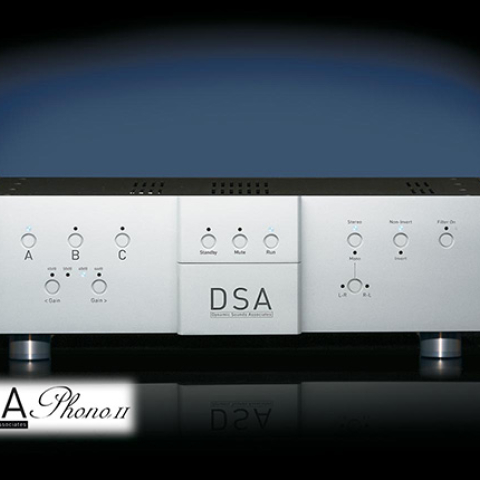
When you select an input, the front panel displays the input number, MC or MM, and the selected gain and loading. Only the "Warp" filter isn't available as a preset, which makes sense. If you need it, you push the front-panel button.
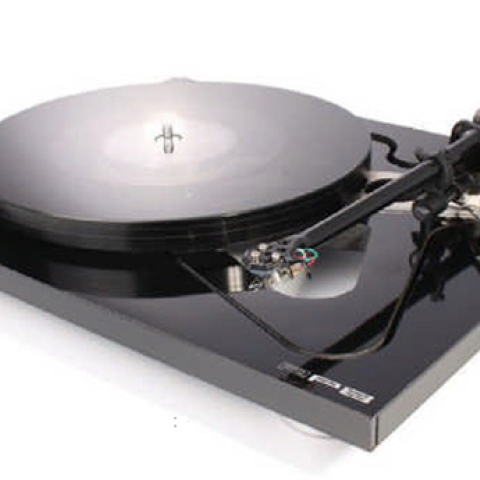
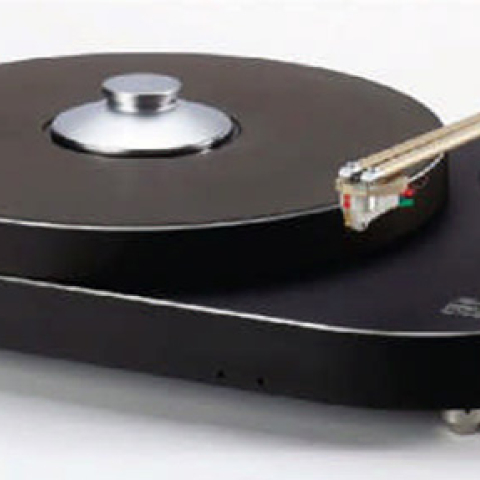
The associated equipment I used was over the top for a product at this price point (because I have no choice); it included the new Lyra Etna Lambda SL and Miyajima Labs Infinity mono cartridges, mounted respectively on the SAT CF1-09T and Kuzma 4 Point arms on the SAT XD-1 turntable. I also moved the AR turntable into the main room and tried that with the Cartridge Man cartridge and the Cyrus phono stage.
Break-in was unusual. Typically, electronics sound bright and hard until they've had a chance to "cook." The Phono Signature went in the opposite direction: It began warm and somewhat syrupy in the bottom octaves; over time it brightened up and achieved a much better balance.
I began serious auditioning with Helen Merrill (Analogue Productions APJ127/EmArcy MG360036), a mono recording from 1954 (originally released in 1955) with arrangements and liner notes by Quincy Jones. The set opens with Billie Holiday and Arthur Herzog's downcast ballad, "Don't Explain." Merrill sings the opening verses in a near-whisper, right on top of the microphone; Clifford Brown's trumpet enters, surrounded by natural room ambience; this is an astonishingly transparent and 3D recording.
A few days earlier, Brown had played on Sarah Vaughan's equally memorable, similarly eponymous EmArcy debut (MG36004), which was released recently in the Acoustic Sounds/Verve reissue series (B0032413-01). Twenty-five-year-old Brown, who unlike many of his bop cohorts lived clean (no drugs or alcohol), died in a car crash in 1956, but Merrill, now 90, is still with us. On this record, she's in your room at age 24.
I was hoping to hear a bright (but clean), tipped-up vocal, because that's how this recording (and the Vaughan) is supposed to sound, and it did. I was hoping for 3D, tightly focused mono, and got that, too. I was hoping that Brown's trumpet would float effortlessly, tightly balled in 3D space in front of Jimmy Jones's piano, placed well back in the mix—and that's what the Phono Signature delivered.
If you think you don't like mono, try both of these EmArcy reissues. Merrill's take on "What's New" adds a level of "come hither" heat Linda Ronstadt's fine take doesn't achieve. Brown's fluttering solo is an added attraction.
After playing this record and being fully impressed with the sound, I decided to hear what might be gained by adding Cyrus's $1199 PSX-R2 DC power supply. It's easy enough to plug it into the socket at the back of the main chassis. Doing so splits the power responsibilities with the PSX-R2, handling the critical analog signal chain, and the main unit, which handles control and switching.
I replayed "Falling in Love With Love" from the Helen Merrill LP, the last track I'd played before shutting the system down to add the PSU. There's an instrumental flourish toward the conclusion (Q calls it a "free and loosely swinging finale") that ends the track with an exclamation mark. The added power supply gave it a bold-faced dynamic accent I hadn't noticed previously.
I replayed a few other dynamic, musically complex tracks, including a side of the spectacular 45rpm direct-to-disc Má Vlast (Accentus Music, ACC40482) performed by The Bamberg Symphony. With the power supply, I heard more macrodynamic slam, an improvement in small-scale microdynamics, added sheen and sweetness in the strings, and more bite and transient precision in the brass.
None of these sonic enhancements changed the unit's essential personality, which is pleasing and emphasizes transient clarity, well-organized 3D soundstaging, and clean, well-articulated bass. It made an honest, attractive sound, whether I was using it with the Etna Lambda SL or the Miyajima Labs Infinity mono—both of which are endowed with a somewhat generous midband. If you want effervescent bloom, midband richness, and a long, graceful decay, you'd best buy a cartridge like these that possesses those qualities.
The Cyrus Phono Signature is attractive visually, sonically, and operationally, especially at the $2199 price point. I enjoyed its multi-input versatility, ease of use, quiet backgrounds, and well-organized and focused imaging and soundstaging. Add the $1199 PSX-R2, and you're at $3398, a price at which there's plenty of competition. The PSX-R2 produces a subtle but worthwhile sonic jolt that doesn't significantly alter the Phono Signature's reserved but well-organized Brit personality.
The X-Quisite SUT X-20
As soon as I finished reviewing the X-quisite ST MC (footnote 5), the unique cartridge with the one-piece ceramic cantilever/ coil former, I bought it. Over time, I began second-guessing my decision but not the review, which I still think was accurate. Even before I wrote it up, after much use, the sound of the cartridge continued to evolve, particularly on top, where it could sound hard one day and not the day after. I listened a long time before writing the review, and I thought the break-in period was over. But the sound continued to change, finally settling in with a "shelved" quality in the upper octaves that worked for some recordings but not others. The easily noticed character was disconcerting. In the ensuing months, when readers have asked me if they should buy an X-quisite, I've tended to equivocate; unlike too many Facebook knuckleheads, I never tell anyone what to buy.
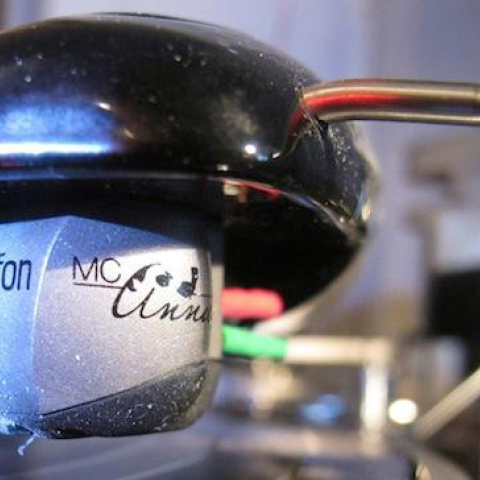
Despite some lingering misgivings, the X-quisite's virtues were clear: It provided fast, articulate transients—more so than the Lyra Atlas Lambda SL and the Ortofon Anna D. The Grado Epoch's refined, supersmooth upper octaves share a special category with the Fuuga and the Air Tight Opus-1. These are "special occasion" cartridges that make me happy to have easily replaceable headshells on both the SAT CF1-09 and the Kuzma 4 Point tonearms.
 The recently released X-quisite SUT X-20 ($13,500) is a stereo, 4N silver-wire toroidal transformer with a low-loss alloy core that's said to match the cartridge "magnetically, electrically and mechanically" and to be optimized "regarding eddy current and hysteresis loss in order to provide the best properties to the unique ceramic transducer in combination with a tube preamplifier." Gain is 26dB (1:20). The case is painted wood; a solid walnut case is optional.
Using the X-quisite with both the CH Precision P1/X1 and the Ypsilon VPS100/MC26L SUT combo made it clear that the X-quisite prefers a SUT to an active MC amplification device, whether it's current or voltage amplification. The X-quisite's sonic performance was considerably more coherent, transparent, and effortless through the Ypsilon combo.
The SUT-20 took that to a new level.
Despite the SUT X-20's three-position ground switch, it took some time to eliminate hum—always an adventure with moving coil step-up transformers. A wire from the X-20's ground lug to the VPS100's ground lug did the trick.
The X-20 magnified everything about the X-quisite ST that I loved and eliminated the qualities that gave me pause. Used with the SUT, the X-quisite did a much better job with high-frequency sibilants, and it completely eliminated that upper-frequency ledge. In its place—subjectively—were impressive linearity and timbral neutrality.
Now the cartridge sings sweetly in every way while continuing to produce the spectacular transient clarity and speed that first attracted me to it.
I'm starting to go through a sumptuously packaged Chasing the Dragon 5-LP set of the Bach solo Cello Suites (VALLPO14), including a version of the 3rd suite with Schumann's piano accompaniment, recorded directly to tape using a pair of omnidirectional tube microphones. Justin Pearson, principal cellist, general manager, and artistic director of the National Symphony of London, performed five of the six suites; the sixth, which calls for a five-string cello, is performed by Pedro Silva, a recent graduate of the Royal Academy of Music.
The recorded sound is unassailable: rich, resonant, well-focused, and spatially 3D. It's a 100% successful production, and the X-quisite combo delivered all of it with smooth, sweet precision and appropriately gritty textures when the cello got rough. Good as it is, this recording might swamp a cartridge that's warm in the midbass.
When I'd finished with Suite #3, which Mr. Pearson performed competently if somewhat languidly, I played "Bourée" 1 and 2 and "Gigue" as executed with crisp intensity (some might say ferociously) by János Starker from his 1959 EMI mono release (Columbia 33CX1656), as reissued by The Electric Recording Company on ERC015.
Whatever hesitancy I'd had about recommending the X-quisite ST cartridge vanished after I spent a few weeks with it running into the X-20 SUT. This combination is sonically stunning. Equally stunning is the price: $26,660 for the combo. Still, at the price, I'd rather have this than accompany Jeff Bezos into space.
The recently released X-quisite SUT X-20 ($13,500) is a stereo, 4N silver-wire toroidal transformer with a low-loss alloy core that's said to match the cartridge "magnetically, electrically and mechanically" and to be optimized "regarding eddy current and hysteresis loss in order to provide the best properties to the unique ceramic transducer in combination with a tube preamplifier." Gain is 26dB (1:20). The case is painted wood; a solid walnut case is optional.
Using the X-quisite with both the CH Precision P1/X1 and the Ypsilon VPS100/MC26L SUT combo made it clear that the X-quisite prefers a SUT to an active MC amplification device, whether it's current or voltage amplification. The X-quisite's sonic performance was considerably more coherent, transparent, and effortless through the Ypsilon combo.
The SUT-20 took that to a new level.
Despite the SUT X-20's three-position ground switch, it took some time to eliminate hum—always an adventure with moving coil step-up transformers. A wire from the X-20's ground lug to the VPS100's ground lug did the trick.
The X-20 magnified everything about the X-quisite ST that I loved and eliminated the qualities that gave me pause. Used with the SUT, the X-quisite did a much better job with high-frequency sibilants, and it completely eliminated that upper-frequency ledge. In its place—subjectively—were impressive linearity and timbral neutrality.
Now the cartridge sings sweetly in every way while continuing to produce the spectacular transient clarity and speed that first attracted me to it.
I'm starting to go through a sumptuously packaged Chasing the Dragon 5-LP set of the Bach solo Cello Suites (VALLPO14), including a version of the 3rd suite with Schumann's piano accompaniment, recorded directly to tape using a pair of omnidirectional tube microphones. Justin Pearson, principal cellist, general manager, and artistic director of the National Symphony of London, performed five of the six suites; the sixth, which calls for a five-string cello, is performed by Pedro Silva, a recent graduate of the Royal Academy of Music.
The recorded sound is unassailable: rich, resonant, well-focused, and spatially 3D. It's a 100% successful production, and the X-quisite combo delivered all of it with smooth, sweet precision and appropriately gritty textures when the cello got rough. Good as it is, this recording might swamp a cartridge that's warm in the midbass.
When I'd finished with Suite #3, which Mr. Pearson performed competently if somewhat languidly, I played "Bourée" 1 and 2 and "Gigue" as executed with crisp intensity (some might say ferociously) by János Starker from his 1959 EMI mono release (Columbia 33CX1656), as reissued by The Electric Recording Company on ERC015.
Whatever hesitancy I'd had about recommending the X-quisite ST cartridge vanished after I spent a few weeks with it running into the X-20 SUT. This combination is sonically stunning. Equally stunning is the price: $26,660 for the combo. Still, at the price, I'd rather have this than accompany Jeff Bezos into space.
Footnote 5: X-quisite. Web: x-quisite.ch. US distributor: Wynn Audio, 20 Wertheim Ct., Unit 31 Richmond Hill, Ontario L4B 3A8, Canada. Web: wynnaudio.com.
As soon as I finished reviewing the X-quisite ST MC (footnote 5), the unique cartridge with the one-piece ceramic cantilever/ coil former, I bought it. Over time, I began second-guessing my decision but not the review, which I still think was accurate. Even before I wrote it up, after much use, the sound of the cartridge continued to evolve, particularly on top, where it could sound hard one day and not the day after. I listened a long time before writing the review, and I thought the break-in period was over. But the sound continued to change, finally settling in with a "shelved" quality in the upper octaves that worked for some recordings but not others. The easily noticed character was disconcerting. In the ensuing months, when readers have asked me if they should buy an X-quisite, I've tended to equivocate; unlike too many Facebook knuckleheads, I never tell anyone what to buy.
The recently released X-quisite SUT X-20 ($13,500) is a stereo, 4N silver-wire toroidal transformer with a low-loss alloy core that's said to match the cartridge "magnetically, electrically and mechanically" and to be optimized "regarding eddy current and hysteresis loss in order to provide the best properties to the unique ceramic transducer in combination with a tube preamplifier." Gain is 26dB (1:20). The case is painted wood; a solid walnut case is optional.
Using the X-quisite with both the CH Precision P1/X1 and the Ypsilon VPS100/MC26L SUT combo made it clear that the X-quisite prefers a SUT to an active MC amplification device, whether it's current or voltage amplification. The X-quisite's sonic performance was considerably more coherent, transparent, and effortless through the Ypsilon combo.
Footnote 5: X-quisite. Web: x-quisite.ch. US distributor: Wynn Audio, 20 Wertheim Ct., Unit 31 Richmond Hill, Ontario L4B 3A8, Canada. Web: wynnaudio.com.