

In an instantly recognizable way, the A 6.2 ME imparted a sense of polish, or "wetness," to the Falcon's almost-dry-but-not-dry sound. By wetness I don't mean more reverb in the room tone or recording studio sense but more like the humidity of heavy, warm summer air. With the AVM, the sound from the Falcons had a slight gloss that was not there with either the Rogue Sphinx V3 or Pass Labs INT-25 integrateds. It also wasn't there with the Rogue RP-7/Parasound A 21+ preamp/amp combination.
 The main effect of this slight sonic glow was to direct my listening toward music I always want to listen to but often refrain from playing because the recordings can be tiring and difficult to stay focused on. The AVM A 6.2 ME presented these challenging recordings in a detailed, well-structured, nonfatiguing manner. As a result, my AVM month was filled with fantastic albums by Björk, Alice Coltrane, and mezzo-soprano Clare Wilkinson. I find these diverse artists to be similar in how their art reaches my psyche by exposing a kind of beauty grounded not in technique or ego, but in a universal human spirit. I cherish what these artists make me feel, but some components I've reviewed did not allow me to access those feelings. The Ovation A 6.2 ME did.
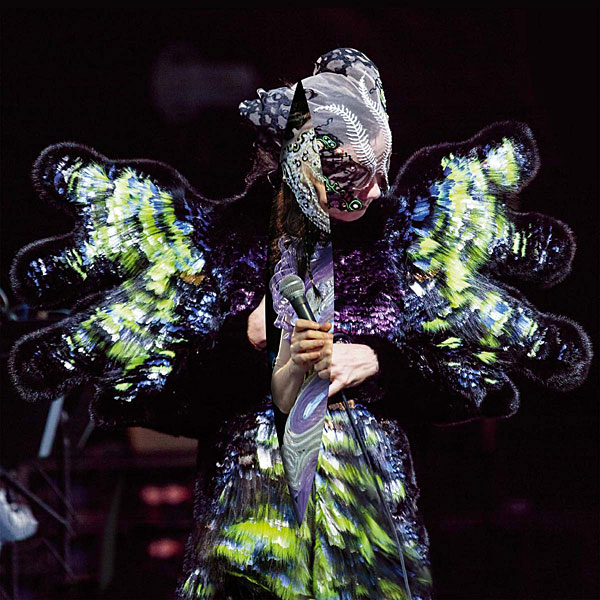 When I played Björk's compilation of live-performance tracks from her 2015 album tour, Vulnicura Live (16/44.1 FLAC, One Little Indian/Tidal), the AVM integrated gave me a wide-angle, member-of-the-audience view, providing information about the size and nature of the diverse venues Björk performed in. In my scribbled notes, I characterized the AVM's Vulnicura presentation as "ease with lush detail." It was smooth and engaging.
Rogue Sphinx V3 comparison
When I played Björk's compilation of live-performance tracks from her 2015 album tour, Vulnicura Live (16/44.1 FLAC, One Little Indian/Tidal), the AVM integrated gave me a wide-angle, member-of-the-audience view, providing information about the size and nature of the diverse venues Björk performed in. In my scribbled notes, I characterized the AVM's Vulnicura presentation as "ease with lush detail." It was smooth and engaging.
Rogue Sphinx V3 comparison
Alice Coltrane's Transfiguration (24/44.1 FLAC MQA Warner Music/Tidal) is another of my favorite albums. I love Alice for how she rejected bebop's orthodoxy and turned free jazz into something more personal, inward looking, and mysterious. What I admire most about Alice's art is how she plays each composition as if it has an important message to convey. When my hi-fi is singing just right, the urgency of her transcendental messages comes through. When it's not, I hear only exotic musicianship. The AVM A 6.2 integrated (powering the Falcon LS3/5a) showed me the most inspired and enlightened Alice Coltrane I've ever heard.
The A 6.2 displayed Alice's unique expressiveness with a sparkling sonic radiance that disappeared almost completely when I swapped in Rogue Audio's much less expensive ($1595) Sphinx V3 integrated amplifier.
As always in audio, sequence is everything. Switching from the AVM to the Rogue integrated made it clear what five times more money can buy. Alice Coltrane's Transfiguration sounded dynamic, engaging, and pleasurably tactile with the humble Rogue. Alice's electric organ was exceptionally exciting with the Sphinx V3. Playing this album, and others by organ masters Jimmy Smith and Dr. Lonnie Smith, the Sphinx-Falcon combo reproduced Hammond, Wurlitzer, and Farfisa organs in a supertactile way that, maybe, no amp could better. But compared to the A 6.2 ME, the Sphinx V3 sounded shadowy, slightly soft, and physically and emotionally distant. The $7999 AVM lit up the music, making it brighter, more vivacious, more right there in front of me, more pacey, and—I think—more meaningful.
The AVM A 6.2 integrated (powering the Falcon LS3/5a) showed me the most inspired and enlightened Alice Coltrane I've ever heard.
The A 6.2 displayed Alice's unique expressiveness with a sparkling sonic radiance that disappeared almost completely when I swapped in Rogue Audio's much less expensive ($1595) Sphinx V3 integrated amplifier.
As always in audio, sequence is everything. Switching from the AVM to the Rogue integrated made it clear what five times more money can buy. Alice Coltrane's Transfiguration sounded dynamic, engaging, and pleasurably tactile with the humble Rogue. Alice's electric organ was exceptionally exciting with the Sphinx V3. Playing this album, and others by organ masters Jimmy Smith and Dr. Lonnie Smith, the Sphinx-Falcon combo reproduced Hammond, Wurlitzer, and Farfisa organs in a supertactile way that, maybe, no amp could better. But compared to the A 6.2 ME, the Sphinx V3 sounded shadowy, slightly soft, and physically and emotionally distant. The $7999 AVM lit up the music, making it brighter, more vivacious, more right there in front of me, more pacey, and—I think—more meaningful.
 Pass Labs INT-25 comparison
Overtly precise, uber-clean audio sound has one problem: It doesn't strike my musical memory chords as real. It is so clean and distinctly outlined that my brain shouts, "Whoa! That's hi-fi!" The $7250 Pass Labs INT-25 is almost that clean. When it drives my LS3/5a's or Harbeth 30.2's, my brain will sometimes interrupt my music focus to admire the well-formed, pristine beauty of the reproduction I am experiencing. This happens most frequently with modern digital recordings like Mynstrelles with Straunge Sounds (16/44.1 FLAC Delphian/Tidal), with mezzo-soprano Clare Wilkinson and the Rose Consort of Viols, because recordings like this one have been mastered to deliver this type of pristine clarity. Driving the Falcons, the AVM A 6.2 gave Clare Wilkinson's voice a lifelike physicality, a tangible, moist, throat-and-mouth presence. With the Pass Labs INT-25, her voice was beautiful but purer and drier. Less touchable. With the Pass, I perceived more space around each instrument. Players seemed more separated from each other and better outlined. This comparison was not subtle or complicated: The INT-25 delivered more bone and less flesh than the Ovation A 6.2.
With Magnepan .7s
Magnepan's .7 quasi-ribbon panel speakers need an amplifier that snoozes while pushing amperes into 4 ohm loads. Björk's Vulnicura Live is a good Magnepan-compatibility test because "getting it all sorted" is a trick only a few amplifiers have excelled at. At the end of each Vulnicura track, the audience cheers and applauds. This happens in a variety of venues. The more focused and distinct and separated each audience member sounds, the better the amp is at driving the .7's load. The AVM A 6.2 not only did focused and distinct, it let each concert venue speak in its own voice. I could sense differences in microphone placement and air volume in each auditorium. The A 6.2 ME had no difficulty sinking current into the Maggies. I used the AVM with the Magnepan .7s for about five days, playing blues, avant-garde jazz, and diverse opera and choral programs. The sound was not as clean and pristine as with the pure class-A Pass Labs INT-25, nor was it as bold and romantic as Rogue Audio's class-D Sphinx V3 integrated. What the AVM integrated did well was deliver music in a well-shaped, delightfully detailed, slightly lush manner.
Headphone output
I used the AVM with the Magnepan .7s for about five days, playing blues, avant-garde jazz, and diverse opera and choral programs. The sound was not as clean and pristine as with the pure class-A Pass Labs INT-25, nor was it as bold and romantic as Rogue Audio's class-D Sphinx V3 integrated. What the AVM integrated did well was deliver music in a well-shaped, delightfully detailed, slightly lush manner.
Headphone output
I read the complete Ovation A 6.2 ME owner's manual, but I only found two sentences about the headphone output. "Plug a 6.35mm headphone connector to the headphone jack. The loudspeaker and preamp outputs will mute automatically while a headphone is plugged in." There were no specifications in the manual nor on the AVM website. I pressed Udo for more info. "It is a completely separate amplifying stage mounted inside on the chassis front panel. It is a discrete bipolar balanced amp with matched transistors. It makes seven watts class-A and does not draw any power from the main amp." Even when I pressed him via email, Udo would not specify any other headphone amp power ratings (into 32 or 300 ohms for example) or say into what impedance those "seven watts" could be achieved.
The most expensive headphones I have in-house are the planar-magnetic T+A Solitaire P openbacks ($6400) I reviewed in Gramophone Dreams #45. They are finely crafted, taut-sounding, low-distortion transducers with an 80 ohm impedance and a moderate sensitivity of 92dB/mW. Like the AVM, they are made in Germany and so jumped out of the deck as an interesting first headphone to try.
 I started by listening with an album that sometimes sounds a little vague and fuzzy through floorspeakers but really sharpens up (focus and structure-wise) with top-shelf headphones like the Solitaire P's: Bill Frisell with Dave Holland and Elvin Jones (24/44.1 FLAC MQA ECM/Tidal) is my everyday test album for assessing "focused and well-sorted." Happily, the resolving powers of the Solitaire P's and AVM headphone amplifier banished all vagueness.
The A 6.2 ME's headphone amp sounds like a completely different amp than the AVM amp that was driving my speakers. Compared to the A 6.2's lightly polished, slightly wet-sounding speaker amp, the headphone amp sounded dry and straitlaced.
My curiosity piqued, I tried HiFiMan's 60 ohm low-sensitivity (83dB/mW) Susvara open-back planar-magnetic headphones. I played the Bill Frisell, the Alice Coltrane, and a bunch of Charles Mingus. The AVM headphone amplifier struggled to deliver undistorted power into the Susvara's difficult load.
Next, I tried the lower impedance (35 ohms) but higher sensitivity (106dB/mW) Focal Stellia, currently my main closed-back reference and daily driver. The beautifully fashioned, superbly finished, $2990 Stellia seemed like a natural (and I thought logical) pairing with the equally stylish Ovation integrated.
I started by listening with an album that sometimes sounds a little vague and fuzzy through floorspeakers but really sharpens up (focus and structure-wise) with top-shelf headphones like the Solitaire P's: Bill Frisell with Dave Holland and Elvin Jones (24/44.1 FLAC MQA ECM/Tidal) is my everyday test album for assessing "focused and well-sorted." Happily, the resolving powers of the Solitaire P's and AVM headphone amplifier banished all vagueness.
The A 6.2 ME's headphone amp sounds like a completely different amp than the AVM amp that was driving my speakers. Compared to the A 6.2's lightly polished, slightly wet-sounding speaker amp, the headphone amp sounded dry and straitlaced.
My curiosity piqued, I tried HiFiMan's 60 ohm low-sensitivity (83dB/mW) Susvara open-back planar-magnetic headphones. I played the Bill Frisell, the Alice Coltrane, and a bunch of Charles Mingus. The AVM headphone amplifier struggled to deliver undistorted power into the Susvara's difficult load.
Next, I tried the lower impedance (35 ohms) but higher sensitivity (106dB/mW) Focal Stellia, currently my main closed-back reference and daily driver. The beautifully fashioned, superbly finished, $2990 Stellia seemed like a natural (and I thought logical) pairing with the equally stylish Ovation integrated.
 I started laughing, tears streamed down my face, while listening to another of my most favorite albums, Jimmy Martin: The King of Bluegrass (16/44.1 FLAC Decca/Tidal). I couldn't stop repeat-playing "Milwaukee, Here I Come," the high-spirited Lee Fykes song popularized by George Jones and Tammy Wynette. With the dCS Bartók DAC sourcing the AVM headphone amp, all the lyrics' stretched words, bent words, and mountain music inflections came pouring out in living color. The AVM headphone amplifier proved it could boogie if it had the right load. The supersensitive Stellias seemed to wake up the A 6.2's headphone amp, which had struggled with the Susvara's more difficult load.
Conclusions
I started laughing, tears streamed down my face, while listening to another of my most favorite albums, Jimmy Martin: The King of Bluegrass (16/44.1 FLAC Decca/Tidal). I couldn't stop repeat-playing "Milwaukee, Here I Come," the high-spirited Lee Fykes song popularized by George Jones and Tammy Wynette. With the dCS Bartók DAC sourcing the AVM headphone amp, all the lyrics' stretched words, bent words, and mountain music inflections came pouring out in living color. The AVM headphone amplifier proved it could boogie if it had the right load. The supersensitive Stellias seemed to wake up the A 6.2's headphone amp, which had struggled with the Susvara's more difficult load.
Conclusions
Call it bad memory or confirmation bias, but after a month of daily listening, I concluded that the AVM A 6.2 ME sounded a lot like those classic class-A amplifiers of yesteryore, which sounded like they had full control and weren't leaving any information behind. They sounded musically right and complete. The AVM A 6.2 ME integrated sounded that kind of right, with a little fairy dust sprinkled on top.
The main effect of this slight sonic glow was to direct my listening toward music I always want to listen to but often refrain from playing because the recordings can be tiring and difficult to stay focused on. The AVM A 6.2 ME presented these challenging recordings in a detailed, well-structured, nonfatiguing manner. As a result, my AVM month was filled with fantastic albums by Björk, Alice Coltrane, and mezzo-soprano Clare Wilkinson. I find these diverse artists to be similar in how their art reaches my psyche by exposing a kind of beauty grounded not in technique or ego, but in a universal human spirit. I cherish what these artists make me feel, but some components I've reviewed did not allow me to access those feelings. The Ovation A 6.2 ME did.
When I played Björk's compilation of live-performance tracks from her 2015 album tour, Vulnicura Live (16/44.1 FLAC, One Little Indian/Tidal), the AVM integrated gave me a wide-angle, member-of-the-audience view, providing information about the size and nature of the diverse venues Björk performed in. In my scribbled notes, I characterized the AVM's Vulnicura presentation as "ease with lush detail." It was smooth and engaging.
Alice Coltrane's Transfiguration (24/44.1 FLAC MQA Warner Music/Tidal) is another of my favorite albums. I love Alice for how she rejected bebop's orthodoxy and turned free jazz into something more personal, inward looking, and mysterious. What I admire most about Alice's art is how she plays each composition as if it has an important message to convey. When my hi-fi is singing just right, the urgency of her transcendental messages comes through. When it's not, I hear only exotic musicianship.
The AVM A 6.2 integrated (powering the Falcon LS3/5a) showed me the most inspired and enlightened Alice Coltrane I've ever heard.
The A 6.2 displayed Alice's unique expressiveness with a sparkling sonic radiance that disappeared almost completely when I swapped in Rogue Audio's much less expensive ($1595) Sphinx V3 integrated amplifier.
Pass Labs INT-25 comparisonOvertly precise, uber-clean audio sound has one problem: It doesn't strike my musical memory chords as real. It is so clean and distinctly outlined that my brain shouts, "Whoa! That's hi-fi!" The $7250 Pass Labs INT-25 is almost that clean. When it drives my LS3/5a's or Harbeth 30.2's, my brain will sometimes interrupt my music focus to admire the well-formed, pristine beauty of the reproduction I am experiencing. This happens most frequently with modern digital recordings like Mynstrelles with Straunge Sounds (16/44.1 FLAC Delphian/Tidal), with mezzo-soprano Clare Wilkinson and the Rose Consort of Viols, because recordings like this one have been mastered to deliver this type of pristine clarity. Driving the Falcons, the AVM A 6.2 gave Clare Wilkinson's voice a lifelike physicality, a tangible, moist, throat-and-mouth presence. With the Pass Labs INT-25, her voice was beautiful but purer and drier. Less touchable. With the Pass, I perceived more space around each instrument. Players seemed more separated from each other and better outlined. This comparison was not subtle or complicated: The INT-25 delivered more bone and less flesh than the Ovation A 6.2.
Magnepan's .7 quasi-ribbon panel speakers need an amplifier that snoozes while pushing amperes into 4 ohm loads. Björk's Vulnicura Live is a good Magnepan-compatibility test because "getting it all sorted" is a trick only a few amplifiers have excelled at. At the end of each Vulnicura track, the audience cheers and applauds. This happens in a variety of venues. The more focused and distinct and separated each audience member sounds, the better the amp is at driving the .7's load. The AVM A 6.2 not only did focused and distinct, it let each concert venue speak in its own voice. I could sense differences in microphone placement and air volume in each auditorium. The A 6.2 ME had no difficulty sinking current into the Maggies.
I used the AVM with the Magnepan .7s for about five days, playing blues, avant-garde jazz, and diverse opera and choral programs. The sound was not as clean and pristine as with the pure class-A Pass Labs INT-25, nor was it as bold and romantic as Rogue Audio's class-D Sphinx V3 integrated. What the AVM integrated did well was deliver music in a well-shaped, delightfully detailed, slightly lush manner.
Headphone outputI read the complete Ovation A 6.2 ME owner's manual, but I only found two sentences about the headphone output. "Plug a 6.35mm headphone connector to the headphone jack. The loudspeaker and preamp outputs will mute automatically while a headphone is plugged in." There were no specifications in the manual nor on the AVM website. I pressed Udo for more info. "It is a completely separate amplifying stage mounted inside on the chassis front panel. It is a discrete bipolar balanced amp with matched transistors. It makes seven watts class-A and does not draw any power from the main amp." Even when I pressed him via email, Udo would not specify any other headphone amp power ratings (into 32 or 300 ohms for example) or say into what impedance those "seven watts" could be achieved.
I started by listening with an album that sometimes sounds a little vague and fuzzy through floorspeakers but really sharpens up (focus and structure-wise) with top-shelf headphones like the Solitaire P's: Bill Frisell with Dave Holland and Elvin Jones (24/44.1 FLAC MQA ECM/Tidal) is my everyday test album for assessing "focused and well-sorted." Happily, the resolving powers of the Solitaire P's and AVM headphone amplifier banished all vagueness.
The A 6.2 ME's headphone amp sounds like a completely different amp than the AVM amp that was driving my speakers. Compared to the A 6.2's lightly polished, slightly wet-sounding speaker amp, the headphone amp sounded dry and straitlaced.
I started laughing, tears streamed down my face, while listening to another of my most favorite albums, Jimmy Martin: The King of Bluegrass (16/44.1 FLAC Decca/Tidal). I couldn't stop repeat-playing "Milwaukee, Here I Come," the high-spirited Lee Fykes song popularized by George Jones and Tammy Wynette. With the dCS Bartók DAC sourcing the AVM headphone amp, all the lyrics' stretched words, bent words, and mountain music inflections came pouring out in living color. The AVM headphone amplifier proved it could boogie if it had the right load. The supersensitive Stellias seemed to wake up the A 6.2's headphone amp, which had struggled with the Susvara's more difficult load.
Call it bad memory or confirmation bias, but after a month of daily listening, I concluded that the AVM A 6.2 ME sounded a lot like those classic class-A amplifiers of yesteryore, which sounded like they had full control and weren't leaving any information behind. They sounded musically right and complete. The AVM A 6.2 ME integrated sounded that kind of right, with a little fairy dust sprinkled on top.















