What I listened to
For a few days, I connected the Brilliance to my office turntable—a Philips AF-887 with Shure M97xe—and spun records through my McIntosh MA6500 integrated amplifier driving Amphion One18 speakers. I got familiar with the controls and dialed in the best-sounding capacitance (350pF). I was impressed with the sound character: crisp and clear, with a full but not thumpy low end. Compared to the built-in phono preamp in the MA6500, the Belleson Brilliance was at another level in terms of clarity, speed, and soundstage depth. Once I was satisfied that the unit I received worked as described and sure I wouldn't make some kind of speaker-wrecking mistake with the control interface, I moved the Belleson upstairs to the reference system and began several weeks of listening. I decided to compare a bunch of cartridges using a relatively small collection of records. I was curious how much parameter adjustment would be required each time I switched cartridges. Swapping cartridges is easy with my Technics SL-1200 MK5; I have a fleet of cartridges premounted in Technics headshells.
Here's a list of the records I listened to:
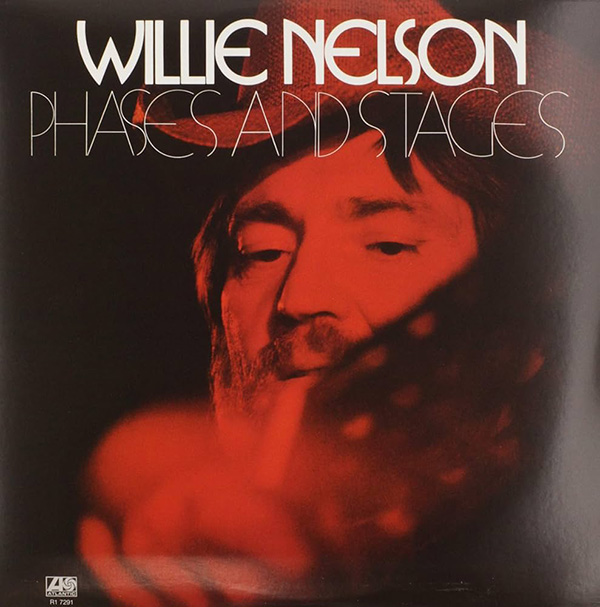 • Willie Nelson's Phases and Stages, the Rhino-Atlantic AAA remaster released for Record Store Day a few years ago (R1 726130/603497827176). When I played this album, I listened all the way through side 1 or 2, because I love the music.
• Roland Kirk's Now Please Don't You Cry, Beautiful Edith, from Analogue Productions' all-analog Verve Series (V6-8709/602475207788). I listened to "Blue Rol" and "Silverlization," the first and last tracks on side 1. The latter track has loud drums in the right channel and is thus a good test if the antiskate is set correctly. (If it is, the drums will sound cleanly all the way to the end of the side.)
• Roger Waters's Amused to Death, the first 45rpm in Analogue Productions/Legacy's deluxe four-platter reissue (APP 468761/88765478901). I concentrated on the wide spread of sound effects in "The Ballad of Bill Hubbard" on side 1, and then all of side 2, the two-part "Perfect Sense." Waters and coproducer Patrick Leonard used the QSound spatial-effects system (footnote 4) to create circa 180° of spread; some sounds appear to originate far beyond the outsides and fronts of the speakers if the LP is reproduced properly.
• Fillmore Street/Little Woodstar, the latest album by my colleague Sasha Matson (Albany Records TROY1985). I concentrated on "Sonora Pass," the second part of the Fillmore Street suite on side 1, because it has a combination of deep bass Moog synthesizer sounds and bright, quick woodwinds and percussion.
I also played tracks from other favorites, including the original Rudy Van Gelder cut of Duke Ellington Meets Coleman Hawkins (Impulse! A-26) and the new Analogue Productions/Pablo reissue of Duke's Big 4 (APJ 153), on which Ellington is accompanied by Joe Pass (guitar), Ray Brown (bass), and Louie Bellson (drums). Finally, I listened to the aforementioned Bob Ludwig cut of Bowie's Let's Dance.
I did plenty of pleasure listening, casting my notepad aside and turning off my critic-comparison brain, and letting the waves of great music sounding its best envelop me and excite the neurons.
What I listened with
• Willie Nelson's Phases and Stages, the Rhino-Atlantic AAA remaster released for Record Store Day a few years ago (R1 726130/603497827176). When I played this album, I listened all the way through side 1 or 2, because I love the music.
• Roland Kirk's Now Please Don't You Cry, Beautiful Edith, from Analogue Productions' all-analog Verve Series (V6-8709/602475207788). I listened to "Blue Rol" and "Silverlization," the first and last tracks on side 1. The latter track has loud drums in the right channel and is thus a good test if the antiskate is set correctly. (If it is, the drums will sound cleanly all the way to the end of the side.)
• Roger Waters's Amused to Death, the first 45rpm in Analogue Productions/Legacy's deluxe four-platter reissue (APP 468761/88765478901). I concentrated on the wide spread of sound effects in "The Ballad of Bill Hubbard" on side 1, and then all of side 2, the two-part "Perfect Sense." Waters and coproducer Patrick Leonard used the QSound spatial-effects system (footnote 4) to create circa 180° of spread; some sounds appear to originate far beyond the outsides and fronts of the speakers if the LP is reproduced properly.
• Fillmore Street/Little Woodstar, the latest album by my colleague Sasha Matson (Albany Records TROY1985). I concentrated on "Sonora Pass," the second part of the Fillmore Street suite on side 1, because it has a combination of deep bass Moog synthesizer sounds and bright, quick woodwinds and percussion.
I also played tracks from other favorites, including the original Rudy Van Gelder cut of Duke Ellington Meets Coleman Hawkins (Impulse! A-26) and the new Analogue Productions/Pablo reissue of Duke's Big 4 (APJ 153), on which Ellington is accompanied by Joe Pass (guitar), Ray Brown (bass), and Louie Bellson (drums). Finally, I listened to the aforementioned Bob Ludwig cut of Bowie's Let's Dance.
I did plenty of pleasure listening, casting my notepad aside and turning off my critic-comparison brain, and letting the waves of great music sounding its best envelop me and excite the neurons.
What I listened with
My Hana SL MK II is the only low-output MC cartridge in my stable, but I have many cartridges designed to operate with a MM preamp. In addition to the Hana, I connected these cartridges to the Belleson Brilliance: • Shure V15 Type III with the original, hyperelliptical stylus. I found this cartridge sounded its best tracking at 1gm and loaded with 350pF capacitance. Its sound was quick and detailed, but the bass foundation was not the firmest. • Ortofon 2M Blue tracking at 1.8gm, capacitance at 250pF. This high-output MM is one of my favorite cartridges because it works with most records and most preamps, it's not fussy about capacitance, and its elliptical stylus pulls more than enough music out of the grooves to be fully satisfying in most situations. It leans heavier midrange and upper bass, but presents enough detail and quickness for the music to pull me in and get my feet tapping.
• LP Gear The Vessel A3SM (footnote 5) tracking at 2gm with 350pF capacitance. The Vessel system is a MM engine with many stylus/cantilever assemblies that can easily be swapped in and out. The A3SM fits the Vessel engine with a MicroLine stylus on an aluminum cantilever; it sounded most similar to my Hana MC. That's not surprising considering that both are made by Excel Sound in Japan. Like the Hana, The Vessel A3SM was quick and superfocused in the top end, plenty weighty in the low end, but not fully red-blood bodied in the midrange, with some records at least. I am working on a review of the Vessel cartridge system.
• Denon DL-110 high-output MC (designed to connect to a MM preamp), tracking at 1.8gm and 350pF capacitance. I've long admired this cartridge's neutrality and precise channel-to-channel output balance. Connected to the Brilliance preamp, it sounded more robust and musical than I remembered. I loved its sound again. Its elliptical stylus rides in a sweet spot of the groove; well-loved records exhibited their wear most with this cartridge. Newer and better cared for platters weren't especially noisy.
The Belleson preamp offers enough loading and gain options to easily accommodate this range—indeed, to accommodate all but the most exotic and fussy cartridges.
What I heard
I used the 1kHz mono reference tone at the beginning of Analogue Productions Ultimate Analogue Test LP (AAPT 1) and a Radio Shack sound pressure level meter to adjust the volume on my Benchmark LA4 so that all the cartridges played at the same loudness. This adventure reinforced my long-held belief that the transducers—phono cartridges and loudspeakers—are the parts of a hi-fi system most variable in sound character. Changing out a cartridge (or a speaker) can fundamentally alter tonality and subjective characteristics such as speed, dynamic impact, and the sonic feel, whether it's laid-back, exciting, or aggressive. Auditioned through the Belleson preamplifier (and the other components listed in the Associated Equipment sidebar at the end of this article), no two cartridges sounded alike with the same musical selections, but there were trends. As expected, the Hana's Shibata stylus and The Vessel's MicroLine stylus brought out a ton of top-end detail and sparkle, enhancing reverb tails and the full sound of cymbals and other high-range percussion instruments. The V15 Type III was extra-sharp focused and detailed up top and down through the midrange. The Denon and Ortofon cartridges presented a balanced sound bottom to top, lacking the sharpest focus but bringing forth the body and soul of the music. To my ears, the Ortofon sound was like dark chocolate and the Denon like British-made Cadbury milk chocolate, or perhaps a "mahogany" vs "oak" sound.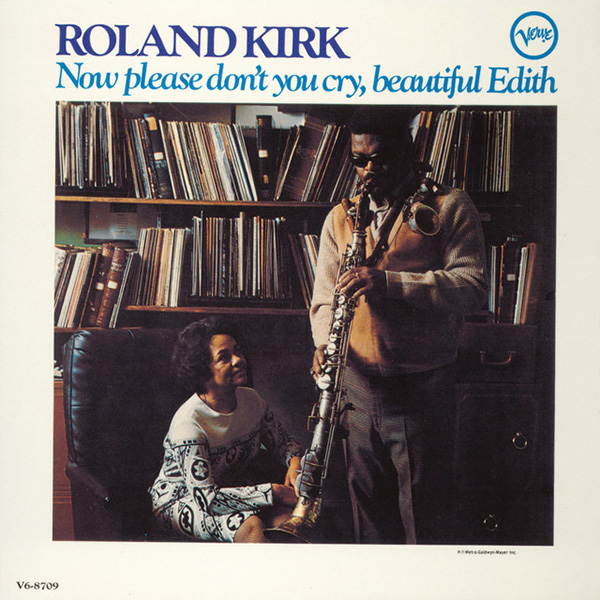 With the Roland Kirk record, the Denon and Shure cartridges sounded particularly satisfying, bringing out the punchy beat and transmitting the tonal nuances of Kirk as he played several reed instruments (often at once). Matched with the Belleson preamp, they saturated the room with a pleasant and full sound. The Denon brought Ronald Boykins's bass and the lower notes of Lonnie Smith's piano further up out of the mix. I also liked the way the Hana cartridge played this record, although it was a different kind of sound: more cymbals from Grady Tate's drums and more high harmonics from Kirk's horns.
With the Vessel cartridge, Willie Nelson's barrel-aged whiskey voice sounded in-the-room; it was also lifelike through the Denon. With the Hana, there was wonderful quickness and a feeling of air and space (via studio reverb) but less leather and whiskey. Through the Denon, the piano, played by Willie's late sister Billie, sounded right out of a honky-tonk saloon.
With the Roland Kirk record, the Denon and Shure cartridges sounded particularly satisfying, bringing out the punchy beat and transmitting the tonal nuances of Kirk as he played several reed instruments (often at once). Matched with the Belleson preamp, they saturated the room with a pleasant and full sound. The Denon brought Ronald Boykins's bass and the lower notes of Lonnie Smith's piano further up out of the mix. I also liked the way the Hana cartridge played this record, although it was a different kind of sound: more cymbals from Grady Tate's drums and more high harmonics from Kirk's horns.
With the Vessel cartridge, Willie Nelson's barrel-aged whiskey voice sounded in-the-room; it was also lifelike through the Denon. With the Hana, there was wonderful quickness and a feeling of air and space (via studio reverb) but less leather and whiskey. Through the Denon, the piano, played by Willie's late sister Billie, sounded right out of a honky-tonk saloon.
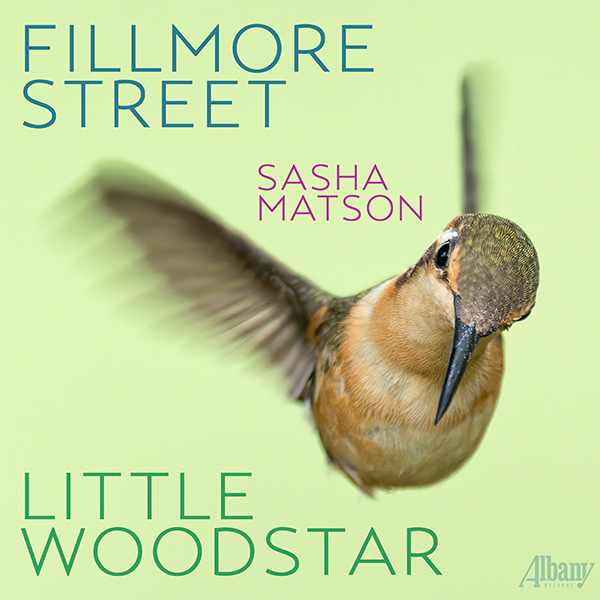 Sasha Matson's album has a cooler temperature than the others in this comparison. It's a modern digital recording, produced by John Atkinson and recorded at Sear Sound in NYC. The mix is as tight as the ensemble playing, yet each instrument sounded distinct. The more I listened to "Sonora Pass," the more stuff I heard going on. The best cartridges for this track were the ones most expert at sorting musical details: The Vessel, the Shure V15 Type III, and the Hana SL MK II. The Denon and Ortofon cartridges did okay, but the results weren't as lively, and some of the details of individual instruments and notes weren't as clear.
Finally, Amused to Death, which Roger Waters considers a magnum opus along with Pink Floyd's Dark Side of the Moon and The Wall. I don't place it in that high company, but it's an interesting sound production, especially the 45rpm Analogue Productions version, which was cut by Bernie Grundman from a 2015 remix made by Waters and James Guthrie. In this comparison of cartridges through the Brilliance preamp, I listened for tonality and how well the QSound wide-stereo sounds worked.
Early in "The Ballad of Bill Hubbard," a dog barks to the far right, way beyond the outside of the speaker. Then a TV switches on far left. Midway through the song, a mountain lion growls far right. The sound to the outside of the left speaker switches to a first-person account of a World War I British soldier leaving his dying mate, Bill Hubbard, in No Man's Land. Jeff Beck's guitar is anchored front and center, and Patrick Leonard's keyboards float between and around the speakers.
Sasha Matson's album has a cooler temperature than the others in this comparison. It's a modern digital recording, produced by John Atkinson and recorded at Sear Sound in NYC. The mix is as tight as the ensemble playing, yet each instrument sounded distinct. The more I listened to "Sonora Pass," the more stuff I heard going on. The best cartridges for this track were the ones most expert at sorting musical details: The Vessel, the Shure V15 Type III, and the Hana SL MK II. The Denon and Ortofon cartridges did okay, but the results weren't as lively, and some of the details of individual instruments and notes weren't as clear.
Finally, Amused to Death, which Roger Waters considers a magnum opus along with Pink Floyd's Dark Side of the Moon and The Wall. I don't place it in that high company, but it's an interesting sound production, especially the 45rpm Analogue Productions version, which was cut by Bernie Grundman from a 2015 remix made by Waters and James Guthrie. In this comparison of cartridges through the Brilliance preamp, I listened for tonality and how well the QSound wide-stereo sounds worked.
Early in "The Ballad of Bill Hubbard," a dog barks to the far right, way beyond the outside of the speaker. Then a TV switches on far left. Midway through the song, a mountain lion growls far right. The sound to the outside of the left speaker switches to a first-person account of a World War I British soldier leaving his dying mate, Bill Hubbard, in No Man's Land. Jeff Beck's guitar is anchored front and center, and Patrick Leonard's keyboards float between and around the speakers.
 "Perfect Sense" starts out with a thunderstorm moving far-right to far-left, and the voice of the HAL 9000 computer from 2001: A Space Odyssey as it's being disconnected and "killed." HAL's words (spoken by actor Douglas Rain) move from center to right to far-right back to center and then left and far-left. Later on side 2, sportscaster Marv Albert provides play-by-play of an imaginary air strike on an oil field, culminating in an explosion that moves around the whole 180° QSound soundstage. Creating these aural illusions requires tight tracking and good handling of out-of-phase information.
To my satisfaction and to some surprise, all the cartridges handled the wide stereo spread, and all managed to track the "airstrike" explosion. The Vessel and the Denon DL-110 presented equally satisfying (but not exactly alike) tonality, with the Vessel most emphasizing the words of that poor WWI veteran. The Shure cartridge presented the QSound panorama well but was light in the low end compared to my favorites. The Hana presented all the details well but with slightly less stereo spread. Although it was a bit bass-heavy, the Ortofon 2M Blue surprised me with its accurate reproduction of the far-spread sounds and its tracking ability throughout.
Brilliant sound
"Perfect Sense" starts out with a thunderstorm moving far-right to far-left, and the voice of the HAL 9000 computer from 2001: A Space Odyssey as it's being disconnected and "killed." HAL's words (spoken by actor Douglas Rain) move from center to right to far-right back to center and then left and far-left. Later on side 2, sportscaster Marv Albert provides play-by-play of an imaginary air strike on an oil field, culminating in an explosion that moves around the whole 180° QSound soundstage. Creating these aural illusions requires tight tracking and good handling of out-of-phase information.
To my satisfaction and to some surprise, all the cartridges handled the wide stereo spread, and all managed to track the "airstrike" explosion. The Vessel and the Denon DL-110 presented equally satisfying (but not exactly alike) tonality, with the Vessel most emphasizing the words of that poor WWI veteran. The Shure cartridge presented the QSound panorama well but was light in the low end compared to my favorites. The Hana presented all the details well but with slightly less stereo spread. Although it was a bit bass-heavy, the Ortofon 2M Blue surprised me with its accurate reproduction of the far-spread sounds and its tracking ability throughout.
Brilliant sound
Because the Belleson Brilliance phono preamplifier has so much flexibility in inputs, outputs, gain, and loading, it can be used with all but the most unusual phono cartridges, and all those parameters can be set by Wi-Fi remote control from your listening seat. Because it imposes so little of its own character on music, it allowed the character of each cartridge to shine through. Facilitated by the Belleson preamp, this modest lineup of instruments—ranging in price from $189 (for the Ortofon) to $850 (for the Hana SL MK II)—extracted almost all the music contained in the grooves of some challenging records over several weeks of listening. It was a reminder of how much music can be cut into the grooves of Thomas Edison's trusty old medium for storing sound. Back in the '80s, when I lamented money wasted on poorly made and poor-sounding records, I didn't think the format could sound really great. Even though I was exposed to higher-end turntables and cartridges at the hi-fi dealers I frequented, I often thought the annoying ticks and pops and uneven sound quality made the format too iffy, its playback too picky. Now, in the midst of vinyl's second act, I have changed my mind. I have heard enough recent-production records and enough good-sounding playback systems to be re-enthused about vinyl. I know from my experience in the mastering lab that a high-quality digital recording sounds more like what was in front of the microphones. Even the lowly CD can sound more like the master medium than the sound alteration caused by the electromechanical process of cutting a lacquer, pressing a disc, and retrieving information from the grooves. But really that's not so important. Vinyl need not sound primitive, cloudy, or fuzzy or be plagued by annoying ticks and pops. Vinyl playback is way better today than it was at its peak.
If you are serious about playing records, and desire control over the parameters that mate a cartridge to a preamp just so, I recommend you check out the Belleson Brilliance. Brian Lowe has designed a modern, wireless-connected device that gives just about any cartridge a chance to sound great. Its mission seems in service of the cartridge: enable its best sound and then give it life through clean gain and accurate RIAA de-emphasis. That is no small task, and it was a pleasure to hear it done so well with such a wide variety of cartridges.
Belleson hand-builds each preamp, and Lowe will answer the phone if you call. You buy direct from the guy who built it, and you have 30 days to try it out. "If you are not fully satisfied, the unit can be returned for full credit," the website says. "A returned unit must be in original condition with all pieces in original box and packing material to receive full credit. You are responsible to pay for return shipping."
An evaluation of the Belleson Brilliance preamp in your system with your cartridges is a low-risk proposition with potential for a very high reward.
Footnote 4: See en.wikipedia.org/wiki/QSound. Footnote 5: See lpgear.com/product/THEVESSELA3SM.html.
For a few days, I connected the Brilliance to my office turntable—a Philips AF-887 with Shure M97xe—and spun records through my McIntosh MA6500 integrated amplifier driving Amphion One18 speakers. I got familiar with the controls and dialed in the best-sounding capacitance (350pF). I was impressed with the sound character: crisp and clear, with a full but not thumpy low end. Compared to the built-in phono preamp in the MA6500, the Belleson Brilliance was at another level in terms of clarity, speed, and soundstage depth. Once I was satisfied that the unit I received worked as described and sure I wouldn't make some kind of speaker-wrecking mistake with the control interface, I moved the Belleson upstairs to the reference system and began several weeks of listening. I decided to compare a bunch of cartridges using a relatively small collection of records. I was curious how much parameter adjustment would be required each time I switched cartridges. Swapping cartridges is easy with my Technics SL-1200 MK5; I have a fleet of cartridges premounted in Technics headshells.
• Willie Nelson's Phases and Stages, the Rhino-Atlantic AAA remaster released for Record Store Day a few years ago (R1 726130/603497827176). When I played this album, I listened all the way through side 1 or 2, because I love the music.
• Roland Kirk's Now Please Don't You Cry, Beautiful Edith, from Analogue Productions' all-analog Verve Series (V6-8709/602475207788). I listened to "Blue Rol" and "Silverlization," the first and last tracks on side 1. The latter track has loud drums in the right channel and is thus a good test if the antiskate is set correctly. (If it is, the drums will sound cleanly all the way to the end of the side.)
• Roger Waters's Amused to Death, the first 45rpm in Analogue Productions/Legacy's deluxe four-platter reissue (APP 468761/88765478901). I concentrated on the wide spread of sound effects in "The Ballad of Bill Hubbard" on side 1, and then all of side 2, the two-part "Perfect Sense." Waters and coproducer Patrick Leonard used the QSound spatial-effects system (footnote 4) to create circa 180° of spread; some sounds appear to originate far beyond the outsides and fronts of the speakers if the LP is reproduced properly.
My Hana SL MK II is the only low-output MC cartridge in my stable, but I have many cartridges designed to operate with a MM preamp. In addition to the Hana, I connected these cartridges to the Belleson Brilliance: • Shure V15 Type III with the original, hyperelliptical stylus. I found this cartridge sounded its best tracking at 1gm and loaded with 350pF capacitance. Its sound was quick and detailed, but the bass foundation was not the firmest. • Ortofon 2M Blue tracking at 1.8gm, capacitance at 250pF. This high-output MM is one of my favorite cartridges because it works with most records and most preamps, it's not fussy about capacitance, and its elliptical stylus pulls more than enough music out of the grooves to be fully satisfying in most situations. It leans heavier midrange and upper bass, but presents enough detail and quickness for the music to pull me in and get my feet tapping.
I used the 1kHz mono reference tone at the beginning of Analogue Productions Ultimate Analogue Test LP (AAPT 1) and a Radio Shack sound pressure level meter to adjust the volume on my Benchmark LA4 so that all the cartridges played at the same loudness. This adventure reinforced my long-held belief that the transducers—phono cartridges and loudspeakers—are the parts of a hi-fi system most variable in sound character. Changing out a cartridge (or a speaker) can fundamentally alter tonality and subjective characteristics such as speed, dynamic impact, and the sonic feel, whether it's laid-back, exciting, or aggressive. Auditioned through the Belleson preamplifier (and the other components listed in the Associated Equipment sidebar at the end of this article), no two cartridges sounded alike with the same musical selections, but there were trends. As expected, the Hana's Shibata stylus and The Vessel's MicroLine stylus brought out a ton of top-end detail and sparkle, enhancing reverb tails and the full sound of cymbals and other high-range percussion instruments. The V15 Type III was extra-sharp focused and detailed up top and down through the midrange. The Denon and Ortofon cartridges presented a balanced sound bottom to top, lacking the sharpest focus but bringing forth the body and soul of the music. To my ears, the Ortofon sound was like dark chocolate and the Denon like British-made Cadbury milk chocolate, or perhaps a "mahogany" vs "oak" sound.
With the Roland Kirk record, the Denon and Shure cartridges sounded particularly satisfying, bringing out the punchy beat and transmitting the tonal nuances of Kirk as he played several reed instruments (often at once). Matched with the Belleson preamp, they saturated the room with a pleasant and full sound. The Denon brought Ronald Boykins's bass and the lower notes of Lonnie Smith's piano further up out of the mix. I also liked the way the Hana cartridge played this record, although it was a different kind of sound: more cymbals from Grady Tate's drums and more high harmonics from Kirk's horns.
Sasha Matson's album has a cooler temperature than the others in this comparison. It's a modern digital recording, produced by John Atkinson and recorded at Sear Sound in NYC. The mix is as tight as the ensemble playing, yet each instrument sounded distinct. The more I listened to "Sonora Pass," the more stuff I heard going on. The best cartridges for this track were the ones most expert at sorting musical details: The Vessel, the Shure V15 Type III, and the Hana SL MK II. The Denon and Ortofon cartridges did okay, but the results weren't as lively, and some of the details of individual instruments and notes weren't as clear.
Finally, Amused to Death, which Roger Waters considers a magnum opus along with Pink Floyd's Dark Side of the Moon and The Wall. I don't place it in that high company, but it's an interesting sound production, especially the 45rpm Analogue Productions version, which was cut by Bernie Grundman from a 2015 remix made by Waters and James Guthrie. In this comparison of cartridges through the Brilliance preamp, I listened for tonality and how well the QSound wide-stereo sounds worked.
"Perfect Sense" starts out with a thunderstorm moving far-right to far-left, and the voice of the HAL 9000 computer from 2001: A Space Odyssey as it's being disconnected and "killed." HAL's words (spoken by actor Douglas Rain) move from center to right to far-right back to center and then left and far-left. Later on side 2, sportscaster Marv Albert provides play-by-play of an imaginary air strike on an oil field, culminating in an explosion that moves around the whole 180° QSound soundstage. Creating these aural illusions requires tight tracking and good handling of out-of-phase information.
To my satisfaction and to some surprise, all the cartridges handled the wide stereo spread, and all managed to track the "airstrike" explosion. The Vessel and the Denon DL-110 presented equally satisfying (but not exactly alike) tonality, with the Vessel most emphasizing the words of that poor WWI veteran. The Shure cartridge presented the QSound panorama well but was light in the low end compared to my favorites. The Hana presented all the details well but with slightly less stereo spread. Although it was a bit bass-heavy, the Ortofon 2M Blue surprised me with its accurate reproduction of the far-spread sounds and its tracking ability throughout.
Because the Belleson Brilliance phono preamplifier has so much flexibility in inputs, outputs, gain, and loading, it can be used with all but the most unusual phono cartridges, and all those parameters can be set by Wi-Fi remote control from your listening seat. Because it imposes so little of its own character on music, it allowed the character of each cartridge to shine through. Facilitated by the Belleson preamp, this modest lineup of instruments—ranging in price from $189 (for the Ortofon) to $850 (for the Hana SL MK II)—extracted almost all the music contained in the grooves of some challenging records over several weeks of listening. It was a reminder of how much music can be cut into the grooves of Thomas Edison's trusty old medium for storing sound. Back in the '80s, when I lamented money wasted on poorly made and poor-sounding records, I didn't think the format could sound really great. Even though I was exposed to higher-end turntables and cartridges at the hi-fi dealers I frequented, I often thought the annoying ticks and pops and uneven sound quality made the format too iffy, its playback too picky. Now, in the midst of vinyl's second act, I have changed my mind. I have heard enough recent-production records and enough good-sounding playback systems to be re-enthused about vinyl. I know from my experience in the mastering lab that a high-quality digital recording sounds more like what was in front of the microphones. Even the lowly CD can sound more like the master medium than the sound alteration caused by the electromechanical process of cutting a lacquer, pressing a disc, and retrieving information from the grooves. But really that's not so important. Vinyl need not sound primitive, cloudy, or fuzzy or be plagued by annoying ticks and pops. Vinyl playback is way better today than it was at its peak.
Footnote 4: See en.wikipedia.org/wiki/QSound. Footnote 5: See lpgear.com/product/THEVESSELA3SM.html.