


The C5 mounted in ear. Circles show pressure points where pain can develop.
Ergonomics Continued: the Secure LoopThe C5 features a unique method for securing the earpieces in the ear. When I first saw it I thought, "That's cool, and smart as hell." Unfortunately it's not quite so cool in practice. The first section of wire coming from the earpiece is covered with about four inches of clear, pliable plastic tube. This section loops around and is captive in a slot in the body of the headphone. The slot is slightly larger than the tube and can be slid in and out so as to form a variable sized loop, which can be adjusted to fit within the concha ridge of the ear. In terms of securing the earpiece in the ear, this mechanism works very well. The problem is that, while it works, the wires against the ear can be quite painful. Have you ever worn a pair of glasses with improperly adjusted earpieces that press on the back side of your ear and create a remarkably painful spot? Sometimes people also have this problem if they sleep on their side and their ear folds while on the pillow. I searched the web for a term for this pain to no avail, so I emailed Mead Killion of Etymotic who asked a couple of ear doctor buddies what this pain was called. One responded with the term, "otodynia," which simply means "earpain."
It's becoming apparent to me that B&W likes their audio with big bass, neutral mids, and a bit of sparkle in the highs. Fundamentally, I like neutral to slightly laid back sound, but I'm trying to learn how to evaluate other EQ curves that some folks may like with a fair and even hand. I spent a good bit of time with the very nice B&W P5 supra-aural headset that is significantly colored, and after a while I came to enjoy it quite a bit.
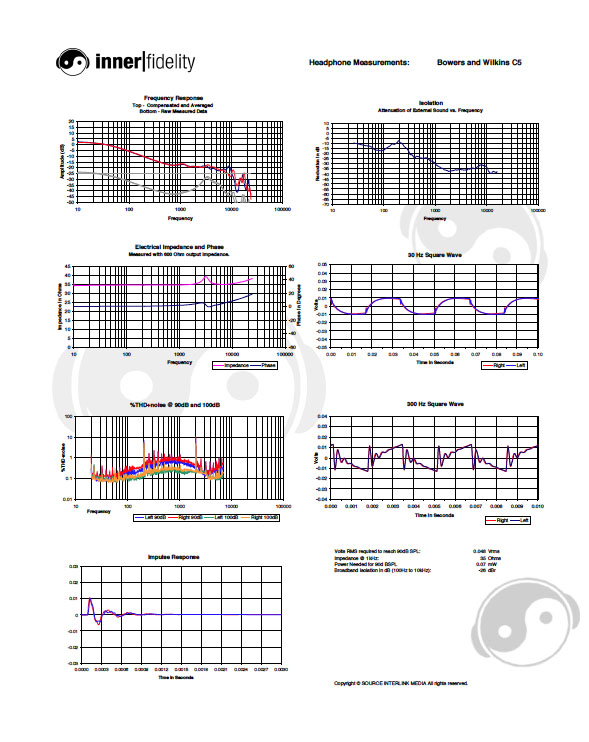
Click on graphs image to download .pdf for closer inspection.
Frequency response shows VERY strong 20dB elevation in low bass. From 500Hz to 10kHz the FR is very flat; this is a good result and because of it I had expected better sound than I experienced in listening tests. The dip at 1300Hz followed by a bump in the top octave looks better than it sounded to me. Technically, this is a pretty good response. Usually a peak at around 10kHz exists with most headphones and the C5 didn't have it. I re-did my listening tests numerous times as what I heard didn't sound as good as the measurements looked. Unfortunately, I always heard the same thing.
Man, I really wanted to like these cans, they're so cool looking and innovative. But it's kinda like motorcycle racing: when you're pushing the envelope and go into a corner a little hot, you can end up out of shape and wadded into a hay bale pretty quick. The bass was overwhelming for me, and the treble both slightly strident and under resolved. Worse however, was the "secure loop" which was too painful for any extended listening at all. I think B&W missed the mark in a valiant attempt to find a unique and special position in this category, and failed harder than they otherwise might have. I applaud their inginuity, but think they'll need to go back to the drawing board on this one. Not recommended.















