

Linett says he can't remember if he used true mono versions to build the stereo mixes on Today! or, instead, a process known as digital extraction from his 1990 remastering. "Those techniques are getting pretty scary, in terms of, if you massage them, what you can get out of it. If we did the digital extraction, it was because either we didn't have the tapes, like on 'Good Vibrations,' or overdubs were done on the dubdown, like 'Help Me, Ronda.' By the time you get to Summer Days it gets even more problematic, because now he was still cutting his tracks in three-track and then bouncing it down to mono, half of it over at CBS studios, which had the only eight-track machine in town. He locked the mono band track and then used the rest for vocals, so it became even more prob lematic, as far as a stereo mix. I guess the [label's] solution was just no stereo mix, and Capitol would do a phonic [as in stereophonic], boxed stereo version.
 "[To create a stereo mix now,] the older ones generally require synchronization of multiple tapes—and again, the fact that we control our masters helps, because if the basic track was recorded spread out over three tracks and then bounced to mono on another machine, ifyou want to spread out the band track, you've got to sync that original three-track to the dub reel, so you wind up with five or six tracks that you can then actually mix in stereo. Over the years, we've done that with a variety of formats, most recently using hi-rez digital to transfer them. It takes bit of time, because no two tape machines run the same. So you have to use the mono band track on the second machine, to get the speed close enough to the first tape that you can hear the two performances phasing for at least 30 or 40 seconds. Once you've got that, then you can do the transfer, and then move the pieces slightly to keep them in sync to get something to mix from. That's the way [the stereo mixes] for Today! and Summer Days were constructed. Party! was just a straight stereo mix."
While Linett is pleased with the results, he's not really a fan of monkeying with an artist's original intentions. Several telephone calls to Brian Wilson's manager, to find out what Wilson thought of the new stereo mixes, went unreturned.
"It's back to the same old question," Linett says: "The only thing that Brian or any of his contemporaries cared about was the mono mix that came out of the AM radio and was on a 45. Stereo had no place in pop music at that time; however, it was a selling point. So the labels all wanted to put out stereo versions because they could sell 'em to people with stereos.
"Brian will tell you that one of the reasons people like he and Phil Spector didn't like stereo is because it would keep the listener from hearing what the producer intended. In mono, you're absolutely going to hear what he wanted. In stereo, where are the speakers? There's one behind the couch. Are they out of phase? It interfered with the artistry.
"As a consumer, I have problems with a lot of remixes of older stuff that quite often get it wrong. I worked for Frank Zappa in the '70s, and I always thought it was unfortunate that at some point in his life he decided to go back to the early Mothers albums and tried to replace the drums. What a waste and ultimately they all been replaced with better remasters of the originals.
"[To create a stereo mix now,] the older ones generally require synchronization of multiple tapes—and again, the fact that we control our masters helps, because if the basic track was recorded spread out over three tracks and then bounced to mono on another machine, ifyou want to spread out the band track, you've got to sync that original three-track to the dub reel, so you wind up with five or six tracks that you can then actually mix in stereo. Over the years, we've done that with a variety of formats, most recently using hi-rez digital to transfer them. It takes bit of time, because no two tape machines run the same. So you have to use the mono band track on the second machine, to get the speed close enough to the first tape that you can hear the two performances phasing for at least 30 or 40 seconds. Once you've got that, then you can do the transfer, and then move the pieces slightly to keep them in sync to get something to mix from. That's the way [the stereo mixes] for Today! and Summer Days were constructed. Party! was just a straight stereo mix."
While Linett is pleased with the results, he's not really a fan of monkeying with an artist's original intentions. Several telephone calls to Brian Wilson's manager, to find out what Wilson thought of the new stereo mixes, went unreturned.
"It's back to the same old question," Linett says: "The only thing that Brian or any of his contemporaries cared about was the mono mix that came out of the AM radio and was on a 45. Stereo had no place in pop music at that time; however, it was a selling point. So the labels all wanted to put out stereo versions because they could sell 'em to people with stereos.
"Brian will tell you that one of the reasons people like he and Phil Spector didn't like stereo is because it would keep the listener from hearing what the producer intended. In mono, you're absolutely going to hear what he wanted. In stereo, where are the speakers? There's one behind the couch. Are they out of phase? It interfered with the artistry.
"As a consumer, I have problems with a lot of remixes of older stuff that quite often get it wrong. I worked for Frank Zappa in the '70s, and I always thought it was unfortunate that at some point in his life he decided to go back to the early Mothers albums and tried to replace the drums. What a waste and ultimately they all been replaced with better remasters of the originals.
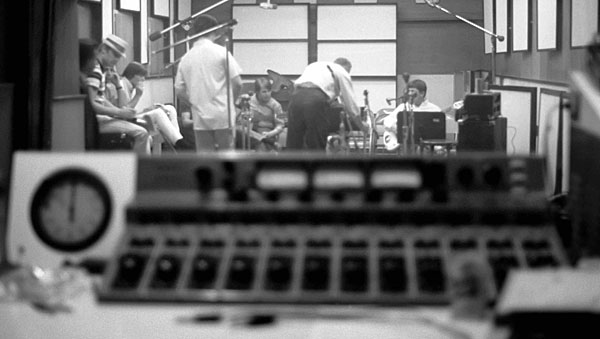 "On the other hand, I'm one of those people who think the stereo of Sgt. Pepper's is way better than the mono, and I think it is because the mono sounds to me like what it was: the one they got involved in and removed a lot of stuff and changed a lot of stuff. The stereo just seems like it flows better. Like all artists of that period, they didn't pay attention to the stereo mixes. They did after that. I hadn't listened to it in a long time, and I got the two boxed sets and listened to the mono. That's all I had when I was a kid. I listened, and I went, 'Oh God, why is that mixed down so you can't hear it? What happened to that part?' Part of it is familiarity. It tends to imprint what you've heard, so an omission or a change tends to stick out more. But I didn't enjoy it as much. It's funny."
There must have been a bunch of glitches—differences between the Beach Boys' session tapes and the mono masters—that couldn't be reconciled?
"There are always little things that you can't duplicate. Pet Sounds has two or three instances where there's something on the mono record that isn't on the multitrack, usually because it was recorded over. For some reason, Brian would decide to use part of an earlier mix. The most obvious example is Mike Love singing the bridge of 'Wouldn't It Be Nice.' Brian resang the whole thing, and that's what you hear if you bring up the multitrack now. But he apparently spliced in the bridge from an earlier vocal take that Mike did and used that in the mono mix. We've flown that in as best we can on the stereo.
"The other one is the vamp of 'God Only Knows,' which has a part missing. I wanna say it's Brian singing it instead of Carl, something like that, that we couldn't fix. And for the most part, people seem to have accepted that. But it's tricky. I don't like the idea of changing history. I mean the monos: that's what Brian and the band did."
"On the other hand, I'm one of those people who think the stereo of Sgt. Pepper's is way better than the mono, and I think it is because the mono sounds to me like what it was: the one they got involved in and removed a lot of stuff and changed a lot of stuff. The stereo just seems like it flows better. Like all artists of that period, they didn't pay attention to the stereo mixes. They did after that. I hadn't listened to it in a long time, and I got the two boxed sets and listened to the mono. That's all I had when I was a kid. I listened, and I went, 'Oh God, why is that mixed down so you can't hear it? What happened to that part?' Part of it is familiarity. It tends to imprint what you've heard, so an omission or a change tends to stick out more. But I didn't enjoy it as much. It's funny."
There must have been a bunch of glitches—differences between the Beach Boys' session tapes and the mono masters—that couldn't be reconciled?
"There are always little things that you can't duplicate. Pet Sounds has two or three instances where there's something on the mono record that isn't on the multitrack, usually because it was recorded over. For some reason, Brian would decide to use part of an earlier mix. The most obvious example is Mike Love singing the bridge of 'Wouldn't It Be Nice.' Brian resang the whole thing, and that's what you hear if you bring up the multitrack now. But he apparently spliced in the bridge from an earlier vocal take that Mike did and used that in the mono mix. We've flown that in as best we can on the stereo.
"The other one is the vamp of 'God Only Knows,' which has a part missing. I wanna say it's Brian singing it instead of Carl, something like that, that we couldn't fix. And for the most part, people seem to have accepted that. But it's tricky. I don't like the idea of changing history. I mean the monos: that's what Brian and the band did."
 As David Sokol said, "Brian was writing these songs, and Brian was George Martin, too. You can make the argument that Brian was like John, Paul, George, and George, wrapped into one."
More fruits of Brian Wilson's labors are due soon from Analogue Productions: reissues of Smiley Smile (1967), Sunflower (1970), Surf's Up (I97l), and Holland (1973), which will be turned into a double album with extra material. All are due before summer 2016.
As David Sokol said, "Brian was writing these songs, and Brian was George Martin, too. You can make the argument that Brian was like John, Paul, George, and George, wrapped into one."
More fruits of Brian Wilson's labors are due soon from Analogue Productions: reissues of Smiley Smile (1967), Sunflower (1970), Surf's Up (I97l), and Holland (1973), which will be turned into a double album with extra material. All are due before summer 2016.
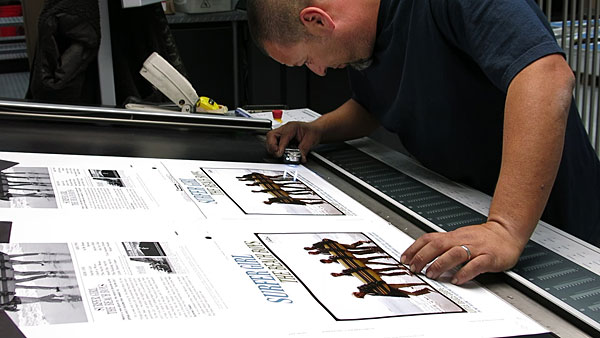 So far, Kassem is well pleased with the results. "We searched and tried to get all the masters we could. On the monos, everything was true masters. The old-school tip-on jackets are beautiful. Two-hundred-gram vinyl: they are the highest quality. I think we did a greatjob. I think the albums look and sound better than ever."
Back in Massachusetts last fall, the 1792 Ridgemont Reserve bourbon was warming our ears and loosening our tongues. As we played "Kiss Me, Baby" again, this time from a mono 45rpm pressing, my old friend David turned over in his hands the picture sleeve of that single, b/w "Help Me, Rhonda."
"The lyrics are so introspective for someone as young as he was at the time," he said. "And the way that he plays the singers, himself and Mike Love, off of each other—it's such a thing of beauty. And it's such a thing of genius that he could not only write for each member of the band as singers, but he also had these narratives in his songs that were just remarkable. It's beautiful stuff. His songs were just so full of heart."
So far, Kassem is well pleased with the results. "We searched and tried to get all the masters we could. On the monos, everything was true masters. The old-school tip-on jackets are beautiful. Two-hundred-gram vinyl: they are the highest quality. I think we did a greatjob. I think the albums look and sound better than ever."
Back in Massachusetts last fall, the 1792 Ridgemont Reserve bourbon was warming our ears and loosening our tongues. As we played "Kiss Me, Baby" again, this time from a mono 45rpm pressing, my old friend David turned over in his hands the picture sleeve of that single, b/w "Help Me, Rhonda."
"The lyrics are so introspective for someone as young as he was at the time," he said. "And the way that he plays the singers, himself and Mike Love, off of each other—it's such a thing of beauty. And it's such a thing of genius that he could not only write for each member of the band as singers, but he also had these narratives in his songs that were just remarkable. It's beautiful stuff. His songs were just so full of heart."
"[To create a stereo mix now,] the older ones generally require synchronization of multiple tapes—and again, the fact that we control our masters helps, because if the basic track was recorded spread out over three tracks and then bounced to mono on another machine, ifyou want to spread out the band track, you've got to sync that original three-track to the dub reel, so you wind up with five or six tracks that you can then actually mix in stereo. Over the years, we've done that with a variety of formats, most recently using hi-rez digital to transfer them. It takes bit of time, because no two tape machines run the same. So you have to use the mono band track on the second machine, to get the speed close enough to the first tape that you can hear the two performances phasing for at least 30 or 40 seconds. Once you've got that, then you can do the transfer, and then move the pieces slightly to keep them in sync to get something to mix from. That's the way [the stereo mixes] for Today! and Summer Days were constructed. Party! was just a straight stereo mix."
While Linett is pleased with the results, he's not really a fan of monkeying with an artist's original intentions. Several telephone calls to Brian Wilson's manager, to find out what Wilson thought of the new stereo mixes, went unreturned.
"On the other hand, I'm one of those people who think the stereo of Sgt. Pepper's is way better than the mono, and I think it is because the mono sounds to me like what it was: the one they got involved in and removed a lot of stuff and changed a lot of stuff. The stereo just seems like it flows better. Like all artists of that period, they didn't pay attention to the stereo mixes. They did after that. I hadn't listened to it in a long time, and I got the two boxed sets and listened to the mono. That's all I had when I was a kid. I listened, and I went, 'Oh God, why is that mixed down so you can't hear it? What happened to that part?' Part of it is familiarity. It tends to imprint what you've heard, so an omission or a change tends to stick out more. But I didn't enjoy it as much. It's funny."
There must have been a bunch of glitches—differences between the Beach Boys' session tapes and the mono masters—that couldn't be reconciled?
"There are always little things that you can't duplicate. Pet Sounds has two or three instances where there's something on the mono record that isn't on the multitrack, usually because it was recorded over. For some reason, Brian would decide to use part of an earlier mix. The most obvious example is Mike Love singing the bridge of 'Wouldn't It Be Nice.' Brian resang the whole thing, and that's what you hear if you bring up the multitrack now. But he apparently spliced in the bridge from an earlier vocal take that Mike did and used that in the mono mix. We've flown that in as best we can on the stereo.
As David Sokol said, "Brian was writing these songs, and Brian was George Martin, too. You can make the argument that Brian was like John, Paul, George, and George, wrapped into one."
More fruits of Brian Wilson's labors are due soon from Analogue Productions: reissues of Smiley Smile (1967), Sunflower (1970), Surf's Up (I97l), and Holland (1973), which will be turned into a double album with extra material. All are due before summer 2016.
So far, Kassem is well pleased with the results. "We searched and tried to get all the masters we could. On the monos, everything was true masters. The old-school tip-on jackets are beautiful. Two-hundred-gram vinyl: they are the highest quality. I think we did a greatjob. I think the albums look and sound better than ever."
Back in Massachusetts last fall, the 1792 Ridgemont Reserve bourbon was warming our ears and loosening our tongues. As we played "Kiss Me, Baby" again, this time from a mono 45rpm pressing, my old friend David turned over in his hands the picture sleeve of that single, b/w "Help Me, Rhonda."
"The lyrics are so introspective for someone as young as he was at the time," he said. "And the way that he plays the singers, himself and Mike Love, off of each other—it's such a thing of beauty. And it's such a thing of genius that he could not only write for each member of the band as singers, but he also had these narratives in his songs that were just remarkable. It's beautiful stuff. His songs were just so full of heart."















