

For this comparison, I need to add one more audio-glossary word: vivid. In my glossary, "vivid" means that I can see into the recording with more brilliance and intensity than is usual. The images, sonic textures, and timbral nuances revealed by a component are dramatically exposed. To me, "vivid" equals raw, unprocessed clarity.
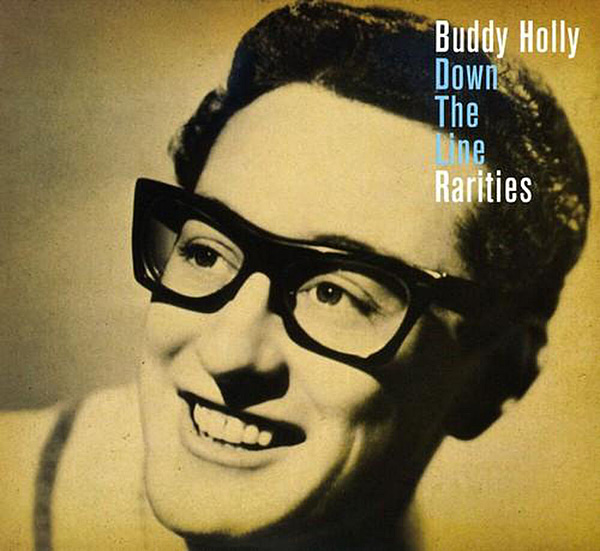 One of my favorite recordings for these kinds of comparisons (as regular readers know) is "Buddy & Maria Elena Talking in Apartment (Undubbed Version)" from Buddy Holly's Down the Line Rarities (16/44.1 FLAC, Geffen/Qobuz). The component that delivers the most ambient room tone, the most precise spatial mapping, the most distinct and intelligible vocals and through-the-window street sounds wins the transparency contest.
Using the Bartók DAC, I switched between the INT-25 and the B1353. I perceived both amps to be above average in transparency. Both put Buddy and Maria Elena in the exact positions (relative to the microphone on the coffee table in front of Buddy) where I know they should be. But the Pass Labs amp delivered a distinctly more vivid, powerful, pulsing, air-in-the-room sound. The Bryston showed these same room sounds but with less dramatic clarity. The Pass Labs amplifier delivered better-focused, more-intelligible street noises. Maria Elena's voice had more presence. When Buddy crunches a cellophane bag near the microphone, it sounded crunchier and more like cellophane with the INT-25. That's what vivid does.
Both amplifiers were strong-enough magnifiers to show me the differences in image density, cathedral ambience, and driving musical force between the Bartók and the Mola Mola DAC. Both amplifiers exposed subtle shifts in timbre and rhythmic nuance. Both amplifiers were dead-flat neutral tone-and-timbre–wise and similar dynamics-wise.
When the sun sets and the music starts, I think most audiophiles, especially music-first audiophiles, will prefer the Bryston's gentle, nonfatiguing clarity to the Pass Labs' hypervividness. I enjoy both.
Powering the GoldenEar BRX
One of my favorite recordings for these kinds of comparisons (as regular readers know) is "Buddy & Maria Elena Talking in Apartment (Undubbed Version)" from Buddy Holly's Down the Line Rarities (16/44.1 FLAC, Geffen/Qobuz). The component that delivers the most ambient room tone, the most precise spatial mapping, the most distinct and intelligible vocals and through-the-window street sounds wins the transparency contest.
Using the Bartók DAC, I switched between the INT-25 and the B1353. I perceived both amps to be above average in transparency. Both put Buddy and Maria Elena in the exact positions (relative to the microphone on the coffee table in front of Buddy) where I know they should be. But the Pass Labs amp delivered a distinctly more vivid, powerful, pulsing, air-in-the-room sound. The Bryston showed these same room sounds but with less dramatic clarity. The Pass Labs amplifier delivered better-focused, more-intelligible street noises. Maria Elena's voice had more presence. When Buddy crunches a cellophane bag near the microphone, it sounded crunchier and more like cellophane with the INT-25. That's what vivid does.
Both amplifiers were strong-enough magnifiers to show me the differences in image density, cathedral ambience, and driving musical force between the Bartók and the Mola Mola DAC. Both amplifiers exposed subtle shifts in timbre and rhythmic nuance. Both amplifiers were dead-flat neutral tone-and-timbre–wise and similar dynamics-wise.
When the sun sets and the music starts, I think most audiophiles, especially music-first audiophiles, will prefer the Bryston's gentle, nonfatiguing clarity to the Pass Labs' hypervividness. I enjoy both.
Powering the GoldenEar BRX
I used the Falcon "Gold Badge" LS3/5a for the above DAC– amplifier comparisons because that's the speaker my mind knows best and because it's a speaker the INT-25 is comfortable driving. But ever since the Bryston B1353 arrived, I've speculated that its lively, uncolored personality would mate well with the $1599/pair GoldenEar BRX loudspeakers. The BRX is more full-range and full-bodied than the Falcon, and because of the purity of its EMT tweeter, it's also less grainy and more transparent. The only (potential) problem is that the GoldenEars need an amplifier that, according to John Atkinson, is "comfortable driving loads below 4 ohms." I wasn't sure the B1353 is that kind of amp. Normally I use the Parasound A 21+ Halo to power the BRX.
 I often use the album Bill Frisell with Dave Holland and Elvin Jones (16/44.1 FLAC Nonesuch/Qobuz) as my amp-clipping test recording. If its first two tracks are sharply focused, lively, clear, and well-sorted through the bass, that's a good indication that an amplifier can handle low EPDRs in the bottom octaves. These are tough tracks to analyze (who knows what's really on them?), but the B1353 appeared to struggle to forge detail in the 80Hz–300Hz region.
Just for fun, I connected the 500Wpc (into 4 ohms), $2995 Parasound A21+ power amplifier to the Bryston's Pre Out and listened again to both Bill Frisell tracks. With the Bryston integrated's preamp driving the A21+, sharp-focus detail and forceful, clean transients prevailed. Bottom-octave clarity was superb. Plus, there was more luster and sparkle through the top seven octaves.
I noticed during this test how the Bryston's preamp section sounded brighter and more detailed than my $4995 Rogue Audio RP-7 preamp. Hmm.
With Harbeth M30.2s
I often use the album Bill Frisell with Dave Holland and Elvin Jones (16/44.1 FLAC Nonesuch/Qobuz) as my amp-clipping test recording. If its first two tracks are sharply focused, lively, clear, and well-sorted through the bass, that's a good indication that an amplifier can handle low EPDRs in the bottom octaves. These are tough tracks to analyze (who knows what's really on them?), but the B1353 appeared to struggle to forge detail in the 80Hz–300Hz region.
Just for fun, I connected the 500Wpc (into 4 ohms), $2995 Parasound A21+ power amplifier to the Bryston's Pre Out and listened again to both Bill Frisell tracks. With the Bryston integrated's preamp driving the A21+, sharp-focus detail and forceful, clean transients prevailed. Bottom-octave clarity was superb. Plus, there was more luster and sparkle through the top seven octaves.
I noticed during this test how the Bryston's preamp section sounded brighter and more detailed than my $4995 Rogue Audio RP-7 preamp. Hmm.
With Harbeth M30.2s
Here's where the Bryston integrated lit up and showed me its best self. The B1353 really clicked with Harbeth's M30.2 monitor speakers. Its neutral, musically adept sound combined with the Harbeth's quick, never-gets-confused lucidity to make recordings seem matter-of-factly wonderful, as when the sky is pure blue, and the ducks are swimming neatly in the pond. I felt like I was hearing the B1353 for the first time. Brilliance, pluck, and a new, mesmerizing recording studio– like clarity dominated my experience of every recording, most especially Andrés Segovia – The Art of Segovia (24/96 FLAC DG/Qobuz). With the 15 ohm Falcon LS3/5a, the Bryston's amplifier had sounded nicely detailed and easy-flowing but maybe a little too well-mannered. Now, driving the Harbeths, which have an impedance curve that never drops below 6 ohms, the same amplifier achieved a stunning—no other word fits—dynamic presence that made each string on Segovia's guitar something alive and special to enjoy. The effect was intoxicating. With the Harbeth-Bryston combo, I could easily hear the volume of the room—the amount of space—behind the guitar master as he played. Because of the Bryston's outstanding spatial resolution, that volume of room air framed and drew attention to the high drama of Segovia's playing. That is exciting, engaging audio.
 This Bryston-Harbeth combo is not a certified audiophile system if it does not frame and attractively present female vocalists, correct? Checking for that, I listened first to Mahalia Jackson singing "An Evening Prayer" from Live at Newport 1958 (16/44.1 FLAC Columbia/Qobuz). As I listened, I felt like my ears became the microphone—that I was getting a closer, less-adulterated, right-there-in-front-of-me-onstage view of Jackson's powerful voice and divine personality. That view accurately displayed Jackson's unique vocal timbre and the force and feeling behind her singing. That close encounter with the great Mahalia made me feel loved and exalted. I live peacefully knowing that when I get to heaven, she'll be there waiting at the gate.
I listened next to "Busted," sung by Hazel Dickens on Hard Hitting Songs for Hard Hit People (16/44.1 FLAC Rounder/Tidal). Like Mahalia, Hazel sings Church, but Dickens specializes in coal-miner-widow Church. The Bryston driving the Harbeths showed all the timbre-true high-lonesome bends and heavenly vocal rise-ups that make Hazel the ultimate feminist-unionist blue-mountain priestess.
When the Bryston played Hazel and Mahalia at that level of emotional satisfaction, I remembered why I never felt like removing the B1353 from my system: It played music!
Headphones
This Bryston-Harbeth combo is not a certified audiophile system if it does not frame and attractively present female vocalists, correct? Checking for that, I listened first to Mahalia Jackson singing "An Evening Prayer" from Live at Newport 1958 (16/44.1 FLAC Columbia/Qobuz). As I listened, I felt like my ears became the microphone—that I was getting a closer, less-adulterated, right-there-in-front-of-me-onstage view of Jackson's powerful voice and divine personality. That view accurately displayed Jackson's unique vocal timbre and the force and feeling behind her singing. That close encounter with the great Mahalia made me feel loved and exalted. I live peacefully knowing that when I get to heaven, she'll be there waiting at the gate.
I listened next to "Busted," sung by Hazel Dickens on Hard Hitting Songs for Hard Hit People (16/44.1 FLAC Rounder/Tidal). Like Mahalia, Hazel sings Church, but Dickens specializes in coal-miner-widow Church. The Bryston driving the Harbeths showed all the timbre-true high-lonesome bends and heavenly vocal rise-ups that make Hazel the ultimate feminist-unionist blue-mountain priestess.
When the Bryston played Hazel and Mahalia at that level of emotional satisfaction, I remembered why I never felt like removing the B1353 from my system: It played music!
Headphones
The only mention of the B1353's headphone amplifier on the Bryston website is in the Specifications section, where "headphone amp" is listed as one of three output choices. It's not encouraging when a company chooses not to brag about a component's headphone output. Likewise, it's not inspiring when the owner's manual warns, "Only use headphones with greater than 50 ohm impedance." Many headphones on the market don't meet that requirement. Before I read that, I tried the 35 ohm–impedance, 90dB/mW–sensitive HiFiMan HE1000 V2 open-back planar-magnetics. I played the Melodians' version of "Rivers of Babylon" from the soundtrack to The Harder They Come (16/44.1 FLAC UMC/Qobuz). Vocal intelligibility was incredible. For once, I could make out every word. Halfway through "Rivers of Babylon," I realized that both treble and bass seemed attenuated, which pushed the vocal range forward, making it more distinct. None of the other headphones I was planning to try—Audeze's LCD-X (22 ohms), Grado's SR325X (38 ohms), and Focal's Stellia (35 ohms)—met the Bryston spec.
For the sake of reviewing fairness, I tried Audeze's discontinued (pre-Fazor) 70 ohm LCD-2 and Audeze's newer, 100 ohm, near-state-of-the–planar-magnetic–headphone-art LCD-3, which I think is a bargain at $1945.
 On Barbra Streisand's The Broadway Album (24/44.1 FLAC Columbia/Qobuz), I got most of the bass and treble back, and now the midrange was more normal. On "Send in the Clowns," Barbra's voice sounded chestier, more nasal, and more Streisand-like than it sounds on my 1985 LP version. On the digital version, with the dCS Bartók as source, The Broadway Album was 100% I-love-Barbra enjoyable. But even with the 100 ohm LCD-3s, the Bryston's headphone output sounded rolled-off and unsparkly.
Conclusion
On Barbra Streisand's The Broadway Album (24/44.1 FLAC Columbia/Qobuz), I got most of the bass and treble back, and now the midrange was more normal. On "Send in the Clowns," Barbra's voice sounded chestier, more nasal, and more Streisand-like than it sounds on my 1985 LP version. On the digital version, with the dCS Bartók as source, The Broadway Album was 100% I-love-Barbra enjoyable. But even with the 100 ohm LCD-3s, the Bryston's headphone output sounded rolled-off and unsparkly.
Conclusion
My eyes think the Bryston B1353 integrated amplifier looks smooth and elegantly understated, with a recording-studio aura. My ears think the B1353 sounds like it looks: understated, recording-studio quiet, detailed, easy-flowing, low-distortion, tone-correct, and low-fatigue. The B1353 always plays music engagingly.
If you are a music-first kind of audiophile, Bryston's integrated amplifier is a must-audition product, and it comes with a 20-year warranty.
One of my favorite recordings for these kinds of comparisons (as regular readers know) is "Buddy & Maria Elena Talking in Apartment (Undubbed Version)" from Buddy Holly's Down the Line Rarities (16/44.1 FLAC, Geffen/Qobuz). The component that delivers the most ambient room tone, the most precise spatial mapping, the most distinct and intelligible vocals and through-the-window street sounds wins the transparency contest.
Using the Bartók DAC, I switched between the INT-25 and the B1353. I perceived both amps to be above average in transparency. Both put Buddy and Maria Elena in the exact positions (relative to the microphone on the coffee table in front of Buddy) where I know they should be. But the Pass Labs amp delivered a distinctly more vivid, powerful, pulsing, air-in-the-room sound. The Bryston showed these same room sounds but with less dramatic clarity. The Pass Labs amplifier delivered better-focused, more-intelligible street noises. Maria Elena's voice had more presence. When Buddy crunches a cellophane bag near the microphone, it sounded crunchier and more like cellophane with the INT-25. That's what vivid does.
I used the Falcon "Gold Badge" LS3/5a for the above DAC– amplifier comparisons because that's the speaker my mind knows best and because it's a speaker the INT-25 is comfortable driving. But ever since the Bryston B1353 arrived, I've speculated that its lively, uncolored personality would mate well with the $1599/pair GoldenEar BRX loudspeakers. The BRX is more full-range and full-bodied than the Falcon, and because of the purity of its EMT tweeter, it's also less grainy and more transparent. The only (potential) problem is that the GoldenEars need an amplifier that, according to John Atkinson, is "comfortable driving loads below 4 ohms." I wasn't sure the B1353 is that kind of amp. Normally I use the Parasound A 21+ Halo to power the BRX.
I often use the album Bill Frisell with Dave Holland and Elvin Jones (16/44.1 FLAC Nonesuch/Qobuz) as my amp-clipping test recording. If its first two tracks are sharply focused, lively, clear, and well-sorted through the bass, that's a good indication that an amplifier can handle low EPDRs in the bottom octaves. These are tough tracks to analyze (who knows what's really on them?), but the B1353 appeared to struggle to forge detail in the 80Hz–300Hz region.
Just for fun, I connected the 500Wpc (into 4 ohms), $2995 Parasound A21+ power amplifier to the Bryston's Pre Out and listened again to both Bill Frisell tracks. With the Bryston integrated's preamp driving the A21+, sharp-focus detail and forceful, clean transients prevailed. Bottom-octave clarity was superb. Plus, there was more luster and sparkle through the top seven octaves.
I noticed during this test how the Bryston's preamp section sounded brighter and more detailed than my $4995 Rogue Audio RP-7 preamp. Hmm.
Here's where the Bryston integrated lit up and showed me its best self. The B1353 really clicked with Harbeth's M30.2 monitor speakers. Its neutral, musically adept sound combined with the Harbeth's quick, never-gets-confused lucidity to make recordings seem matter-of-factly wonderful, as when the sky is pure blue, and the ducks are swimming neatly in the pond. I felt like I was hearing the B1353 for the first time. Brilliance, pluck, and a new, mesmerizing recording studio– like clarity dominated my experience of every recording, most especially Andrés Segovia – The Art of Segovia (24/96 FLAC DG/Qobuz). With the 15 ohm Falcon LS3/5a, the Bryston's amplifier had sounded nicely detailed and easy-flowing but maybe a little too well-mannered. Now, driving the Harbeths, which have an impedance curve that never drops below 6 ohms, the same amplifier achieved a stunning—no other word fits—dynamic presence that made each string on Segovia's guitar something alive and special to enjoy. The effect was intoxicating. With the Harbeth-Bryston combo, I could easily hear the volume of the room—the amount of space—behind the guitar master as he played. Because of the Bryston's outstanding spatial resolution, that volume of room air framed and drew attention to the high drama of Segovia's playing. That is exciting, engaging audio.
This Bryston-Harbeth combo is not a certified audiophile system if it does not frame and attractively present female vocalists, correct? Checking for that, I listened first to Mahalia Jackson singing "An Evening Prayer" from Live at Newport 1958 (16/44.1 FLAC Columbia/Qobuz). As I listened, I felt like my ears became the microphone—that I was getting a closer, less-adulterated, right-there-in-front-of-me-onstage view of Jackson's powerful voice and divine personality. That view accurately displayed Jackson's unique vocal timbre and the force and feeling behind her singing. That close encounter with the great Mahalia made me feel loved and exalted. I live peacefully knowing that when I get to heaven, she'll be there waiting at the gate.
I listened next to "Busted," sung by Hazel Dickens on Hard Hitting Songs for Hard Hit People (16/44.1 FLAC Rounder/Tidal). Like Mahalia, Hazel sings Church, but Dickens specializes in coal-miner-widow Church. The Bryston driving the Harbeths showed all the timbre-true high-lonesome bends and heavenly vocal rise-ups that make Hazel the ultimate feminist-unionist blue-mountain priestess.
When the Bryston played Hazel and Mahalia at that level of emotional satisfaction, I remembered why I never felt like removing the B1353 from my system: It played music!
The only mention of the B1353's headphone amplifier on the Bryston website is in the Specifications section, where "headphone amp" is listed as one of three output choices. It's not encouraging when a company chooses not to brag about a component's headphone output. Likewise, it's not inspiring when the owner's manual warns, "Only use headphones with greater than 50 ohm impedance." Many headphones on the market don't meet that requirement. Before I read that, I tried the 35 ohm–impedance, 90dB/mW–sensitive HiFiMan HE1000 V2 open-back planar-magnetics. I played the Melodians' version of "Rivers of Babylon" from the soundtrack to The Harder They Come (16/44.1 FLAC UMC/Qobuz). Vocal intelligibility was incredible. For once, I could make out every word. Halfway through "Rivers of Babylon," I realized that both treble and bass seemed attenuated, which pushed the vocal range forward, making it more distinct. None of the other headphones I was planning to try—Audeze's LCD-X (22 ohms), Grado's SR325X (38 ohms), and Focal's Stellia (35 ohms)—met the Bryston spec.
On Barbra Streisand's The Broadway Album (24/44.1 FLAC Columbia/Qobuz), I got most of the bass and treble back, and now the midrange was more normal. On "Send in the Clowns," Barbra's voice sounded chestier, more nasal, and more Streisand-like than it sounds on my 1985 LP version. On the digital version, with the dCS Bartók as source, The Broadway Album was 100% I-love-Barbra enjoyable. But even with the 100 ohm LCD-3s, the Bryston's headphone output sounded rolled-off and unsparkly.
ConclusionMy eyes think the Bryston B1353 integrated amplifier looks smooth and elegantly understated, with a recording-studio aura. My ears think the B1353 sounds like it looks: understated, recording-studio quiet, detailed, easy-flowing, low-distortion, tone-correct, and low-fatigue. The B1353 always plays music engagingly.















