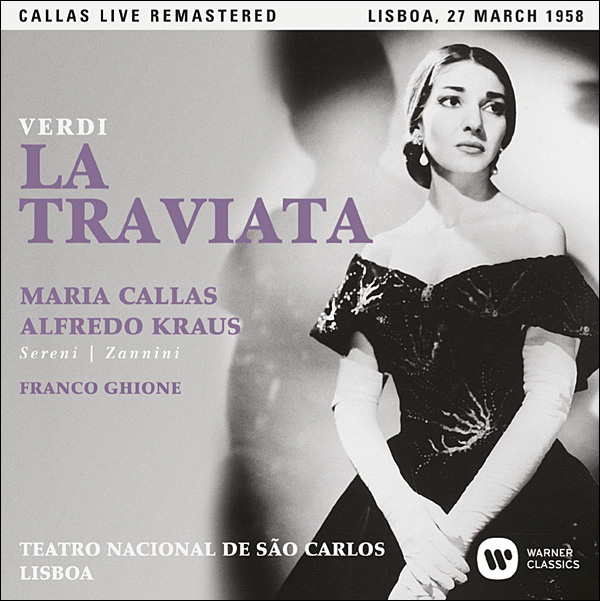
Warner's latest high-resolution 24/96 digital remasterings of Callas's commercial and live repertoire honor the intentions of the original recording engineers and showcase her at her astounding best. Sutherland's early-stereo analog LPs for London/Decca (footnote 2) are as prized for their depiction of air, space, and vocal proportion as for the singing itself. Perhaps the only limitation of these "Golden Age of analog" mono and stereo recordings was the need to compress dynamics between the softest and loudest passages to avoid oversaturation, needle skipping, and burying subtle detail under surface noise. Even Georg Solti's landmark stereo recording of Wagner's Ring Cycle suffers from dynamic compression.
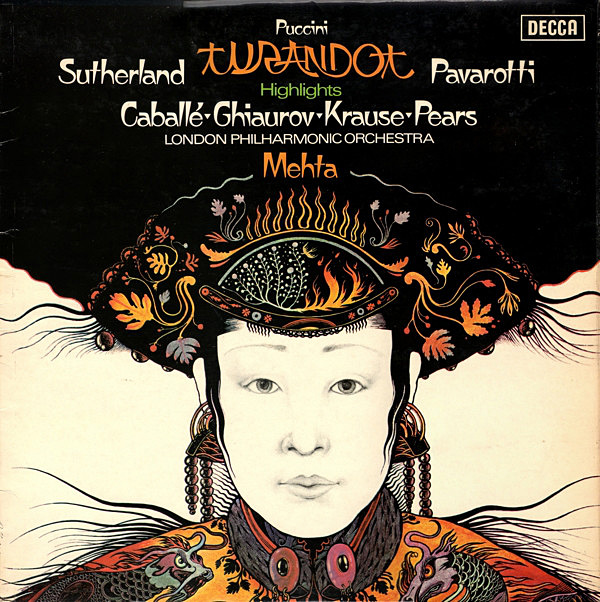
 One reason that opera and art-song lovers attend their 85th staging of Puccini's final opera, Turandot, or 35th recital of Schubert's final song cycle, Winterreise (A Winter's Journey), is to hear what a specific singer does with music they love. Compare the 1926 recording of Lìu's radiant aria, "Signore, ascolta," from Turandot, by Maria Zamboni, the role's creator under Arturo Toscanini, with Montserrat Caballé's 1972 traversal under Zubin Mehta. Considering that Toscanini knew Puccini and premiered three of his operas, Zamboni's extremely emotive performance is unquestionably definitive. Yet, how many vocal lovers would trade it for Caballé's exquisite, long-spun lines and magically floated pianissimos? As for Winterreise, the more you're willing to explore the nuances of despair, the more you can understand why vocal aficionados spend years listening to baritone Dietrich Fischer-Dieskau's seven studio and live recordings of the cycle and contrast them with versions from Hans Hotter, Gerhard Hüsch, Lehmann, Mark Padmore, and Matthias Goerne to determine which presents the most convincing union between composer, singer, and accompanist.
 If you love tenors, before you settle on Luciano Pavarotti and Jonas Kaufmann as your standbys, be sure to listen to their glorious predecessors, including Caruso, Beniamino Gigli, Tito Schipa, Lauritz Melchior, Georges Thill, Jussi Björling, and Franco Corelli. Someone is about to shoot me, or maybe just write me an angry letter, for leaving out their favorite tenor.
Relevance
If you love tenors, before you settle on Luciano Pavarotti and Jonas Kaufmann as your standbys, be sure to listen to their glorious predecessors, including Caruso, Beniamino Gigli, Tito Schipa, Lauritz Melchior, Georges Thill, Jussi Björling, and Franco Corelli. Someone is about to shoot me, or maybe just write me an angry letter, for leaving out their favorite tenor.
Relevance
Context is central to the appreciation of older operatic repertoire. Mozart's great Le nozze di Figaro (The Marriage of Figaro) may seem like a light comedy about the mores of earlier times, filled with some of the most beautiful and captivating vocal music ever composed. But it was more. Librettist Lorenzo Da Ponte based his story on the Beaumarchais play La folle journée, ou le Mariage de Figaro, whose examination of the power of the aristocracy over the lower classes helped foment the French revolution. To get around censorship from the state and church, Da Ponte and Mozart exercised a sometimes-subtle form of self-censorship. As baritone Ricardo Panela explains in his article, "Mozart, Da Ponte and Censorship," a play that fomented class conflict was transformed into a comic opera about love and forgiveness. Nonetheless, when Mozart allows the vocal line of the servant Susanna to intertwine with and then rise above that of her co-conspirator, the Countess, he is making a statement about power and ultimate worth. Any plot that challenged the absolute word of the church, exposed its hypocrisy, or threatened its vast real estate empire was censored. Giuseppe Verdi's explorations of kings and queens would have packed far more punch had he been allowed to speak his truth. As explored by WQXR-FM's Fred Plotkin, after several of Verdi's early political operas incited street riots, Milanese censors and the Catholic Church began to demand rewrites. Un Ballo in Maschera (A Masked Ball), whose original libretto focused on the assassination of King Gustav III of Sweden, was transformed into an opera about the governor of Boston in the 16th century (before Boston was even founded). Verdi wrote about a king's assassination in the initial version of Rigoletto, but censors forced him to transform the King of France into the Duke of Mantua and to kill off his daughter rather than the Duke himself.
Admittedly, the stories of older vocal works can seem dated, racist, and irrelevant. If Turandot was a vast "oriental fantasy of love and death" complete with Emperor, slaves, rolling heads, and rivals for the Princess's hand, Schubert's final song cycle was a depressive winter's journey complete with horses, maidens, and a lonely organ grinder. The feelings both masterpieces evoke remain universal, but the specificities of character and action are very much passé.
Looking forward
For more than 100 years, American operas, songs, and Broadway musicals have featured realistic characters and situations we can relate to in 2021. Scott Joplin's Treemonisha, Jerome Kern's Showboat, the Gershwins' Porgy and Bess, Mark Blitzstein's The Cradle Will Rock, and Leonard Bernstein's Trouble in Tahiti variously focused on racial issues, drugs, human rights, and stultifying conformity. One of the first enduring American operas, Carlisle Floyd's Susannah, focused on small-town small-mindedness, hypocrisy, and sexual abuse as it transposed a biblical story to the Bible Belt of eastern Kentucky. Susannah could have been written yesterday. Just a few years later came Leonard Bernstein and Stephen Sondheim's West Side Story, which explored impossible love amidst gang violence. Bernstein's political and social commentary also made its mark in the song realm, especially with Arias and Barcarolles and Songfest.
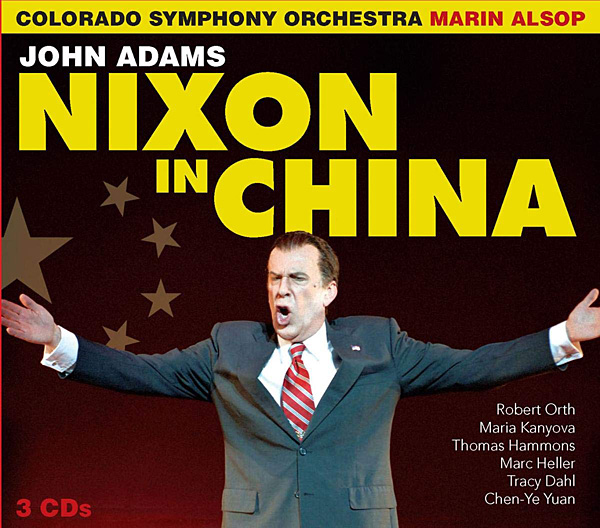 Closer to the present day, American operas inspired by contemporary events increasingly receive audio and/ or video recordings. The operas Nixon in China, The Death of Kinghoffer, and Doctor Atomic flowed from the pen of John Adams. One of Adams's most moving works for choir and orchestra, On the Transmigration of Souls, was written in response to 9/11 and won the Pulitzer Prize for Music.
 Jake Heggie and Terrence McNally's heart-wrenching Dead Man Walking, which quickly became one of the most frequently performed 21st century operas worldwide, addresses the death penalty. Heggie's three equally moving one-act works, Another Sunrise; Farewell, Auschwitz; and For a Look or a Touch are based on stories of Holocaust survivors. All are commissions from Seattle-based Music of Remembrance, whose other Holocaust-themed commissions include Paul Schoenfield's sardonically witty Camp Songs. Heggie's song cycles, including those on the superbly recorded collection Unexpected Shadows, are recommended as much for their alternately hilarious, evocative, and shattering subject matter as for the extraordinary partnership between pianist Heggie and the larger-than-life, must-hear mezzo-soprano Jamie Barton.
 Just as Susannah won the 1957 New York Music Critics' Circle Award, so have recent topical operas received Opera Awards from the Music Critics Association of North America (MCANA). Of these, I cannot recommend strongly enough Prism (footnote 3), Ellen Reid and Roxie Perkins's brilliantly conceived, heart-stopping opera about sexual abuse. That it also won the 2019 Pulitzer Prize for Music should provide sufficient impetus for a listen. Other MCANA award–winning operas include Missy Mazzoli and Royce Vavrek's Breaking the Waves, about love and misogyny; David Hertzberg's The Wake World, from a story by Aleister Crowley; and Jeanine Tesori and Tazewell Thompson's Blue, about police violence. Blue might have been recorded by now if COVID-19 had not intervened. Equally recommended are two MCANA runners-up that I've reviewed, Gregory Spears's Fellow Travelers, about the 1950s Lavender Scare, and Mason Bates's The (R)evolution of Steve Jobs. What Stereophile reader doesn't know what the latter is about? The music to these operas is accessible, the stories real. I love a great tune as much as anyone, but how many people make love, murder, or commit suicide by singing a lovely melody capped by a high E-flat?
Footnote 2: See store.acousticsounds.com/d/88806 and arkiv-music.com/classical/album.jsp?album_id=3038. Footnote 3: You can find my recording review here.
One reason that opera and art-song lovers attend their 85th staging of Puccini's final opera, Turandot, or 35th recital of Schubert's final song cycle, Winterreise (A Winter's Journey), is to hear what a specific singer does with music they love. Compare the 1926 recording of Lìu's radiant aria, "Signore, ascolta," from Turandot, by Maria Zamboni, the role's creator under Arturo Toscanini, with Montserrat Caballé's 1972 traversal under Zubin Mehta. Considering that Toscanini knew Puccini and premiered three of his operas, Zamboni's extremely emotive performance is unquestionably definitive. Yet, how many vocal lovers would trade it for Caballé's exquisite, long-spun lines and magically floated pianissimos? As for Winterreise, the more you're willing to explore the nuances of despair, the more you can understand why vocal aficionados spend years listening to baritone Dietrich Fischer-Dieskau's seven studio and live recordings of the cycle and contrast them with versions from Hans Hotter, Gerhard Hüsch, Lehmann, Mark Padmore, and Matthias Goerne to determine which presents the most convincing union between composer, singer, and accompanist.
If you love tenors, before you settle on Luciano Pavarotti and Jonas Kaufmann as your standbys, be sure to listen to their glorious predecessors, including Caruso, Beniamino Gigli, Tito Schipa, Lauritz Melchior, Georges Thill, Jussi Björling, and Franco Corelli. Someone is about to shoot me, or maybe just write me an angry letter, for leaving out their favorite tenor.
Context is central to the appreciation of older operatic repertoire. Mozart's great Le nozze di Figaro (The Marriage of Figaro) may seem like a light comedy about the mores of earlier times, filled with some of the most beautiful and captivating vocal music ever composed. But it was more. Librettist Lorenzo Da Ponte based his story on the Beaumarchais play La folle journée, ou le Mariage de Figaro, whose examination of the power of the aristocracy over the lower classes helped foment the French revolution. To get around censorship from the state and church, Da Ponte and Mozart exercised a sometimes-subtle form of self-censorship. As baritone Ricardo Panela explains in his article, "Mozart, Da Ponte and Censorship," a play that fomented class conflict was transformed into a comic opera about love and forgiveness. Nonetheless, when Mozart allows the vocal line of the servant Susanna to intertwine with and then rise above that of her co-conspirator, the Countess, he is making a statement about power and ultimate worth. Any plot that challenged the absolute word of the church, exposed its hypocrisy, or threatened its vast real estate empire was censored. Giuseppe Verdi's explorations of kings and queens would have packed far more punch had he been allowed to speak his truth. As explored by WQXR-FM's Fred Plotkin, after several of Verdi's early political operas incited street riots, Milanese censors and the Catholic Church began to demand rewrites. Un Ballo in Maschera (A Masked Ball), whose original libretto focused on the assassination of King Gustav III of Sweden, was transformed into an opera about the governor of Boston in the 16th century (before Boston was even founded). Verdi wrote about a king's assassination in the initial version of Rigoletto, but censors forced him to transform the King of France into the Duke of Mantua and to kill off his daughter rather than the Duke himself.
For more than 100 years, American operas, songs, and Broadway musicals have featured realistic characters and situations we can relate to in 2021. Scott Joplin's Treemonisha, Jerome Kern's Showboat, the Gershwins' Porgy and Bess, Mark Blitzstein's The Cradle Will Rock, and Leonard Bernstein's Trouble in Tahiti variously focused on racial issues, drugs, human rights, and stultifying conformity. One of the first enduring American operas, Carlisle Floyd's Susannah, focused on small-town small-mindedness, hypocrisy, and sexual abuse as it transposed a biblical story to the Bible Belt of eastern Kentucky. Susannah could have been written yesterday. Just a few years later came Leonard Bernstein and Stephen Sondheim's West Side Story, which explored impossible love amidst gang violence. Bernstein's political and social commentary also made its mark in the song realm, especially with Arias and Barcarolles and Songfest.
Closer to the present day, American operas inspired by contemporary events increasingly receive audio and/ or video recordings. The operas Nixon in China, The Death of Kinghoffer, and Doctor Atomic flowed from the pen of John Adams. One of Adams's most moving works for choir and orchestra, On the Transmigration of Souls, was written in response to 9/11 and won the Pulitzer Prize for Music.
Jake Heggie and Terrence McNally's heart-wrenching Dead Man Walking, which quickly became one of the most frequently performed 21st century operas worldwide, addresses the death penalty. Heggie's three equally moving one-act works, Another Sunrise; Farewell, Auschwitz; and For a Look or a Touch are based on stories of Holocaust survivors. All are commissions from Seattle-based Music of Remembrance, whose other Holocaust-themed commissions include Paul Schoenfield's sardonically witty Camp Songs. Heggie's song cycles, including those on the superbly recorded collection Unexpected Shadows, are recommended as much for their alternately hilarious, evocative, and shattering subject matter as for the extraordinary partnership between pianist Heggie and the larger-than-life, must-hear mezzo-soprano Jamie Barton.
Just as Susannah won the 1957 New York Music Critics' Circle Award, so have recent topical operas received Opera Awards from the Music Critics Association of North America (MCANA). Of these, I cannot recommend strongly enough Prism (footnote 3), Ellen Reid and Roxie Perkins's brilliantly conceived, heart-stopping opera about sexual abuse. That it also won the 2019 Pulitzer Prize for Music should provide sufficient impetus for a listen. Other MCANA award–winning operas include Missy Mazzoli and Royce Vavrek's Breaking the Waves, about love and misogyny; David Hertzberg's The Wake World, from a story by Aleister Crowley; and Jeanine Tesori and Tazewell Thompson's Blue, about police violence. Blue might have been recorded by now if COVID-19 had not intervened. Equally recommended are two MCANA runners-up that I've reviewed, Gregory Spears's Fellow Travelers, about the 1950s Lavender Scare, and Mason Bates's The (R)evolution of Steve Jobs. What Stereophile reader doesn't know what the latter is about? The music to these operas is accessible, the stories real. I love a great tune as much as anyone, but how many people make love, murder, or commit suicide by singing a lovely melody capped by a high E-flat?
Footnote 2: See store.acousticsounds.com/d/88806 and arkiv-music.com/classical/album.jsp?album_id=3038. Footnote 3: You can find my recording review here.