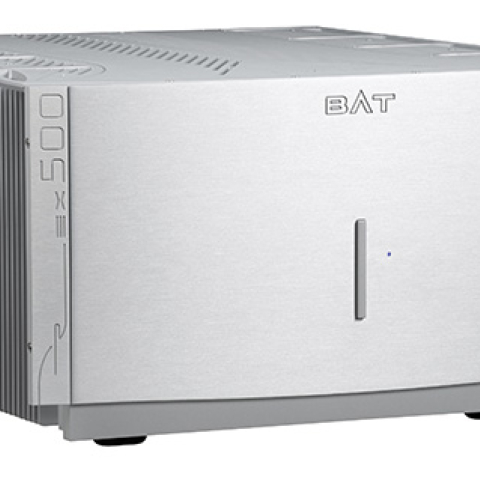
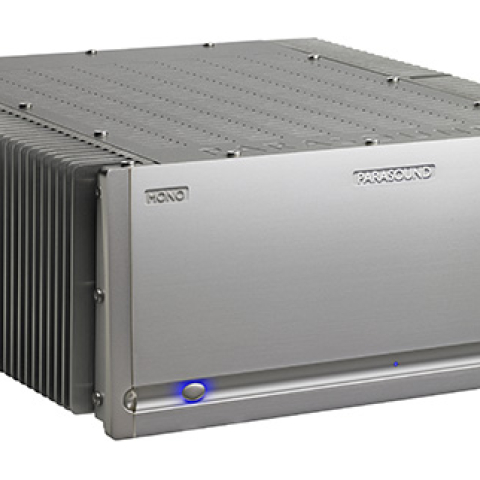
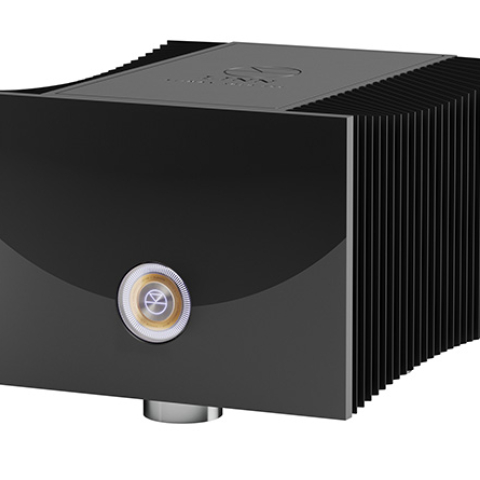
I've heard very fine amplifiers that produced more bass weight, and brighter and sharper high-frequency transients, than the D'Agostinos. I've heard amplifiers that were more billowy in the lower mids, and drier and more reserved in the upper mids. I've heard some that were more polite, some that were more brash. I've heard amplifiers with faster attack and more generous sustain. All of these are noticeable qualities that, once you hear them, you always hear, like it or not—or you work around them with associated gear.
After spending a great deal of time listening to the Momentums, I kept coming back to their overall seamlessness, their tube-like midband delicacy, their bottom-end authority. They fully gripped the Alexandrias' woofers, but with a light, delicate touch timed and executed to produce just the right blend of speed, texture, weight, and tonality. They produced an airy midband effervescence, and a top end that, while not exactly white light, perfectly complemented everything below.
The overall result was the production of an all-enveloping "sonic aether" in which all of the notes swam with equal ease and at just the right time. In short, I heard at home precisely what I'd heard through the Wilson Sashas at CES: pretty much nothing. Or everything.
 Overall, the Momentum's sonic personality resembled that of the big darTZeel, though the very top was a bit more reserved, its high-frequency transients somewhat more relaxed, its bass performance ever so slightly less muscular. That, of course, added up to an equally seamless picture, just on a more reserved scale.
In musical terms
Overall, the Momentum's sonic personality resembled that of the big darTZeel, though the very top was a bit more reserved, its high-frequency transients somewhat more relaxed, its bass performance ever so slightly less muscular. That, of course, added up to an equally seamless picture, just on a more reserved scale.
In musical terms
In Grant Green's version of "My Favorite Things," from The Complete Quartets with Sonny Clark (2 CDs, Blue Note CDP 8 57194 2), recorded by Rudy Van Gelder and withheld for years in favor of more commercial outings, the guitarist is accompanied by Clark on piano, Sam Jones on bass, and Louis Hayes on drums. It's a more swinging, breezy, jazzified version than Coltrane's better-known one, but Green, probably playing his Gibson hollow-body, whose treble and bass he liked to turn down, liquefies his single-note lines, exuding woody warmth as he fingers the lower half of the fretboard. The D'Agostino Momentums reproduced Green's warmth, which is the easy part, while preserving the subtle, three-dimensional aura of sound around each pluck that pulses, blooms, and decays with the notes. That's the not-so-easy part—but when it's done correctly it reproduces an aural image of the physical instrument in a stable, three-dimensional space.
A faster, more clinical-sounding amp might emphasize the transient at the expense of the aura; a slower, softer-sounding one might get the aura but fail to cleanly delineate it. Given that choice, I'd go for clinical over mush—but it's better to hear it all correctly drawn. That's what the Momentums did.
There's probably a bit more sparkle to be had from Hayes's cymbals, but the drums otherwise sounded so "together," from floor toms to snare, and the attack and decay were so clean and well organized, that it didn't matter.
That said, you wouldn't want to run a pair of soft- and/or "burnished"-sounding cables between the Momentums and your speakers, unless the latter sound really bright and clinical. These amps need a wide-open path to a perform best. Speaking of wide-open paths, digits were serviced by an MSB Platinum Diamond DAC IV D/A converter, which I'll be packing up and returning after this review. It's easily the best digital sound I've ever heard (footnote 1).
The Meridian (formerly Sooloos) Digital Music Server just served up "Purim," from the Andy Statman Quartet's Between Heaven & Earth: Music of the Jewish Mystics (CD, Shanachie 64079). Statman's clarinet in the right channel, there's a banjo at center left, and the banjo player's foot taps just to his left. You couldn't ask for a clarinet to be drawn in 3D space with any more air or perfection. You might want a bit more bite to the banjo, but again, the seamlessness of this picture, the way the Momentums subtly produced the aether between the two instruments, as well as the space around each, was part of what made the D'Agostinos special—and spatial.
A benchmark recording for me is Endre Hegedüs's Piano Music in a Church (Almost Analog Digital, also available as a digital download from www.toneapearls.com) a live analog recording of solo-piano works by Chopin and Debussy. It's one man at one piano in a stone church: if you like your soundstage layered, the D'Agostinos produced layer after layer after layer of spatial information while retaining remarkable image clarity and authority. Chopin's familiar (if it's familiar to me, it's familiar) Waltz in D-flat Major, Op.64 No.1 ("Minute"), dances across most of the keyboard, punctuated by dynamic thrusts that test the coherent qualities of amps and speakers alike.
Other than through the big darTZeels, I've not heard a more convincing presentation of this recording, whether spatially, dynamically, or harmonically. So stable was the sound picture, regardless of where on the keyboard Hegedüs's fingers were or how intensely he hit the keys, that the sense of being in the audience and seeing the piano in front of me was as convincing as I've ever experienced. I wish someone would license the analog tape and issue this recording on vinyl, so we could revel in the pitch instability, and beat Artur Rubinstein producer Max Wilcox to the punch. (Max, in case you're reading this: You once berated me at Avery Fisher Hall for being a vinyl fanatic.)
Another solo-piano recording that came to life through these amps was Van Dyke Parks's gutsy performance of his difficult-to-play and twice-as-difficult-to-sing "The All Golden," from Moonlighting: Live at The Ash Grove (CD, Warner Bros. 46533-2). (The song originally appeared on his epic Song Cycle, from 1968, which deserves a better-sounding reissue than the one Sundazed managed.) Again, the sense of the nightclub's space, and the way the amps separated yet naturally mixed the sounds of the room and the monitor speakers, was masterful.
But can they rock?
The Beatles' Stereo Vinyl Box Set (14 LPs, EMI 33809) arrived during the review. The D'Agostinos did an expert job of delineating the differences between the first and second UK pressings, the Japanese box, the MoFi box, Toshiba Pro-Use, Capitol original pressings, and CD and USB flash-drive remasterings of Abbey Road (yes, I spent the better part of a day doing this) and this new edition. It was cut from a 44.1kHz master—as Nancy Kerrigan screamed when Tanya Harding whacked her in the knees at the Olympics, "Why? Why? Why?" But you know what? The equalization job for the new LPs is excellent, and overall, the tonal balance is masterful. But if you want to hear why CDs are simply inadequate, compare the 24-bit USB stick edition to the 16-bit CD. And the new vinyl's top end, even sourced from 24/44.1k, hits a wall that every other vinyl edition easily sails over. But while the Momentums' top end might be said to be ever so slightly reserved, it was nonetheless completely revealing. As I went through the Beatles' catalog with the D'Agostinos, even digitized vinyl was an absolute pleasure. When I listened to some of the most awful and bright rock records in my collection, they sounded awful and bright. And when I played my best rock recordings, they . . . rocked. These amps didn't cover up anything.
Attack, sustain, decay
My favorite trio, and the D'Agostino Momentum, like the darTZeel NHB-458, flat-out nailed it. Attacks were clean and precise, but not artificial or clinical. I heard no artificial edge definition, no emphasis of leading-edge transients. If those fill your excitement cup, look elsewhere—but it's not real detail, and it's not what you hear live. A soft, warm, billowy take on instrumental attacks may be comforting in the short run, but over time it wears thin—or thick, actually. The Momentum may have been ever so slightly on this side of the attack fence, but not by enough for that to be a problem other than in the careful choosing of associated gear. The Momentum's sustain was generous—as ample and flowing as a great tube amp's, and that's a major achievement for solid-state. Its decay was equally ample, precise, and long-tailed, fading into a natural ambience—not an artificial, antiseptic black never heard in nature. One test of an audio component is the type of music it makes you want to hear. Looking back at what I listened to for this review, and discounting the recordings I had to play (a lot of Beatles, and a few other records I reviewed for AnalogPlanet.com), the playlist was all over the map. The D'Agostinos didn't do a better job with any particular kind of music, they did a masterful job with all of them.
Conclusions
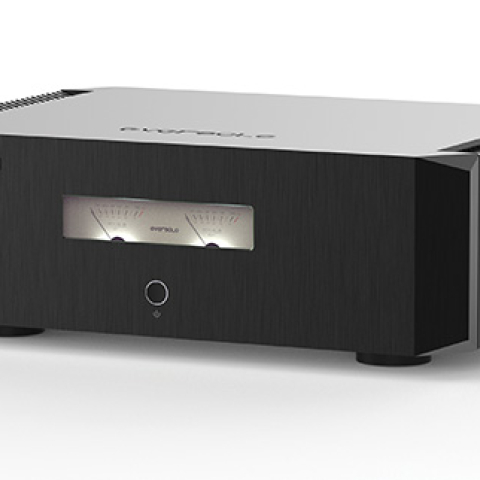
Driving the big, efficient Wilson Alexandria XLFs, the steam-punk needles of the D'Agostino Momentums' power meters barely budged, no matter what I threw at them. Given their rated power output, they should have little trouble driving speakers of any efficiency or inefficiency, no matter how punishing the load. If their power ratings hold up against John Atkinson's measurements (given who designed these amps, I have no doubt they will), the Momentums like low impedance loads. I've heard more clinically precise amplifiers, and ones that produced more digital-like black backgrounds, but, other than the darTZeel, none that could produce such a "meaty," well-proportioned, consistently enticing sonic picture. Dan D'Agostino's Momentum is clearly his best design yet. With the darTZeel NHB-458, it's one of the two most satisfying power amplifiers I've ever heard.
Footnote 1: The MSB was favorably reviewed by Jon Iverson in October 2012.—Ed.
Overall, the Momentum's sonic personality resembled that of the big darTZeel, though the very top was a bit more reserved, its high-frequency transients somewhat more relaxed, its bass performance ever so slightly less muscular. That, of course, added up to an equally seamless picture, just on a more reserved scale.
In musical termsIn Grant Green's version of "My Favorite Things," from The Complete Quartets with Sonny Clark (2 CDs, Blue Note CDP 8 57194 2), recorded by Rudy Van Gelder and withheld for years in favor of more commercial outings, the guitarist is accompanied by Clark on piano, Sam Jones on bass, and Louis Hayes on drums. It's a more swinging, breezy, jazzified version than Coltrane's better-known one, but Green, probably playing his Gibson hollow-body, whose treble and bass he liked to turn down, liquefies his single-note lines, exuding woody warmth as he fingers the lower half of the fretboard. The D'Agostino Momentums reproduced Green's warmth, which is the easy part, while preserving the subtle, three-dimensional aura of sound around each pluck that pulses, blooms, and decays with the notes. That's the not-so-easy part—but when it's done correctly it reproduces an aural image of the physical instrument in a stable, three-dimensional space.
The Beatles' Stereo Vinyl Box Set (14 LPs, EMI 33809) arrived during the review. The D'Agostinos did an expert job of delineating the differences between the first and second UK pressings, the Japanese box, the MoFi box, Toshiba Pro-Use, Capitol original pressings, and CD and USB flash-drive remasterings of Abbey Road (yes, I spent the better part of a day doing this) and this new edition. It was cut from a 44.1kHz master—as Nancy Kerrigan screamed when Tanya Harding whacked her in the knees at the Olympics, "Why? Why? Why?" But you know what? The equalization job for the new LPs is excellent, and overall, the tonal balance is masterful. But if you want to hear why CDs are simply inadequate, compare the 24-bit USB stick edition to the 16-bit CD. And the new vinyl's top end, even sourced from 24/44.1k, hits a wall that every other vinyl edition easily sails over. But while the Momentums' top end might be said to be ever so slightly reserved, it was nonetheless completely revealing. As I went through the Beatles' catalog with the D'Agostinos, even digitized vinyl was an absolute pleasure. When I listened to some of the most awful and bright rock records in my collection, they sounded awful and bright. And when I played my best rock recordings, they . . . rocked. These amps didn't cover up anything.
My favorite trio, and the D'Agostino Momentum, like the darTZeel NHB-458, flat-out nailed it. Attacks were clean and precise, but not artificial or clinical. I heard no artificial edge definition, no emphasis of leading-edge transients. If those fill your excitement cup, look elsewhere—but it's not real detail, and it's not what you hear live. A soft, warm, billowy take on instrumental attacks may be comforting in the short run, but over time it wears thin—or thick, actually. The Momentum may have been ever so slightly on this side of the attack fence, but not by enough for that to be a problem other than in the careful choosing of associated gear. The Momentum's sustain was generous—as ample and flowing as a great tube amp's, and that's a major achievement for solid-state. Its decay was equally ample, precise, and long-tailed, fading into a natural ambience—not an artificial, antiseptic black never heard in nature. One test of an audio component is the type of music it makes you want to hear. Looking back at what I listened to for this review, and discounting the recordings I had to play (a lot of Beatles, and a few other records I reviewed for AnalogPlanet.com), the playlist was all over the map. The D'Agostinos didn't do a better job with any particular kind of music, they did a masterful job with all of them.
Driving the big, efficient Wilson Alexandria XLFs, the steam-punk needles of the D'Agostino Momentums' power meters barely budged, no matter what I threw at them. Given their rated power output, they should have little trouble driving speakers of any efficiency or inefficiency, no matter how punishing the load. If their power ratings hold up against John Atkinson's measurements (given who designed these amps, I have no doubt they will), the Momentums like low impedance loads. I've heard more clinically precise amplifiers, and ones that produced more digital-like black backgrounds, but, other than the darTZeel, none that could produce such a "meaty," well-proportioned, consistently enticing sonic picture. Dan D'Agostino's Momentum is clearly his best design yet. With the darTZeel NHB-458, it's one of the two most satisfying power amplifiers I've ever heard.
Footnote 1: The MSB was favorably reviewed by Jon Iverson in October 2012.—Ed.