The Milty Zerostat: Sold for prevention of disease. And other things.
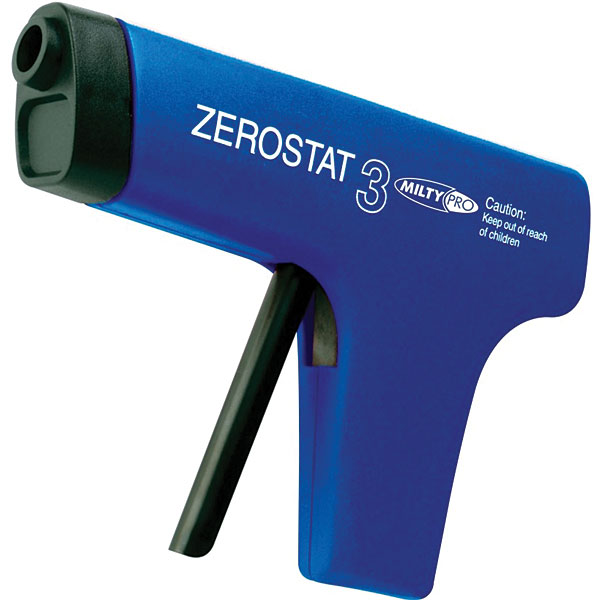
Before dropping the needle onto Christine's copy of Sold for Prevention of Disease Only, I shot the record a few times with the Milty Zerostat 3 ($100), a blue, gun-shaped gadget that helps eliminate static. Squeezing the Zerostat's thin black trigger releases positive ions; relaxing the trigger produces negative ions. A complete squeeze cycle results in a neutral static condition—one perfectly in balance, neither too heavy nor too light—and my LPs play quietly. This step in my LP-playing routine grew out of necessity and has become a habit. The process is especially important in the cold winter months, when the air in my small apartment is dry, and debris stubbornly clings to my LPs and my cartridge's stylus.
A couple of years ago, I spent three sad winter months trying to figure out what was wrong with my turntable. Complex passages of music were consistently marred by horrible distortion that made listening to vinyl unbearably stressful. Close inspection of my stylus revealed the culprit: ugly clumps of dust and debris. I blew on the stylus, brushed it, treated it with cleaners, pleaded with it, made promises, said prayers. Nothing worked. Finally, in desperation, I shot my cartridge with the Milty Zerostat 3. Haven't had a problem since. Other products cleaned my cartridge, but only the Milty kept it clean.
At the time, I'd asked Leland Leard, of Music Hall, Milty's US distributor, about the Zerostat's effectiveness with phono cartridges.
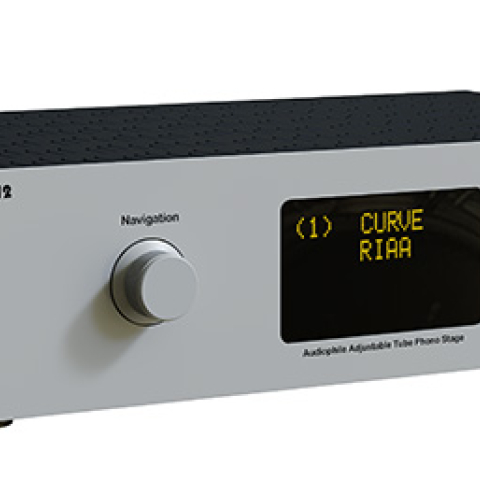
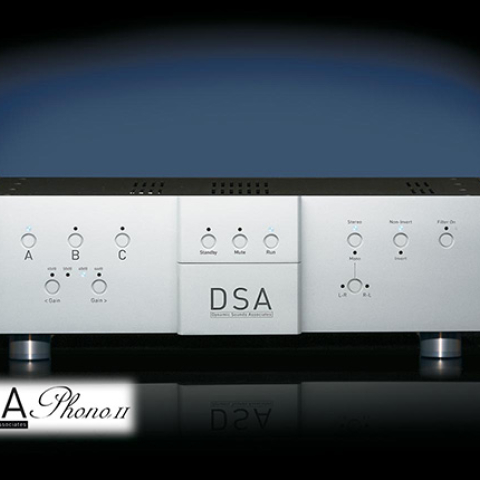
Now that Christine's record was clean and static-free, I sat down to listen. As usual, I used my Rega P3-24 turntable ($1295 in high-gloss white; now discontinued), which has a Rega Elys 2 moving-magnet cartridge. The rest of the system comprised my five-year-old PSB Alpha B1 loudspeakers ($299/pair), NAD C 316BEE integrated amplifier ($379), and AudioQuest Rocket 33 speaker cables ($299/10' pair) and Sidewinder interconnects ($65/1m pair; now discontinued). Most important, I'd just swapped out the outstanding Parasound ZphonoUSB ($349) for the Musical Fidelity V-LPS II phono preamplifier ($189) and V-PSU II power supply ($249). As I mentioned last month, this copy of Wilderness Road's Sold for Prevention of Disease Only (Warner Bros. MS 2125), a white-label promo disc, was so badly dished that I could have used it as a serving bowl at one of Natalie and Nicole's parties. Playing the convex side was impossible: The tonearm leapt right from the surface of the record and the stylus couldn't trace the groove—unusual for my Rega, which prior to this had seemed capable of tracking anything. The concave side, however, played fine and sounded surprisingly good. Produced by Jack Richardson, Sold for Prevention of Disease Only, like many rock records from the early 1970s, sounds big, dramatic, and present. But because this was my first time hearing the record, I was careful not to attribute these characteristics to the Musical Fidelity products. After listening to a couple of tracks, it was time to listen to something more familiar, something that would give me a better idea of the V-LPS II's own sound.
I had preheated my oven for 30 minutes at 150°F, as prescribed by the clear and thorough instruction sheet that came with my sample of the Vinyl Flat record flattener ($99.95). I placed Christine's record between the two Groovy Rings, sandwiched the Rings between the Vinyl Flat's two metal plates, screwed the whole thing together, carefully placed it in the center of my oven rack, and closed the oven. Foresight should have told me to first try the Vinyl Flat with a record from my own collection, but foresight tends to be valued only in hindsight. I consulted the Vinyl Flat's table of heating times and found an entry for Reprise albums from the 1970s. According to the table, I would have to bake the record for 35 minutes and allow it to cool for another 45. Good: I would use the time to get to know the Musical Fidelity products. I reached for James Blake's self-titled release (LP, Polydor B0015443-01) and cued up "Limit to Your Love." Back in the day
Sam Tellig wrote a little bit about the original V-LPS in our May 2009 issue. He liked it, especially for its detail retrieval, but acknowledged its limitations: "This was not the most dynamic, expansive phono sound around," he wrote, and concluded, "If you decide to upgrade later on, the V-LPS will make a splendid backup. Or use it in a second system."