For the hard core, StroboSoft offers not only historical tunings (eg, Kellner, Rameau, Werckmeister III), but also proprietary Peterson "sweetened" tunings for guitars and other instruments. These tunings redistribute the error-allocation scheme of a piano's usual equal temperament, in the interest of making fourths and fifths ring more sweetly. I found StroboSoft to be challenging and educational, and it does work! (usually discounted; www.petersontuners.com)
To get the best results with StroboSoft, you'll need a good USB microphone (unless your computer already has a soundcard). Audio-Technica's all-metal, professional-feeling ATR2100-USB fills the bill admirably. It has USB and XLR analog outputs (both cables are included), as well as a mini-jack in the base for a latency-free headphone output. Its internal USB-powered DAC operates at 44.1 or 48kHz (16-bit only); the maker claims a frequency response of 50Hz–15kHz, which I think is not shabby at the price. A desk tripod and a mike-stand clamp are included; a carrying pouch is not. No driver required; setup is easy.
The ATR2100-USB is not just for high-zoot guitar tuning. I can easily imagine it in use in podcasting. It would also make a great gift for a talented young nephew or niece who wants to start making recordings with Apple Garage Band or similar software. (usually discounted; www.audio-technica.com)
 5. Tungsten Customs' Nixie Epoch Clock: $235
This totally charming, petite, retro timekeeper, only 6.75" wide by 3" high by 2" deep and weighing just 13oz, is the perfect gift for the tube lover in your life—or for anyone who delights in the mid-century design style exemplified by the Eames molded-fiberglass chair and the Nelson Ball Clock. Jeremy Medow handcrafts these clocks from solid blocks of maple, in Connecticut. (He also offers LED clocks in cherry, walnut, or sapele.) The Russian IN-12A Nixie, a numeric-readout tube, doesn't have the usual side-view display. Instead, the readout is at the top of the tube, which allows for horizontal mounting and a cleaner, minimalist look. Nixies are not actually vacuum tubes; their glow is not from the thermionic discharge of electrons but because each glass tube is filled with a gas mixture that includes neon. That's why its 9VDC power supply is sufficient, and why the maker can predict long tube life. Buttons on the laser-cut hardboard back allow for setting hours and minutes, toggling between 12- and 24-hour styles, choosing among five brightness levels, and whether to show a zero in front of times earlier than 10 o'clock. There is no alarm function. The power supply has a 5' cord, and Medow claims that the Nixies should last for many years. (www.tungstencustoms.com)
 4. Delta H Design Inc. ZR Acoustics panels: $299 and up
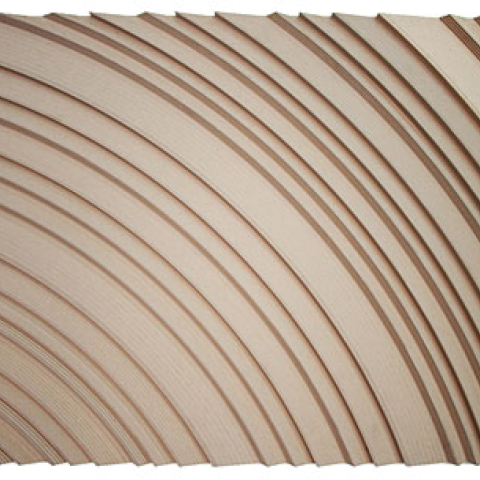
Delta H Design Inc. (DHDI) is an architecture firm and acoustics consultancy in Marina del Rey, California. Their audacious claims for their ZR Acoustics room treatments (patent pending) include that the acoustical panels, which range in thickness from 3/4" to about 4", can control sound in a range from 1Hz all the way up to three octaves above the range of human hearing, ca 160kHz. Obviously, such claims fly in the face of conventional "quarter-wave theory." Designer-inventor Hanson Hsu says that his mission is to drag architectural acoustics away from the Newtonian billiard-ball model and base it instead on quantum and Mandelbrotian realities. DHDI's technique for radically increasing the number of nonparallel surfaces in a panel "employs fractal and tessellation mathematics hybridized with chaos theory." Chaos is not anarchy—ie, that the natural universe has no laws. In this context, chaos theory means—as shown by Henri Poincaré's brilliant failure to solve the three-body problem (footnote 1)—that what may appear to be completely random is instead merely bafflingly nonlinear.
DHDI sent me two 24" by 24" by 1.25" ZR Micro panels ($599 each) to go behind my speakers, and three 20" by 40" by 0.75" ZR Sample Rate 8 Bit panels ($299 each) to go between and above the speakers (total: $2095 plus shipping). Hanson Hsu thought those the bare minimum needed to appreciably improve my listening room's sound.
Hsu says that DHDI's design goal is a sound that is "transparent, organic, and musical." In my room, the ZRs accomplished all that in spades. To boil it down to one adjective, the sound was richer. Mobile Fidelity's amazing SACD remastering of Dire Straits' Brothers in Arms converted even a hardened room-treatment agnostic. I was very impressed. A review is in the works. (www.deltahdesign.com)

 3. Rega Research RP1 turntable: $499
Parasound Zphono stage: $199
In the May 2007 issue, when Art Dudley enthused over Rega Research's P1 ready-to-go package of turntable, tonearm, and installed moving-magnet cartridge, it cost $350. Today, at $499, the P1's replacement, the RP1, it's still a conspicuous bargain.
The other day, as I waited for a city bus, I complimented a college-age young man on the Daft Punk LP in his shopping bag. He earnestly informed me that, if one listens to MP3s, the equipment is better than the music is—but if one listens to LPs, the music is usually better than the equipment, and that, somehow, that's less frustrating and more musical. Well, there's one straw in the wind!
I think that Rega's RP1 provides the ideal entry or re-entry to vinyl. It's designed as a package—the only setup necessary is to pluck the counterweight from its slot in the packing material, snug it in to as far as it can go on the tonearm tube, snap in the provided dustcover, and connect the signal cables (four-conductor, with no separate ground wire, per Rega's norm) to your phono stage. No need to mess with overhang or balance. Well done. (www.rega.co.uk)
Parasound's handsome Zphono phono stage is the paradigmatic "It does what it says on the can" product. I have no idea how they can sell it for $199—perhaps it's a loss leader to introduce people to the brand. In addition to an MM/MC switch, the Zphono has a line-current polarity-inversion switch. (www.parasound.com)
In use, the combo of RP1 and Zphono led with the midrange, convincingly conveying the sassy seductiveness of Cécile McLorin Salvant's Woman Child (2 LPs, Mack Avenue 1072LP), a recent release that Michael Fremer has been recommending.
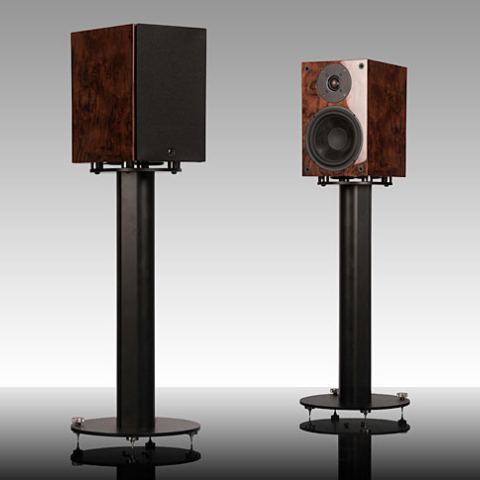
 2. Dynaudio Professional BM Compact mkIII powered speakers: $1260/pair
The BM Compact mkIII is a superb little speaker. The smallest model in Dynaudio Professional's entry-level BM Series, the 12-lb BM Compact's shape and size (10.7" high by 6.7" wide by 9.3" deep) are eerily reminiscent of . . . wait, it'll come to me . . . a large loaf of bread! You were expecting, perhaps, the model name of a famous BBC minimonitor? But other than that, and that both are two-ways, there really aren't that many similarities. The BM Compact mkIII is a ported design powered by built-in digital amplifiers, which enables the slopes around the 2.1kHz crossover frequency to be realized through DSP. The 5.5" woofer and 1" tweeter have their own separate 50W amplifiers, and an auto-standby feature reduces the BM's power consumption to 0.3W at idle. I did find a bit of a delay in waking the speakers from standby, but that's a tiny niggle.
One very nice touch is that the BM Compact's rear panel has a set of sliders for adjusting the levels of the bass, mid, and treble, which I found as helpful for midfield as for desktop listening. The rear panel has RCA jacks as well as the usual XLRs; to feed the speakers from a computer's headphone jack, all you need is an inexpensive adapter.
I actually began with the BM5 mkIII, the next model up in size, but found the BM Compact mkIII more to my taste. I think its smaller woofer is faster, booms less, and blends more convincingly with the tweeter than does the BM5's 7" woofer. I sat on the couch and listened engrossed to Klaus Tennstedt and the Chicago Symphony's recording of Mahler's Symphony 1, and to Paavo Berglund and the Chamber Orchestra of Europe's recordings of Sibelius's Symphonies 5 and 7—which proved to me that I could listen to the BM5 Compact mkIIIs for musical enjoyment and hear nothing that strikes me as amiss. For the price, very impressive.
The BM5 Compact mkIIIs come bundled with IsoAcoustics isolation stands with adjustable rake; a hardwired analog volume control is a $69 option. (www.dynaudioprofessional.com)
 1. Ultrasone Edition 10 headphones: $2750
Ultrasone's Edition 10 headphones combine design elements reminiscent of the golden age of aviation with elegant finishing touches such as perforated sheepskin-leather earpads and zebrano-wood accents. The overall look calls to mind the interiors of Mercedes-Benz's full-size convertibles of the late 1950s and early '60s. And like those pre–robotics-built cars, Edition 10s are handmade in Germany. The Edition 10s even have that sought-after "new-car smell"! The Edition 10 differs from the Edition 9 (which I wrote about in my June 2007 column) in three important ways. First, the 10s are the first open-back model in Ultrasone's Edition line. Second, while the 9s were somberly all black, the 10s combine rich browns and champagne silver. Third, while the 9s departed from a neutral sound in the direction of mellow (as do my standby recording-session cans, Audio-Technica's underrated and very affordable M-50s), the 10s depart from neutrality in the direction of liveliness—but with truly remarkable bass for an open-back design. Like the 9s, the Edition 10s employ Ultrasone's proprietary and nondefeatable spatialization technology. I didn't mind this at all in either model, but I gather that it's a polarizing issue among headphone hobbyists. The 10s arrive in a finger-jointed hardwood case, and include a headphone stand of zebrano plywood.
As I've often written, headphones are the most personal of audio components, and the Ultrasones' steep price makes an audition and/or a money-back guarantee essential (footnote 2). All that said, these are very cool cans. I was sorry to see them go. (www.ultrasone-headphones.com)
Wrapping Up . . .
So there you have them: 14 items, at prices ranging from affordable stocking-stuffer territory to that of ultrapremium indulgences. Finally, a request to readers: This season, at least once, when you see a Salvation Army collection pot, please drop into it a $20 bill. You'll be amazed at the sound it makes. Or donate $20 online at www.salvationarmyusa.org.
Footnote 1: As framed by King Oscar II of Sweden in 1887, the three-body problem for an "arbitrarily large" number of bodies was not solved for n >3 until 1991, by Qiudong Wang, of the University of Arizona.
Footnote 2: InnerFidelity.com's Tyll Hertsens hated an early-production pair of Edition 10s that Ultrasone tells me no longer represents current production. My review pair was serial no.1559.
5. Tungsten Customs' Nixie Epoch Clock: $235This totally charming, petite, retro timekeeper, only 6.75" wide by 3" high by 2" deep and weighing just 13oz, is the perfect gift for the tube lover in your life—or for anyone who delights in the mid-century design style exemplified by the Eames molded-fiberglass chair and the Nelson Ball Clock. Jeremy Medow handcrafts these clocks from solid blocks of maple, in Connecticut. (He also offers LED clocks in cherry, walnut, or sapele.) The Russian IN-12A Nixie, a numeric-readout tube, doesn't have the usual side-view display. Instead, the readout is at the top of the tube, which allows for horizontal mounting and a cleaner, minimalist look. Nixies are not actually vacuum tubes; their glow is not from the thermionic discharge of electrons but because each glass tube is filled with a gas mixture that includes neon. That's why its 9VDC power supply is sufficient, and why the maker can predict long tube life. Buttons on the laser-cut hardboard back allow for setting hours and minutes, toggling between 12- and 24-hour styles, choosing among five brightness levels, and whether to show a zero in front of times earlier than 10 o'clock. There is no alarm function. The power supply has a 5' cord, and Medow claims that the Nixies should last for many years. (www.tungstencustoms.com)
4. Delta H Design Inc. ZR Acoustics panels: $299 and upDelta H Design Inc. (DHDI) is an architecture firm and acoustics consultancy in Marina del Rey, California. Their audacious claims for their ZR Acoustics room treatments (patent pending) include that the acoustical panels, which range in thickness from 3/4" to about 4", can control sound in a range from 1Hz all the way up to three octaves above the range of human hearing, ca 160kHz. Obviously, such claims fly in the face of conventional "quarter-wave theory." Designer-inventor Hanson Hsu says that his mission is to drag architectural acoustics away from the Newtonian billiard-ball model and base it instead on quantum and Mandelbrotian realities. DHDI's technique for radically increasing the number of nonparallel surfaces in a panel "employs fractal and tessellation mathematics hybridized with chaos theory." Chaos is not anarchy—ie, that the natural universe has no laws. In this context, chaos theory means—as shown by Henri Poincaré's brilliant failure to solve the three-body problem (footnote 1)—that what may appear to be completely random is instead merely bafflingly nonlinear.
3. Rega Research RP1 turntable: $499Parasound Zphono stage: $199
In the May 2007 issue, when Art Dudley enthused over Rega Research's P1 ready-to-go package of turntable, tonearm, and installed moving-magnet cartridge, it cost $350. Today, at $499, the P1's replacement, the RP1, it's still a conspicuous bargain.
2. Dynaudio Professional BM Compact mkIII powered speakers: $1260/pairThe BM Compact mkIII is a superb little speaker. The smallest model in Dynaudio Professional's entry-level BM Series, the 12-lb BM Compact's shape and size (10.7" high by 6.7" wide by 9.3" deep) are eerily reminiscent of . . . wait, it'll come to me . . . a large loaf of bread! You were expecting, perhaps, the model name of a famous BBC minimonitor? But other than that, and that both are two-ways, there really aren't that many similarities. The BM Compact mkIII is a ported design powered by built-in digital amplifiers, which enables the slopes around the 2.1kHz crossover frequency to be realized through DSP. The 5.5" woofer and 1" tweeter have their own separate 50W amplifiers, and an auto-standby feature reduces the BM's power consumption to 0.3W at idle. I did find a bit of a delay in waking the speakers from standby, but that's a tiny niggle.
1. Ultrasone Edition 10 headphones: $2750Ultrasone's Edition 10 headphones combine design elements reminiscent of the golden age of aviation with elegant finishing touches such as perforated sheepskin-leather earpads and zebrano-wood accents. The overall look calls to mind the interiors of Mercedes-Benz's full-size convertibles of the late 1950s and early '60s. And like those pre–robotics-built cars, Edition 10s are handmade in Germany. The Edition 10s even have that sought-after "new-car smell"! The Edition 10 differs from the Edition 9 (which I wrote about in my June 2007 column) in three important ways. First, the 10s are the first open-back model in Ultrasone's Edition line. Second, while the 9s were somberly all black, the 10s combine rich browns and champagne silver. Third, while the 9s departed from a neutral sound in the direction of mellow (as do my standby recording-session cans, Audio-Technica's underrated and very affordable M-50s), the 10s depart from neutrality in the direction of liveliness—but with truly remarkable bass for an open-back design. Like the 9s, the Edition 10s employ Ultrasone's proprietary and nondefeatable spatialization technology. I didn't mind this at all in either model, but I gather that it's a polarizing issue among headphone hobbyists. The 10s arrive in a finger-jointed hardwood case, and include a headphone stand of zebrano plywood.
So there you have them: 14 items, at prices ranging from affordable stocking-stuffer territory to that of ultrapremium indulgences. Finally, a request to readers: This season, at least once, when you see a Salvation Army collection pot, please drop into it a $20 bill. You'll be amazed at the sound it makes. Or donate $20 online at www.salvationarmyusa.org.
Footnote 1: As framed by King Oscar II of Sweden in 1887, the three-body problem for an "arbitrarily large" number of bodies was not solved for n >3 until 1991, by Qiudong Wang, of the University of Arizona.