I had forgotten how adeptly the J2 tracked complex musical passages and how completely it recovered reverberation. On Correlations, the reverb tails on piano notes were perfect: mesmerizing, rich in tone, neither too long nor too short.
Carlos Cipa is a young (b. 1990), Munich-based, classically trained pianist, drummer, composer, and producer. Correlations (on 11 pianos) is his newest album. It might not be as musically deep or edgy as it pretends to be, but the exquisite textured tones and delicate reverb from its 11 radically different pianos was all the deep content I required.
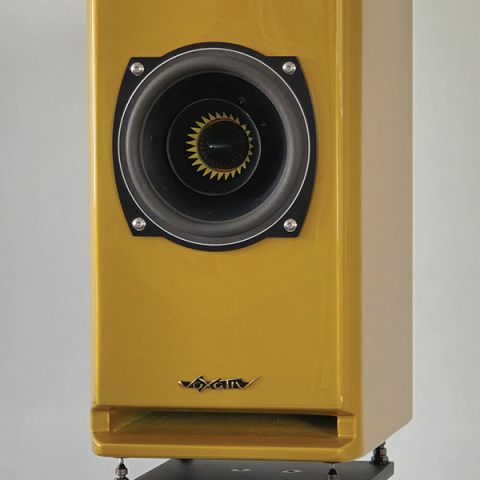
The O/93 speaker and J2 amplifier made each track—each piano—sound distinctively different and fascinating to compare. (The pianos on the recording range include an 1840 Collard, a 1920 Ritter upright, and a 1976 Fender Rhodes. And then there's my favorite track, "Sitting at a dead piano, trying to find some notes that work.") Each piano showcased a unique and hauntingly clear palette of decaying note-tones. These tones were the stars of the Correlations show, and on most tracks, they were organized into carefully orchestrated steps. The J2 plus O/93 made each tone-shifting step into a delectable sensuous moment.
When I played Correlations with the new F8, the palette of tones remained as naturally saturated as it was with the J2. The F8's midrange was as densely detailed as the J2's—but clearer and more brightly lit. It was interesting how the F8 directed my attentions away from the sensuous tones and focused them more on the impact and velocity of Cipa's playing. Overall, the F8 portrayed rhythms slightly more succinctly than the J2.
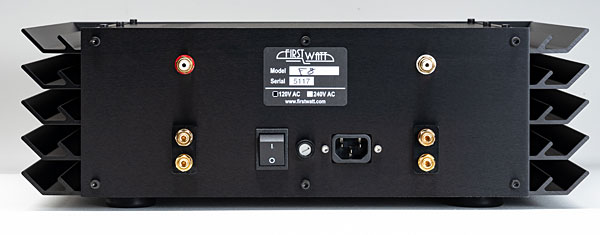 Reverb decay was equally attractive with the two amps but appeared a bit shorter with the F8. The piano's left-hand octaves were firmer and better defined with the F8; which, consequentially, made the pianos feel more physical. The F8 presented lower-octave notes as emerging from a brighter, more transparent space. This was a subtle difference but a defining one.
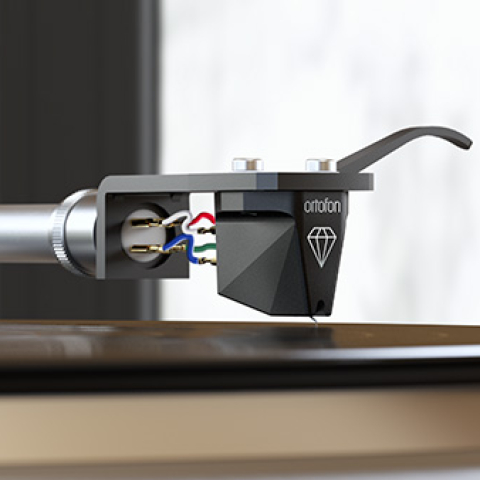
For me, the best thing about fancy audio gear is its ability to capture my attentions and direct them to far-away peoples and their musical cultures. For example, the "fancy" First Watt F8 driving the fancy-but-outlier DeVore speakers, and the unquestionably fancy Koetsu Rosewood Signature moving-coil cartridge, had the power to turn the singing, drum-playing, and intricate hand-clapping of Hamza El Din's "Song With Tar" from Escalay: The Water Wheel (LP, Nonesuch H-72041) into a night by the fire in a desert camp in Nubia.
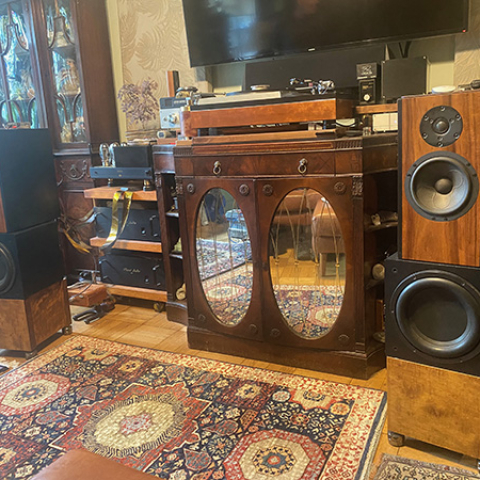
The most exciting part was how this combination of gear and this recording made me feel like I could see the musicians sitting in a circle in front of me. Intricate, descriptive detail was in such abundance, it seemed I could glimpse the tacks holding the stretched skin on the tar drum's wood frame. With the broad-faced DeVore O/93s, soundstage visions had never before been this clear and pure. I credit the F8.
Once my mind moved past the profuse detail, it was energized by the delirious, dervishlike rhythms and sensuality of these Nubian apparitions. The F8 + O/93 made the shifting rhythms quite noticeable. Together, these two extraordinary recordings gave me a good feeling for the sound character of the F8 with the DeVores—and permission to switch to the 25Wpc Pass Labs XA25 amplifier.
F8 vs XA25
Reverb decay was equally attractive with the two amps but appeared a bit shorter with the F8. The piano's left-hand octaves were firmer and better defined with the F8; which, consequentially, made the pianos feel more physical. The F8 presented lower-octave notes as emerging from a brighter, more transparent space. This was a subtle difference but a defining one.
For me, the best thing about fancy audio gear is its ability to capture my attentions and direct them to far-away peoples and their musical cultures. For example, the "fancy" First Watt F8 driving the fancy-but-outlier DeVore speakers, and the unquestionably fancy Koetsu Rosewood Signature moving-coil cartridge, had the power to turn the singing, drum-playing, and intricate hand-clapping of Hamza El Din's "Song With Tar" from Escalay: The Water Wheel (LP, Nonesuch H-72041) into a night by the fire in a desert camp in Nubia.
The most exciting part was how this combination of gear and this recording made me feel like I could see the musicians sitting in a circle in front of me. Intricate, descriptive detail was in such abundance, it seemed I could glimpse the tacks holding the stretched skin on the tar drum's wood frame. With the broad-faced DeVore O/93s, soundstage visions had never before been this clear and pure. I credit the F8.
Once my mind moved past the profuse detail, it was energized by the delirious, dervishlike rhythms and sensuality of these Nubian apparitions. The F8 + O/93 made the shifting rhythms quite noticeable. Together, these two extraordinary recordings gave me a good feeling for the sound character of the F8 with the DeVores—and permission to switch to the 25Wpc Pass Labs XA25 amplifier.
F8 vs XA25
When I exchanged the F8 for the Pass Labs XA25, the night glow of that desert fire went out. Suddenly, on "Song With Tar" it was daytime, the skies were cloudless, and the sun was bright. The XA25 delivered conspicuously more daylight and apparent speed than either the J2 or F8. The XA25's well-focused lower octaves, in concert with its inherent hyper-transparency, enhanced El Din's vocal articulations and made the tar sound crisper and more percussive, its skin more tightly stretched. Now, instead of tar tacks, I saw musicians in thobes and keffiyeh.
 I like recordings that are as direct sounding, unprocessed, and uncompressed as possible, with the proviso that the music must still be real and challenging artistically. The catalog of the Art Ensemble of Chicago's recordings on ECM and Atlantic has fulfilled those requirements for decades. Lately, I've been stuck on their 1973 live recording Bap-Tizum—Performance at The Ann Arbor Blues Festival (16/44.1 FLAC Rhino-Atlantic/Qobuz). Bap-Tizum features diverse sonic provocations that happen near to and far from the listener's (and microphone's) position near the festival's stage. This recording is a riot for the senses, with Lester Bowie on trumpet, Roscoe Mitchell on saxophones of every size, formal and informal percussion, crowd sounds, and mad jabbering. Its main feature, though, is its raw high-energy poetic expression striking direct hit after direct hit on unprepared listeners. Perfect Herb music.
And perfect for studying amplifiers.
I like recordings that are as direct sounding, unprocessed, and uncompressed as possible, with the proviso that the music must still be real and challenging artistically. The catalog of the Art Ensemble of Chicago's recordings on ECM and Atlantic has fulfilled those requirements for decades. Lately, I've been stuck on their 1973 live recording Bap-Tizum—Performance at The Ann Arbor Blues Festival (16/44.1 FLAC Rhino-Atlantic/Qobuz). Bap-Tizum features diverse sonic provocations that happen near to and far from the listener's (and microphone's) position near the festival's stage. This recording is a riot for the senses, with Lester Bowie on trumpet, Roscoe Mitchell on saxophones of every size, formal and informal percussion, crowd sounds, and mad jabbering. Its main feature, though, is its raw high-energy poetic expression striking direct hit after direct hit on unprepared listeners. Perfect Herb music.
And perfect for studying amplifiers.
 I experienced an enjoyable startling moment when I played Bap-Tizum through the DeVores driven by the First Watt F8. Bap-Tizum's first track, "Nfamoudou-Boudougou," introduces the Art Ensemble members on a very spacious outdoor stage with nearby audience sounds of clapping, shouting, and revved-up merrymaking. With the Rogue RP-7 driving the F8, the chameleon-like DeVores reproduced the myriad sounds from the announcer's microphone with a vibrant, unprocessed I-am-thereness. But then suddenly, without pause, the second track begins with two startlingly loud drum whacks followed by more varieties of percussion and the sweetest cowbell sounds since the invention of that instrument in the Bronze Age. Once again, the F8 created an unusually vivid, strikingly 3D virtual scene.
With the XA25 powering the O/93s, the first track's crowd sounds were well-defined and fascinating but less minutely detailed and 3D than with the F8. On the positive side, the XA25's high frequencies were more clear and present, more available for scrutiny. With the XA25, the second track's drum whacks pounded the floor with greater intensity. The Pass Labs amp projected sounds into the room with a more tangible dynamic swing and a crisper clarity than either the First Watt J2 or F8. Overall, the XA25 made a bolder, clearer sonic presentation than the more intimate-sounding F8.
I asked Nelson Pass how he would characterize the sound of these three designs. "It is perhaps not oversimplifying to say that the XA25 has a 3rd harmonic character and the F8 has a very 2nd harmonic personality," he said. "The J2 sits between them."
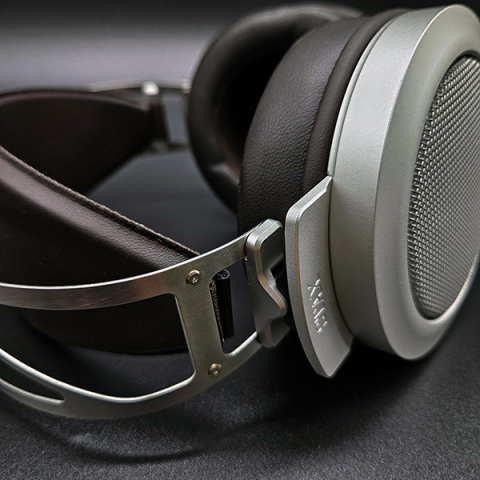
I sort of agree, but that characterization is perhaps "oversimplifying." The XA25's exceptional transparency is free of even the slightest hints of second harmonic character. But I would not characterize either the J2 or the F8 as overtly second harmonic. In a variety of bunker systems, which include the incredible, low-distortion JPS Labs Abyss AB-1266 Phi TC and RAAL-requisite SR1a headphones, the J2 exhibits an extremely slight, almost subliminal-grained opacity that is not present in the F8 or XA25.
Compared to Line Magnetic tubes
I experienced an enjoyable startling moment when I played Bap-Tizum through the DeVores driven by the First Watt F8. Bap-Tizum's first track, "Nfamoudou-Boudougou," introduces the Art Ensemble members on a very spacious outdoor stage with nearby audience sounds of clapping, shouting, and revved-up merrymaking. With the Rogue RP-7 driving the F8, the chameleon-like DeVores reproduced the myriad sounds from the announcer's microphone with a vibrant, unprocessed I-am-thereness. But then suddenly, without pause, the second track begins with two startlingly loud drum whacks followed by more varieties of percussion and the sweetest cowbell sounds since the invention of that instrument in the Bronze Age. Once again, the F8 created an unusually vivid, strikingly 3D virtual scene.
With the XA25 powering the O/93s, the first track's crowd sounds were well-defined and fascinating but less minutely detailed and 3D than with the F8. On the positive side, the XA25's high frequencies were more clear and present, more available for scrutiny. With the XA25, the second track's drum whacks pounded the floor with greater intensity. The Pass Labs amp projected sounds into the room with a more tangible dynamic swing and a crisper clarity than either the First Watt J2 or F8. Overall, the XA25 made a bolder, clearer sonic presentation than the more intimate-sounding F8.
I asked Nelson Pass how he would characterize the sound of these three designs. "It is perhaps not oversimplifying to say that the XA25 has a 3rd harmonic character and the F8 has a very 2nd harmonic personality," he said. "The J2 sits between them."
I sort of agree, but that characterization is perhaps "oversimplifying." The XA25's exceptional transparency is free of even the slightest hints of second harmonic character. But I would not characterize either the J2 or the F8 as overtly second harmonic. In a variety of bunker systems, which include the incredible, low-distortion JPS Labs Abyss AB-1266 Phi TC and RAAL-requisite SR1a headphones, the J2 exhibits an extremely slight, almost subliminal-grained opacity that is not present in the F8 or XA25.
Compared to Line Magnetic tubes
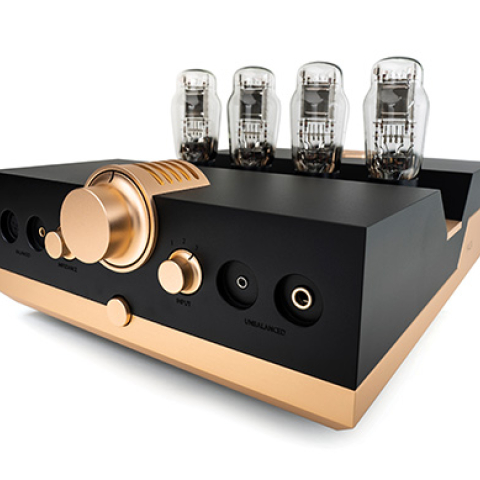
You've probably noticed that I like both tube and solid-state amplifiers—especially when they are single-ended like the First Watt F8 and my favorite in-house tube amp, the $4450 Line Magnetic LM-518 IA. I could live happily with either amplifier because they both reproduce the 3D inner workings of a recording, and they both reproduce the force and intensity of events captured by microphones.
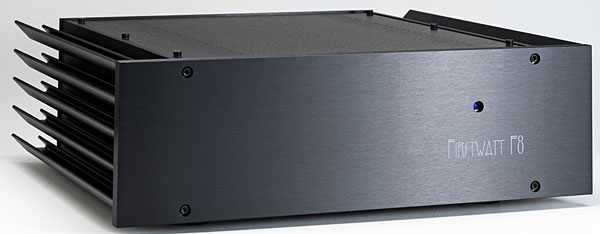 This bipartisan viewpoint was validated by the fact that the First Watt F8 reproduced spatially complex recordings in a luminous, naturally radiant manner—similar to the Line Magnetic LM-518IA. As you may already know, solid-state rarely does luminous or naturally radiant.
Also surprising was how, on that Carlos Cipa 11-piano recording, the F8's dimensionality and reverb retrieval equaled the Line Magnetic's in quantity and almost in quality. The LM-518IA won the top prize due to its more vivid and extended high frequencies and more kaleidoscopic tone character.
On the Art Ensemble's Bap-Tizum, the LM-518IA forced the sound, especially Roscoe Mitchell's saxophones, to literally burst into the room. Instrumental textures were so tactile and lifelike, my sense of being there was noticeably greater with the Line Magnetic than it was with the First Watt.
In case you were wondering, bright-emitter directly heated 845 triodes sound like they look: radiant and intense. The JFETs in the F8 sound radiant and intense but look dull and unspectacular.
Driving the Falcon LS3/5a
This bipartisan viewpoint was validated by the fact that the First Watt F8 reproduced spatially complex recordings in a luminous, naturally radiant manner—similar to the Line Magnetic LM-518IA. As you may already know, solid-state rarely does luminous or naturally radiant.
Also surprising was how, on that Carlos Cipa 11-piano recording, the F8's dimensionality and reverb retrieval equaled the Line Magnetic's in quantity and almost in quality. The LM-518IA won the top prize due to its more vivid and extended high frequencies and more kaleidoscopic tone character.
On the Art Ensemble's Bap-Tizum, the LM-518IA forced the sound, especially Roscoe Mitchell's saxophones, to literally burst into the room. Instrumental textures were so tactile and lifelike, my sense of being there was noticeably greater with the Line Magnetic than it was with the First Watt.
In case you were wondering, bright-emitter directly heated 845 triodes sound like they look: radiant and intense. The JFETs in the F8 sound radiant and intense but look dull and unspectacular.
Driving the Falcon LS3/5a
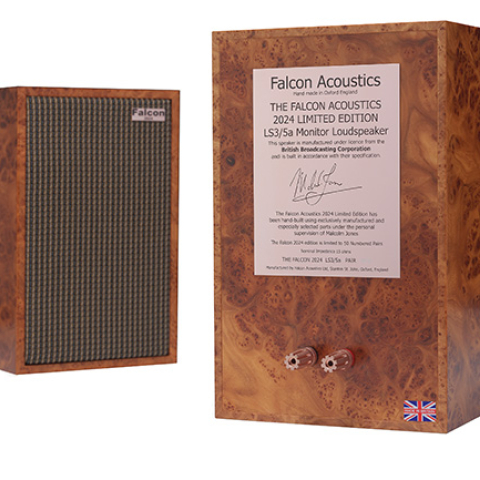
I played The Art Ensemble's Bap-Tizum with the First Watt F8 driving the Falcon Acoustic LS3/5as ($2995/pair), and it was instantly clear: the F8 was comfortable powering the Falcon's 15 ohm, 83dB/2.83V/m load. Together, they played loud enough for me, at low distortion. With the Falcons, the wild sounds of Bap-Tizum were better sorted, more microresolved, more textural, more intimately there than they were with the DeVore Fidelity Orangutan O/93. After only a day of listening, I knew the First Watt F8 + Falcon LS3/5a combo was one of the most revealing and exciting-to-listen-to systems I've heard at any price.
Of course, this superengaging sound did not come out of the little Falcons with the same hardihood as it did with the big DeVores. And of course, maximum SPL is limited. But the F8 + LS3/5a revealed more of each recording's sonic and poetic essences than did the F8 + O/93—or possibly, any other system I've used in the bunker.
You have my word: This is a Zen-type, keep-forever, stay-up-all-night, can't-stop-listening system.
Listening to learn
In my world, the only purpose a $4000, 25Wpc class-A amplifier can serve is as a tool in the pursuit of engaged listening. The new First Watt F8 amplifier served that purpose well by making it easy for me to listen with practiced, knowledgeable intent—like Joe Bussard—and by driving two of my preferred speakers in a manner that made my current favored recordings sound the way I think they are supposed to sound. Thank you, Joe, for the lessons in listening. Thank you, Nelson, for designing another very effective tool for listening.
Reverb decay was equally attractive with the two amps but appeared a bit shorter with the F8. The piano's left-hand octaves were firmer and better defined with the F8; which, consequentially, made the pianos feel more physical. The F8 presented lower-octave notes as emerging from a brighter, more transparent space. This was a subtle difference but a defining one.
For me, the best thing about fancy audio gear is its ability to capture my attentions and direct them to far-away peoples and their musical cultures. For example, the "fancy" First Watt F8 driving the fancy-but-outlier DeVore speakers, and the unquestionably fancy Koetsu Rosewood Signature moving-coil cartridge, had the power to turn the singing, drum-playing, and intricate hand-clapping of Hamza El Din's "Song With Tar" from Escalay: The Water Wheel (LP, Nonesuch H-72041) into a night by the fire in a desert camp in Nubia.
When I exchanged the F8 for the Pass Labs XA25, the night glow of that desert fire went out. Suddenly, on "Song With Tar" it was daytime, the skies were cloudless, and the sun was bright. The XA25 delivered conspicuously more daylight and apparent speed than either the J2 or F8. The XA25's well-focused lower octaves, in concert with its inherent hyper-transparency, enhanced El Din's vocal articulations and made the tar sound crisper and more percussive, its skin more tightly stretched. Now, instead of tar tacks, I saw musicians in thobes and keffiyeh.
I like recordings that are as direct sounding, unprocessed, and uncompressed as possible, with the proviso that the music must still be real and challenging artistically. The catalog of the Art Ensemble of Chicago's recordings on ECM and Atlantic has fulfilled those requirements for decades. Lately, I've been stuck on their 1973 live recording Bap-Tizum—Performance at The Ann Arbor Blues Festival (16/44.1 FLAC Rhino-Atlantic/Qobuz). Bap-Tizum features diverse sonic provocations that happen near to and far from the listener's (and microphone's) position near the festival's stage. This recording is a riot for the senses, with Lester Bowie on trumpet, Roscoe Mitchell on saxophones of every size, formal and informal percussion, crowd sounds, and mad jabbering. Its main feature, though, is its raw high-energy poetic expression striking direct hit after direct hit on unprepared listeners. Perfect Herb music.
And perfect for studying amplifiers.
I experienced an enjoyable startling moment when I played Bap-Tizum through the DeVores driven by the First Watt F8. Bap-Tizum's first track, "Nfamoudou-Boudougou," introduces the Art Ensemble members on a very spacious outdoor stage with nearby audience sounds of clapping, shouting, and revved-up merrymaking. With the Rogue RP-7 driving the F8, the chameleon-like DeVores reproduced the myriad sounds from the announcer's microphone with a vibrant, unprocessed I-am-thereness. But then suddenly, without pause, the second track begins with two startlingly loud drum whacks followed by more varieties of percussion and the sweetest cowbell sounds since the invention of that instrument in the Bronze Age. Once again, the F8 created an unusually vivid, strikingly 3D virtual scene.
With the XA25 powering the O/93s, the first track's crowd sounds were well-defined and fascinating but less minutely detailed and 3D than with the F8. On the positive side, the XA25's high frequencies were more clear and present, more available for scrutiny. With the XA25, the second track's drum whacks pounded the floor with greater intensity. The Pass Labs amp projected sounds into the room with a more tangible dynamic swing and a crisper clarity than either the First Watt J2 or F8. Overall, the XA25 made a bolder, clearer sonic presentation than the more intimate-sounding F8.
You've probably noticed that I like both tube and solid-state amplifiers—especially when they are single-ended like the First Watt F8 and my favorite in-house tube amp, the $4450 Line Magnetic LM-518 IA. I could live happily with either amplifier because they both reproduce the 3D inner workings of a recording, and they both reproduce the force and intensity of events captured by microphones.
This bipartisan viewpoint was validated by the fact that the First Watt F8 reproduced spatially complex recordings in a luminous, naturally radiant manner—similar to the Line Magnetic LM-518IA. As you may already know, solid-state rarely does luminous or naturally radiant.
Also surprising was how, on that Carlos Cipa 11-piano recording, the F8's dimensionality and reverb retrieval equaled the Line Magnetic's in quantity and almost in quality. The LM-518IA won the top prize due to its more vivid and extended high frequencies and more kaleidoscopic tone character.
On the Art Ensemble's Bap-Tizum, the LM-518IA forced the sound, especially Roscoe Mitchell's saxophones, to literally burst into the room. Instrumental textures were so tactile and lifelike, my sense of being there was noticeably greater with the Line Magnetic than it was with the First Watt.
I played The Art Ensemble's Bap-Tizum with the First Watt F8 driving the Falcon Acoustic LS3/5as ($2995/pair), and it was instantly clear: the F8 was comfortable powering the Falcon's 15 ohm, 83dB/2.83V/m load. Together, they played loud enough for me, at low distortion. With the Falcons, the wild sounds of Bap-Tizum were better sorted, more microresolved, more textural, more intimately there than they were with the DeVore Fidelity Orangutan O/93. After only a day of listening, I knew the First Watt F8 + Falcon LS3/5a combo was one of the most revealing and exciting-to-listen-to systems I've heard at any price.
In my world, the only purpose a $4000, 25Wpc class-A amplifier can serve is as a tool in the pursuit of engaged listening. The new First Watt F8 amplifier served that purpose well by making it easy for me to listen with practiced, knowledgeable intent—like Joe Bussard—and by driving two of my preferred speakers in a manner that made my current favored recordings sound the way I think they are supposed to sound. Thank you, Joe, for the lessons in listening. Thank you, Nelson, for designing another very effective tool for listening.