

I tried to employ the app but ran into problems. It's incompatible with Google network extenders, which don't allow you to manually choose between 2.4GHz and 5GHz bands; the RA180 manual makes it clear that it doesn't support dual-band or 5GHz connections. I was able to connect my iPhone 13 Pro and the amplifier to the same network, but only sometimes and only briefly. Even after I installed a new router, which allowed separate connection of the 2.4GHz and 5GHz bands, I continued to experience such issues. Finally, after reinstalling the app, I was able to make the connection, but the only controls that functioned were volume, mute, and input selection. Hopefully these issues will be addressed by a future app update.
In any case, these issues didn't affect playback. For my audition, I played a mix of streaming tracks, LPs, and CDs. For digital, I used a Roon Ready MBL N31 DAC/CD player. The RA180's phono preamp worked well with the 0.7mV Clearaudio Talisman V2 MC cartridge loaded up on Clearaudio's DC Performance Wood turntable. I also tried a MoFi Electronics UltraDeck turntable with a 3.5mV UltraTracker MM cartridge. That worked fine, too.
Out of the gate and at its best, I was struck by the RA180's speed, detail, and clarity. There was a heightened intensity to the sound. Listening was fun and exciting.
With the MBL 120s
I began by hooking up the MBL 120 loudspeakers, my current reference—largeish three-way standmount speakers with the German manufacturer's Radialstrahler omnidirectional tweeter and midrange and bass from two side-firing woofers. The 120s are not biwirable, so I ran the RA180 in BTL mode for maximum power. I cued up A Delicate Motor's "Do for Self," from Fellover My Own (CD SBR2-035), which could be described loosely as experimental chamber pop. A lone kalimba—African thumb piano—opens and closes the track and continues less noticeably throughout. Its presence remained more noticeable than usual in the middle of the track. Images were realistic, natural in scale. The presentation felt grounded. Textures were tactile. On "Fall Out," a spinning bicycle tire sounded exactly like what it was, its soft clicks easy to hear for what they were, to soothing effect. Adam Petersen's vocals were ethereal, floating slightly left of center. Vocal timbre seemed natural. (I've heard them live.) Soundstaging was good, and the system got out of the way: The 120s disappeared. The RA180's knack for detail retrieval magnified playing-style nuance. On that kalimba, I could hear the varying force of Petersen's thumb attacks on the instrument's flattened nails. On guitarist Fausto Mesolella's Live ad Alcatraz (LP Fonè Jazz 062), the finer actions of his fingers could be heard—loud-to-soft plucking or strumming, the subtle squeaks of strained strings. His guitar body's resonant humming, aided by a loop pedal at times, sustained longer. This limited-edition LP, pressed in Italy in a "one-stage" process, is pleasing: an intimate set, well-recorded and pressed.
 On tracks from Tori Amos's Under the Pink, a half-speed remaster from Abbey Road Studios (LP, Atlantic, R1-82567), the exaggerated breathiness of her vocal delivery and the dynamic nuances of her piano playing stood out. The varying force she applied to the Bösendorfer's keys was more noticeable than usual on "Icicle." Leading-edge transients struck lightning-fast, followed by floating sustains and lingering decay. Nine Inch Nails front man Trent Reznor sings backing vocals on "Past the Mission," a track on Amos's record that, according to the liner notes, was recorded at Sharon Tate's former mansion, in contrast to the album's other tracks, which were recorded at a haçienda in Taos, New Mexico. Amos's and Reznor's voices blended well yet remained distinct—each seeming to come from a real person. It was easy to hear that this track was recorded in a different space than the others.
 I pulled out Gorillaz's Demon Days (2 LP, Warner Parlophone 1902954423681) and spun "Dare," which features vocals by Shawn Ryder of Happy Mondays. Via the RA180, the rhythm's steady repetition took on a special sense of continuity, making it easier to get lost in these grooves. But, exposed by the 120s, the recording lacked body and warmth. It was time to try the RA120's tone controls.
I increased the bass and dialed down the treble—about a sixth of a turn each. Bass was muscular and tight, as if the system were caffeinated, "amped up" yet controlled, not frenetic. "Dirty Harry" and other cuts felt fast and fun. I was tempted to turn it up to nightclub levels and add a sub, but I didn't. I had the sense that I was using only a small fraction of the RA180's horsepower, as though I were driving a high-end sportscar at the speed limit—maybe only in second gear.
With the phono input, the gain was such that with my MC cartridge I was limited to the first fifth or so of the volume knob; any higher and the music was too loud. I detected some noise with the MC phono input that wasn't present with digital playback, but it was too low in level to be a problem: I usually only heard it when I put my ear near the speaker. I missed having the gain and loading controls found on many other phono preamps.
The RA180/MBL setup, with the RA180's channels bridged, fared best on analog (unamplified or minimally amplified) music. On electric pop/rock, electronica, EDM, etc., the 120s sounded less like themselves. Familiar mixes sometimes showed more separation of the various parts. At times the presentation seemed less cohesive.
Surprisingly, when I left bridged mode, using only two amplification channels, things sounded right again—still revealing but with the usual body and more familiar, realistic tonal balance.
Biamping?
I pulled out Gorillaz's Demon Days (2 LP, Warner Parlophone 1902954423681) and spun "Dare," which features vocals by Shawn Ryder of Happy Mondays. Via the RA180, the rhythm's steady repetition took on a special sense of continuity, making it easier to get lost in these grooves. But, exposed by the 120s, the recording lacked body and warmth. It was time to try the RA120's tone controls.
I increased the bass and dialed down the treble—about a sixth of a turn each. Bass was muscular and tight, as if the system were caffeinated, "amped up" yet controlled, not frenetic. "Dirty Harry" and other cuts felt fast and fun. I was tempted to turn it up to nightclub levels and add a sub, but I didn't. I had the sense that I was using only a small fraction of the RA180's horsepower, as though I were driving a high-end sportscar at the speed limit—maybe only in second gear.
With the phono input, the gain was such that with my MC cartridge I was limited to the first fifth or so of the volume knob; any higher and the music was too loud. I detected some noise with the MC phono input that wasn't present with digital playback, but it was too low in level to be a problem: I usually only heard it when I put my ear near the speaker. I missed having the gain and loading controls found on many other phono preamps.
The RA180/MBL setup, with the RA180's channels bridged, fared best on analog (unamplified or minimally amplified) music. On electric pop/rock, electronica, EDM, etc., the 120s sounded less like themselves. Familiar mixes sometimes showed more separation of the various parts. At times the presentation seemed less cohesive.
Surprisingly, when I left bridged mode, using only two amplification channels, things sounded right again—still revealing but with the usual body and more familiar, realistic tonal balance.
Biamping?
I wanted to try the RA180's biamping function. I don't have supertweeters, but John Atkinson sent me the three-way, floorstanding Triangle Antal 40th Anniversary Edition speakers recently reviewed by Robert Schryer ($4700/pair), which he (JA) had been measuring. The Triangles have two sets of loudspeaker terminals: The upper terminals feed the midrange driver and tweeter (and the crossover that connects them) while the lower terminal feeds the woofers. Unfortunately, shipping damage rendered one speaker inoperable, so I had to wait for a new pair, which delayed publication of this review. The new pair installed, it was time for some classical music. It had been a while since I had listened to the Diabolus in Musica: Accardo interpreta Paganini compilation with Salvatore Accardo on violin (2LP, DG 477 6492). Accardo is backed by London's Royal Philharmonic Orchestra under Charles Dutoit. On "La Risata del Diavolo" and into "La Campanella Rondo," a tiny chime rings out, clear as, well, a bell, from the right channel. The orchestra's downbeat entrance was dramatic, quick, and as startle-in-your-seat sudden as I've heard them. Accardo's impossibly fast and fluid arpeggios soared. Lately I've been listening to a violinist of a different ilk, Andrew Bird. Like Tori Amos, Bird cut his teeth in the classical world, starting Suzuki training at age 5. I've been enjoying Bird's latest album, Inside Problems (which I'm preparing to review for AnalogPlanet) on vinyl and 24/96 download (LP, 24/96 WAV, Loma Vista LVR 02591). Regardless of format, the presentation was smooth, natural, liquid. Bass lines were clean, easy to follow. Recording-venue acoustics cues, such as slight echo on "Atomized," were easy to hear—more so than usual. Bird's voice showed unusual hints of dryness; his whistling was clear and sweet. Pizzicati had palpable string tension. Heightened detail helped reproduce the violin's body and texture: the resin on the strings, the action of the bow across them. Tone seemed neutral, sweet not shrill, clean without artifice.
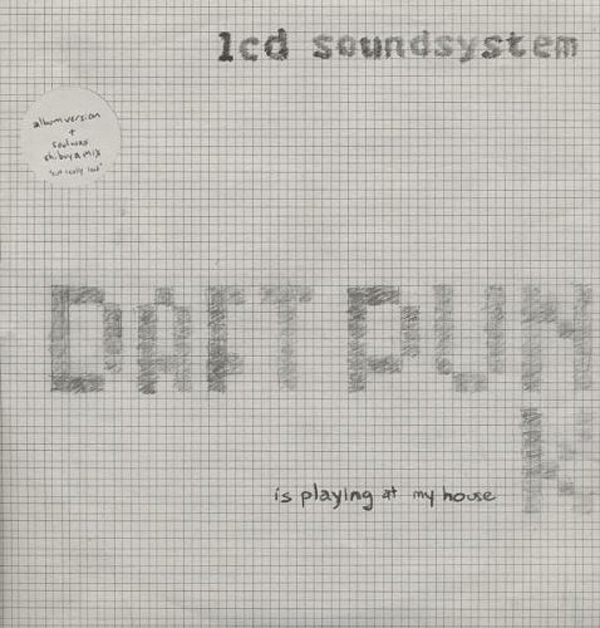 Leading-edge transients lent liveliness to the raucous, hilarious "Daft Punk Is Playing at My House" from LCD Soundsystem's self-titled album (LP, DFA 2138). I noticed bouncy bass lines and assertive (but not aggressive) punch. An agogo bell clanged when struck. The system delivered all this track's crunchy energy but stayed in control.
 On Sketches of Spain (SACD, Esoteric ESSS 90157), arranged and conducted by Gil Evans, Miles Davis's fluegelhorn on "Concierto de Aranjuez" and "Saeta" rang with tonal purity. Its brassy body imaged in 3D.
It would be interesting to experiment with the RA180's active crossover, but that wasn't possible, since the crossover's high-pass filtering function bottoms out at 600Hz while the woofer-to-midrange crossover on the Antals occurs at a much-lower 185Hz (footnote 4).
On Sketches of Spain (SACD, Esoteric ESSS 90157), arranged and conducted by Gil Evans, Miles Davis's fluegelhorn on "Concierto de Aranjuez" and "Saeta" rang with tonal purity. Its brassy body imaged in 3D.
It would be interesting to experiment with the RA180's active crossover, but that wasn't possible, since the crossover's high-pass filtering function bottoms out at 600Hz while the woofer-to-midrange crossover on the Antals occurs at a much-lower 185Hz (footnote 4).
 What affect did biamping have? It seemed to improve body, dimensionality, and integrity—the sense of soundfield integration. Each element occupied its own space, yet it was all part of the same sonic field. Also, biamping tightened up the bass on some recordings, presumably because there was less current demand on the channel serving the bass, as on tracks from Billie Eilish's debut, When We All Fall Asleep, Where Do We Go? (24/44.1 MQA, Interscope/Tidal). Elsewhere, hyperdetailed bits were tamed, as was some cymbal tizz on El Vy's title track from Return to the Moon that I don't normally hear. Some sibilance on other material smoothed out.
I decided to try the RA180's subwoofer-out connection. I paired a Pioneer SW-8 active sub with the Antals to extend the low end, crossing over at 55Hz and then 70Hz (footnote 5). After careful adjustment of the subwoofer level, I heard more deep bass of course, with decent integration. On Billie Eilish's "Bad Guy," from When We All Fall Asleep, Where Do We Go?, the bellowing synth drop dipped deeper and cleaner.
Conclusion
What affect did biamping have? It seemed to improve body, dimensionality, and integrity—the sense of soundfield integration. Each element occupied its own space, yet it was all part of the same sonic field. Also, biamping tightened up the bass on some recordings, presumably because there was less current demand on the channel serving the bass, as on tracks from Billie Eilish's debut, When We All Fall Asleep, Where Do We Go? (24/44.1 MQA, Interscope/Tidal). Elsewhere, hyperdetailed bits were tamed, as was some cymbal tizz on El Vy's title track from Return to the Moon that I don't normally hear. Some sibilance on other material smoothed out.
I decided to try the RA180's subwoofer-out connection. I paired a Pioneer SW-8 active sub with the Antals to extend the low end, crossing over at 55Hz and then 70Hz (footnote 5). After careful adjustment of the subwoofer level, I heard more deep bass of course, with decent integration. On Billie Eilish's "Bad Guy," from When We All Fall Asleep, Where Do We Go?, the bellowing synth drop dipped deeper and cleaner.
Conclusion
The HiFi Rose RA180 is big on speed, energy, clarity, and detail. You get plenty of power in a single chassis. Although it is HiFi Rose's most expensive product to date, it offers a lot for its $6995 MSRP—neither entry-level nor crazy money by hi-fi standards. The best sound and quietest backgrounds I heard was while biamping and playing back hi-rez digital. With vinyl playback, surface noise was sometimes more noticeable.
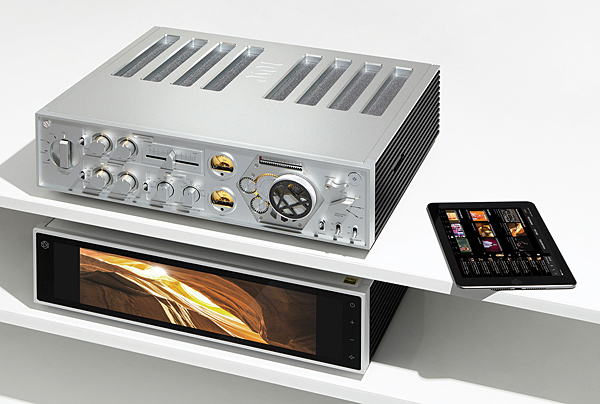 Perhaps the GaN transistors' decreased "dead time" helped music's sense of smoothness and continuity. Maybe their speed aided quick and sharp transient attacks and overall dynamics. It's hard to say, but I do know I enjoyed my time with HiFi Rose's RA180 flagship. At times it felt hyper-responsive. Its heightened detail lent an exciting intensity to most material.
Except perhaps for this impression of heightened detail, the RA180 remained mostly neutral in its tonal balance. If anything, it ran slightly cool rather than warm. Once in a while, the RA180 verged on leaning a little too far to light, clean, and shiny, like a new penny. Yet, in any kind of music—delicate classical, hard funk, crystalline electronica, all the other stuff I played—the RA180 maintained its cool sense of control.
Audiophiles who appreciate a unique visual and functional design and fast, clear, detailed sound—especially those with biampable speakers (or, even more, who use supertweeters)—should give the HiFi Rose RA180 a long look and listen.
Perhaps the GaN transistors' decreased "dead time" helped music's sense of smoothness and continuity. Maybe their speed aided quick and sharp transient attacks and overall dynamics. It's hard to say, but I do know I enjoyed my time with HiFi Rose's RA180 flagship. At times it felt hyper-responsive. Its heightened detail lent an exciting intensity to most material.
Except perhaps for this impression of heightened detail, the RA180 remained mostly neutral in its tonal balance. If anything, it ran slightly cool rather than warm. Once in a while, the RA180 verged on leaning a little too far to light, clean, and shiny, like a new penny. Yet, in any kind of music—delicate classical, hard funk, crystalline electronica, all the other stuff I played—the RA180 maintained its cool sense of control.
Audiophiles who appreciate a unique visual and functional design and fast, clear, detailed sound—especially those with biampable speakers (or, even more, who use supertweeters)—should give the HiFi Rose RA180 a long look and listen.
Footnote 4: On the Triangle Antal 40th Anniversary speakers, the bottom terminals feed the woofer while the top terminals connect to the midrange and tweeter.—Jim Austin Footnote 5: These figures are approximate, since the dial doesn't show precise steps.
I began by hooking up the MBL 120 loudspeakers, my current reference—largeish three-way standmount speakers with the German manufacturer's Radialstrahler omnidirectional tweeter and midrange and bass from two side-firing woofers. The 120s are not biwirable, so I ran the RA180 in BTL mode for maximum power. I cued up A Delicate Motor's "Do for Self," from Fellover My Own (CD SBR2-035), which could be described loosely as experimental chamber pop. A lone kalimba—African thumb piano—opens and closes the track and continues less noticeably throughout. Its presence remained more noticeable than usual in the middle of the track. Images were realistic, natural in scale. The presentation felt grounded. Textures were tactile. On "Fall Out," a spinning bicycle tire sounded exactly like what it was, its soft clicks easy to hear for what they were, to soothing effect. Adam Petersen's vocals were ethereal, floating slightly left of center. Vocal timbre seemed natural. (I've heard them live.) Soundstaging was good, and the system got out of the way: The 120s disappeared. The RA180's knack for detail retrieval magnified playing-style nuance. On that kalimba, I could hear the varying force of Petersen's thumb attacks on the instrument's flattened nails. On guitarist Fausto Mesolella's Live ad Alcatraz (LP Fonè Jazz 062), the finer actions of his fingers could be heard—loud-to-soft plucking or strumming, the subtle squeaks of strained strings. His guitar body's resonant humming, aided by a loop pedal at times, sustained longer. This limited-edition LP, pressed in Italy in a "one-stage" process, is pleasing: an intimate set, well-recorded and pressed.
On tracks from Tori Amos's Under the Pink, a half-speed remaster from Abbey Road Studios (LP, Atlantic, R1-82567), the exaggerated breathiness of her vocal delivery and the dynamic nuances of her piano playing stood out. The varying force she applied to the Bösendorfer's keys was more noticeable than usual on "Icicle." Leading-edge transients struck lightning-fast, followed by floating sustains and lingering decay. Nine Inch Nails front man Trent Reznor sings backing vocals on "Past the Mission," a track on Amos's record that, according to the liner notes, was recorded at Sharon Tate's former mansion, in contrast to the album's other tracks, which were recorded at a haçienda in Taos, New Mexico. Amos's and Reznor's voices blended well yet remained distinct—each seeming to come from a real person. It was easy to hear that this track was recorded in a different space than the others.
I pulled out Gorillaz's Demon Days (2 LP, Warner Parlophone 1902954423681) and spun "Dare," which features vocals by Shawn Ryder of Happy Mondays. Via the RA180, the rhythm's steady repetition took on a special sense of continuity, making it easier to get lost in these grooves. But, exposed by the 120s, the recording lacked body and warmth. It was time to try the RA120's tone controls.
I increased the bass and dialed down the treble—about a sixth of a turn each. Bass was muscular and tight, as if the system were caffeinated, "amped up" yet controlled, not frenetic. "Dirty Harry" and other cuts felt fast and fun. I was tempted to turn it up to nightclub levels and add a sub, but I didn't. I had the sense that I was using only a small fraction of the RA180's horsepower, as though I were driving a high-end sportscar at the speed limit—maybe only in second gear.
I wanted to try the RA180's biamping function. I don't have supertweeters, but John Atkinson sent me the three-way, floorstanding Triangle Antal 40th Anniversary Edition speakers recently reviewed by Robert Schryer ($4700/pair), which he (JA) had been measuring. The Triangles have two sets of loudspeaker terminals: The upper terminals feed the midrange driver and tweeter (and the crossover that connects them) while the lower terminal feeds the woofers. Unfortunately, shipping damage rendered one speaker inoperable, so I had to wait for a new pair, which delayed publication of this review. The new pair installed, it was time for some classical music. It had been a while since I had listened to the Diabolus in Musica: Accardo interpreta Paganini compilation with Salvatore Accardo on violin (2LP, DG 477 6492). Accardo is backed by London's Royal Philharmonic Orchestra under Charles Dutoit. On "La Risata del Diavolo" and into "La Campanella Rondo," a tiny chime rings out, clear as, well, a bell, from the right channel. The orchestra's downbeat entrance was dramatic, quick, and as startle-in-your-seat sudden as I've heard them. Accardo's impossibly fast and fluid arpeggios soared. Lately I've been listening to a violinist of a different ilk, Andrew Bird. Like Tori Amos, Bird cut his teeth in the classical world, starting Suzuki training at age 5. I've been enjoying Bird's latest album, Inside Problems (which I'm preparing to review for AnalogPlanet) on vinyl and 24/96 download (LP, 24/96 WAV, Loma Vista LVR 02591). Regardless of format, the presentation was smooth, natural, liquid. Bass lines were clean, easy to follow. Recording-venue acoustics cues, such as slight echo on "Atomized," were easy to hear—more so than usual. Bird's voice showed unusual hints of dryness; his whistling was clear and sweet. Pizzicati had palpable string tension. Heightened detail helped reproduce the violin's body and texture: the resin on the strings, the action of the bow across them. Tone seemed neutral, sweet not shrill, clean without artifice.
Leading-edge transients lent liveliness to the raucous, hilarious "Daft Punk Is Playing at My House" from LCD Soundsystem's self-titled album (LP, DFA 2138). I noticed bouncy bass lines and assertive (but not aggressive) punch. An agogo bell clanged when struck. The system delivered all this track's crunchy energy but stayed in control.
On Sketches of Spain (SACD, Esoteric ESSS 90157), arranged and conducted by Gil Evans, Miles Davis's fluegelhorn on "Concierto de Aranjuez" and "Saeta" rang with tonal purity. Its brassy body imaged in 3D.
It would be interesting to experiment with the RA180's active crossover, but that wasn't possible, since the crossover's high-pass filtering function bottoms out at 600Hz while the woofer-to-midrange crossover on the Antals occurs at a much-lower 185Hz (footnote 4).
What affect did biamping have? It seemed to improve body, dimensionality, and integrity—the sense of soundfield integration. Each element occupied its own space, yet it was all part of the same sonic field. Also, biamping tightened up the bass on some recordings, presumably because there was less current demand on the channel serving the bass, as on tracks from Billie Eilish's debut, When We All Fall Asleep, Where Do We Go? (24/44.1 MQA, Interscope/Tidal). Elsewhere, hyperdetailed bits were tamed, as was some cymbal tizz on El Vy's title track from Return to the Moon that I don't normally hear. Some sibilance on other material smoothed out.
I decided to try the RA180's subwoofer-out connection. I paired a Pioneer SW-8 active sub with the Antals to extend the low end, crossing over at 55Hz and then 70Hz (footnote 5). After careful adjustment of the subwoofer level, I heard more deep bass of course, with decent integration. On Billie Eilish's "Bad Guy," from When We All Fall Asleep, Where Do We Go?, the bellowing synth drop dipped deeper and cleaner.
ConclusionThe HiFi Rose RA180 is big on speed, energy, clarity, and detail. You get plenty of power in a single chassis. Although it is HiFi Rose's most expensive product to date, it offers a lot for its $6995 MSRP—neither entry-level nor crazy money by hi-fi standards. The best sound and quietest backgrounds I heard was while biamping and playing back hi-rez digital. With vinyl playback, surface noise was sometimes more noticeable.
Perhaps the GaN transistors' decreased "dead time" helped music's sense of smoothness and continuity. Maybe their speed aided quick and sharp transient attacks and overall dynamics. It's hard to say, but I do know I enjoyed my time with HiFi Rose's RA180 flagship. At times it felt hyper-responsive. Its heightened detail lent an exciting intensity to most material.
Except perhaps for this impression of heightened detail, the RA180 remained mostly neutral in its tonal balance. If anything, it ran slightly cool rather than warm. Once in a while, the RA180 verged on leaning a little too far to light, clean, and shiny, like a new penny. Yet, in any kind of music—delicate classical, hard funk, crystalline electronica, all the other stuff I played—the RA180 maintained its cool sense of control.
Audiophiles who appreciate a unique visual and functional design and fast, clear, detailed sound—especially those with biampable speakers (or, even more, who use supertweeters)—should give the HiFi Rose RA180 a long look and listen.
Footnote 4: On the Triangle Antal 40th Anniversary speakers, the bottom terminals feed the woofer while the top terminals connect to the midrange and tweeter.—Jim Austin Footnote 5: These figures are approximate, since the dial doesn't show precise steps.















